NASA announced the four prime crew members and a backup for the Artemis 3 test flight:
NASA astronaut Randy Bresnik, commander
ESA astronaut Luca Parmitano, pilot
NASA astronaut Andre Douglas, mission specialist
NASA astronaut Frank Rubio, mission specialist
6 juin 1971
Il y a 55 ans, l'équipage de Soyouz 11, Georgi Dobrovolski, commandant, et Vladislav Volkov et Victor Patsaïev, décolle de Baïkonour pour la station Saliout 1 à laquelle il s'arrime le 7 juin.
Lors du retour sur Terre, le 29 juin, les trois hommes meurent...
Great Red Spot Rotation
Winds around Jupiter's Great Red Spot are simulated in this JunoCam view that has been animated using a model of the winds there. The wind model, called a velocity field, was derived from data collected by Voyager spacecraft and Earth-based telescopes.
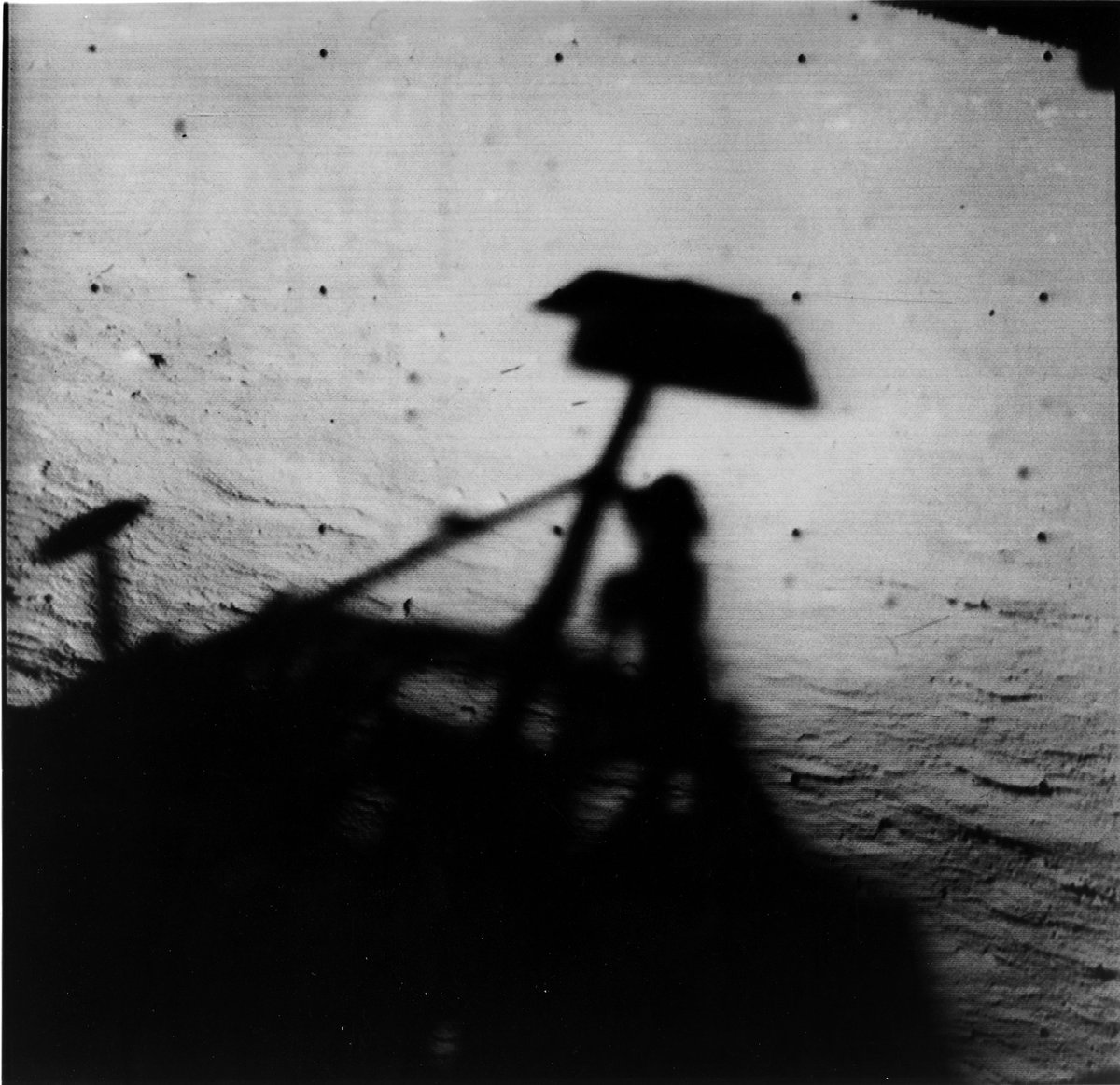
60 years ago today, Surveyor 1 launched from the Cape and became America’s first successful soft landing on the Moon. The robotic lander returned 11,000 images and proved the lunar surface could support future Apollo astronauts. Another giant step from the Cape.
@ccspacemuseum
55 years ago today, Mariner 9 launched from the Cape’s LC-36 aboard an Atlas-Centaur and became the first spacecraft to orbit another planet.
The mission mapped 85% of Mars and forever changed our view of the Red Planet.
@ccspacemuseum
Daylight reveals the extent of damage caused to Launch Complex 36 (LC-36) and the surrounding area of Cape Canaveral Space Force Station in Florida, following last night’s massive explosion of Blue Origin’s New Glenn during a Static Fire Test. Significant fire damage to the launch pad, tower, and other infrastructure can be seen - which will undoubtably require months of repairs - while debris from New Glenn lay scattered around LC-36.
Photo credit: @asherbphotos@tweetsiphotos@LaunchHeavenX
SpaceX Just Unleashed the Insane Specs for Starship V4 — And It’s Next-Level!
Hey space fans! Elon Musk just dropped fresh details on Starship Version 4 (targeted for 2027), and it’s clear: the future of spaceflight just got a whole lot bigger, bolder, and more powerful.If you thought Starship was already a beast, V4 is about to redefine what’s https://t.co/kb42D9QPwJ’s the mind-blowing upgrade package: 42 Raptor Engines Total
Super Heavy booster stays at 33 engines, but the upper stage gets stretched and upgraded to 9 engines (3 sea-level + 6 vacuum-optimized). As Elon put it: “as foretold in the prophecy.” 10,000 Metric Tons of Thrust
That’s roughly three times the liftoff thrust of the mighty Saturn V. This will be the most powerful rocket ever built by humanity. Towering Height: Nearly 150 Meters
Imagine stacking three Statues of Liberty on top of each other. That’s how tall this monster will stand. Game-Changing Payload
Designed to deliver 200+ metric tons to Low Earth Orbit in fully reusable mode. This slashes the cost of getting mass to space and opens the door to real Mars colonies and massive orbital infrastructure. Flying Space Station
The upper stage will offer over 1,000 cubic meters of pressurized volume — that’s more internal living space than the entire International Space Station!Why go this big?As Starship gained heat shields, reinforcements, and all the real-world hardware needed for safety and reusability, it got heavier. Instead of endlessly chasing weight reductions, SpaceX chose to scale up everything: longer tanks, more propellant, more engines. The result? A rocket that can still haul the massive payloads required for humanity’s multi-planetary future.They’re still crushing it with V3 first — a huge leap on its own. V3 should wrap up production and testing by the end of this year, with heavy flight operations throughout 2026–2027 before V4 takes center https://t.co/8gH2ZsrYls… with Starship V4 basically being a flying city block with more living space than the ISS, would you sign up for a multi-month journey to Mars aboard one? Or are you watching safely from Earth? Drop your thoughts below — I’d love to hear them!Note: This image is an illustrative render for educational purposes, not an official SpaceX image.
In a post-script to Soyuz-5 inaugural launch, it worth mentioning that the flight was a culmination of a winding path not only for the rocket development project (starting in 2016), but also for the Russo-Kazakh Baiterek venture, rooted as far as 2004: https://t.co/8lIyAsKhKG
👇
What was Conestoga?
Conestoga was a launch vehicle built by Space Services Inc. It was the world’s first privately funded commercial rocket aimed at providing an affordable way to reach orbit.
Before Conestoga, there was Percheron. It was a simple design intended to make launching to orbit cheaper using pressure-fed kerosene-oxidizer engines. Unfortunately, during an engine test firing, the rocket malfunctioned and exploded on the pad. After that, the company shifted to solid-fueled launch vehicles.
Conestoga 1 was the smallest of the launch vehicles but also the only one to succeed. In fact, Conestoga 1 was the first private launch vehicle to reach space! Although they had gotten no customers to fly it again and decided to move onto the next vehicle.
Conestoga 1620 was an upgrade to the Conestoga family and was given a payload for its first launch (METEOR). Unfortunately, due to a faulty navigation system, it ran out of hydraulic fluids faster than expected and was terminated at T+45 seconds.
For fun I have added Falcon 1 as a comparison.
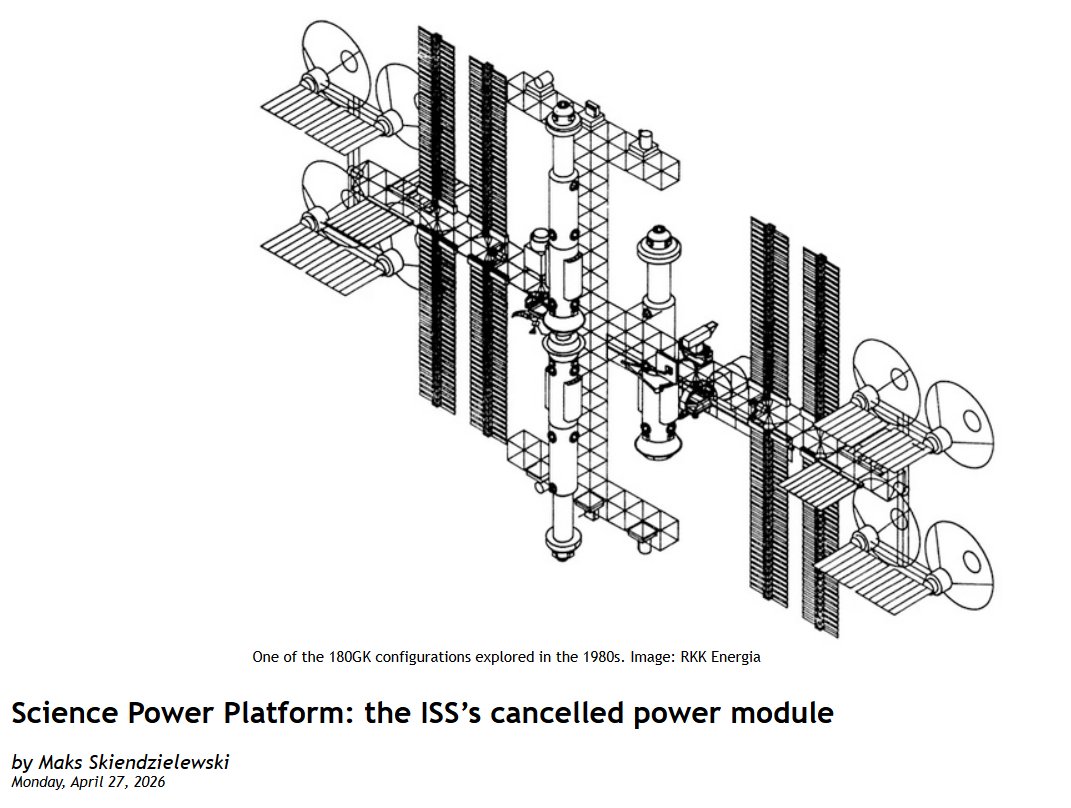
My article on the history of the ISS' forgotten Science-Power Platform and its Mir-2 origins now available on The Space Review.
https://t.co/Ums71PB5lg