Acabo de crear una página web que recopila datos del Perú a través de diferentes encuestas del INEI, como la ENAHO, la ENDES, la encuesta de empresas y los paneles. Se puede abrir cualquier indicador y verlo a lo largo de 20 años.
EL PERU EN 20 AÑOS DE DATOS:
https://t.co/4F6a8AsIpi
EEAT - thats why you're not getting indexed!!!!
The SEO advice is amazing.
Lets skip the pretense of "YMYL" - EEAT - something you cannot "add" to your content - is now why your content isn't being indexed.
This is genuinely sad
cc @edwardeachday@seosmarty
I love this brand new SEO hack:
1. Add your social to Search Console.
2. Wait at least 2 days for some keywords.
3. Visit GSC and note some keywords.
4. Analyze the SERPs and write the post.
5. Put a keyword at the beginning.
6. Share the post.
Your post will appear on Google SERPs.
And, you will get traffic or sales...
More about Cloudflare's announcement from yesterday -> Cloudflare sets a September 15 deadline for AI companies to differentiate their web crawlers into search, AI training, and AI agents or face being blocked
"Cloudflare has just issued the AI industry a new deadline to separate the web crawlers used for traditional search purposes, like Google Search, from those used for AI agents and training. Starting on September 15, 2026, Cloudflare’s default settings will block “mixed-use” crawlers from any pages that host ads, the company announced on Wednesday."
https://t.co/qfC5srYHts
Just an FYI - FAQs are completely dead in Google
Those are clicks+impressions from yesterday from FAQs. (no, no schema)
Source: https://t.co/wQ2NzDuXSn
Oh yeah, I'm sure Google is going to share how rankings work... :) -> The CMA added that under this conduct requirement, Google must:
*Rank ‘organic’ search results using objective and non-discriminatory criteria (including in AI Overviews but not sponsored results)
*Provide greater transparency to businesses about how rankings work and give advance notice of significant changes
*Introduce clear processes for businesses to raise concerns about how Google ranks results and have them addressed effectively
Another new exciting announcement from Google: The Agentic Resource Discovery specification.
We've been wondering how agents will know where to find resources on the web and this is it!
ARD allows tools and services to be securely shared and connected. It helps agents know:
▪Where the right capability lives
▪Which capability it should use
▪How to verify if the capability is safe
It relies on Catalogs (an organization will publish a catalog that describes its available capabilities) and Registries (a search engine for the agentic web.)
ARD provides a cryptographic layer for verification and trust of agents.
Google stood on stage and said the strategy for winning in AI search comes down to three things: be unique, be helpful, and be agent-ready.
No secret schema, no chunking trick, no file you upload that makes LLMs fall in love with your site.
Just three plain words.
This should worry every AEO tool or consultant currently charging five figures a month for a checklist.
Almost every tactic built around gaming AI answers has a shelf life measured in months rather than years, because the moment enough people exploit it, Google quietly patches it out from underneath them.
Structured data formatting tricks, forum mention farming, answer-box keyword stuffing, all of it eventually gets discovered and neutralized.
This also exposes something funnier: the entire category of tools that will happily tell you your brand's visibility score across ChatGPT, DeepSeek, Claude, Perplexity, and AI Overviews, charted weekly, color-coded, and exportable to a deck for your CMO.
They'll tell you exactly where you rank. They will not tell you why, and they definitely won't tell you what to do about it, because the honest answer is "write something only you could have written," and that doesn't fit in a dashboard widget.
You can watch your score go from 34 to 31 for a month straight, and the tool will never once suggest the actual fix because it isn't a feature they can ship.
Agent-led spam doesn't count if it doesn't move the needle.
The three pillars Google named don't have that expiration problem.
Unique can't be automated away at scale, no matter how good the generation tools get.
Helpful can't be faked for long once readers and ranking systems both start noticing the pattern.
The smartest move right now isn't chasing whatever new AEO trend is circulating on LinkedIn this particular week, and it definitely isn't refreshing a tracking dashboard hoping the number moves on its own.
Go back to the unglamorous work that never had a clever name to begin with: User empathy and marketing.
Google empieza a definir cómo crear agentes IA seguros en Chrome.
Hoy hace exactamente una semana, Google anunció el lanzamiento de la beta para poder crear herramientas WebMCP con las que los agentes IA puedan interactuar con tu sitio web: https://t.co/JMmmsYUEVv
De hecho, puedes todavía apuntarte a dicha beta desde aquí: https://t.co/abfuXT2HjK
Hoy, lanza nueva documentación, pero esta vez para garantizar la seguridad de uso al crear estos agentes IA: https://t.co/LrHUbKmC2Q
Las recomendaciones pueden resumirse en cuatro bloques:
1⃣ Controles Técnicos
Establece límites de tokens de entrada para evitar ataques por sobrecarga y exige siempre confirmación humana antes de ejecutar acciones que modifiquen estados. Además, restringe las interacciones del agente solo a los orígenes web necesarios.
2⃣ Blindaje de Datos
Utiliza etiquetas de delimitación (como <untrusted>) o codificación Base64 para que el modelo diferencie claramente entre datos externos e instrucciones ejecutables. Asegúrate de que el sistema reconozca estas marcas en sus instrucciones.
3⃣ Supervisión con IA
Implementa clasificadores para filtrar contenido malicioso y utiliza "críticos" (LLMs independientes) que verifiquen si la acción del agente realmente coincide con la intención original del usuario.
4⃣ Vigilancia Continua
Realiza pruebas de vulnerabilidad (Red Teaming) regularmente y monitorea anomalías en producción, como el agotamiento repentino de tokens o comportamientos inusuales en los registros.
Naturalmente, dicen que esto es solo el comienzo de buenas prácitcas y que irán ampliándola y mejorándola en el futuro.
BlogPosting and Article schema are being used by almost 10 million websites
schema is not dead. Far from it, just like SEO is not dead...
Google and https://t.co/SIJxIH1LMc just announced the schema usage statistics dataset. They are using Googles infrastructure to inspect websites, and check what schema types are being used..
What does this mean for you? It gives you an indication of what the most popular schema types are, and can give you a pointer to where you should be headed when it comes to schema.
If you are doing seo, and building out your product pages and blog articles and service pages, you can use the data to see what schema types are trending...
I use either article or blogposting schema on all my blogposts. I find the most relevant entities, and build out the entity map for the articles, inside the schema.
Im using https://t.co/ecF53fWj7M to do this, as it crawls and analyzes the top10 search results for me..
Read the blogpost here:
https://t.co/NqimZh7j87
#seo #schema #jespernissenseo
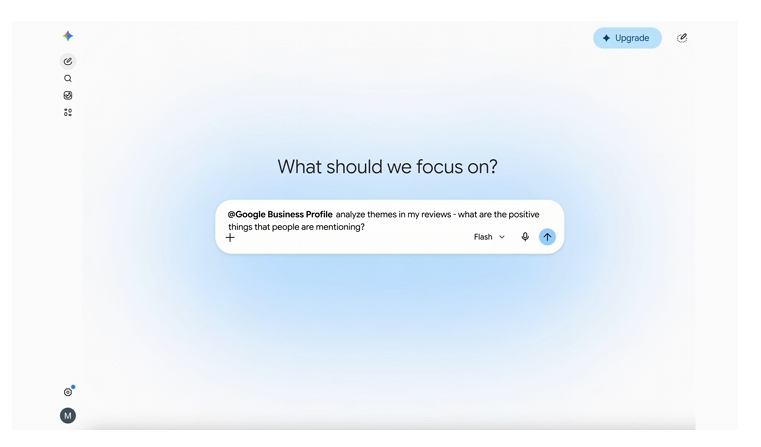
Starting soon -> Connect your Google Business Profile to Gemini
"In the coming weeks, you’ll be able to securely connect your Google Business Profile to Gemini with a single tap. Once connected, Gemini becomes an AI assistant that actually knows your business, having access to your real-world context like customer reviews, customer questions and performance data. This gives Gemini all the context it needs to provide recommendations and content that’s relevant to your business, and allows you to offload complex, time consuming tasks." https://t.co/GIf8HD99ZD
Google's May broad core update was a beast. My latest post covers interesting cases, findings, and analysis. Grab a cup of coffee or a red bull. It's not short :) -> Core Roars Back – Interesting Cases and Findings From Google’s May 2026 Broad Core Update
I cover:
* How March was meh and May was BIG.
* Two powerful tremors.
* YMYL impact (especially with gambling).
* How sites gaming AI Search fared...
* How sites impacted by the January 2026 unconfirmed update fared.
* An interesting case of a manual action first, then core update second.
* Grokipedia Rising (but for how long)?
* An interesting case of scaled content abuse (with scaled translations).
And more...
https://t.co/Rdq0eyiaiC
🚨 MUCHA GENTE NO LO SABE PERO... El 17 de junio Google activa el toggle para bloquear tu web en AI Overviews y AI Mode.
Y hay cosas que necesitas saber antes de tocarlo:
Lo que hace:
➡️ Tu contenido deja de aparecer en AI Overviews, AI Mode y Discover IA
➡️ Tus rankings orgánicos NO se ven afectados (en principio, veremos como afectan señales de tráfico)
➡️ Google no usará la señal de opt-out como factor de ranking
Lo que NO hace:
➡️ NO bloquea tu contenido en la app de Gemini
➡️ NO afecta a ChatGPT, Perplexity ni Claude
➡️ NO te devuelve el tráfico que la IA ya te ha quitado
Ojo que tiene trampa:
Google te da la opción de salir de sus funciones de IA, pero solo de las que están dentro de Search. La app de Gemini queda excluida. Tu contenido puede seguir apareciendo ahí sin que puedas hacer nada.
¿Por qué lo lanza?
Google lanza esto porque el regulador del Reino Unido (CMA) se lo exigió bajo la Digital Markets Act. Rollout empieza en UK. Expansión global después.
Y si os doy mi opinión: para la mayoría de empresas, activar el toggle es un error. Pierdes visibilidad IA sin ganar nada a cambio. Los publishers con contenido premium tienen más motivos para evaluarlo. Pero incluso ellos deberían medir primero cuántas impresiones IA reciben antes de decidir.
Mide primero. Decide después.
A little AI search hack I've been using:
Take your SEO keyword research & convert keywords into prompts for AI search within Google sheets' AI function using a prompt like this one:
=AI("You are converting a terse SEO search keyword into the natural-language query a real person would actually type or speak to an AI assistant like ChatGPT, Gemini, or a voice assistant. Rewrite the keyword as a single conversational question or request that preserves the exact search intent and intent type (informational, commercial, transactional, or local). Phrase it the way someone would genuinely ask out loud in a full sentence — not in keyword shorthand. Keep any brand, product, or location named in the keyword, but do NOT invent specifics, constraints, or details that aren't already implied. Do not answer the query. Return only the rewritten prompt as plain text — no quotation marks, no preamble, no explanation, no trailing punctuation beyond a question mark. Keyword:", A2)
Like it or not, your website almost certainly now has more bot visitors than humans. Latest Cloudflare data:
- Bots: 57.4%
- Humans: 42.6%
Let's call it a tax. While Google/AI companies monetize all your website data, you still pay the hosting bill
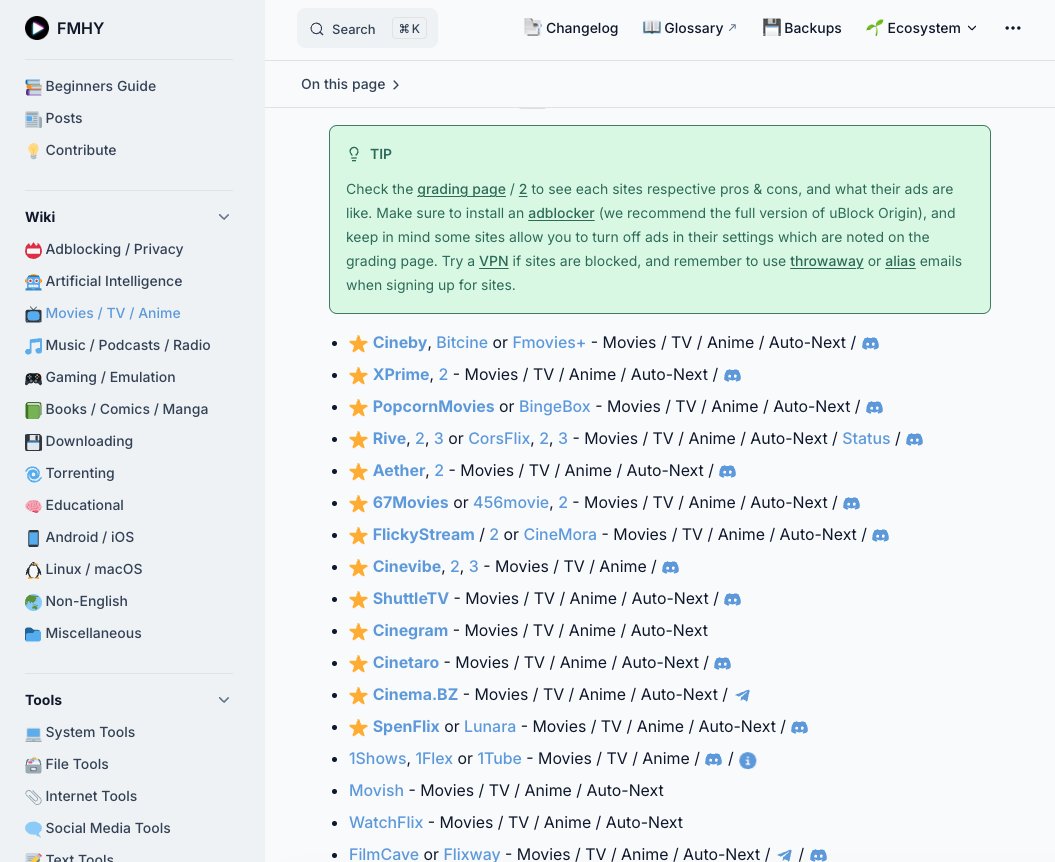
Un tipo llamado nbatman en Reddit construyó accidentalmente el sitio web más útil de internet.
Se llama FMHY (Free Media Heck Yeah).
Este es el sitio web que Google eliminó de los resultados de búsqueda por violaciones de DMCA, que Reddit ocultó parcialmente por promover la piratería, que la Motion Picture Association señaló como una de las principales amenazas de piratería, y sobre el que la RIAA presionó a proveedores de hosting para que lo eliminaran. Aun así, sigue en línea. Y sigue actualizándose cada mes.
Así es como funciona.
FMHY es el índice. La wiki en sí no aloja nada. Solo te dice dónde vive realmente todo lo gratuito en internet, organizado en 14 categorías con calificaciones de seguridad en cada enlace.
→ Películas y series en 4K desde más de 50 sitios de streaming
→ Música con calidad de Spotify y Apple Music
→ Adobe Creative Cloud, Microsoft Office, AutoCAD, JetBrains
→ Todos los cursos de pago de las principales plataformas de aprendizaje
→ 100 millones de libros y artículos a través de Anna’s Archive
→ Alternativas gratuitas a todas las herramientas de IA de pago
→ Una extensión de navegador llamada SafeGuard que marca sitios inseguros en tiempo real
Comenzó como un simple Google Doc mantenido por un moderador de Reddit en 2018. Google lo eliminó mediante una solicitud DMCA en 2023.
La comunidad reconstruyó la wiki en su propio dominio, la replicó en GitHub e IPFS, y ahora funciona simultáneamente en 12 dominios de respaldo.
No hay empresa. No hay CEO. No hay un servidor central. Seis voluntarios anónimos mantienen todo esto en su tiempo libre. Las donaciones por Ko-fi pagan el hosting. Nadie obtiene beneficios.
Hollywood no puede cerrar esto. Spotify no puede cerrar esto. Adobe no puede cerrar esto.
Toda la economía de suscripciones se sostiene en que no sepas que esta wiki existe.
https://t.co/xDVW1xKCxd