@HauntedVagina I thought so, too. But I want to dig deeper . . . bc this is the only instance of the novel that someone is in a real danger. They should be frightened! #7922austen
hmmm. I really want to discuss the scene in which Harriet encountered "a party of gipsies" (261) . . . why "all the youth and servants in the place [Highbury] were soon in the happiness of frightful news" (264)? #7922Austen
@HauntedVagina probably not. But it still worth to mention that he is one of a few characters who could keep his secret and privacy from the nosy people of Highbury, I think.
Are letters public or private? Or are they kind of both, just like the way we use twitter? (we have private accounts, but need to keep in mind that other people can always read our tweets...) It seems that there is no "private" correspondence in the novel . . . #7922Austen
Compared to the other novels, Emma is certainly interested in gossip and its circulation in community. Even personal letters are frequently cited and read by strangers. #7922austen
@sophiepkennedy Yes! Mr. W loathes change in any forms--including late dinner, matrimony, and travel. I understand him as a comic symbol of provincialism, a love of country in which everyone is a "voluntary spy" to each other. #7922austen
@ckrovee it seems to me that the setting of the novel is designed to give stability to their economic conditon, and asks us to pay attention to what people of leisure would do in that situation. (I am thinking of the exchange of opinions, gossip, and so on...)
I just realized there is no mention of Mr. Woodhouse's property in the text (at least in the first volume). What is going to happen to all the money and estate of Mr. Woodhouse if he is deceased? Who is the heir(ess)? #7922austen
@ckrovee Right! I thought the naming part somewhat weird but it really makes sense if henry will inherit his grandfather's property...! And the fact that Mr. W being a hypercondriac somehow obscures the nature of his business(?) is also interesting.
The example of Northanger Abbey could be useful to make my point. Catherine's belief that General Tilney murdered his wife is, of course, groundless but it somehow captures the truth of his character. Maybe the same logic could be applied to Sir Thomas's slave trade #7922austen
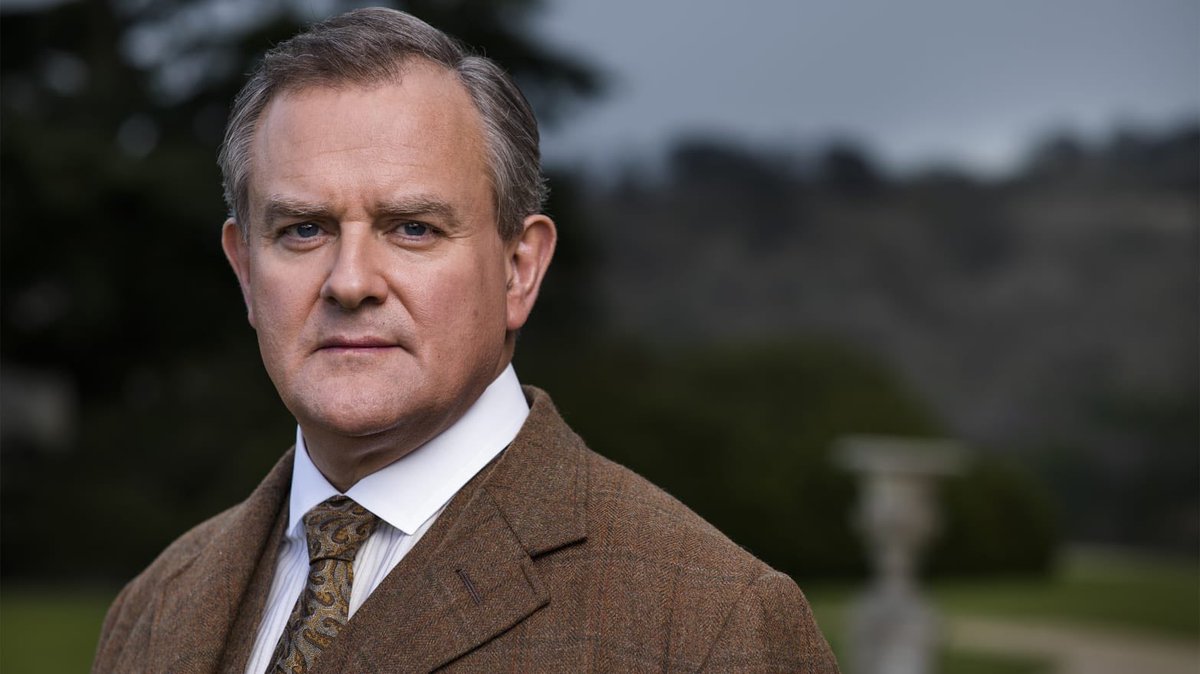
Just watched 1999 film version of Mansfield Park . . . and recognized that the actor of Mr. Rushworth also played Lord Grantham in Downton Abbey! Wow. #7922austen
Maybe we do not have enough textual evidence (except Sir Thomas's "dead silence") to pursue the subject further, but I it would be worth to link it to the violence of father in a patriarchal system #7922austen
@HauntedVagina Right. Said's influence is quite manifest in this film adaptation. But it is not groundless, I think. In page 155 (Vol II. Chapter III) Sir Thomas only gives a "dead silence" when he was asked about the slave trade. #7922austen
"But there is nobleness in the name of Edmund. It is a name of heroism and renown--of kings, princes, and knights; and seems to breath the spirit of chivalry and warm affections." (165). Very Interesting. First, the name itself always remind me of Edmund in King Lear. #7922Austen
Besides, Fanny finds the name Edmund--not Lord Edmund or Sir Edmund--as something that possess the chivalric virtue . . . even though there is no prospect of him to be a feudal lord. Maybe here Austen plays with Edmund Burke's idea of "the age of chivalry"? #7922austen