The Parallel Software and Systems Group is a research group @UofMaryland @umdcs, directed by Prof. @bhatele. Research on HPC, Vis. and ML. RTs ≠ endorsements.
@umdcs@UMDscience@umiacs Sending sparse data between GPUs? Unfortunately, existing communication libraries don’t exploit sparsity to speed up performance. Come to room W176abc at 2:35 pm to hear Dalton talk about his work on SpCCL.
We have an excellent line up of tutorials, posters and papers. If you miss a session and want to get in touch with us, you can find our contact info on our website: https://t.co/K2upZe4onl
#HPC#AI#HPCUnites#SC26@umdcs@UMDscience@umiacs
We are fortunate that we were able to convince @YafanHuang to join UMDCS. For the first time ever, PSSG has two faculty members instead of one, and I am looking forward to many years of fruitful collaboration with Yafan!
We are excited to announce that Dr. @YafanHuang, who recently started at @umdcs as an assistant professor is joining PSSG as a Co-Director. Dr. Huang is an expert in data compression & fault tolerance methods. We are starting work on several new research projects this year! #HPC
🔊 @UofMaryland Computer Science announced 11 faculty promotions, effective July 1, including four professors, five associate professors, one principal lecturer and one senior lecturer.
https://t.co/65Qvyo1ADg
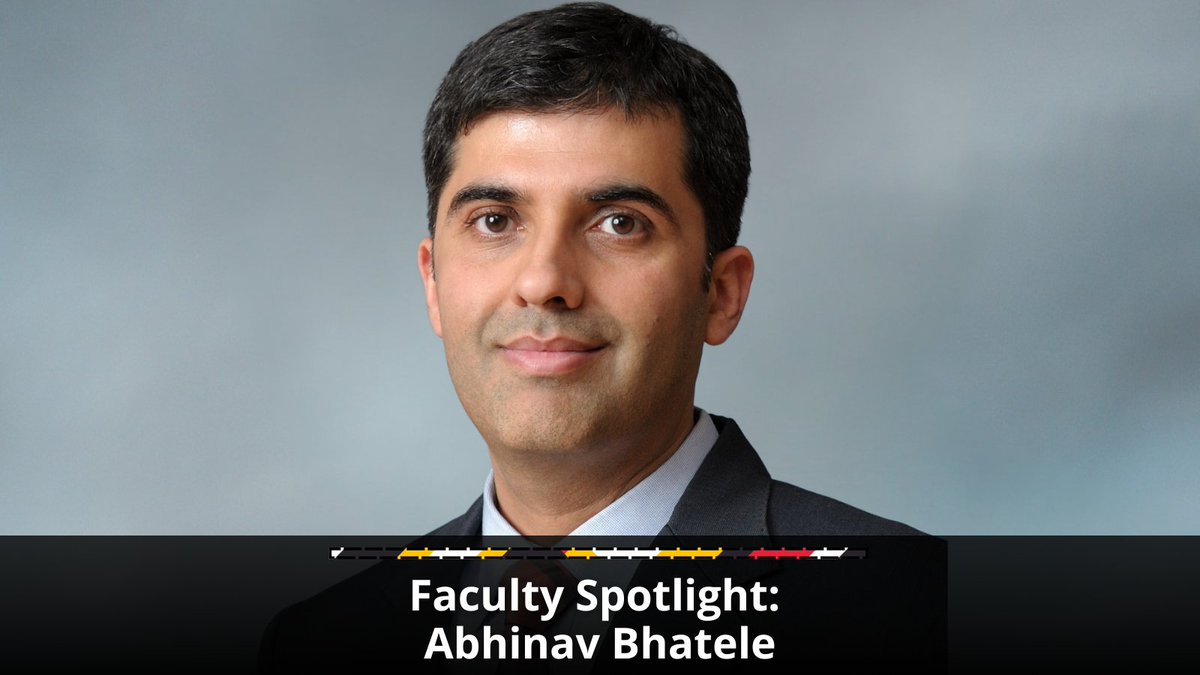
🧠 From early programming lessons to scaling #AI on supercomputers, Abhinav Bhatele (@bhatele) shares his path and research at @UofMaryland's Department of Computer Science.
Read more: https://t.co/KEwHty5nkc
Congratulations to Dr. Joy Kitson for successfully defending her PhD dissertation last Friday (April 10)! That makes her the fifth PhD student to graduate from our group.
Dissertation title: "Scaling Agent-based Epidemic Diffusion on HPC Clusters"
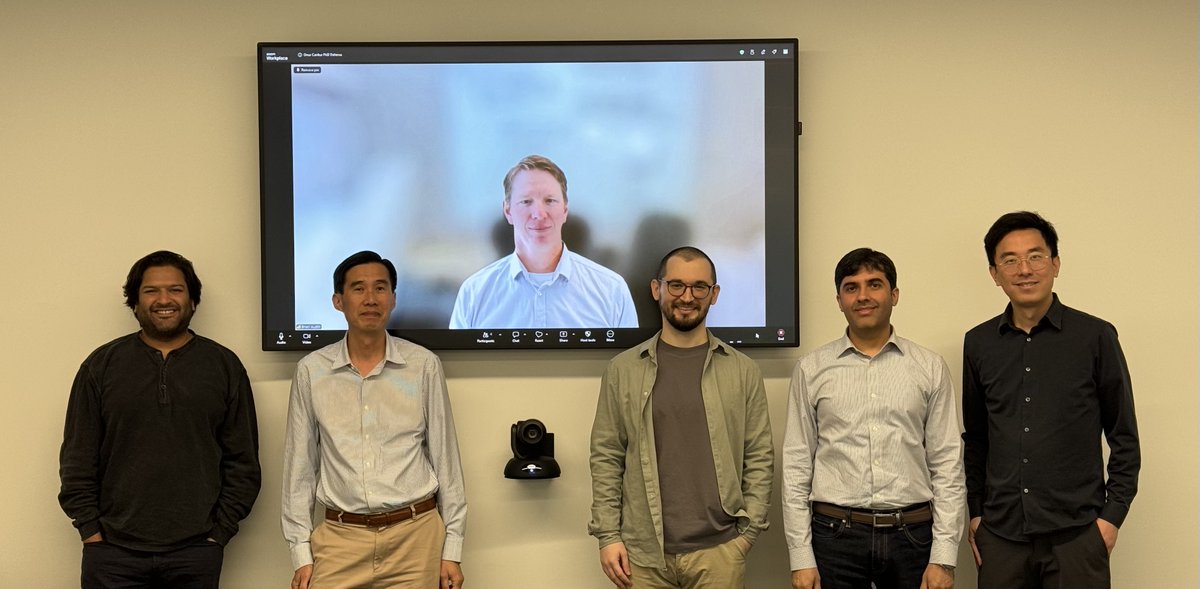
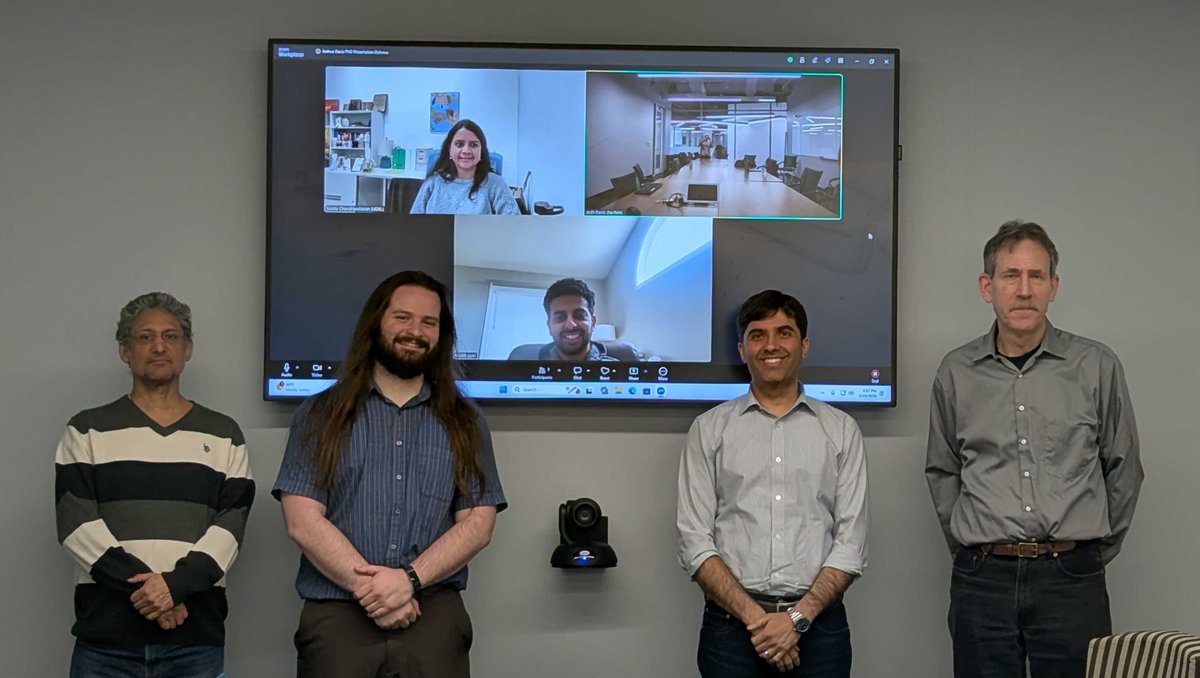
On Mar 25, we set a personal record with 2 PhD defenses in a day! Congrats to @onurcankur & @jhdavis_josh for their excellent work:
Onur's title: "Longitudinal Data Analytics of HPC Systems & Applications"
Josh's title: "LLM-driven Development of Performant & Portable GPU Codes"
The Distributed Deep Learning tutorial is happening right now in Room 123. #SC25#DistributedAI#AxoNN#YALIS
All the tutorial material is on github: https://t.co/mbZx6Kx6D7
We have arrived in St. Louis for @Supercomputing 2025. Learn more about our group's research through the various talks, panels and tutorials below. We will also be at the @UofMaryland booth (3123) at various times. #SC25#UMDCS#HPC#AI#MLSys#AI4Science
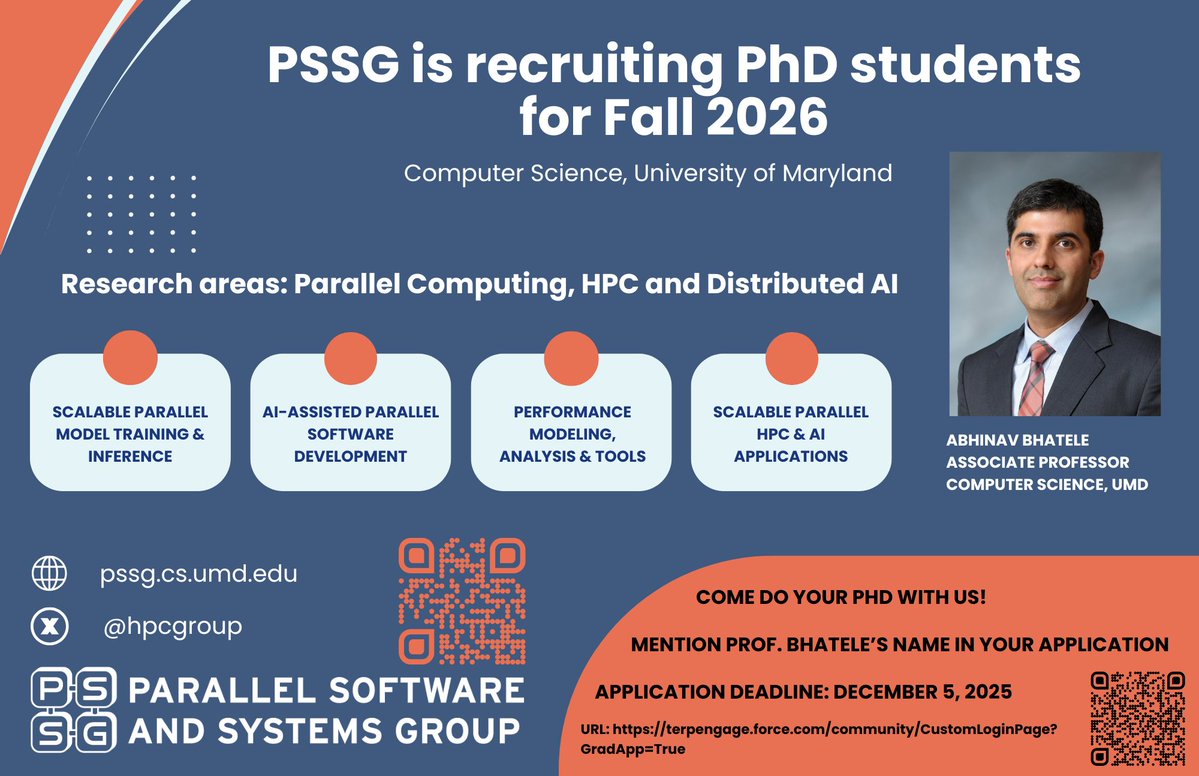
A large number of PhD students in my group have graduated or will be graduating by Spring, so I am recruiting several PhD students for the next admission cycle (Fall 2026). If you want to work with us, apply by Dec 5 and drop me a short email. Please repost/share widely. #HPC#AI
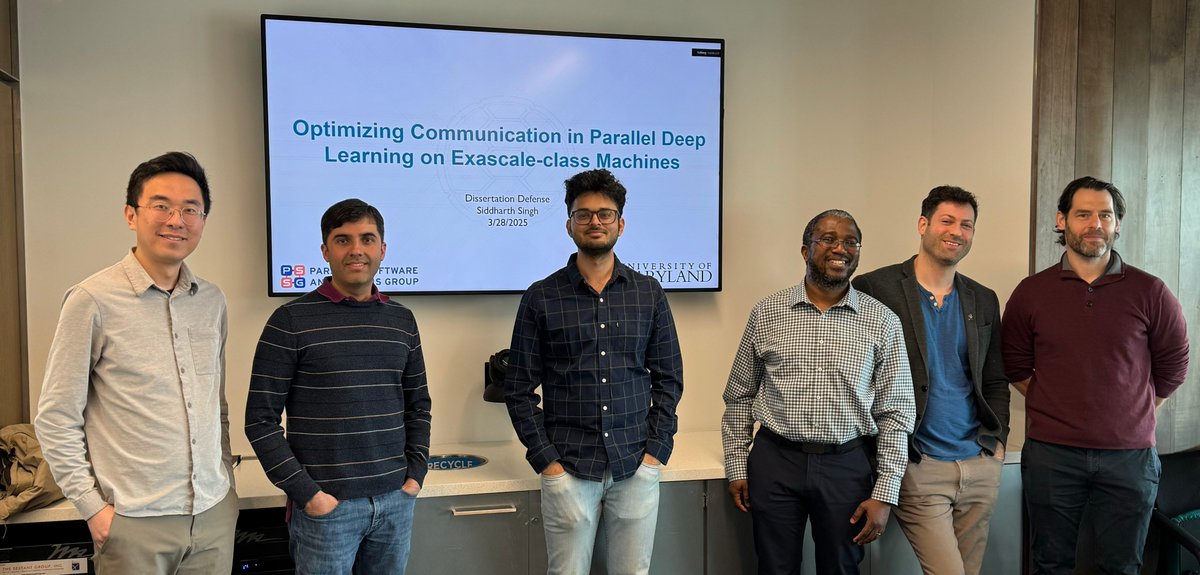
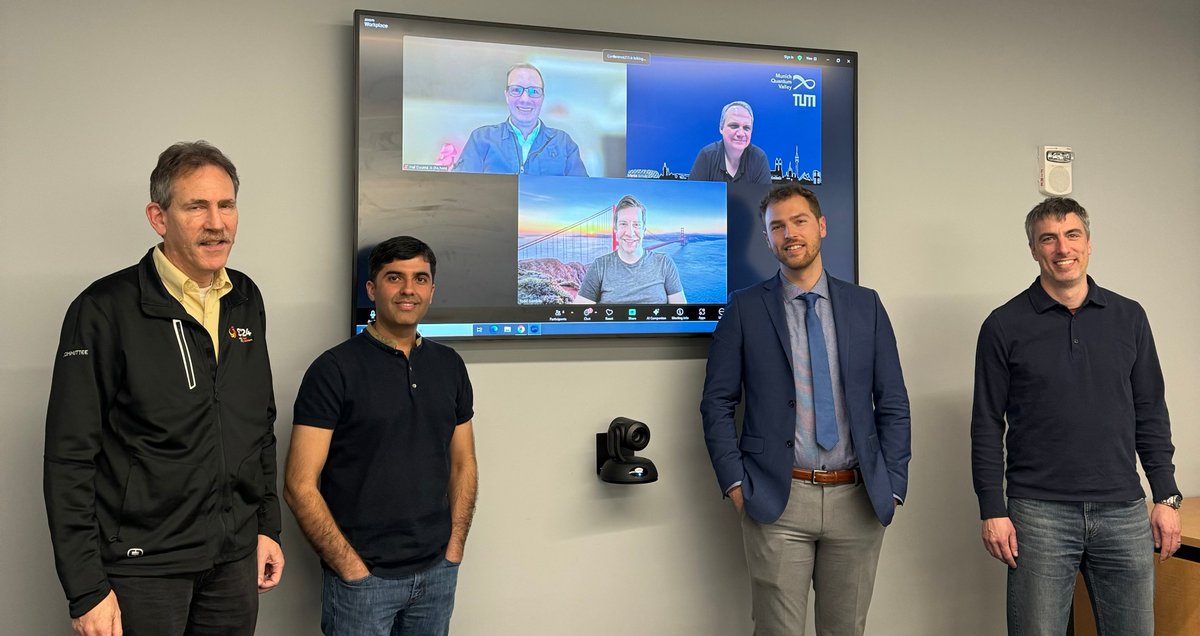
We are on a roll, second successful dissertation defense in a week (March 28)! Congratulations to @siddharth_3773 on becoming the second PhD graduate from PSSG!!
Dissertation title: "Optimizing Communication in Parallel Deep Learning on Exascale-class Machines"
#HPC#AI#HPC4AI
We present our very first newly minted Dr. Daniel Nichols (@DanielNichols10), who successfully defended his dissertation today. Congrats & best wishes for a bright future ahead!!
Dissertation Title: "On Learning Behaviors of Parallel Code and Systems Across Modalities"
#HPC#AI
We have a postdoc opening in our group on the intersection of HPC and AI, specifically on developing and applying Code LLMs to HPC software development. Please help us spread the word:
https://t.co/i4Gi5xPsTr
Position will remain open until filled. #HPC#AI
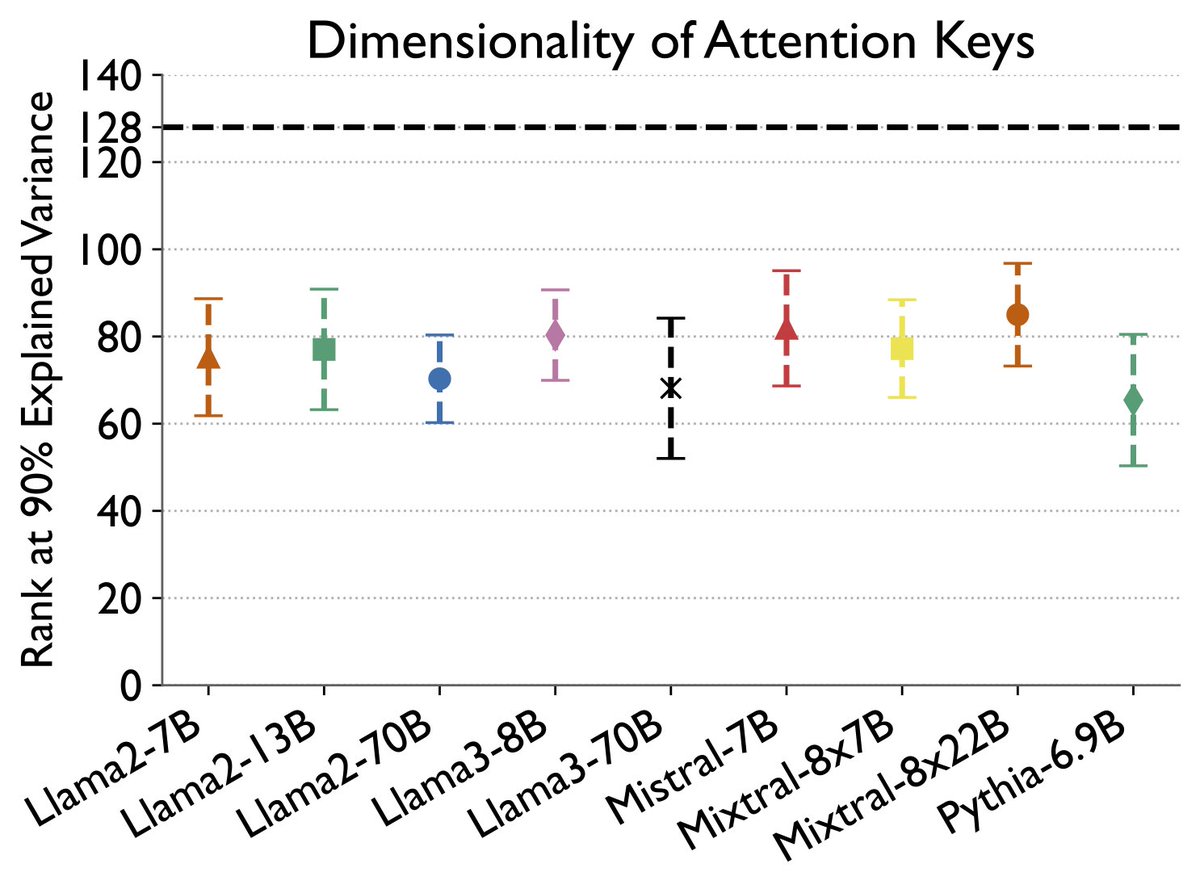
Can we get away w/ reducing attention keys to a lower-dimensional space to optimize compute during inference?
@prajwal1210 & @siddharth_3773 investigated using PCA on key vectors & found that the rank of attention keys is much lower than the full dimensionality. #NeurIPS2024
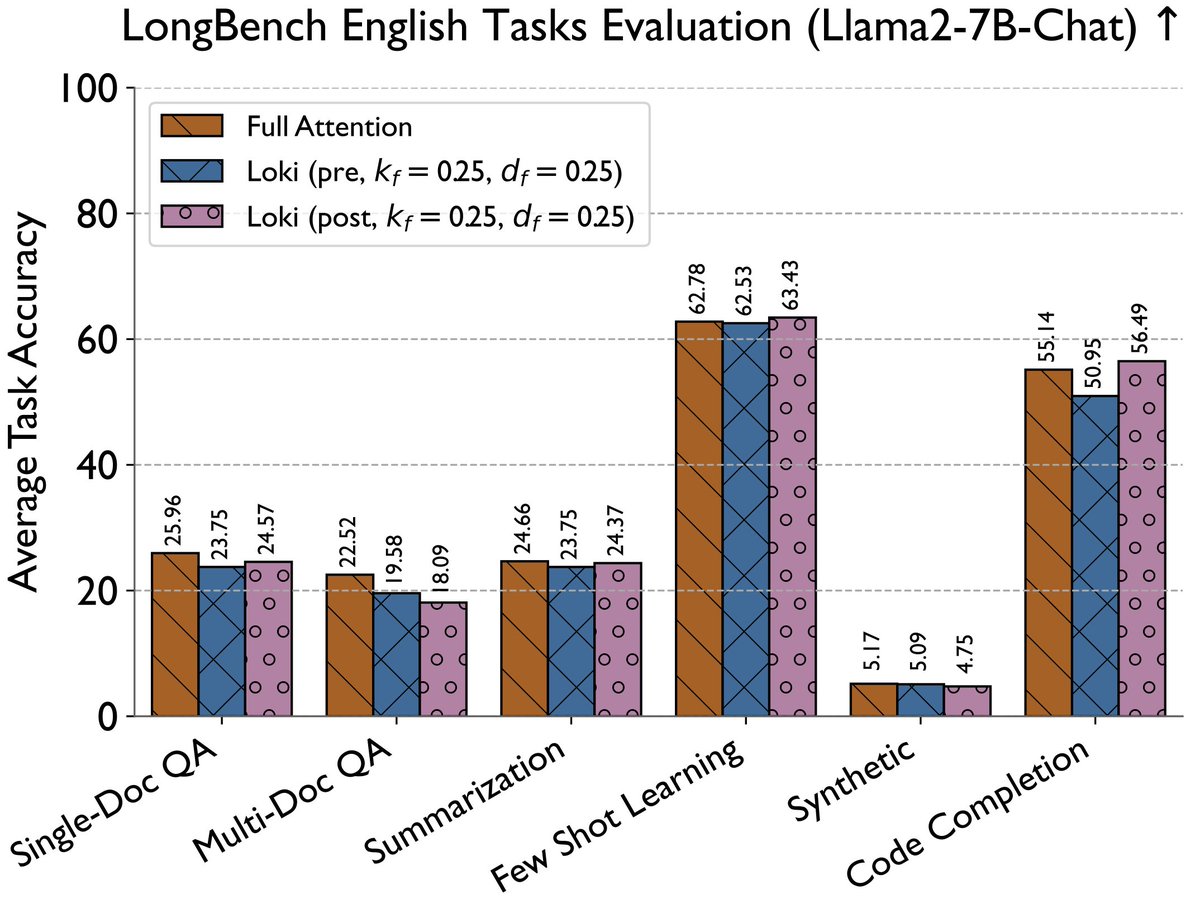
We show that our method, Loki, achieves better accuracies compared to other sparse attention methods for short-context and long-context tasks across a range of models.
Paper: https://t.co/g1wsF0hMYZ
Code: https://t.co/xxhdz73G6r
#NeurIPS2024#HPC#AI
Come see our #NeurIPS2024 poster today on"
Loki: Low-rank Keys for Efficient Sparse Attention"
Paper: https://t.co/MwRsuFYaks
Code: https://t.co/ZUMt1ped6x
Loki is a sparse attention method that reduces the computational and memory costs of LLM inference! By exploiting the low-dimensional space of key vectors in self-attention, Loki achieves faster attention computation without compromising model performance.