On this day in 1820, the Nantucket whaleship Essex, commanded by George Pollard Jr., was struck twice by a sperm whale while hunting in the Pacific Ocean. The ship sank, leaving its 20 crewmen in three small whaleboats.
Over the next three months, the men faced starvation and exposure. Some resorted to cannibalism. Only eight survived.
Owen Chase, the ship’s first mate and one of the survivors, published an account of the disaster in 1821. His narrative helped inspire Herman Melville’s Moby-Dick, published in 1851.
I’m linking to a digital facsimile of Chase’s original 1821 account, made available by the University of Nebraska–Lincoln.
For a modern account of the disaster, I highly recommend @natphilbrick ‘s In the Heart of the Sea: The Tragedy of the Whaleship Essex.
https://t.co/bkQbXv9yvA
Don't think I've ever seen this mythological origin for the name "England" before, listed alongside the usual ones by a French author in 1654:
"Those who take the ladies’ side say that Angela, Queen of the Saxons, drove out the giants who then inhabited the island and divided the lands among her soldiers.
To make her victory famous to posterity, she kept nothing for herself except the honour of having given her name to a province where she could lay down the law.
On this day in 1600, Charles I was born in Dunfermline, Scotland.
His reign descended into civil war and ended with his execution in 1649.
In a conversation with @tylercowen , historian @hrcastor , drew a connection between Charles I and Richard II that I found interesting.
When Richard was deposed in 1399, his opponents drew up 33 articles accusing him of abusing royal power and violating his coronation oath. More than two centuries later, those same articles were being discussed by men challenging Charles’s authority.
At the Putney Debates in 1647, Colonel Thomas Rainsborough cited Richard’s deposition while debating whether a king could refuse laws proposed by Parliament.
Henry Ireton replied:
“I have seen the Articles of Richard the Second, and it is strange that the Parliament should not insist upon that.”
https://t.co/I8oYfhegVR
On the front line Margaret is about to find out which friends (and relations) have her back, and which will do their best impression of Brave Sir Robin…
Link ⬇️
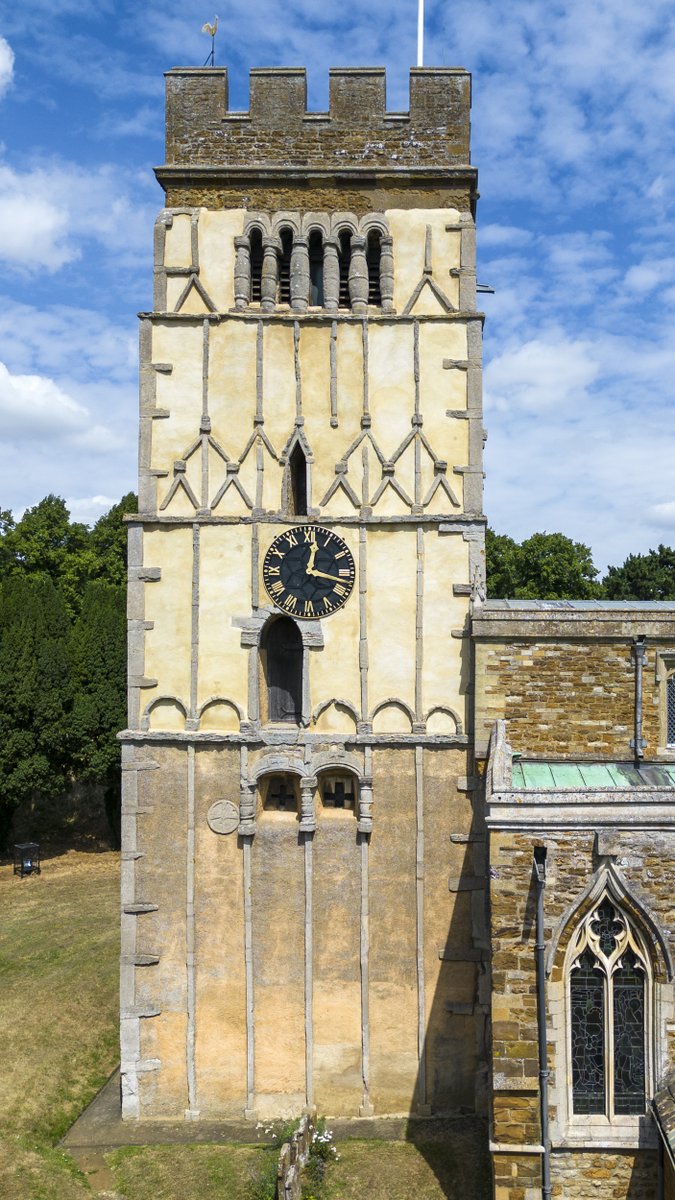
Stone speaking the language of wood. Earls Barton’s extraordinary Anglo-Saxon tower is a remarkable survival, now in my Treasure Hoard Gazetteer. Lots more 📸 👉 https://t.co/KG0nBeZyUp
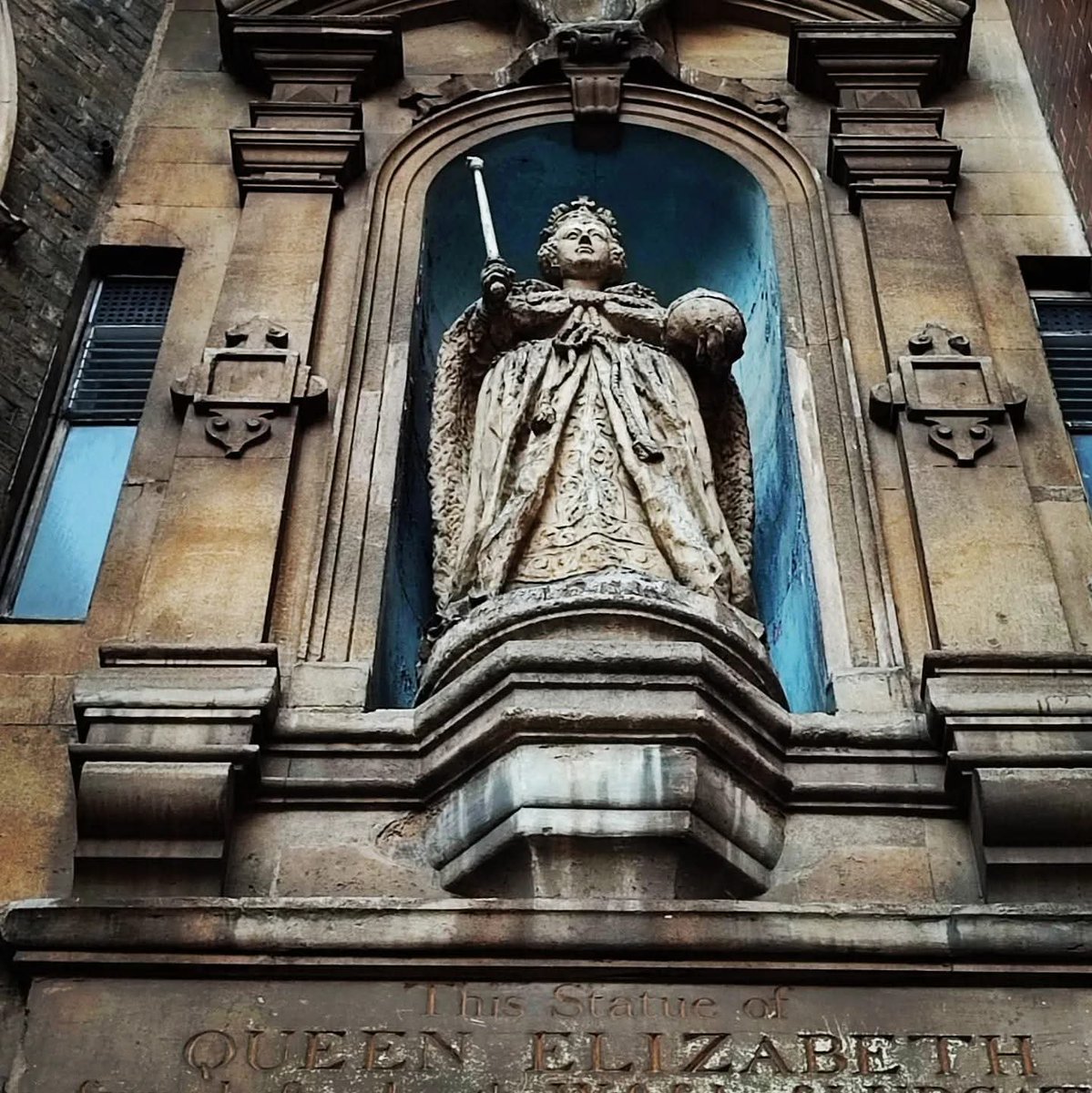
Follow on from my last post, also at St-Dunstan-in-the-West church is a statue of Elizabeth I. It's thought to have been carved in 1586 and is the only surviving statue of her created during her lifetime. This was also on Ludgate before it was demolished in 1760.
Lunch at one of the Inns of Court in 1710 horrified a German visitor:
"the eating here is just as slovenly as in the colleges at Oxford. The table had just been laid, with wooden plates and green earthenware pots to throw the bones into. There were no napkins, and the tablecloth looked as if a sow had given birth on it.
We had no wish to eat with them, so we hurried off to see the library."
Difficult to fit curvilinear tracery into a circle, so the rose window in the south transept at Lincoln (the Bishop's Eye c.1330) is quite an achievement. The masons abandoned the usual 4 lines of symmetry through a central point, creating 2 mirrored lozenges with dense tracery
Remarkable east window (1463) is by John Prudde of Westminster, Henry VI’s glazier. Window glass is vandalised by Puritans in 1643, and some figures reconstituted from fragments. left photo is Richard Beauchamp but his head is female, believed to be his wife’s
St. Mary’s Warwick
For over 20 years, I’ve photographed this oak screen at Beverley Minster. Last week, whilst sketching an outline of it, sunlight reached behind the cusping, revealing a face I’d never seen.