Claude Opus 5.5 just cooked a 20-person motion studio...
these are the 20 skills I actually use with Opus 5.5 for video, design, 3D, motion and gamedev. 770K+ github stars between them:
VIDEO
┣ hyperframes · write HTML, get a video (81K★)
┃ ┗ https://t.co/XpVR9XGwpP
┣ openmontage · full agentic video studio, 12 pipelines (79K★)
┃ ┗ https://t.co/gktEo3Ojny
┣ video-shotcraft · cinematic product promos (18K★)
┃ ┗ https://t.co/7GrAu9LQza
┗ remotion skills · the official one, videos in react (6.7K★)
┗ https://t.co/qNx47iqlcr
DESIGN
┣ anthropic skills · frontend-design, canvas, algorithmic art (190K★)
┃ ┗ https://t.co/m27vukRKTG
┣ impeccable · /polish /bolder /critique, kills AI slop (107K★)
┃ ┗ https://t.co/cyuTTrq4jx
┣ open-design · open-source AI design workspace (107K★)
┃ ┗ https://t.co/mdMa5u0Vo9
┗ hallmark · design that refuses to look AI-made (51K★)
┗ https://t.co/ddjFOfJZkT
3D
┣ blender mcp · claude drives blender, whole scenes (34K★)
┃ ┗ https://t.co/RwV0A519q4
┣ anatomy · any idea as a real working 3D object (26K★)
┃ ┗ https://t.co/cnDmCatIrK
┣ unity mcp · claude runs the unity editor (16K★)
┃ ┗ https://t.co/ARcM0kaGRR
┗ blender-skills · 94 skills, blockout → export (2.3K★)
┗ https://t.co/LuqnxOAYg1
MOTION
┣ gsap skills · official easing, timelines, scroll (18K★)
┃ ┗ https://t.co/DyH2wWqJ1A
┣ anything2explainer · topic in, narrated explainer out (3.2K★)
┃ ┗ https://t.co/Su7UUUVkBT
┣ oil-motion · animation that follows scroll + mouse (2.9K★)
┃ ┗ https://t.co/g0fpbs7oWe
┗ herk edit kit · cut dead air, edit reels + shorts (2.7K★)
┗ https://t.co/VZPKE9Ouyo
GAMES
┣ universal-modder · mod any PC game you own (9.5K★)
┃ ┗ https://t.co/u8XHTgjK9o
┣ gamedev skills · 77 skills, godot to three.js (7.9K★)
┃ ┗ https://t.co/fCnv1h4L3f
┣ pixelfx · 244 pixel effects in code (6.2K★)
┃ ┗ https://t.co/oJfE8LomCt
┗ sprite-gen · game sprites + animation atlases (3.9K★)
┗ https://t.co/RwCxfpR4nr
all open source. the 3D scene on each card is mine, fully rendered in blender for that skill
🚨 ANTHROPIC ACABA DE REGALAR EL MANUAL PARA MONTAR UNA EMPRESA SIN EMPLEADOS
taller gratuito sobre cómo construir un negocio operado por agentes de IA.
nada de chatear con la IA. agentes que se activan solos y ejecutan el trabajo sin intervención humana.
→ se lanzan con un horario, una llamada o un evento de GitHub
→ corren en la nube aunque apagues el ordenador
→ gratis
→ subtitulado al español
resultado: tareas que antes hacías a mano cada día, ahora las hace un agente por su cuenta.
🔖 guárdalo, te va a servir.
THIS IS F*CKING GOLDMINE
Opus 5.5 + Blender + Remotion = your own character animation studio that you can use to earn $$$
tiny worlds. expressive characters. cinematic camera moves.
character idea → editable 3D scene → animated film
steal the full stack ↓
01 give Claude a director’s brief
one character. one setting. one visual joke
specify the shots, expressions, camera moves and final pose before building the scene
02 connect Claude Code to Blender
MCP for Blender lets Claude inspect the scene and write Blender Python
with Blender + uv installed:
- `claude mcp add blender uvx mcp-for-blender`
- `uvx mcp-for-blender install-addon`
enable the addon in Blender and start its server
▸MCP for Blender
https://t.co/Io3qbXf2gW
03 build + animate
Blender handles the scene, rigging, keyframes and character animation
block the keyboard and character first. then add the walk, eye movements, glass and close-ups
▸Blender animation tools
https://t.co/VL0T7jPYlH
04 light the world
Poly Haven supplies CC0 HDRIs, textures and models
give the glass something to reflect. keep the character readable against the background
▸Poly Haven
https://t.co/kdUKzzD3AA
05 finish the film
Remotion assembles the rendered footage, titles and audio into a reusable composition
add the official agent guidance inside your video project:
`npx skills add remotion-dev/skills`
▸Remotion Skills
https://t.co/bxBzSKDCsP
06 export + check
FFmpeg for the delivery file
watch the actual MP4, check the sound and keep the editable scene + project
▸FFmpeg
https://t.co/Y2Dc6luI2I
the loop:
brief → scene → character → materials → light → camera → preview → render → edit → export
the clip is the visual reference. the animated console breaks down a workflow for building this kind of scene
save this, then read the full guide for Opus 5.5 Motion Engineering ↓
Andrej Karpathy calls his LLM wiki a compiler, not a storage system. this diagram shows the architecture he laid out.
Think of one thing you saved last month. could you use it today? a second brain usually starts as a filing cabinet: notes go in, you search when you need one, and the pile grows without ever getting smarter.
Retrieval answers questions. compilation builds understanding. a compiled wiki is built for the second one.
raw/ keeps your sources exactly as they came in: unstructured, untouched, the ground truth. wiki/ is where the model turns them into structured, linked, lasting pages. you read it, the model writes it. output/ is where finished work lands, built from the wiki instead of from memory.
In the center sits CLAUDE.md, with who you are, what you prefer and what you're building. the model loads it at the start of every session, so Claude already knows you before your first message and you stop briefing it from scratch.
Then the loop closes. every new source gets ingested, compiled, linked and merged into what's already there, so the system gets better with every cycle.
Five automations run that loop. ingest captures and extracts the sources, write retrieves and drafts from the wiki, manage ties decisions to their context, review summarizes and reflects, and maintain prunes whatever has gone stale.
The first version takes about 20 minutes to set up. give it a year, and the cabinet is just bigger, while the compiled wiki is something you can actually think with.
Save this before you build yours.
A LA MIERDA EL VIBE-CODING!
FUE BONITO MIENTRAS DURÓ:
2025 - 2026🪦
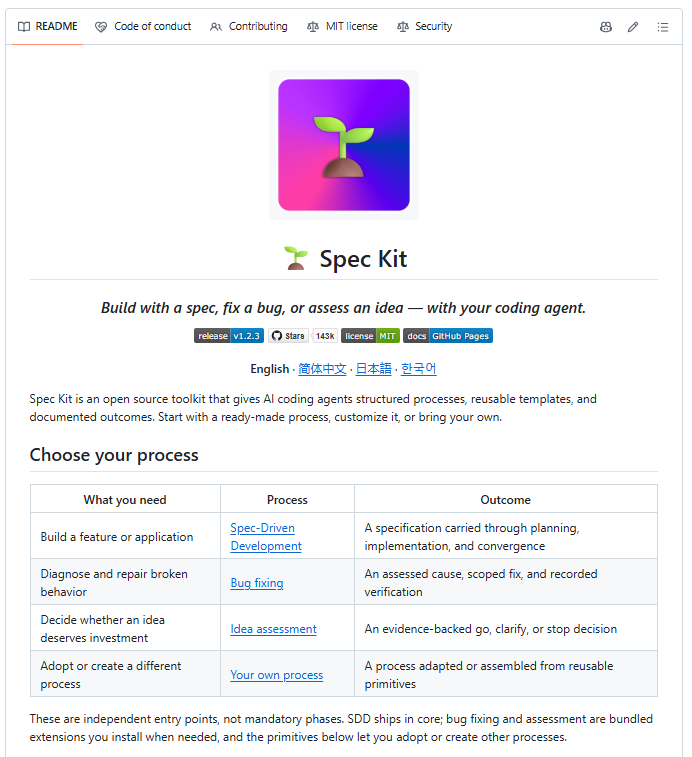
GitHub ha sacado spec-kit
La idea: dejas de pedirle cosas al agente a lo loco y escribes primero la especificación.
Luego el agente la ejecuta.
El flujo son 5 comandos:
/speckit.constitution → los principios de tu proyecto
/speckit.specify → qué quieres construir
/speckit.plan → stack y arquitectura
/speckit.tasks → lista de tareas real
/speckit.implement → lo construye
Funciona con 30+ agentes:
- Copilot,
- Claude
- Codex
- Cursor
y muuuuchos más.
Link al repo en los comentarios👇🏼
🚨 ADIÓS A ELEVENLABS
Un desarrollador ha creado una alternativa open source para clonar voces, doblar vídeos y generar audio desde tu propio ordenador.
Se llama VoiceStudio y es una locura.
Te permite:
→ Clonar voces desde un clip de referencia
→ Doblar vídeos a otros idiomas
→ Generar audiolibros y locuciones
→ Transcribir audio a texto
→ Elegir entre múltiples motores de texto a voz
Todo desde una misma herramienta.
Y lo mejor: puedes ejecutar los modelos compatibles localmente, sin depender de una API externa para cada generación.
El proyecto está en GitHub.
Guárdate esto, vas a querer probarlo.
Link abajo 👇
ESTO ES UNA MINA DE ORO
Anthropic ha publicado +400 agentes y skills listos para usar en casi cualquier tarea:
→ https://t.co/wS5zUp2UCP (158k estrellas)
Unos 170 agentes organizados como una empresa: ingeniería, diseño, marketing, ventas, producto, testing, seguridad y soporte.
Con packs adicionales para finanzas, salud y desarrollo de videojuegos.
Compatible con más de 15 herramientas.
→ https://t.co/Sq06TTjnjT (40k estrellas)
202 agentes, 184 skills y 105 comandos repartidos en 94 plugins para Claude Code.
Especialistas en lenguajes de programación, revisión de código, depuración, infraestructura, seguridad y testing.
Instala solo los plugins que necesites.
→ https://t.co/bxPVYAgagZ (26k estrellas)
Los plugins del propio Anthropic, organizados por áreas de trabajo: ventas, atención al cliente, gestión de producto, marketing, legal, finanzas y datos.
→ https://t.co/W6Z5VPlR2p (18k estrellas)
Agentes oficiales que puedes poner en marcha: un resumen diario de Slack y GitHub, clasificación programada de incidencias de Sentry, bots para Slack y Linear, un agente de atención al cliente y un analista de datos financieros.
→ https://t.co/IOtiSh372n (103k estrellas)
De ingenieros de Anthropic.
25 skills que cubren todo el ciclo de desarrollo: interview-me, redacción de especificaciones, desarrollo guiado por tests, pruebas en navegador, revisión de seguridad e integración y despliegue continuos
Yo empezaría por claude-quickstarts.
Cada agente es un ejemplo completo y funcional que puedes ejecutar y desmontar para entender cómo funciona.
Aprovecha estos recursos oficiales gratuitos para tus próximos proyectos👇
this is pure f*cking gold for anyone running coding agents
Jev founder Diogo Amogo wrote a PDF on building a Jev harness
what their tests show:
> up to 200x faster
> up to 400x cheaper
the model hasn't been the bottleneck for a while
speed and cost both come from the harness you wrap around it
• how to use it
> give this PDF and the article below to Claude Code or Codex
> ask it to rebuild its own setup around Jev
• how it turns into a promotion
> pick the agent workflow your team pays the most for
> rebuild it in one evening
> bring the before and after bill to your manager
one evening of Jev engineering, and next week you're the one running a harness most teams haven't built yet
How to build automations with Claude Managed Agents: https://t.co/uvNMfZ4vwB
Deploy an agent that reads Slack/GitHub on a schedule (with credentials and memory) and posts updates. You can set it up with a Claude Code command and use the new API credits included in Max and Team.
Anthropic engineers just shared the agent setup they use at Anthropic to keep up with their work
It’s a reference architecture for any agent that runs on a cron with nobody watching.
Here’s how it works: on a schedule, an agent on Claude Managed Agents wakes up, reads every source you gave it, and posts a short brief with only what needs your attention today.
The interesting part is how they managed to avoid the usual ways these automations break.
Memory: every run starts in a fresh sandbox, so everything lives in two stores. Preferences are read-only and re-read every run, so your rule changes apply the next morning. State is the agent’s own: a bookmark with the newest item it saw per source, and a ledger with a stable ID for everything it already reported.
Reading: it starts from the bookmark, never from “the last 24 hours”. With a time window, a late run leaves gaps and an early one sends duplicates.
Credentials: the sandbox only holds placeholders. The real tokens get swapped in as the request leaves, and only for the hosts you allowed. Nothing inside the agent can leak a key it never had.
Broken sources: if a source is down or a token expired, the run still starts, just without that source. So its bookmark stays put and the output says what couldn’t be read, instead of pretending it was a quiet day.
Posting: before sending, it checks whether today’s output already exists. A send counts only when the destination confirms it, and only then do the bookmarks move. If the result is unclear, the run gets marked “maybe posted” and nothing else changes.
What I’d copy into any agent: bookmarks plus that “maybe posted” state.
🚨Este OCR LEE LA LETRA DE LOS MÉDICOS!
Y también:
- tablas complejas
- ecuaciones matemáticas
Se llama Chandra, de Datalab.
Y es uno de los OCR más completos que he visto.
Puede procesar:
📌 Texto escrito a mano
Notas médicas, formularios rellenados, letra cursiva o poco legible.
📌 Tablas complejas
Mantiene celdas combinadas, filas y columnas. Ideal para facturas, informes financieros y PDFs con muchos datos.
📌 Fórmulas matemáticas
Convierte ecuaciones directamente a LaTeX.
📌 Formularios
Reconoce casillas, botones y valores introducidos.
📌 Documentos con diseños difíciles
Textos a varias columnas, periódicos, libros y documentos con imágenes.
Puede devolver el resultado en Markdown, HTML o JSON.
Funciona en más de 40 idiomas.
Para instalarlo:
`pip install chandra-ocr`
Es gratuito para uso personal.
Dejo el link al repo en los comentarios 👇🏻
🚨ADIÓS A LA EDICIÓN DE VIDEO
Alguien acaba de crear una herramienta de edición de video gratuita para Claude Code... y es una locura.
Literalmente solo tienes que soltar tu material sin procesar + archivos en una carpeta.
Eso es todo.
Se encarga de TODO:
• Corta los clips
• Elimina las palabras de relleno
• Añade subtítulos
• Aplica corrección de color y filtros
• Maneja animaciones
• Renderiza el video final
Sin línea de tiempo. Sin edición manual. Sin rodeos.
Honestamente, esto va más allá de herramientas como Remotion.
No solo te ayuda a crear videos… hace la edición por ti.
El proyecto es open source en GitHub.
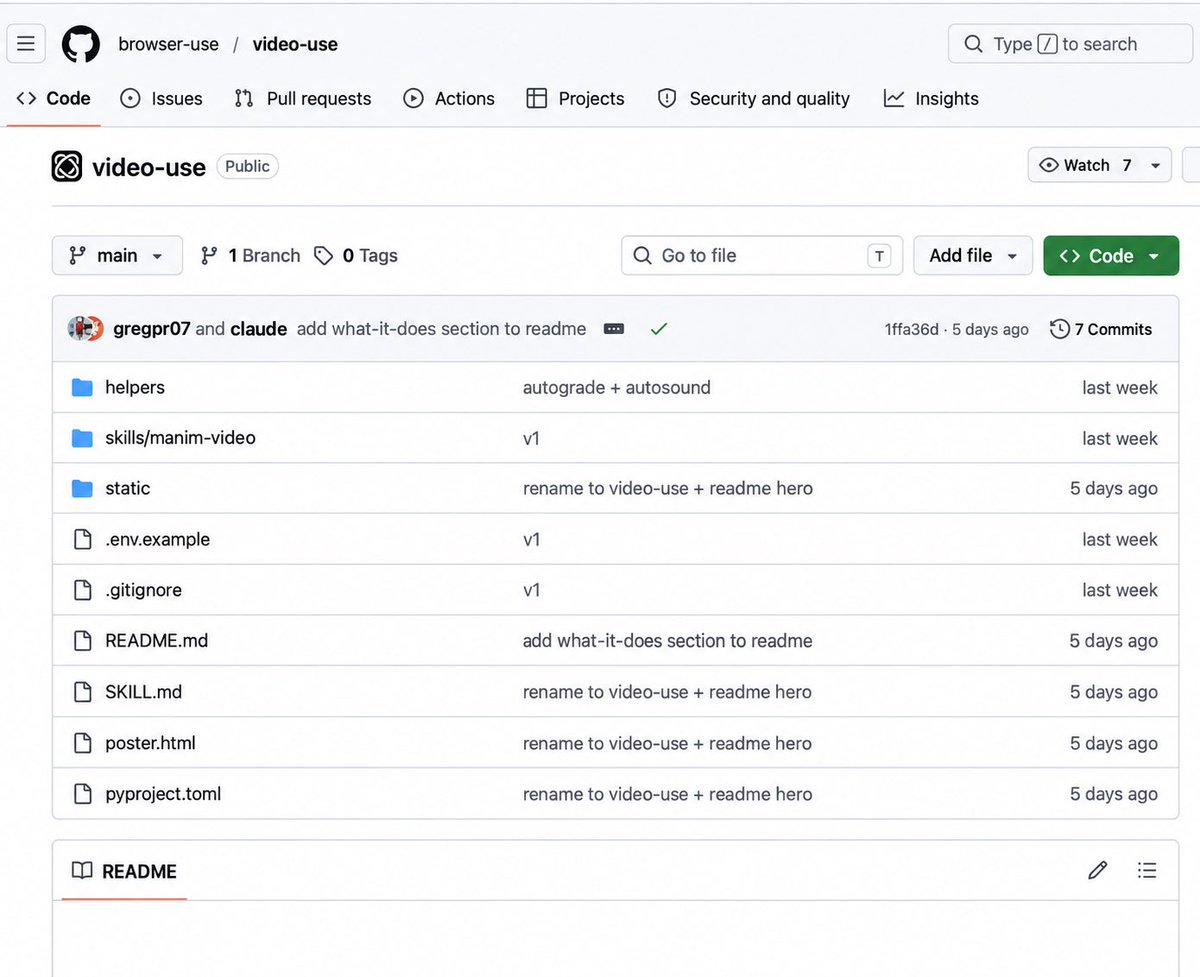
Se llama Video Use.
Link abajo👇
ESTE DOCUMENTO DE ANTHROPIC LITERALMENTE TE VA A CONSEGUIR UN ASCENSO
La forma más rápida de ascender es automatizar el trabajo que haces hoy
Esta guía técnica oficial de Anthropic explica cómo enseñarle a Claude a ejecutar tus tareas del día a día
Crea «Skills» personalizadas para que la IA se encargue del trabajo pesado:
→ convierte tus procesos habituales en instrucciones reutilizables
→ deja que el agente ejecute tareas en segundo plano
→ conéctalo a tus herramientas locales mediante servidores MCP
Delega las tareas repetitivas y dedica tu tiempo al trabajo que te puede conseguir ese ascenso
Aquí tienes la guía para hacerlo paso a paso👇
Anthropic acaba de publicar un PDF de 13 páginas sobre memoria para agentes de IA
5 capas para reducir un 90% el coste en tokens y hacer que tu agente aprenda de verdad👇
1. MEMORIA DE TRABAJO: lo que ve ahora
La ventana de contexto. Todo lo que el agente tiene delante en este momento
Cuando se llena, el contexto antiguo se pierde. La mayoría de los agentes se quedan aquí y luego nos preguntamos por qué fallan
2. MEMORIA EPISÓDICA: lo que pasó
El historial completo de interacciones, con fecha y hora
El agente recuerda que el despliegue falló el martes a las 3 de la mañana porque el script de migración tenía una errata
No tienes que explicárselo otra vez
3. MEMORIA SEMÁNTICA: lo que sabe
Hechos, entidades y relaciones guardados en un grafo de conocimiento
«El usuario prefiere TypeScript» vive aquí
Y no desaparece cuando termina la sesión
4. MEMORIA PROCEDIMENTAL: cómo hacer las cosas
El agente prueba 3 enfoques. Uno funciona
Ese método se convierte en una habilidad reutilizable
La próxima vez va directamente a lo que funcionó
5. OLVIDO: lo que debe borrar
Un agente que nunca olvida acaba acumulando contradicciones
Las preferencias antiguas se imponen a las nuevas. Te mudas de ciudad y sigue recomendándote restaurantes donde vivías antes
Recordar importa. Saber qué olvidar, también
¿El resultado?
→ Mem0 almacena 1.800 tokens por consulta en lugar de 26.000
→ Snowflake añadió una capa de ontología: un 20% más de precisión y un 39% menos de llamadas a herramientas
La memoria compensa su coste desde el primer día
Este PDF de 13 páginas marca la diferencia entre un chatbot y un agente que aprende de verdad
No lo pases de largo ↓
@JonatanDimotta@FaztTech andaba probando gemini hasta el 3.7 , pero a nivel de desarrollo de software se queda aún por detrás de claude opus 5.0 (lo mismo con gemino 3.1 pro , su modelo de razonamiento más potente) .