I am glad these results are out.
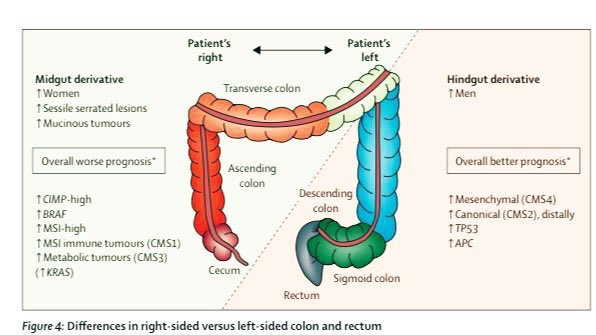
Guidelines jumped the gun on incorporating sidedness for mCRC treatment.
Insurance companies started denying therapy even when molecular data pointed otherwise..
Patients suffered.
#gi24
Just published @CCR_AACR
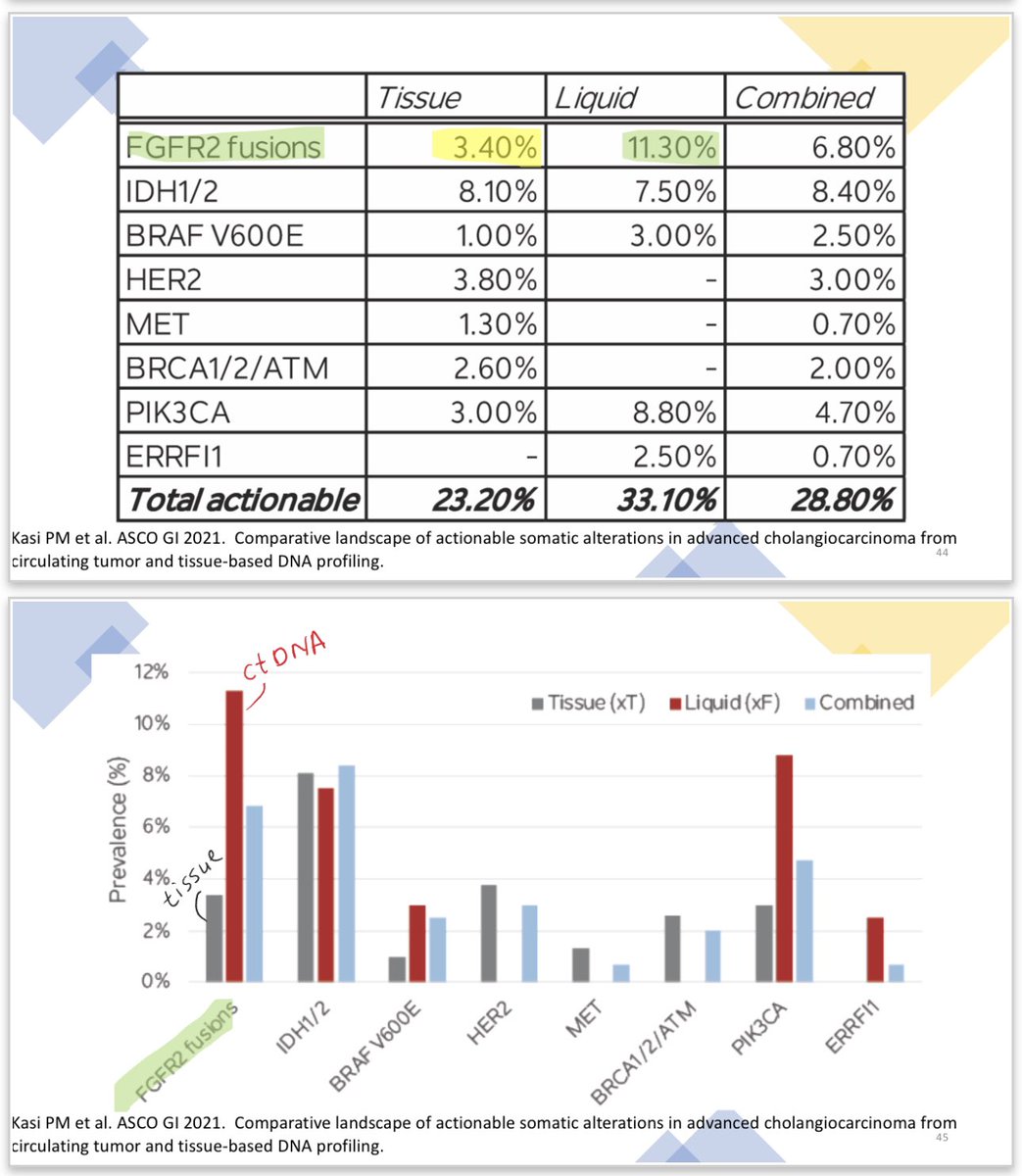
Is it a myth🐉that you can’t detect fusions on #ctDNA?
👇🏾Presenting one of the largest datasets on #LiquidBiopsies & Fusion🖇️detection
53,842 patients
1️⃣4️⃣% had a pathogenic rearrangement detected
Shedding💦matters
@OncoAlert
https://t.co/1yw4j8UnFr
🎉 My first paper in JLB @isliquidbiopsy! 🤓
A pleasure to collaborate with SCRUM-Japan to describe pan-tumor bTMB 🩸concordance w TMB 🔬& identification of cancer pts w better outcomes on IO:
https://t.co/rv7sUBAsma
Thank you @arafflemd et al. for collaborating on this important work about BRAF beyond V600E (mutations and fusions): an exciting, potentially targetable biomarker that has been largely overlooked in #prostatecancer.
6.We hope our findings will fuel future exploration of targeting BRAF alts in PCa! Many thanks to @HTukachinsky & #justinhwanglab for their invaluable contributions, and a huge shout out to @EAntonarakis, @neerajaiims , & @montypal for their unwavering support and mentorship 🙏🏼
The level of circulating tumor DNA (ctDNA) shed by a patient’s specific tumor informs the accuracy of blood-based CGP test results. Through a tumor fraction algorithm, our scientists developed a method for quantifying ctDNA in each blood sample: https://t.co/OX9hmoup55 #ASCO23
Appreciate the kind words!
A good poster is a health hazard. We talked about liquid biopsies for over 4 hours! Had to be booted🥾out of the poster hall.
And the slow walk & ongoing questions shows the VERY HIGH enthusiasm and education needed about #ctDNA. #ASCO23@OncoAlert
@geoff_oxnard@VivekSubbiah@Relay_Tx@BrentonMar I recently heard that ALL the 3 phase-3 trials continue to have very slow accrual🚶♀️. 2 have shut down due to slow accrual!
Took these companies a long time to realize that you could enroll ctDNA➕.
1/3rd of cholangio; not enough tissue for NGS. 💡🩸 can fill the void.#ASCO23
Bravo @JoelNealMD , love this paradigm @CharuAggarwalMD has championed: early LBx 🩸🧬 based on a *clinical diagnosis* of lung cancer, in parallel to pathologic diagnosis🔬!
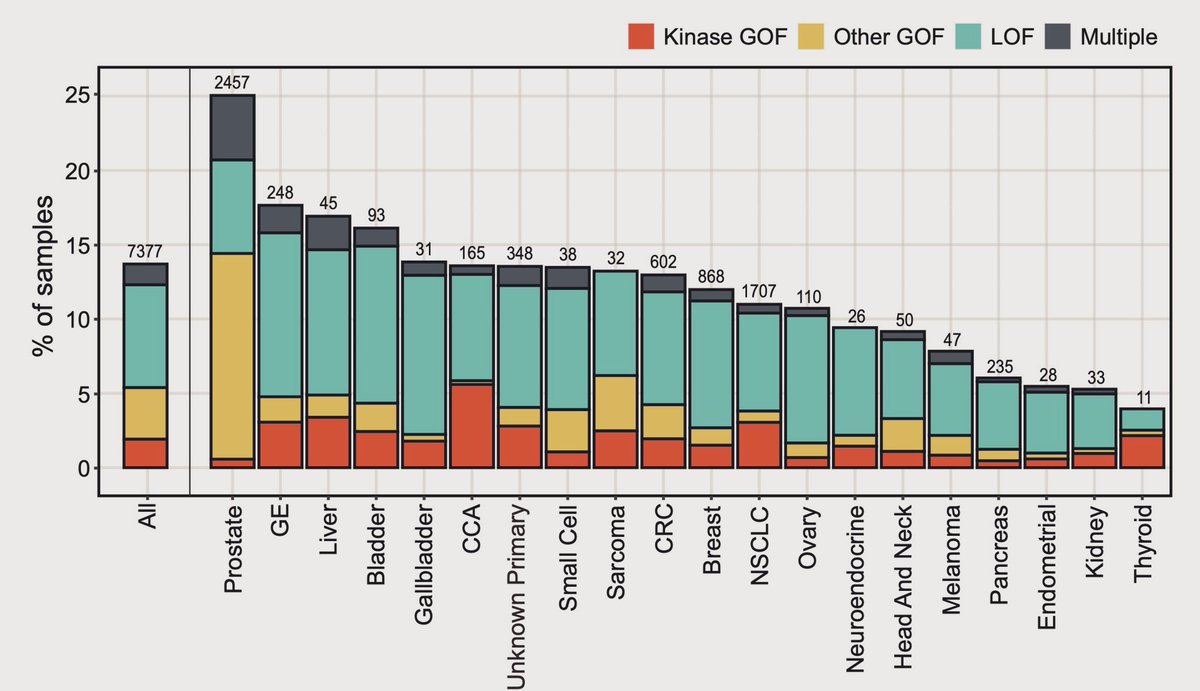
Unique spectrum of BRAF alts in prostate cancer!
👉3% BRAF activated, mostly rearrangements and K601E.
👉Diverse BRAF fusions detected both in tissue DNA (F1CDx) and liquid ctDNA (F1LCDx).
Love the teamwork here!🙌 @neerajaiims@montypal@EAntonarakis@HTukachinsky
Key takeaway 2:
In an analysis of real world data, these patients with non-companion diagnostic PIK3CA mutations derived benefit from addition of alpelisib to fulvestrant (similar to the companion diagnostic mutations).
It was an honor to collaborate with @hoperugo on a study about the extended spectrum of PIK3CA mutations in #breastcancer, and the outcomes of patients with such mutations on alpelisib (Piqray) + fulvestrant. Paper published online first in @CCR_AACR: https://t.co/G7ZDxMhVsz
Key takeaway 1:
1/5 of patients with PIK3CA-mutant breast cancer do not have a PIK3CA mutation on the companion diagnostic list for alpelisib (would not be detected by PCR hotspot testing)
👀 Check out what’s popular this week in #JCOPO:
Tumor Fraction Correlates With Detection of Actionable Variants Across > 23,000 Circulating Tumor DNA Samples 👉 https://t.co/I4YrGmmyoQ @HatimHusainMD@geoff_oxnard#ctDNA#lcsm
Our manuscript went live today. APOBEC mutational signatures in ER+/HER2- breast cancer are associated with poor prognosis on SOC CDK4/6i + ET with a subset of patients responding to immune checkpoint inhibitors. https://t.co/Ov0RC6Wnhs