We had many questions today at @openmsf Stack Tour about the speed and cost of running simulations on different hardware, and we shared some older benchmark results. What a great motivation @NVIDIAHealth just gave us with cuPotential to repeat those benchmarks - yay speed!
Kidding aside, one aspect of statements by Dario ahead of Anthropic IPO is big expectations about new treatments create a statement “cliff” as they will be desperate to bring new medicines forward to deliver.
Side note- it’s irksome that these tech CEOs pump everything while biotech CEOs aren’t even supposed to acknowledge (eg like) posts congratulating them during the quiet period leading into pricing & have to write (and say) tortured sentences like “We believe our potential investigational product candidate may commence a potentially registration enabling study next year but there can be no assurance such a study will ever happen or that it will support registration” instead of “We plan to start a pivotal study next year”
I think that would be amazing and I think it’s not likely. The map of biology is still largely a blank page and randomized human proof is the long pole in the tent. I am excited about the use of AI in our sector but progress will likely be steady and incremental.
We’ve won our 4th consecutive OpenADMET Blind Challenge, coming ahead of 270 entrants, this time for predicting CYP direct inhibition.
Why do we keep winning? The short answer is our data, but it goes deeper than that.
Our goal at Inductive is to build superhuman chemical intelligence. In chemistry, the most valuable data remains orders of magnitude slower and more expensive to generate than in domains like coding and math, which have benefited from the near-infinite scalability of compute and reliable verification.
Because of this cost, any strategy for building chemical intelligence that relies on brute force data generation alone – even if you have billions of dollars to spend – will lose to a strategy that also aggregates data already being generated as part of economically valuable work.
That’s why, from the start, we’ve built products and services that generate immense value to drug discovery scientists while building a consortium to access large amounts of diverse, experimentally relevant chemistry data as a byproduct. That data enables us to build better models for the drug hunters we work with.
Doing this effectively requires trust from scientists who have decades of scar tissue dealing with the unending complexities of biology while being told again and again by Silicon Valley that technology is about to change everything. Earning that trust has taken years, and we take it seriously.
It’s also in the DNA of our team, where the best ML scientists and software engineers I know work with veteran drug discovery scientists. Together, we dream big while simultaneously thinking pragmatically about how to improve drug discovery today.
Thank you to OpenADMET for organizing yet another well-run competition and thank you to our customers for continuing to trust us to support their drug programs.
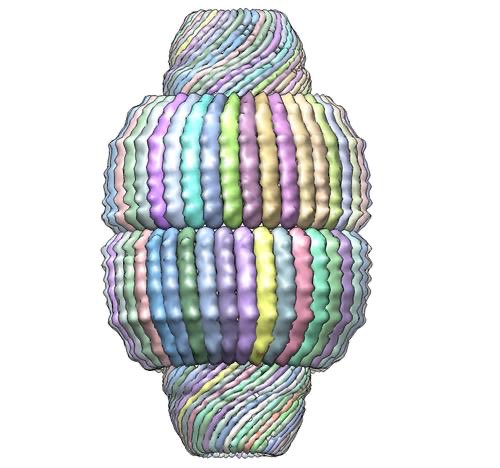
Vaults!
Love to see @AnthropicAI pointing Claude at big biological mysteries.
Near-ubiquitous, but functional orphans. Such an enigma. D39 symmetry. No mouse KO phenotype to date. I promised myself I’d never work on them
@A_May_MD Shock horror someone working on a really hard problem with enormous potential benefit to patients used a CRO! And consultants! SOP for many companies.
Surprise 1: Anthropic acquired a one-person biotech
.
.
.
Surprise 2: that person is me
Surprise 3: I���m here to tell you all about it
Yes, this is what you think it is; after 6 yrs of increasingly loose anonymity: the Professor Oak reveal post
…and yes, it has gotten so boring around here that I’m literally doxxing myself to spice up the timeline
-------
Ok, allow me to introduce myself. My name is Cody Tranbarger. I mostly tweet, but occasionally find time to dabble in drug dev & starting/building biotechs. My past lives span the VC, crossover, startup continuum; Prof Oak has been my way of keeping a digital foot in those worlds, despite having my physical feet planted elsewhere.
The past 18 mo, ‘elsewhere’ was Mithril Medicine, a co. I founded to develop bsAbs for LAMA2-CMD & other ECM-related genetic diseases.
Mithril was born out of hands-on building with @MikeNGladstone, @JasonPaulRhodes, @LifeSciVC, & team @atlasventure. Somehow, I made enough half-decent calls along the way (even a broken clock is right twice a day, eh?) to convince them Mithril/I warranted a small seed. While I can hardly rationalize such an outrageously cavalier bet, I’m grateful for it, & I'd partner with Atlas again in a heartbeat.
In typical AV fashion, Mithril’s primordial form was virtual, decentralized, & ultra-lean. This stage tends to be short-lived, but for Mithril, it worked surprisingly well, for surprisingly long, thanks in part to the rapid maturation of the AI tools I used liberally.
Eventually, Mithril became a bit of an experiment itself - to find the upper bound of how far it could scale as a single operator + a bunch of Claude (+ a stellar bench of part-time consultants).
In parallel, I started spending time with @nc_frey, @an1lam, & @CoefficientBio team; and promptly experienced, for the 1st time, AI at the frontier. Soon thereafter, Mithril stopped looking like an experiment, & started looking like a preview of an entirely new operating model.
From that spark came “Pipeline-in-a-Person.” The idea immediately resonated when we shared it here back in April; and it was central to the shared vision that led to Anthropic’s acquisition of Mithril, & my joining the team.
Why join Anthropic? Three reasons.
(1) For Mithril, the programs continue, with more resources & infrastructure behind them, and as much Claude as I can put to work.
(2) For me, the chance to start several more programs, & find out how many one person can actually run in parallel - an almost unprecedented luxury for a curious drug hunter.
(3) For our mission, a path to institutionalize & scale this new way of working, then put it in the hands of all of biopharma, all over the world - which, candidly, I find the most energizing.
Will AI x Bio cure diseases? Unequivocally yes, imo… but not by the route that gets the most airtime. Rather than timeline acceleration & compression, I see orchestration & parallelization as today's low-hanging fruit.
Most drug hunters see a handful of go/no-go calls in a career, & spend entirely too much of the rest trading emails (my inbox can attest).
Give them the bandwidth to run several programs at once, and the time to focus on scientific judgment, and I’m willing to bet they’ll make better calls. And at scale, better calls translate to more drugs, higher hit rates, broader patient impact, & likely, a disease or 10 or 100 cured. I couldn't be more excited to build toward that future @AnthropicAI.
Finally, a heartfelt thank you to BioTwitter/X. The end of anonymity is bittersweet, but if anyone’s earned a proper introduction, you all have.
It’s difficult to overstate how much this app has done for me: a decade of education, plenty of friends, many job opportunities, several mentors, a few investors, even a co-founder (fmr). It was the generosity of this community that inspired me to start posting 6 years ago, after just as many years lurking. I hope I’ve been able to pay it forward, in my own small way.
But, to be clear, Prof Oak isn’t going anywhere. Same beat, same themes, and now, a front-row seat to drug development at the frontier. Stay tuned for dispatches from the trenches; and remember...
Gotta Cure 'Em All
There’s a really pronounced divide between people who are on the AI side of things and people who are on the biology side of things. Even among people working in AI, the divide persists based on where they’re focused.
The AI side, adherents of scaling laws and the bitter lesson, believe that AI getting better means AI being more capable of novel discoveries in medicine (that go beyond discovering new drugs in well understood targets or speeding up dry lab work etc).
The biology people think the idea of a bitter lesson in biology is kind of ridiculous and that regardless of AI’s capabilities it’s going to be at least 5-10 years until you could hope to reliably simulate human toxicology in silico (right now AI/ML can’t even reliably simulate in vivo studies like binding affinities or functional assays).
Even the most AI pilled of them, who will list all the areas that AI can reduce the time spent on various areas, don’t think the concept of AI discovering novel targets or generating new understanding of causal biology is realistic in the near term. Most, in fact, will readily characterize the assumption that even an “ASI” level model could find cures hidden in our current understanding (without expanding that understanding with significantly more biological data) as patently false.
This was a big part of why we wanted to experience it ourselves by using AI for a (very) small portion of what it can do in biology. It was both mind blowing and revealed some poignant insights into how different the problem of making AI better at something like coding is to the problems of biology.
Even if it unlocked the ability to generate new molecules at a stunning pace, its simulation (in silico) of binding only had 49% accuracy. And if we wanted to improve that, we’d need to feed it back the data from the lab - data that took about 30x as long to get as it took to generate the molecules. And these were tests in a test tube (turn of phrase), imagine how long it would take if we wanted to improve the model with data that required recruiting humans and monitoring their reactions.
Human biology is very complex, and adding a drug - especially a novel drug and doubly so for a novel drug acting on a novel mechanism - means mapping interactions that have nth-order-effects that we don’t have the data to predict. Virtual cells have made advancements enabled by AI, but the perturbations equate to a small fraction of the possible.
This is before you even get into curing disease, especially uniquely human diseases. Brain function involves cellular identities that are unique to humans, meaning animal studies are of little use.
How long does it take to understand what the side effects of chronic administration of a drug in humans are? AI can speed up analyzing the data, or designing the trial or even getting it approved…but it can’t make a 6 month trial complete in 3 months.
I think its important to point out that significant advancements can be made in AI that contribute to biology, while also being realistic about how much it speeds up something as complex as curing a specific cancer or diseases of the brain.
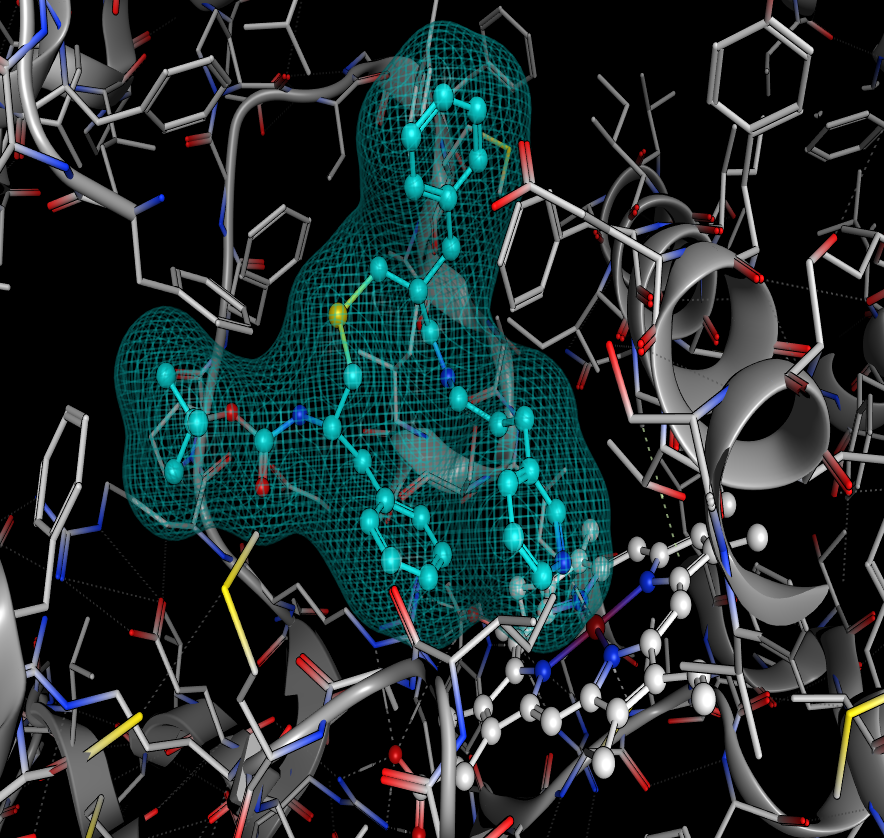
Retro and lessons learned on the structure track of the OpenADMET PXR challenge, where teams had to predict poses in a notoriously large, flexible and promiscuous binding pocket on >150 unpublished structures.
https://t.co/8WjyJtbZkb