🏅 Last night in London, @CatherineBelton presented me with the 2026 Magnitsky Human Rights Award for Outstanding Journalist for my reporting on Orbán’s collusion with the Kremlin and his regime’s smear campaign against me. Thank you, Catherine, @Billbrowder and @GMJCampaign! 🙏
1/ Detransitioners are asking to be witnesses at the scrutiny committee for the draconian conversion ban.
In this thread I will set out the criminal law basis for why they should be with an explanation of how the bill is legally relevant to them and the committee.
Proud to announce my latest addition to the RADS Classification Scheme, standardising our approach to colleagues, reducing ambiguity, informing referring clinicians
COCK-RADS™
Whilst lacking true empirical data, I feel it would happily sit within the @RadiologyACR’s scheme
We are shocked the Nobel went to Navi Pillay. She called to sanction Israel before leading a UN inquiry into it—then backed a colleague’s “Jewish lobby” remark. The prize should uphold impartiality and reject antisemitism—not reward those who subvert both. https://t.co/cxK6vQmz8c
In the dead of night at Bergen-Belsen concentration camp, a garbage truck stopped behind a women’s barracks. Its cargo was not trash.
One by one, 54 children were dumped into the freezing mud before the truck drove away, leaving them crying in the darkness.
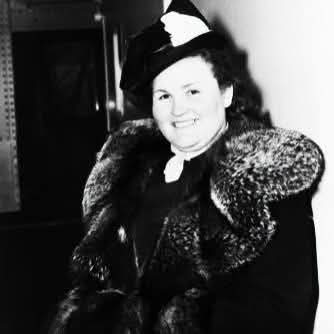
Inside the barracks, 26-year-old Luba Tryszynska heard the commotion through the thin walls. A former nurse from Kamenets-Litovsk, she had arrived at Bergen-Belsen only weeks earlier. When she stepped outside, she found terrified children between the ages of four and twelve.
Earlier that day, their mothers had been separated from them and transported to another camp near Hamburg. The children had been loaded onto a different vehicle, driven around for hours while officials decided their fate, and ultimately abandoned like unwanted cargo.
For Luba, the sight was unbearable.
Two years earlier, at Auschwitz, she had been forced to watch her own family disappear. During the selection process, an SS guard noticed her young son, Isaac. Knowing mothers with small children were often sent directly to the gas chambers, Luba’s mother-in-law pulled the boy from her arms in a desperate attempt to save her life.
Isaac, her husband Hersch, and her mother-in-law were all taken away. None returned.
Luba survived, but the loss haunted her every day. She often wondered why she had been spared when the people she loved most had not.
That night at Bergen-Belsen, standing before dozens of abandoned children, she finally found a purpose for her survival.
Without hesitation, she gathered the children and brought them inside. The other prisoners were terrified. Sheltering children could have resulted in severe punishment or death for everyone in the barracks.
Luba did it anyway.
She arranged bunks for them, tucked the youngest children into the safest corners, and reassured them with quiet words:
“You’re safe now. Stay quiet, and I’ll take care of you.”
Then she took an even greater risk.
Luba approached Fritz Klein, an SS doctor at the camp, and told him directly that she intended to keep the children hidden and under her care. Against all expectations, Klein agreed and allowed her to use a separate wooden hut.
Why he consented remains unclear.
With that small concession, Luba created something almost unimaginable inside one of the most horrific places on earth: a refuge for children.
Over the next four months, she and a handful of other women worked tirelessly to keep them alive. Hermina Krantz, a Slovak prisoner, helped clean and prepare whatever scraps of food could be found. Dr. Ada Bimko, another prisoner, cared for the sick and injured.
Luba became the heart of the operation.
Every day she searched for food, traded possessions, begged for supplies, and sometimes stole whatever was necessary to feed the children. Bread, water, bits of soup, and occasionally milk became precious treasures.
Remarkably, some German guards even began assisting her. They quietly provided firewood, extra bread, and on one occasion, an entire bucket of fresh milk.
As the months passed, more orphaned children arrived.
By April 1945, Luba was caring for 94 children, including an infant less than a year old.
Then, on April 15, British troops liberated Bergen-Belsen.
The soldiers entered a camp filled with death, disease, and starvation. Everywhere they looked were bodies and prisoners barely clinging to life.
But when they opened the door to Luba’s hut, they encountered something extraordinary.
Inside were dozens of children who had survived.
A British officer reportedly asked who was responsible for them.
Luba stepped forward and answered simply:
“I am.”
Thanks to her determination, nearly all of those children lived through the war.
After liberation, she personally helped return many of the children to their home countries. Some were escorted back to the Netherlands, while others were taken to safety in Sweden.
Eventually, Luba married fellow survivor Sol Frederick and settled in Washington, D.C., where she built a new life far from the horrors she had endured.
Yet the children never forgot her.
In 1995, fifty years after the war, many of those she had saved gathered in Amsterdam for a reunion. They arrived as adults—doctors, teachers, engineers, parents, and grandparents.
One after another, they embraced the woman who had protected them when no one else would.
The child Luba lost at Auschwitz could never be replaced. The pain of that loss stayed with her forever.
But through her courage, compassion, and refusal to look away, nearly one hundred other children were given the chance to grow up, build families, and live full lives.
Luba Tryszynska passed away in 2009 at the age of 91.
Her story remains one of the most powerful reminders that even in humanity’s darkest moments, a single act of love can become a lifeline for countless others.
I was horrified to learn that in the 1950's samesex attracted people were told they were criminals and then pumped full of body altering chemicals. Thankfully nowadays, these people are told they are trans, and then pumped full of body altering chemicals. We've come so far.
Remember: The New York Times devoted a long, admiring profile to this rape denier, portraying her as “fearless.”
Albanese: “Look, there are different views on what happened on October 7th... There were fabrications, like the mass rape and other horror stories.”
The end of Viktor Orbán’s autocratic regime is a victory not just for Hungary, but for people who value democracy around the world.
Congratulations to Tisza, to incoming leader Péter Magyar, and to Hungarians everywhere.
In collaboration with @VSquare_Project, we reveal that Hungarian domestic intelligence has been using Webloc since at least 2022 and continues to use it today. This represents the first confirmation of the use of ad-based surveillance tech in Europe.
https://t.co/XwP0IFuTl5
💥INVESTIGATION: New leaked audio and call transcripts show how Budapest weaponized Hungarian minority rights in Ukraine to stall EU accession talks. Orbán’s foreign minister, Péter Szijjártó, was even tasked by Sergey Lavrov with sending EU documents. https://t.co/CO4QzMnPvf