PEOPLE DONT TRUST YOU 🫵🏼
its because you still post AI generated content on the internet in 2025
we are finally fixing this mess for you
Now you can transform your AI generated slop into human written text in less than 2 seconds
try now 👉 https://t.co/Ff2Y5H3Dmi
Phishing and social engineering are getting more sophisticated at an exponential rate due to AI.
Proton just let a phishing email go through to my inbox that I think will compromise tens of thousands of folks.
How it seems to work: someone added my email to a real Google Group. They then sent out a message to all members of the group with subject line "Your Google data has been exported."
Obviously this will cause many people to panic. The email went through to my inbox because it came from a legit google group from a legit Google URL.
All links in the email look totally normal – unless you look at the link for "Cancel request" button. But amazingly this one also seems to come from a genuine Google URL – a URL shortener from Google! goo[dot]gl/XXXXX (not putting the real URL here).
Then it takes you to (1) a Recaptcha screen and then (2) a genuine looking Google account login screen. It's hosted on a Google site (sites[dot]google[dot]com) so everything looks legit.
Because all links are technically hosted by Google, this is very very bad.
Je positionne une nouvelle page dans le top 3 Google chaque semaine (20m/jour).
Voici comment tu peux faire pareil :
La plupart des gens font du SEO complètement à l'envers. Ils écrivent du contenu d'abord. Et espèrent que ça va ranker.
Ça ne marche plus en 2026. La meilleure façon de faire du SEO aujourd'hui c'est l'inverse.
D'abord : trouve ce qui génère DÉJÀ du trafic dans ta niche.
Ensuite : utilise l'IA pour repérer les gaps exacts que tu peux gagner.
Entre la GSC et les SERPs des concurrents. Et ça change tout.
Parce que le SEO arrête de ressembler à du devinage. Chaque page que tu publies, c'est : "ok, celle là va ranker."
Seul souci :
La plupart des gens n'arrivent pas à faire ça de manière constante.
Voilà ce qui se passe généralement :
→ Ils écrivent 50 articles de blog sur des sujets qu'ils "pensent" qui vont ranker
→ Les pages mettent 6 mois à peut être ranker, ou ne rankent jamais
→ Ils paient des outils SEO qui balancent des audits de 500 pages que personne ne lit
→ Ils embauchent une agence à 3K€/mois pour des recos génériques
→ Ils craquent avant de voir le moindre résultat
→ Résultat : des mois de boulot, 12 clics par mois
Ce n'est PAS comme ça que le SEO marche en 2026.
Donc au lieu d'embaucher une agence, j'ai construit un système qui combine Claude + GSC + data des concurrents.
Maintenant je passe 20 min/jour sur le SEO et je continue à publier des pages qui rankent chaque semaine.
La clé : ne bosser que sur les pages avec une vraie intention.
→ Les mots clés où tu rankes déjà en positions 5 à 15
→ Les pages concurrentes qui perdent du trafic
→ Les requêtes avec des impressions qui montent mais zéro clic
→ Les sujets que tes acheteurs cherchent déjà
→ Les pages à une réécriture du top 3
J'ai documenté tout le process :
→ Comment je trouve des mots clés faciles à prendre en 2 minutes
→ Comment j'audit les pages concurrentes avec l'IA (et je vole ce qui marche)
→ Comment je réécris les meta titles qui se font vraiment cliquer
→ Comment je transforme la data GSC en plan de contenu hebdo
→ Les prompts exacts que j'utilise pour shipper du SEO vite
Ce que c'est : un système qui transforme le SEO en routine quotidienne de 20 minutes.
Ce que c'est PAS : un énième audit de 500 pages que tu ne liras jamais.
-----
Tu veux le playbook complet ?
1. Follow-moi
2. Commente "SMART SEO" en-dessous
3. Reposte ça pour m'encourager à créer plus de guides gratuits
seems pretty fucking big
as someone said already:
> 1. rotate all env vars and secrets in your vercel dashboard right now
> 2. regenerate any github tokens connected through vercel's git integration
> 3. check build logs for cached secrets from old deployments
> 4. revoke API keys for stripe, databases, anything sitting in that dashboard
Google quietly open sourced a time-series AI that predicts anything.
Sales trends. Market prices. User traffic. Energy demand. Crypto volatility.
It's called TimesFM. Pre-trained on 100B real-world data points. Zero-shot forecasting with no fine-tuning. Outperforms supervised models trained on your specific data.
Runs locally. Free. Apache license.
Most people are focused on language models. The quietly powerful ones are learning to predict the future.
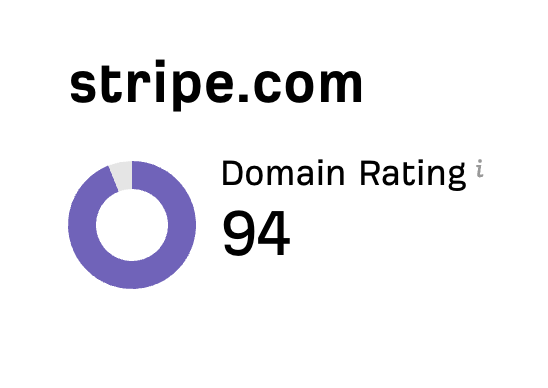
Want a backlink from Stripe (DR 94)?
Just join the Stripe Climate program.
You commit 0.5% of your revenue to carbon removal… but here's the hack:
If your MRR = $0 → your contribution = $0.
Free high-authority backlink 🔥
Climate activist? No.
Backlink opportunist? Yes 😅
i was texting a saas founder doing $12m/year last week
he asked me this question:
"if i move $50k from my ad budget into organic creator content, what should i realistically expect"
so i thought i’d answer this publicly for any businesses curious:
this is what our data shows across 500+ active campaigns:
$50k on meta ads at current rates ($20 CPM) =
roughly 2.5 million impressions
the majority of those get skipped in under a second. average CTR around 3%
$50k deployed through creators on Content Rewards =
roughly 100-250 million organic impressions
this depends on niche and budget restrictions (like post cap and CPM)
CTR is the exact same AND the content lives on the platform indefinitely and continues generating views for weeks after posting (for free)
so the raw reach is 15-35x greater and the engagement rate is the same (if not higher)
but the part that actually matters for brands isn't even the reach or the clicks
it's what happens in the comments
when 500 different creators post about your product in the same week…
the comment sections become organic conversations about your brand. real people asking questions, sharing opinions, tagging friends
the algorithm sees that engagement and pushes the content further.
but more importantly, the VIEWERS see real humans talking about your product in a way that no ad creative can manufacture
a paid ad has zero comments or fake engagement a creator clip has 50-1000+ genuine comments per post
that social proof compounds across hundreds of clips. suddenly your brand is everywhere and it looks like a cultural moment, not a marketing campaign
the brands on our platform who understand this don't think of creator content as "cheaper ads." they think of it as manufacturing word-of-mouth at scale
that reframe changes everything about how you approach it


![zherbert's tweet photo. Phishing and social engineering are getting more sophisticated at an exponential rate due to AI.
Proton just let a phishing email go through to my inbox that I think will compromise tens of thousands of folks.
How it seems to work: someone added my email to a real Google Group. They then sent out a message to all members of the group with subject line "Your Google data has been exported."
Obviously this will cause many people to panic. The email went through to my inbox because it came from a legit google group from a legit Google URL.
All links in the email look totally normal – unless you look at the link for "Cancel request" button. But amazingly this one also seems to come from a genuine Google URL – a URL shortener from Google! goo[dot]gl/XXXXX (not putting the real URL here).
Then it takes you to (1) a Recaptcha screen and then (2) a genuine looking Google account login screen. It's hosted on a Google site (sites[dot]google[dot]com) so everything looks legit.
Because all links are technically hosted by Google, this is very very bad.](https://pbs.twimg.com/media/HJ-c-53XUAE3wKr.jpg)





![zherbert's tweet photo. Phishing and social engineering are getting more sophisticated at an exponential rate due to AI.
Proton just let a phishing email go through to my inbox that I think will compromise tens of thousands of folks.
How it seems to work: someone added my email to a real Google Group. They then sent out a message to all members of the group with subject line "Your Google data has been exported."
Obviously this will cause many people to panic. The email went through to my inbox because it came from a legit google group from a legit Google URL.
All links in the email look totally normal – unless you look at the link for "Cancel request" button. But amazingly this one also seems to come from a genuine Google URL – a URL shortener from Google! goo[dot]gl/XXXXX (not putting the real URL here).
Then it takes you to (1) a Recaptcha screen and then (2) a genuine looking Google account login screen. It's hosted on a Google site (sites[dot]google[dot]com) so everything looks legit.
Because all links are technically hosted by Google, this is very very bad.](https://pbs.twimg.com/media/HJ-d829X0AEyrX5.jpg)