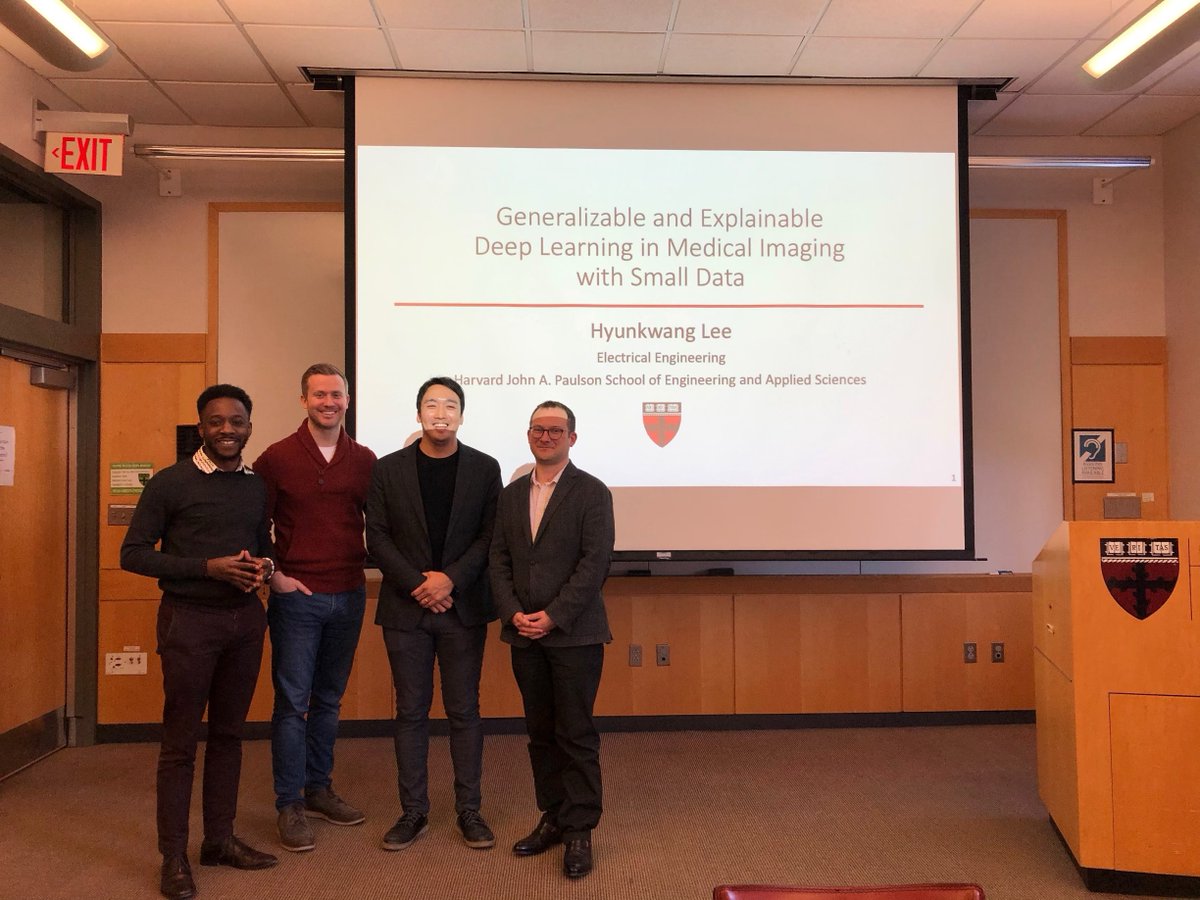
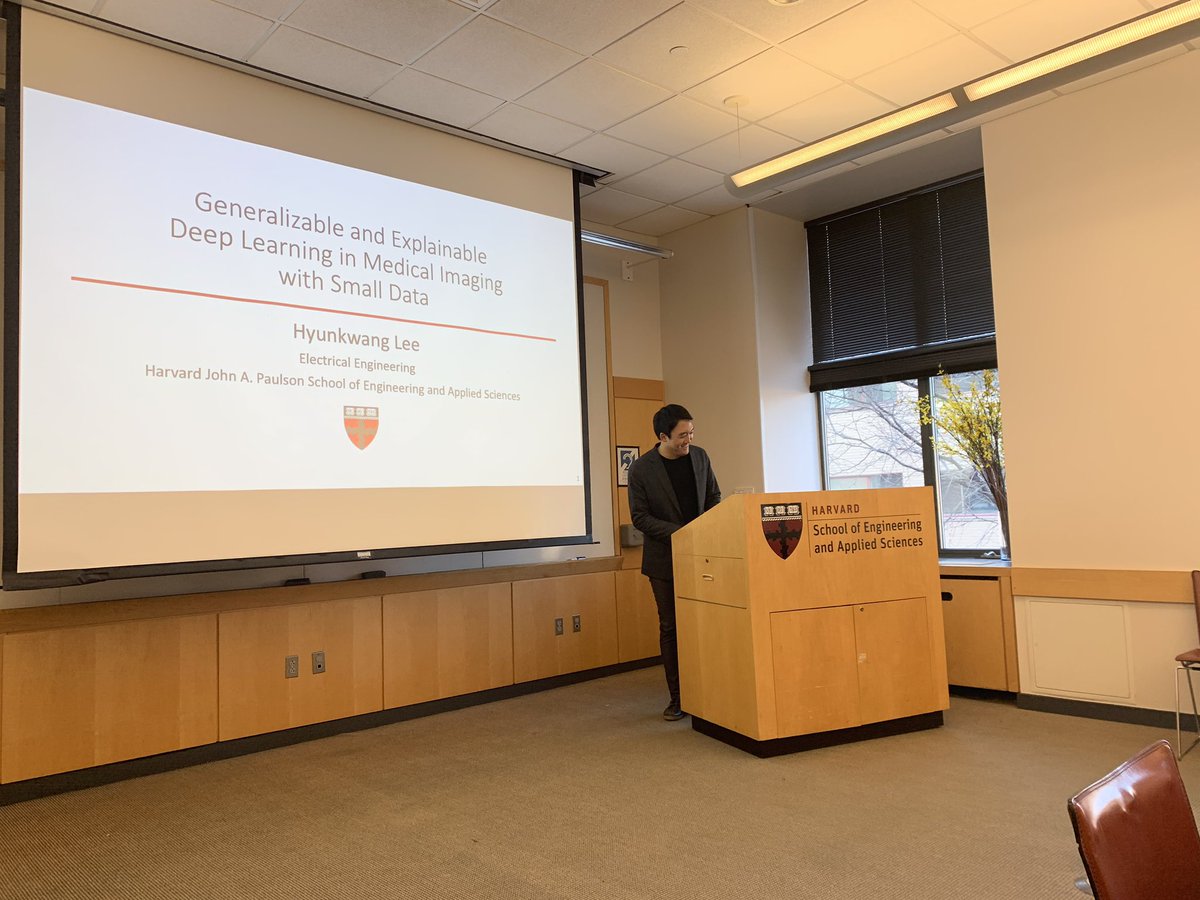
Just heard from colleague that Deep Learning in Medicine course @harvardmed@HarvardDBMI https://t.co/nwqnMa41Qe was oversubscribed this year even more than last & going well by distance learning during the pandemic. Kudos! CC @AndrewLBeam@kunhsingyu
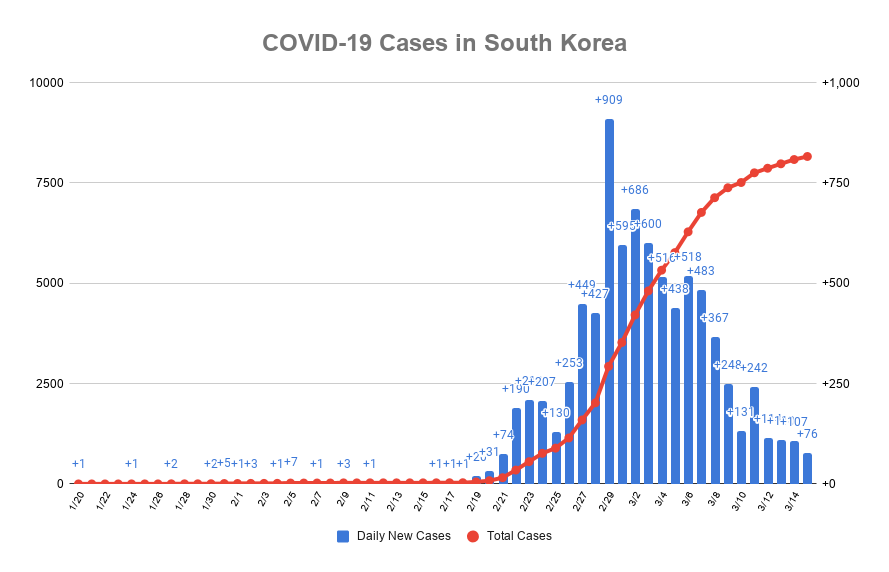
#COVID19 South Korea daily new cases declines again to 76, lowest since 2/22
- Total cases: 8,086➡️8,162
- Deaths: 72➡️75
- Total tested: 261,335➡️268,212
Very impressive how huge amount of work on broad testing + tracing + isolating is paying off against the #coronavirus!
When AI > AI+human, we face important ethical questions.
"In the reader study, the performance level of AI was 0.940, significantly higher than that of the radiologists without AI assistance (0.810). With the assistance of AI, radiologists' performance was improved to 0.881."
Delighted to kick off 2020 w/our research published @nature. A massive achievement for our team, working over the last few years with @CRUK & many collaborators including patients. A great step to better breast cancer care: now on to clinical validation. https://t.co/7AXUKFSsXW
Editorial: Many PhD students and postdoctoral researchers are overworked and overstressed — and their mental health is suffering because of it. https://t.co/XMh95WptNI
@IAmSamFin@AndrewLBeam Thank you so much and I am sorry to hear that. Hope you feel better and we will catch up soon (and talk about our ongoing project 😀)
Successfully defended my PhD dissertation today. Wouldn't have been possible without the support of my wife, family, friends, my dissertation committee (David Parkes, Demba Ba, @AndrewLBeam)and all the collaborators. Thank you all!
Congratulations Dr. Lee! @hyunkwang_lee gave an amazing thesis defense this morning. So happy to have been a part of his committee and hear about his impressive body of work.
@AndrewLBeam@maithra_raghu I also really enjoyed this paper when it was uploaded in arxiv! I wanted to do the same analysis for the GrayNet pretrained model if i could get access...
Another #RSNA meeting is officially behind us. We wanted to take a moment to recognize all of our colleagues, partners, vendors, prospects, and especially the team at @RSNA for contributing to another successful week. From our team to all of you, thank you! #RSNA2019
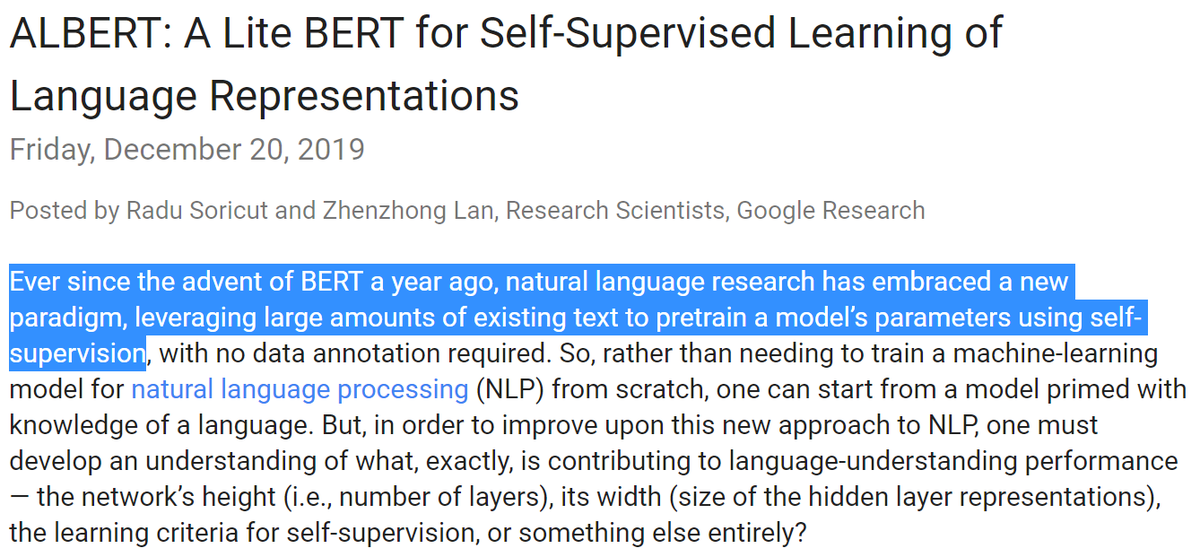
How does transfer learning for medical imaging affect performance, representations and convergence? Check out the blogpost below and our #NeurIPS2019 paper https://t.co/jNesB0ODBD for some of the surprising conclusions, new approaches and open questions!
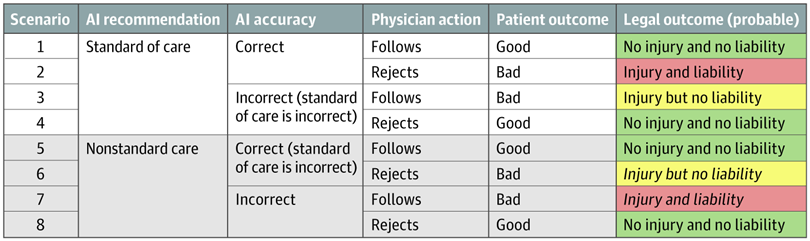
A question that always comes up when discussing AI in medicine:
"Who is responsible when a medical AI system gets a diagnosis wrong?"
Finally, a useful summary just published in
@JAMA_current: https://t.co/AxP0HvICUh
Using #ArtificialIntelligence to read chest radiographs for #tuberculosis detection: A multi-site evaluation of the diagnostic accuracy of three deep learning systems #Radiography https://t.co/z8Fzky03Eh
No matter how experienced the radiologist, accurate interpretation of malignant lung nodules on chest X-rays was ameliorated by #AI#openaccess https://t.co/FAVsqU6HnG
@radiology_rsna@RSNA
Intriguing: "most #deeplearning algorithms have been developed using reconstructed, human-interpretable medical images. ... this study showed SinoNet performed better for pathology detection directly from sparse sinograms than reconstructed images"
https://t.co/F4EnVcLIUj