Lichens are probably the first step in turning dead Martian dust into something that could eventually hold a plant.
A self-sufficient symbiotic consortium, powered by mere sunlight, that builds its own radiation shielding, fixes its own carbon and often its own nitrogen straight from the air, survives near-complete dehydration by switching itself off, and asks almost nothing of the ground it sits on beyond a place to hold. But most importantly, it slowly dissolves bare rock into the beginnings of soil.
To me this is rather elegant - a miniature ecosystem that builds the foundation of a broader ecosystem for other, more complex living things.
After the San Francisco launch at the end of 2027 and the start of scaling in 2028, when do you expect to see the first locations outside the US? How exactly are you planning to approach global expansion? Would it be only company-owned spas, or would there be some kind of partnership/franchise model? Any early thoughts on priority international markets, such as Australia or New Zealand?
@GnosisWolf Of course there are such factors. Human-induced climate change is nothing compared to all the natural climate changes throughout the Earth's history. Unfortunately, geology is not part of any school program, and therefore almost everyone is completely ignorant of these matters
Both perchlorates and radiation can be mostly ignored by some extremophiles. The biggest issue is the narrow time window for liquid water each day. But I think it can be solved by some tent-like structures, simple greenhouses. They will improve temperature conditions only, and they will be cheap. Lichens and maybe even mosses will spread out from them eventually, little by little.
All of it is a fantasy, of course. But I'll try to achieve it anyway
And it will be a huge garden
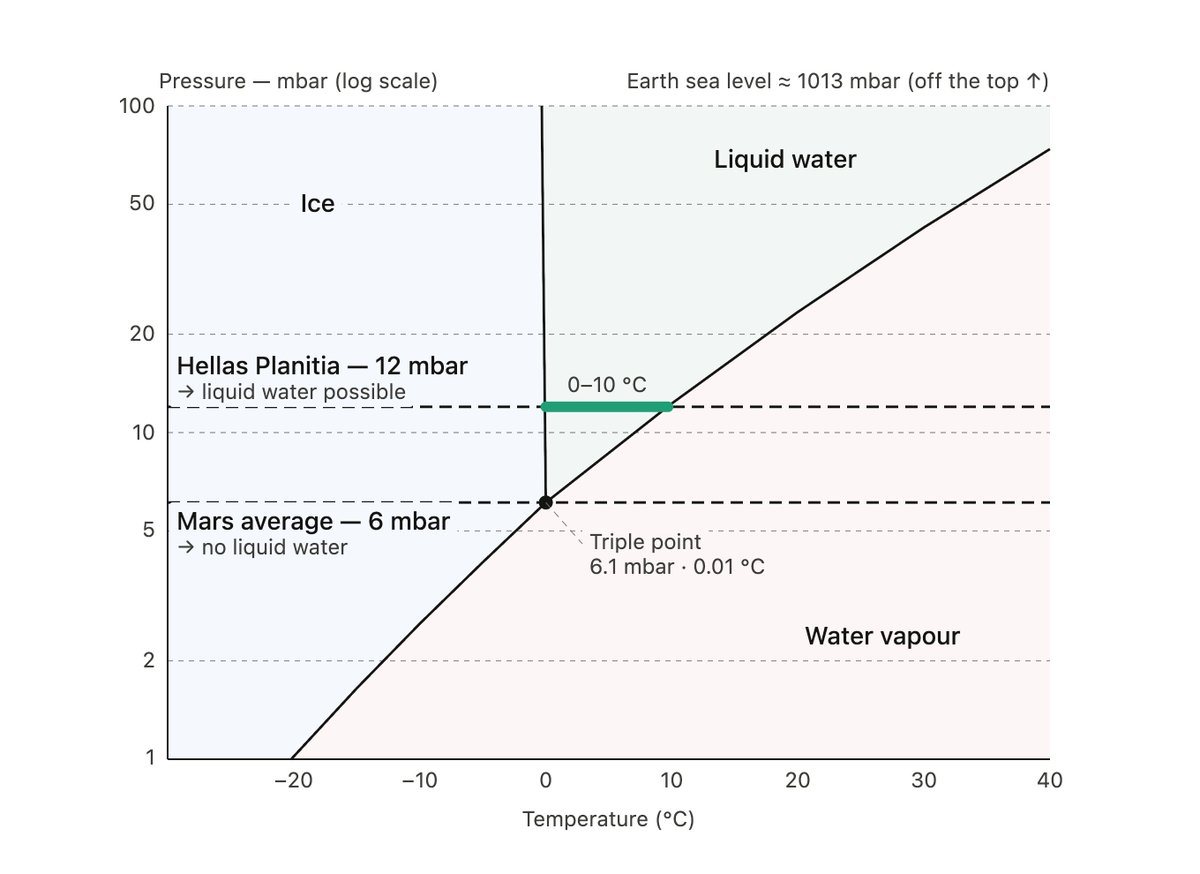
The atmospheric pressure there is around 12 mbar. It's almost nothing compared to the Earth's, but on Mars it's the highest you can get in "open air". And it is just enough for the first plants and other organisms to begin their colonial journey.
We definitely lack an understanding of how we will handle months-long "deep" space flights.
You can try to compare it with sea-voyages, but even there and even in full solitude, you are still on Earth. The air, water, animals, weather, day/night cycle, and so on. You're in harsh conditions, of course, but they are livable, and most people would not come to madness through it.
You can try to compare it with some long missions on the ISS. Conditions are much harsher there for your mental well-being. However, even there, there is some certainty. Especially a certainty of going back. You know that you are close to Earth, you see it all the time and you feel some connection to it.
But when you are in a spaceship in orbit between Earth and Mars, where there's complete nothingness all about you... How would you feel? Would you still be certain of something?
I am certain that many of us could not withstand such conditions. Many will lose their sanity. And therefore I believe that we need to double down on Earth-like nature presence on our future space missions. When we have other living things to care about (animals, plants, other humans), we are more likely to endure even the harshest conditions. Man should have a goal.
https://t.co/xbnJgTNDDI
This is part of the reason why this mission is necessary. When this remains the mainstream opinion, we will never become a multiplanetary civilization.
True. There are risks. Everything comes with risks. Instead of holding back, we are proactively looking for solutions to mitigate those risks. This is how progress is made.
I feel a bit sad when people claim that a crewed flyby has little to no scientific value. They fail to understand that the science of human spaceflight is, in large part, medical science. Despite years of ISS operations, there are still many gaps in our understanding of the impact of spaceflight on the human body.
Many of the studies we carried out on fram2 were medical studies. Even though the mission was short, I carefully chose them to help us better understand and prepare for future long-duration deep-space flights. We will do the same on our journey to Mars. A precursor mission before committing to a landing will deepen our knowledge and help answer long-standing questions that ground experiments like Mars-500 could never answer.
Doraemon only exists in manga. The Anywhere Door does not belong to our physical world. A nuclear engine will not solve every problem. In the end, we still have to spend months, if not years, in deep space to reach another planet or asteroid. This is orbital mechanics.
When you recognize that life is short, the universe is vast, and that making life multiplanetary is inevitable and urgent, the only meaningful answer is:
Work. 💪
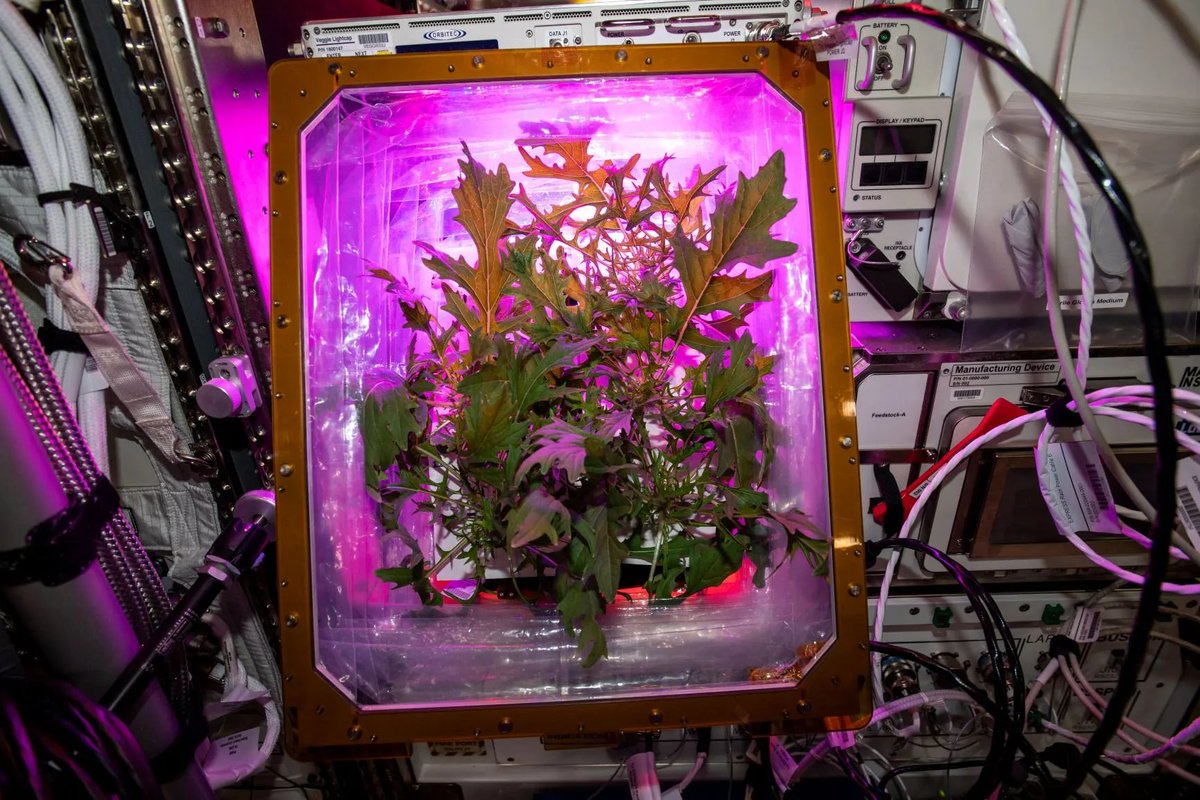
A little bit about that from the plant-nurturing point of view: https://t.co/KlQZ42HwG7
"Participants generally rated plant-related tasks as enjoyable, with consuming harvested plants and voluntarily viewing the plants ranking highest in satisfaction."
I’ve been saying for months that plants are crucial for mental well-being, especially in space. And especially on Mars. It’s time to back it up with some NASA studies.