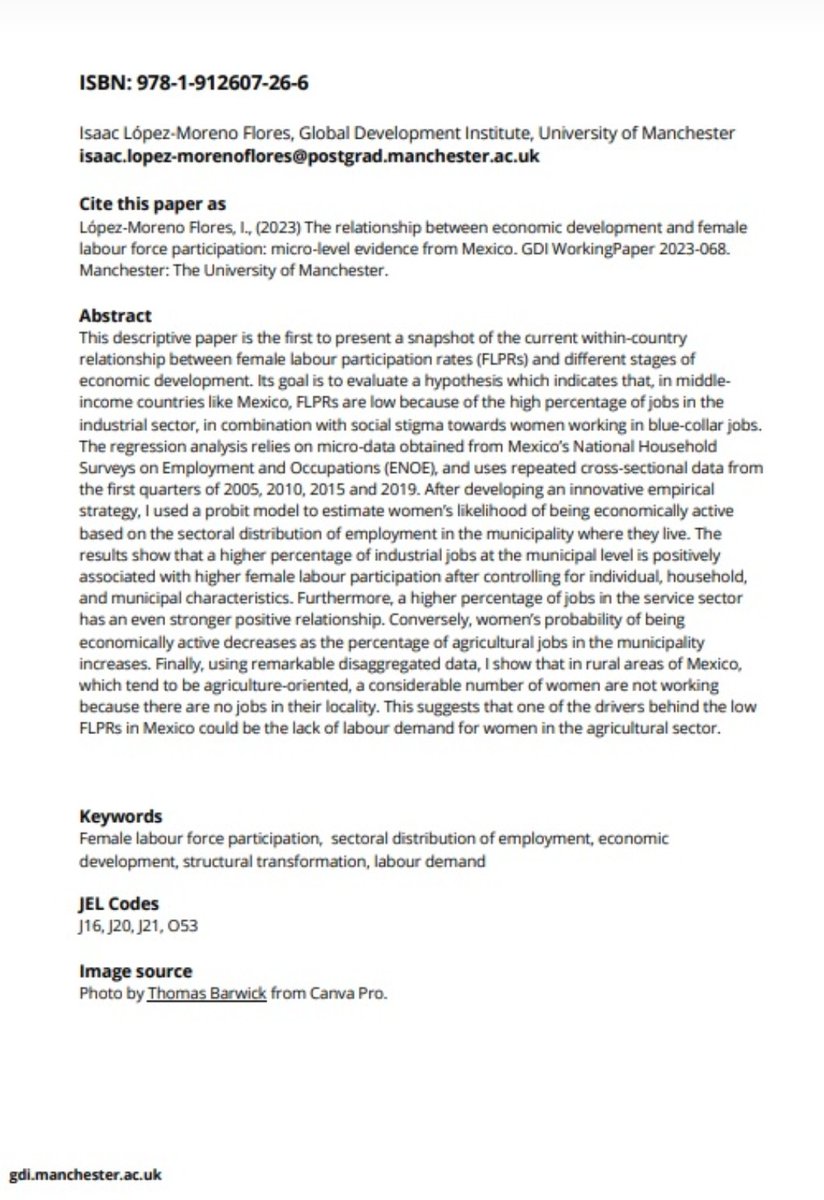
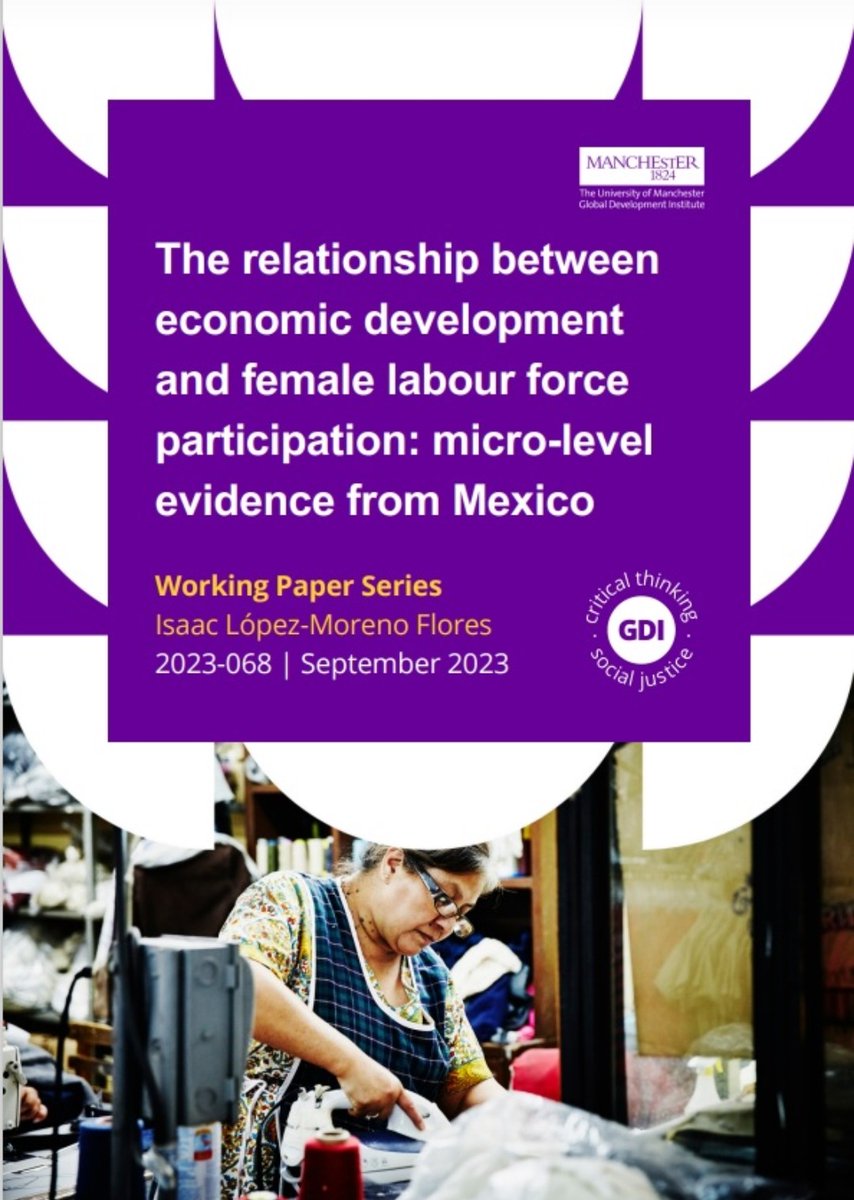
This is my first working paper, published by @GlobalDevInst.
I analyze the relationship between female labor participation and different levels of economic development within Mexico.
I sent it to Claudia Goldin 2 weeks ago and she responded! Perfect timing!
(5/8) The empirical validity of this theory is questionable. Evidence from several countries in the last six decades (e.g Chile, Taiwan, South Korea, Singapore, and China) indicates that growth is possible in non-democratic systems that, at the time, lacked inclusive institutions
victoria no tiene cuenta acá, pero como su prima y por lo orgullosa que estoy de ella, es mi obligación compartir que compite el domingo 11.08, de 3 a 7 am, hora de méxico. a sus 23 años, participa en sus primeros juegos olímpicos y no podríamos estar más orgullosas de ella💘💘💘
The quality of econ paper today is simply too exceptional. What the fuck: "We use river shifts in southern Iraq as a natural experiment, in a new archeological panel dataset."
.@IDOS_research in Bonn is looking to convene experts for a workshop on gender & social protection in the global south
Nov 21 - 22 in Bonn 🇩🇪
Call for abstracts of 500-600 words closes June 14!
*funding available for select non-OECD participants*
https://t.co/XGFsWOSkOU
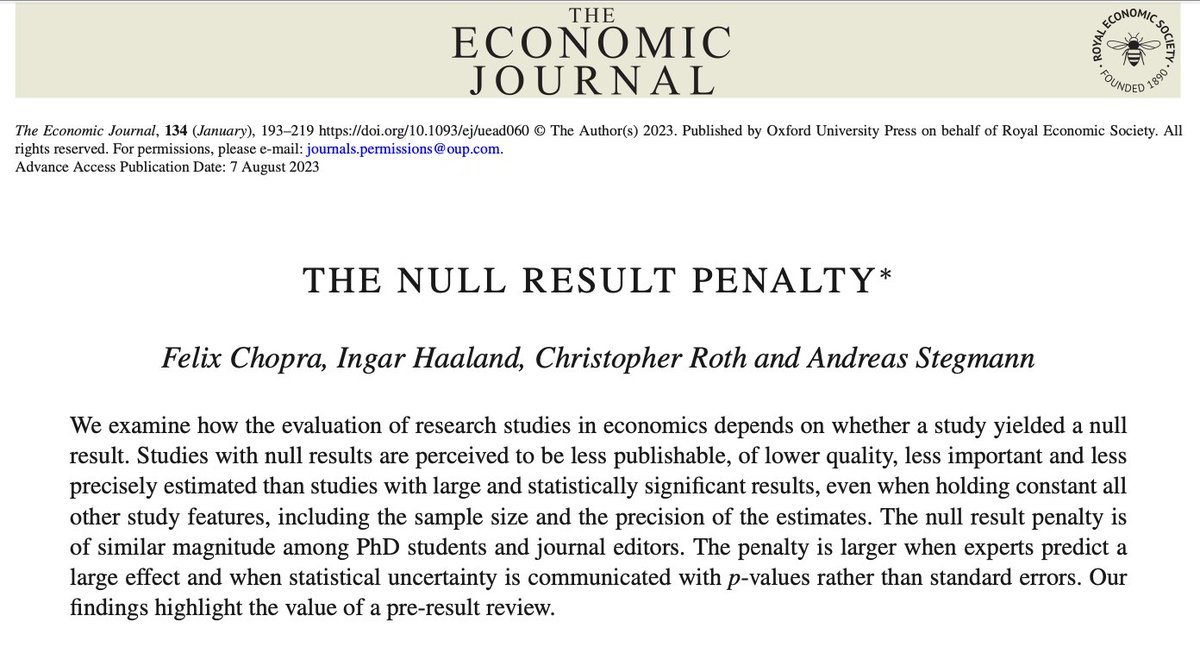
On the topic of null results, this paper is absolutely fascinating. Holding all else constant (precision, p-values, etc.), studies are deemed much less publishable, *lower quality* and less important when results are null vs. significant 😳
CC: @carlislerainey
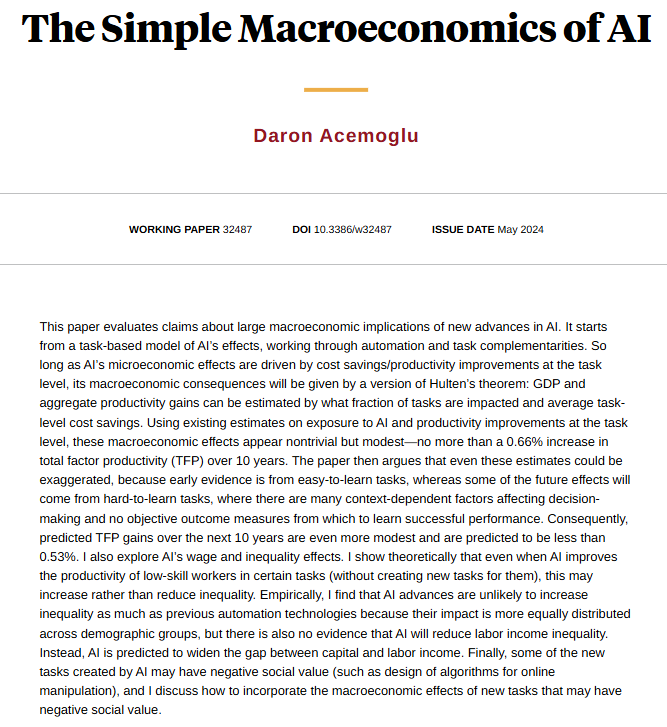
An evaluation of claims about large macroeconomic implications of new advances in AI finds a 0.66 percent increase in total factor productivity over 10 years, from @DrDaronAcemoglu https://t.co/8VYks1sUom
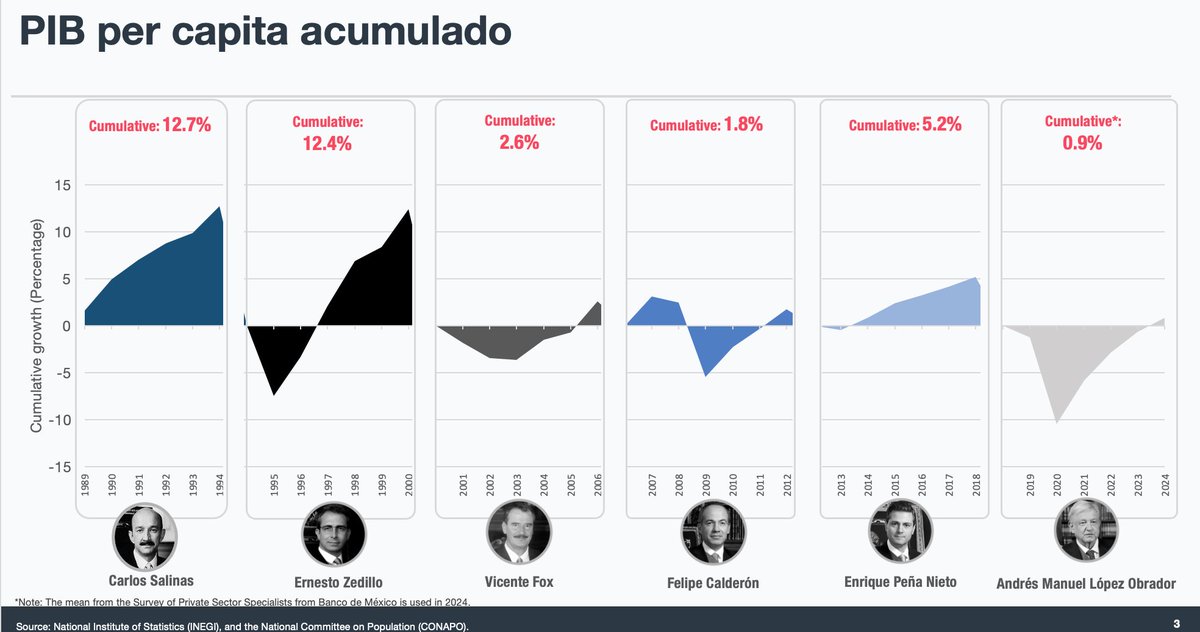
Así se ve el crecimiento per capita en las últimas administraciones... PIB real, como debe de ser, en precios constantes... es decir, quitando el efecto de la inflación...
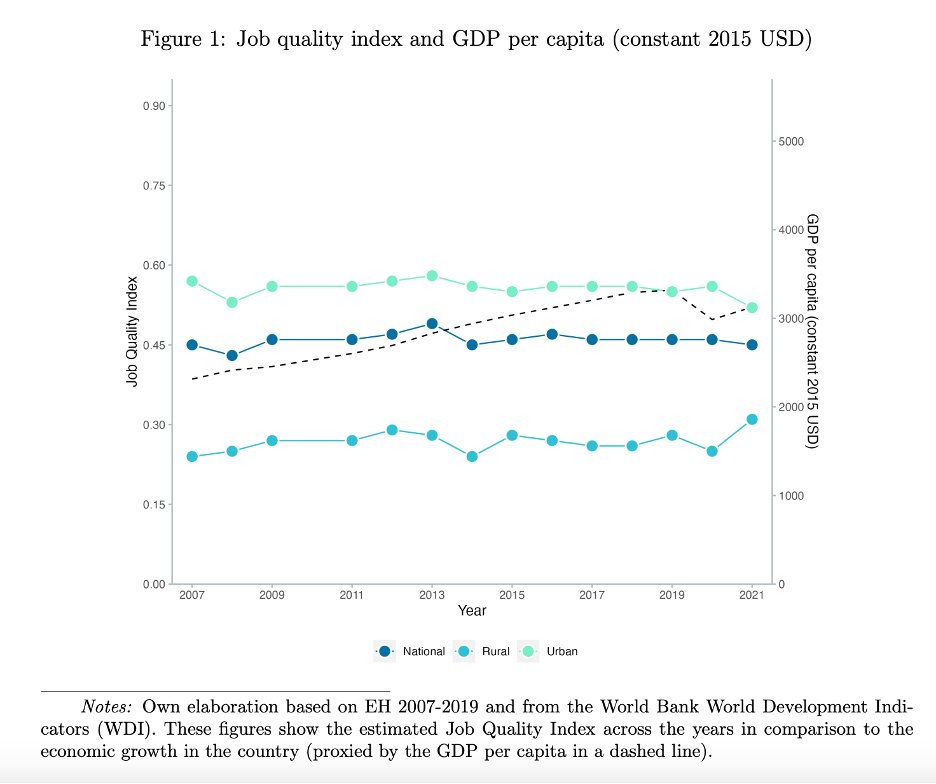
To understand the state of the #labor market, we must go beyond traditional measures such as participation or unemployment rates. We must also look at the #quality of jobs, which has important implications for productivity and well-being.
The @WBG_Poverty Job Quality Index offers useful insights into different dimensions of job quality and can help to unpack differences in the quality of jobs held by different sociodemographic groups and across different economic sectors and employment structures.
For example, in #Bolivia, between 2007-2021, the quality of jobs has largely remained constant, with values around 0.46 (where 1 indicates higher quality). This value shows minimal changes even during periods of significant economic growth. However, overall number obscure important differences across groups: job quality tends to be lower in rural areas, among women, among young and elderly workers, in the agricultural sector, and for micro and small firms.
Learn more in this @WorldBank Policy Research Working Paper “Beyond the Usual: Understanding the Multidimensional Nature of Job Quality in Bolivia’s Labor Market” by Gustavo Canavire-Bacarreza, Ronald A. Cueva and María E. Dávalos: https://t.co/pyRXAm8LNm
More on measuring job quality in this @WorldBank Policy Research Working Paper “Global Job Quality : Evidence from Wage Employment across Developing Countries” https://t.co/ZyRqZuNslO
In many cities in low- and middle-income countries experience recurrent levels of high pollution, exceeding WHO’s guidelines. Do workers change their behaviour in days of extremely high levels of pollution? We look at daily data for Mexico City🧵👇
https://t.co/Nd8mqVjkkh
Hi #EconTwitter!
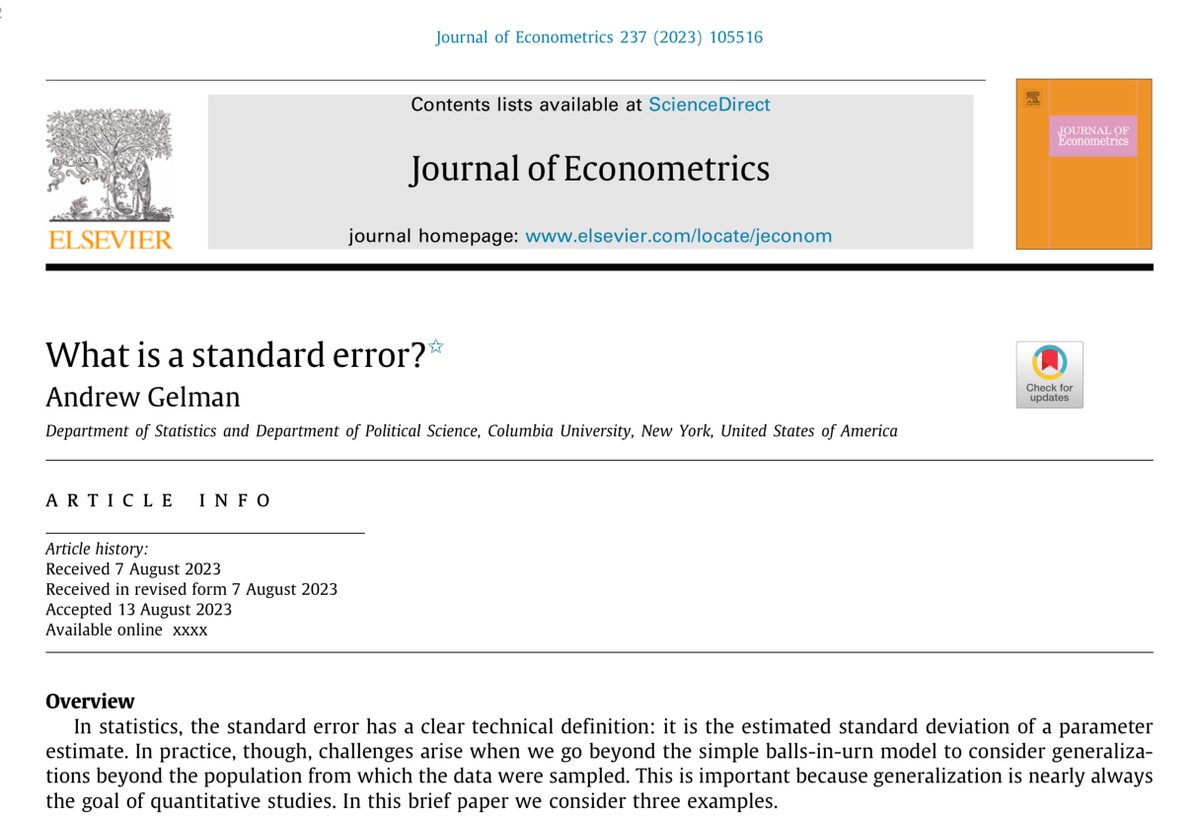
What is a standard error? 🧐😆
Don't forget about the "trilogy" on the subject, published in @jeconometrics!
Papers by @jmwooldridge (@michiganstateu), Andrew Gelman @StatModeling (@columbia) and James Powell (@uarizona). 👇
Have fun! 🤩
Links:
Jeff's: https://t.co/ldU4CHSv0N
Andrew's: https://t.co/9isvJGzUHA
James': https://t.co/THaypspMwM
#Econometrics
Rogerson's (2024) JEL paper argues that labor supply, and how it responds to policies, matters for understanding macroeconomic outcomes across countries -- more so than you'd think based on a typical undergrad macro textbook.
🔗 https://t.co/M4mYTqymTt
👇 Brief summary-🧵