@elzorrotacneno 🤣🤣🤣
Allá los que se tratan ese cuento y se someten a tratamientos de homeopatía, otros de raíces, otros de oraciones y así una sarta de idioteces y cuando llegan a donde el médico, ya solo es para que le que busque "Días de Calidad" ; hasta STEVE JOBS cayó por inocente.
The US government has spent the last 12 years trying to censor and destroy Alex Jones. They’re still trying, and it’s not because he’s crazy and dishonest. It’s because he’s telling the truth. Watch this.
(0:00) How Alex Jones Predicted 9/11
(9:22) The CIA's Influence Over The X Files
(13:33) The Globalists Are Hiding in Plain Sight
(17:55) Why the Left Wants Trump Killed
(20:50) The Burden and Responsibility Alex Jones Bears
(25:37) The Spiritual Revolution
(35:28) Why the Most Evil People Are the Most Unhappy
(38:50) The Secret Undermining of the West
(43:04) The Assassination of Infowars Journalist Jamie White
(47:03) Have We Lost the War With Russia?
(49:47) There Was a 50% Chance of Nuclear War and the Pentagon Didn’t Care
(57:05) The EU’s 20-Year War Strategy
(1:00:00) Why the Globalists Are So Scared of Donald Trump
(1:09:57) The Plan to End Free Speech in the United States
(1:14:10) Alex Jones Details the Legal Attacks Against Him
(1:25:21) Why Obama Secretly Labeled Alex Jones a National Security Threat
(1:29:59) The Fraudulent Auction to Sell Infowars to The Onion
(1:34:42) The Real Culprit Behind the Lawfare Against Alex Jones
(1:39:54) Will the New Department of Justice Help Alex Jones?
(1:52:14) The Potential Nuclear Exchange Between Iran and Israel
(1:55:41) They Want You Dull, Asleep, and Spiritually Dead
(1:58:38) The Evils of the Transhumanist Movement
Includes paid partnerships.
Warning signs of a heart attack you should NEVER ignore.
A heart attack does not always start with severe chest pain. Sometimes, the symptoms can be mild or come and go.
LEARN the signs to watch for
Come to the comment section below
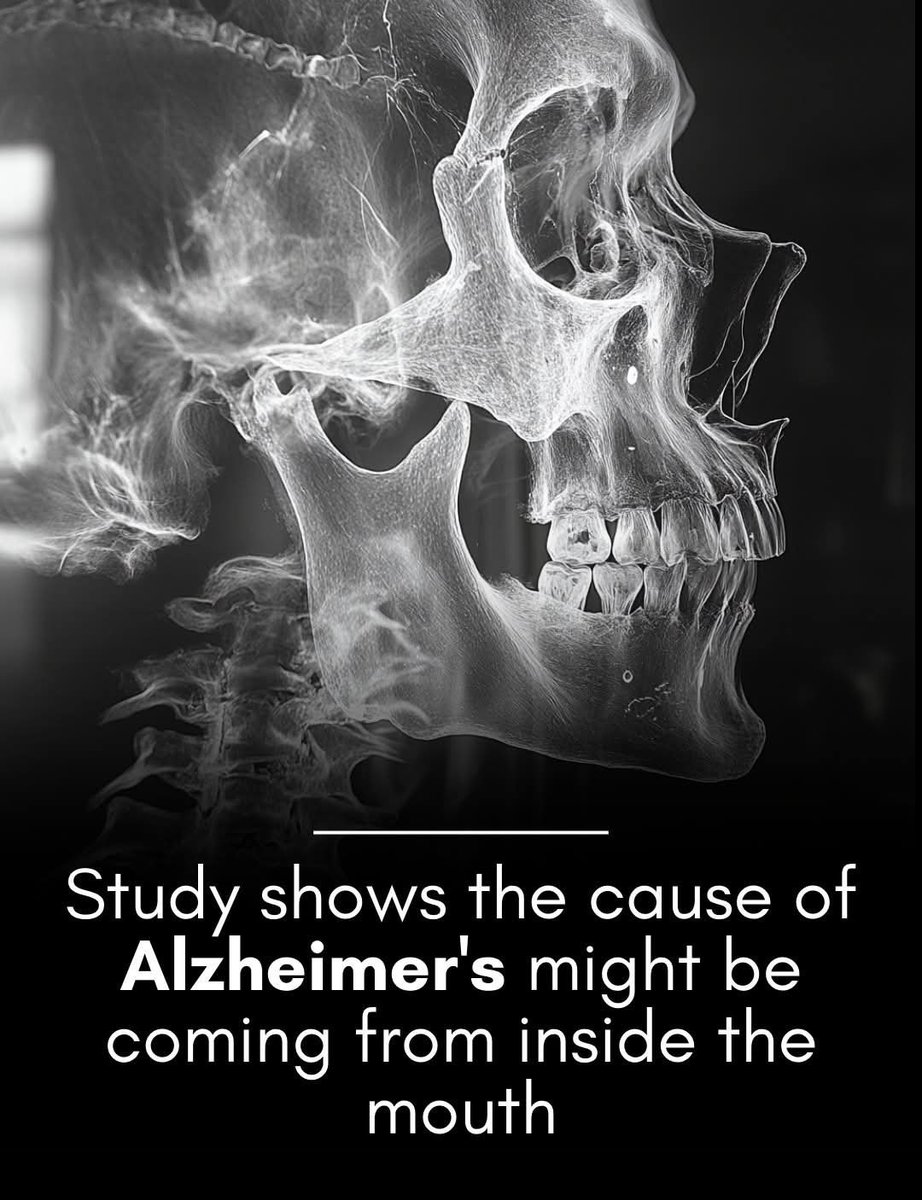
🧠 Alzheimer’s may be linked to gum bacteria, new research shows.
Yes, the disease might not come from your brain at all — but a oral infection.
Emerging research suggests a surprising connection between gum disease and Alzheimer’s disease, offering a potential breakthrough in understanding—and possibly preventing—one of the most devastating brain disorders.
Scientists have found Porphyromonas gingivalis, the bacteria responsible for chronic gum disease, in the brains of deceased Alzheimer’s patients.
In lab experiments, mice infected with the bacteria developed hallmark Alzheimer’s features, including amyloid beta, a protein long associated with the disease. Even more striking, toxic bacterial enzymes were found in people with early brain changes linked to Alzheimer’s—well before any symptoms appeared—hinting that the infection may trigger damage years in advance.
This discovery is fueling hope for new treatments. One experimental drug, COR388 (developed by Cortexyme), has already shown promise in reducing both the bacteria and amyloid beta buildup in animal models. While more studies and human trials are needed, the findings support the idea that Alzheimer’s could have an infectious component, not just a degenerative one. For now, researchers are cautiously optimistic—but the implications are big: maintaining good oral hygiene could do more than preserve your smile; it might also help protect your brain.
Source: Dominy, S. S., et al. (2019). Porphyromonas gingivalis in Alzheimer’s disease brains: Evidence for disease causation and treatment with small-molecule inhibitors. Science Advances.
Forced to get the shot? Regret trusting the “experts”? Detox your body with Ultimate Spike Detox. It's an all-natural formula with Nattokinase, Bromelain & more, created + used by Dr. Peter McCullough and used worldwide. Code CATTURD saves 10% off + free U.S. shipping 🇺🇸. https://t.co/WpLLutoIPI
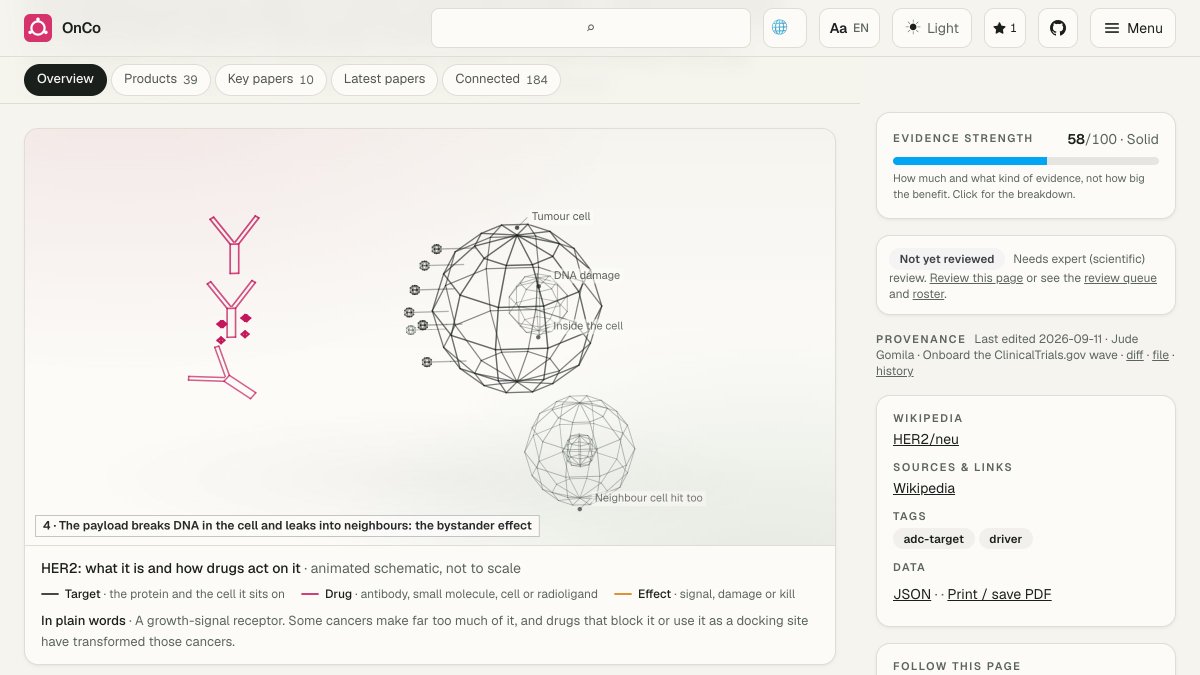
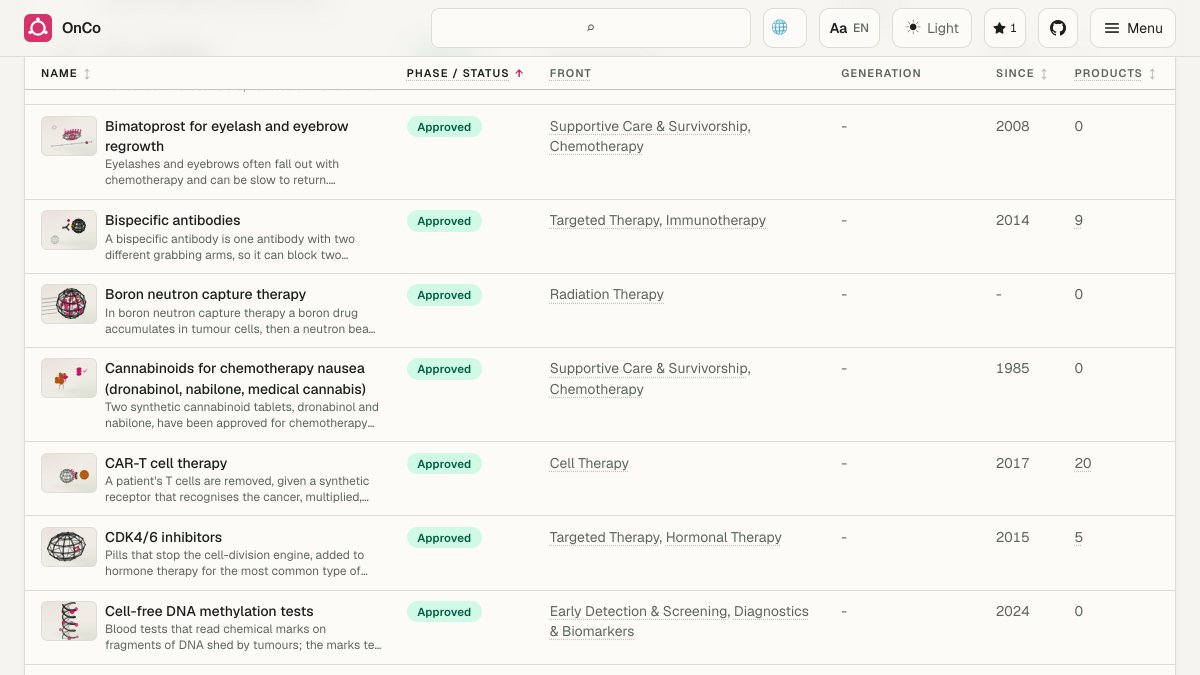
I've attempted to map everything in oncology in a public website and open source repo for all.
The site is trying to get all cancers, products, technologies, bottlenecks, people, startup opportunities with 1000+ ideas for upgrading the field.
If you have a loved one with cancer and you are technical or can engineer, go take a look, file improvement requests or bugs or help with the open repo and make this the best open and free info resource for individuals, researchers and educational use.
This should save people time, aid AI oncology projects and generate positive action. If you are not technical just complain in this thread about broken or annoying or things you want and I'll fix them live.
Some of the interesting pages:
Treatments: https://t.co/EJEOhMppoB
A gallery of the molecules being used https://t.co/EV6ZitrVqm
And targets: https://t.co/CgkjuF8nR2
The technologies in oncology: https://t.co/lNaieWYRKH
1100 ideas for helping oncology: https://t.co/iQA6Z5SvRA
Bottlenecks on oncology: https://t.co/WND44055WD
Open questions (LETS GO RESEARCH PEOPLE) https://t.co/wSbphQ0IBg
Startup requests (LETS GO STARTUP PEOPLE) https://t.co/PphztuLihP
Mechanics of cancer: https://t.co/cMUyVObzZi
Battlefronts: https://t.co/PlSZitVd50
Isotope supply: https://t.co/2Pcl4tTuPv
Key papers: https://t.co/YK0dW1XJj0
Pipeline funnels: https://t.co/xYcbSCSyBg
Cancer by type: https://t.co/d9k8Yyzdk7
Institutional rankings: https://t.co/VepXcKHhaa
The startups: https://t.co/whXKg5dPzb
Heros and heroines : https://t.co/uLDmhRjE36
Key medical people: https://t.co/JWhDZ0rC73
Here is the project roadmap: https://t.co/UtbbuOsdA5
Models and data sets: https://t.co/bim0tjiWOj
There are other views as well, take a browse.
Try making a PR if you have an upgrade to this on the repo here: https://t.co/2Dw0ufEJ3z
If you are biologically/medically minded and something is wrong, file a bug as well or say on the thread and we will get it fixed live.
If this is a useful project star the repo and help get it calibrated.
I've tried to add some other languages but I cannot speak them so tell me if that doesnt work well.
I believe we will crack oncology and having total information dominance is key to the problem.
Let the feedback flow!
🚨 “90% REDUCTION IN MORTALITY.” DR. PIERRE KORY ON THE NEW 113,000-PERSON IVERMECTIN ANALYSIS
113,000 participants. Five months of data. Then researchers looked at how consistently people actually took Ivermectin.
Dr. Pierre Kory discusses findings from Itajaí, Brazil, where participants reportedly took Ivermectin for four days each month over five months.
📊 THE INITIAL NUMBERS
According to the report:
📉 50% reduction in infections
📉 68–70% reduction in hospitalizations and mortality
But then came the secondary analysis.
🧬 THE DETAIL THAT CHANGED THE PICTURE
Researchers reportedly used pharmacy data to separate participants into three groups:
• Regular Ivermectin users
• Irregular users who missed doses
• People who didn't take it
And when those groups were compared, the reported differences became even more striking.
🔥 THE NUMBER EVERYONE WILL NOTICE
The analysis reportedly found:
90% reduction in mortality among regular users.
The report also describes 100% reduction in death among those who took Ivermectin regularly without missing doses.
Those are extraordinary numbers.
But they also need to be interpreted carefully, because this type of analysis does not by itself establish that Ivermectin caused the observed differences.
📌 KORY’S BIGGER POINT
Kory argues that the findings add to a wider body of Ivermectin prevention research, pointing to approximately 12 other observational and randomized controlled studies.
His conclusion is blunt:
“A humanitarian tragedy.”
He believes a potentially life-saving medicine was unfairly maligned.
⚠️ IMPORTANT CONTEXT
Ivermectin is not currently FDA-approved to prevent or treat COVID-19.
The report says the FDA acknowledges that assessments are ongoing. It also says NIH and FDA were contacted for comment on the latest analysis but had not responded before airtime.
🔥 113,000 PARTICIPANTS. REGULAR VS. IRREGULAR USE. A SECONDARY ANALYSIS. AND A REPORTED 90% MORTALITY REDUCTION.
Whether these findings ultimately withstand deeper scrutiny is exactly why the underlying data deserve attention.
Don't just debate the headline. Examine the study. Examine the methodology. Examine the numbers.
📌 SAVE this breakdown.
🔄️ REPOST so more people can examine the evidence.
💊 Looking for Ivermectin? Explore available options at @rxmeds_store with worldwide delivery.
#Ivermectin #PierreKory #COVID19 #MedicalResearch #RepurposedMedicine #ClinicalResearch #HealthResearch
@Fa21519230 exakt so ist es.
vor Ivermectin Tests (mach ich jetzt auch)
ist ein Parasiten-Test zu empfehlen
(https://t.co/3QZYuypMTH), sonst geht das in die Hose.
wortwörtlich.
Wermut (aus Beifuss) ist auch gut.
🚨🚨 Una encuesta a médicos reveló que el 88.3% de los doctores rechazaría la quimioterapia para su propio tratamiento de cáncer...
La tasa de supervivencia a 5 años con quimioterapia es solo del 2.1%, sin embargo, la mayoría de los oncólogos solo ofrecen el "Estándar de Atención" a los pacientes...
El Dr. Seyfried elegiría el protocolo con Ivermectina y Ayuno...
La Junta Directiva de la Sociedad Americana de Oncología Clínica (ASCO) tiene datos de que los oncólogos, ELLOS MISMOS, no tomarían quimioterapia para el cáncer, a pesar de que recomiendan quimio y radiación como el único tratamiento "aprobado" a sus pacientes...
MacKillop y colegas descubrieron que en una encuesta a médicos canadienses que tratan cáncer de pulmón, solo el 16% querría quimioterapia para su propio tratamiento si tuvieran un diagnóstico de cáncer...
Lind y colegas entrevistaron a oncólogos docentes en Boston y encontraron que solo el 27% tomaría quimio para cáncer de pulmón...
"La contribución de la quimioterapia citotóxica a la supervivencia a 5 años en malignidades adultas" cita... La contribución general de la quimioterapia citotóxica curativa y adyuvante a la supervivencia a 5 años en adultos es solo del 2.3% en Australia y del 2.1% en EE.UU...
El tratamiento del cáncer es una industria multimillonaria.
El sistema obtiene más ganancias de la quimio y radiación de por vida que de la intervención natural.
La quimioterapia no es la respuesta para sanar el cuerpo del cáncer. El indice de glucosa-cetona GKI y erradicación del cáncer basado en la investigación revolucionaria de Otto Warburg podría ayudar a hacerlo...
Las células cancerosas son metabólicamente inflexibles y no pueden usar cuerpos cetónicos para energía cuando la glucosa es limitada, a diferencia de las células sanas...
Un GKI bajo se logra restringiendo los carbohidratos, lo que baja la glucosa en sangre e incrementa la producción de cetonas. Esto priva a las células cancerosas de glucosa mientras proporciona a las células normales una fuente alternativa de energía...
La investigación muestra que un entorno de baja glucosa promueve que nuestras células Natural Killer (NK) y células T se vuelvan aún más fuertes, las cuales son cruciales para matar el cáncer...
La quimioterapia y la radiación en realidad matan nuestras Células Natural Killer NK, pudiendo permitir que el cáncer regrese incluso más fuerte que antes del tratamiento convencional...
Stage I pancreatic cancer has 44% five-year survival rate.
Stage IV has a 3% rate.
Many patients are diagnosed at Stage IV. That gap is driven almost entirely by late detection.
These 3 findings are to be treated as pancreatic cancer until furthur tests proves otherwise.
1. New-onset diabetes after 50 with unexplained weight loss.
About 0.6–1% of adults who develop diabetes after 50 have pancreatic cancer within 3 years. Unintentional weight loss, especially in a lean older adult, raises that risk. Ordinary type 2 diabetes usually comes with weight gain. Diabetes plus weight loss should not wait in an endocrine clinic.
2. Painless yellowing of the skin or eyes.
A head-of-pancreas tumour can block the bile duct before pain starts. In a middle-aged or older adult without stones or hepatitis, this is malignancy until imaging says otherwise. Do not wait for pain.
3. Persistent upper abdominal pain radiating to the back.
A vague dull ache, worse lying flat and easier leaning forward, is often treated for months as reflux. Isolated pain is usually not cancer. Imaging studies to be done when it persists and comes with weight loss, new diabetes or jaundice.
🚨🚨 El cáncer no es la enfermedad, sino el síntoma"...
Lo dice el Dr. Patrick Soon-Shiong, oncólogo y referente mundial en inmunoterapia...
Su tesis: la causa raíz no es el tumor, es el colapso del sistema inmune...
Hay un número en tu análisis de sangre que casi nadie mira: el Conteo Absoluto de Linfocitos (ALC). Rango normal: 1.000 a 4.000 células por microlitro.
Si caes por debajo de mil, se llama linfopenia.
Y en medicina, desde los años noventa, aparece siempre el mismo hallazgo. Cáncer de mama, de páncreas, de pulmón, el que elijas: con linfopenia, la supervivencia se acorta de forma significativa. Soon-Shiong habla de entre 200 y 300 publicaciones apuntando en la misma dirección.
¿Por qué? Porque el ALC mide tus linfocitos y células T. Son las que previenen la infección, atacan al tumor y frenan la metástasis. Son tu ejército.
🚨🚨 El dato : quimioterapia y radiación producen linfopenia.
El tratamiento que ataca al tumor también golpea a las células que más necesitas...
🚨🚨 "Una dieta baja en sal causa resistencia a la insulina y presión arterial alta"...
Dr Ben Bikman, PhD
"Un médico nunca debería decirle a un paciente que 'reduzca la sal'... Esto causa niveles más altos de insulina y mayor presión arterial."
La sal es el segundo componente principal en el cuerpo y necesitamos sal en todo momento.
Cuando se restringe la ingesta de sal, el cuerpo activa sistemas hormonales para retener sodio y causar resistencia a la insulina:
Activación del sistema renina-angiotensina-aldosterona (SRAA): • Restringir el sodio hace que el cuerpo libere hormonas como renina, aldosterona y angiotensina II para ayudar a retener sodio. Esto aumenta la resistencia a la insulina.
• Aumento de hormonas de estrés: Una ingesta baja de sodio eleva los niveles de hormonas de estrés en el cuerpo, como la noradrenalina. Niveles elevados de estas hormonas causan resistencia a la insulina.
• Reducción del flujo sanguíneo a los músculos: Una caída en el volumen sanguíneo debido a la restricción de sodio reduce el flujo sanguíneo a los músculos esqueléticos. Esto perjudica la entrega de insulina y glucosa al tejido muscular, empeorando la resistencia a la insulina.
• Aumento de los niveles de insulina: El cuerpo responde a la restricción de sal aumentando los niveles de insulina en ayunas como medida compensatoria para retener sodio. Esto es un factor de riesgo para desarrollar diabetes tipo 2.
5 formas en que la resistencia a la insulina causa presión arterial alta:
• Retención de sodio y agua: Cuando ocurre la resistencia a la insulina, el páncreas produce insulina en exceso para manejar el azúcar en sangre. Los altos niveles de insulina sobreestimulan los riñones para reabsorber más sodio y agua, lo que aumenta el volumen sanguíneo y eleva la presión arterial.
• Disfunción vascular: Una señalización saludable de insulina promueve la producción de óxido nítrico (NO), una molécula que relaja los vasos sanguíneos y mejora el flujo sanguíneo. En un estado de resistencia a la insulina, este proceso se detiene y la presión arterial sube a niveles peligrosos.
• Aumento de la actividad del sistema nervioso simpático: Los altos niveles de insulina sobreestimulan el sistema nervioso simpático, que controla la respuesta de "lucha o huida" del cuerpo. Esto aumenta la frecuencia cardíaca, contrae los vasos sanguíneos y activa el sistema SRAA, lo que promueve aún más la retención de sodio y agua.
• Inflamación crónica y estrés oxidativo: La resistencia a la insulina causa inflamación crónica de bajo grado y estrés oxidativo en todo el cuerpo. Estos procesos dañan el revestimiento de los vasos sanguíneos (el endotelio).
• Endurecimiento vascular: Con el tiempo, la inflamación crónica y otros problemas llevan a una remodelación y endurecimiento arterial. Esto hace que las arterias sean menos flexibles y más resistentes al flujo sanguíneo, obligando al corazón a bombear con más fuerza y elevando la presión arterial.
No toda la sal es igual... la sal de mesa es altamente procesada y tóxica. El procesamiento químico de la sal de mesa la despoja de todos los minerales, dejando solo cloruro de sodio aislado. La sal de mesa se blanquea y luego se agregan ingredientes como ferrocianuro de sodio, citrato de amonio, silicato de aluminio, azúcar (dextrosa) y agentes anticompactantes.
La sal saludable es sal mineral sin refinar... sal celta o gris sin procesar que retiene todos los más de 80 minerales traza. Busca las que estén libres de microplásticos, metales pesados y contaminantes.
This is Don't Die in the language of biology.
1. First, respect to Levin for taking such a huge swing and having the fortitude to endure the stormy course.
2. Levin's thesis is that the body is collective intelligence at every scale, from single cells to organs. If you cut a flatworm in half, both halves will rebuild themselves into a whole worm.
3. For biology to perform this magic, it needs an attractor: a target goal that guides the biological system. In my framework, that ultimate attractor is Don't Die.
4. Levin has argued elsewhere that when the shared vision breaks down, cells change their focus, defect from the group and self-destruct resulting in cancer, aging and decay.
5. Levin proposes that physical bodies are interfaces and antennas tuned into higher order patterns versus mechanical engines.
6. I propose that it's possible to extend this thesis to intelligent agents including humans and AI and that Don't Die is a universal imperative rooted in the structure of reality, awaiting to be incorporated as the attractor that elevates our shared goal to continued collective persistence.
Bronze and crystal sword from China, c.450-250 BCE: the hilt of this sword was crafted from rock crystal, turquoise, and gold, and the blade is covered in a greenish-blue patina that was naturally produced over time
[📸 National Museum of China, Beijing]






![Rainmaker1973's tweet photo. Bronze and crystal sword from China, c.450-250 BCE: the hilt of this sword was crafted from rock crystal, turquoise, and gold, and the blade is covered in a greenish-blue patina that was naturally produced over time
[📸 National Museum of China, Beijing] https://t.co/q4wvA20M1v](https://pbs.twimg.com/media/HR_0XkFaIAAdRFA.jpg)





