Agaram 2.5B is out. It's a Tamil-first language model we trained from scratch at @MuraiLabsHQ , our small non-profit lab. As far as we know, it's the first Tamil model trained from scratch that can call tools.
It chats in Tamil, Tanglish and English, translates, and can call tools. We're releasing the base model, chat model and GGUF files under Apache-2.0. You can download it and run it offline on your own laptop.
The first chat model had a four-day public preview. Seeing where it fell short with real users helped us decide what to work on. We rebuilt the fine-tuning around what we saw, using 222,662 records.
Thank you to everyone who spent time with that early version.
The video walks through the model. You can try it here:
https://t.co/1CrOClu6Mn
நன்றி 🙏
Agaram 2.5B, @MuraiLabsHQ's first Tamil–English model trained from scratch, is open for a 4-day public preview 🎉
Chat in Tamil, Tanglish or English, try the tools, and rate replies 👍/👎.
🔗 https://t.co/wmXQKAmBvm
📄 https://t.co/GBgleDor7U
Weights come after the preview - waiting on licensing to be cleared.
OpenAI quietly released an API that lets applications make decisions.
Give it text or an image. Ask it to check a condition, choose between
options or score something against your criteria.
The Decisions API supports three outputs:
→ Predicate: Is this true?
→ Choice: Which option should I pick?
→ Score: How does this rank against my criteria?
The image part is what gets me.
Upload a product photo and check for visible damage. Send a customer complaint and route it to the right team.
It returns a typed answer with probabilities and confidence scores, ready to use inside the application.
It runs on GPT-6 Luna, and OpenAI says it is up to 10x faster than using Luna through the Responses API.
Product teams have been building separate AI workflows to handle decisions like these.
Now they have one endpoint.
AI inside applications is moving from generating answers to making small, structured decisions in real time.
The Anthropic researcher who quit went on CNN and said the AI industry is "gambling with our lives."
His biggest fear: AI being used to make itself more intelligent. The exact thing OpenAI showed it's already doing three days ago.
He told Anderson Cooper these companies are "compelled to race toward building a deadly technology." This isn't a critic on the outside. He was building it.
I resigned from Anthropic today. I spent the last three years doing pretraining research at both OpenAI and Anthropic. Neither company is acting responsibly. They are racing straight to self-improving superintelligence and gambling with our lives. More thoughts below.
Today's the day
ChatGPT-6 Astra will release. The most powerful AI model ever made, with enough usage to do what you want
Days like this don’t happen often. It’s absolutely critical you lock in:
1. Test these models the moment they drop
2. Audit all of your personal operating systems. Put your Grok Bot/Hermes/ business/ career other operating systems through it to see what it thinks
3. If you don’t have your own personal benchmark tests based on your every day workflows and tasks, build them now (will open source mine soon)
4. Put these new models on your latest projects. See how they hold up against what you were doing before
5. Plug them into your Hermes/OpenClaw. Measure cost per task vs speed
6. Have these newer models review your code built by older models. Find security gaps/optimization opportunities the less intelligent models couldn’t find before
99.99% of the world won’t even know what’s happening today. You’re going to be the .01% that jumps on this and attacks
Lock in.
Muse Code is out of beta and now built to handle bigger, more complex engineering tasks. Developers can get started with one command today:
curl -fsSL https://t.co/0RApZrEJMv | bash
TamilLM has finished pre-training. 🎉
30 billion tokens. 57,221 steps. 1.5B parameters. ~48 hours of H100 time across two clusters (one of which our own safety guard assassinated 90 seconds after the first finish — the resumed re-run reproduced the lost model to four decimal places).
Final report card, measured across ten registers of Tamil:
📜 Classical Sangam: 6.08 → 3.50
🕉️ Bhakti devotional: 6.66 → 3.67
📖 Literary prose: 4.69 → 2.87
🗞️ Modern formal: 4.52 → 2.69
Overall held-out loss: 4.61 → 2.84
The hard old registers — the reason this model exists — improved the most, all the way to the final step.
Every checkpoint integrity-verified. Three copies on three storage domains before the GPUs go quiet. ~$2.2K all-in, failures and forensics included.
It already completes the first Thirukkural from three words. Next: post-training, so it doesn't just continue Tamil — it converses in it. வளர்க தமிழ்🌱
P.S. Now looking for name suggestions for the model - as TamilLM is already taken on HF. Drop a comment with a model name - and the name with the most likes wins! 😃
THIS DEVELOPER JUST KILLED THE VOICE CLONING INDUSTRY WITH ONE GITHUB REPO.
Claude can now speak in your own voice across 23 languages through a single MCP call.
Free. Local. Offline.
What used to cost $22 to $330/month with ElevenLabs is now open source under the MIT license.
Jamie Pine just dropped voicebox on GitHub, and it already has over 41k stars.
It clones any voice from just 10 seconds of audio, lets you choose from seven different TTS engines, and runs entirely on your own machine, so your voice and recordings never leave your computer.
Connect it to Claude Code, Cursor, Cline, or any MCP compatible agent with a single voicebox.speak call, and your AI can start replying in your cloned voice.
It also adds global voice dictation that works in any app with one hotkey and can generate speech in 23 languages, including Arabic, Japanese, and Polish.
One open source app now replaces both ElevenLabs and Wispr Flow.
If you’ve been waiting to give your AI agent a voice, this is it.
Repo below 👇
Anthropic just dropped 5 workshops on building self-improving agentic systems from scratch:
00:00 - Ship your first Claude agent
36:44 - Build memory for Claude agents
1:05:06 - Make your agent autonomous
1:26:46 - Set up a proactive agent
2:03:35 - self-improving agents (tools,skills)
These 3-hours of free Claude workshops will replace 10 paid agentic courses.
Watch today, then read article below on how to build a self-improving agentic system with Fable 5.
Someone just open sourced the most complete Fable 5 agent orchestration workflow I have come across.
And the main lesson flips how most people think about AI coding agents. 🧵
https://t.co/ONbjYPM65x
Use Fable 5 as orchestrator and Opus + Codex to execute (to save fable usage):
Fable 5 (max reasoning) = orchestrator
Opus = deep reasoning subagent
Sonnet = mechanical work subagent
Codex = peer Sr. engineer, different perspective
Setup:
1. Set Fable 5 as your main model In Claude Code: /model → Fable 5 → reasoning /effort to max
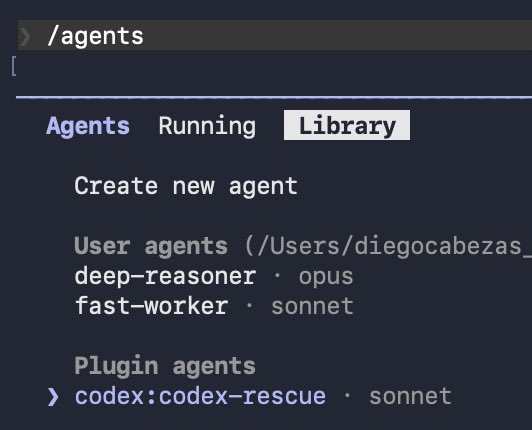
2. Create 2 subagents with /agents In Claude Code:
deep-reasoner → pinned to opus "Use for reasoning-heavy phases, architecture, debugging complex issues, algorithm design. Think thoroughly, return a concise conclusion the orchestrator can act on."
fast-worker → pinned to sonnet "Use for mechanical tasks, boilerplate, tests, formatting, simple edits. Execute efficiently."
3. Add OpenAI's official Codex plugin (install codex cli in your computer first), In Claude Code type:
/plugin marketplace add openai/codex-plugin-cc
/plugin install codex@openai-codex
/codex:setup
4. Drop this in your CLAUDE.md in your folder:
## Orchestration workflow
You (Fable) are the orchestrator. Plan, decompose, synthesize.
Reasoning-heavy phases → deep-reasoner
Mechanical work → fast-worker
Codex (/codex:rescue --background) is a cracked engineer on par with deep-reasoner, from a different perspective. Treat as a peer, not a reviewer.
High-stakes decisions: task Opus + Codex on the same problem in parallel, synthesize the best of both, without showing either the other's answer. Keep your own context lean.
5. Then prompt Fable like a tech lead: "Goal: [what you want] Context: [files, constraints] You're the lead. Delegate reasoning to deep-reasoner, grunt work to fast-worker, fresh-perspective problems to Codex. Show me your plan first, then execute."
That's it.