Sri Lanka has abolished pensions for its parliamentarians. Public office is a responsibility, not a lifelong entitlement. Taxpayer money must serve the people, especially with pressing needs in healthcare and education.
Time to rethink political privileges in India?
I have replied to @nishikant_dubey notice of defamation. Sent to your advocate Amit Awasthi on 26 September. I post it here for everyone’s information. Reply to the Notice of Nishikant Dubey for Alleged... https://t.co/AS3zIP48di
India mein koi 5 minutes number Google kar le to doodh ka doodh paani ka paani ho jaye.
RBI surplus to Govt : ₹2.87 Lakh Crores (US$30 Bn)
Total listed bank profits : ₹4.11 Lakh Crores (US$42 Bn)
NPCI - which runs UPI pre tax ‘surplus’ : ₹ 1,888 crores (US$200 Mn)
To nuksaan kis ka ho raha hai UPI se aur kaunsi subsidy de rahi hai Govt UPI pe jo chubh rahi hai?
Cost of running ATMs and cash logistics in India is ₹30,500 crores (US$ 3.0 Bn). If you want to optimise shut ATMs and promote UPI instead.
Any levy on UPI is just tax collection. UPI is the one scientific achievement of India everyone acknowledges par ab tax ki bali chadhegi.
UPI Charges Row | Ashneer Grover Exclusive
If I transfer ₹1 lakh to my friend through UPI, or I pay ₹3,000 using a QR code, what is the cost of running the system? The cost is the same. So, if I transfer ₹1 lakh to my friend, nobody is making money from it. But if I make a payment of ₹2,500 to a small shopkeeper then the government wants to put charges, what’s the logic? — @Ashneer_Grover speaks to @shreyadhoundial
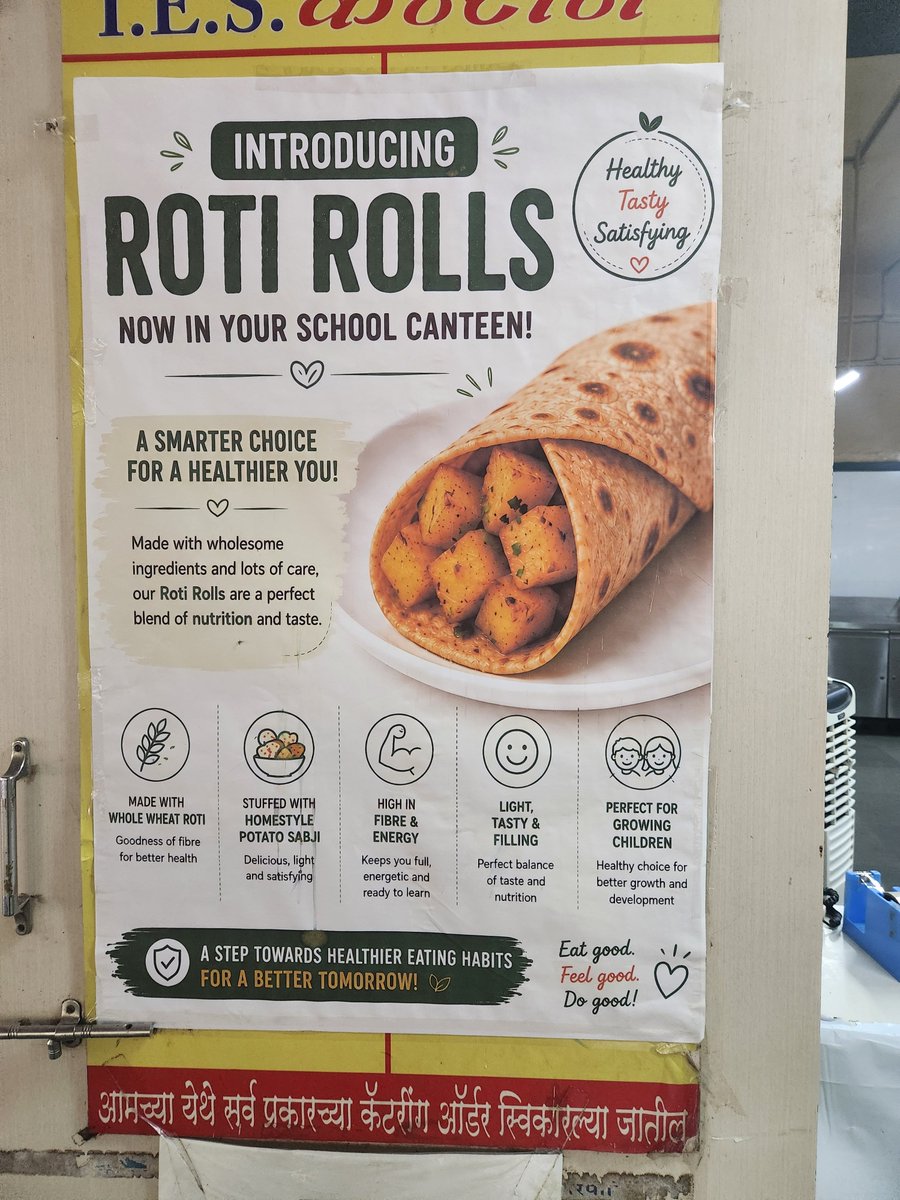
The Tukaram Mundhe impact is clearly visible in Mumbai.. Posters and banners almost outside every restaurant assuring people and authorities that they are following FSSAI norms... it's great to see one man impacting the entire food industry.. imagine if all officials start taking their job seriously.. or is it too much to ask? @Tukaram_IndIAS
The Finance Minister’s response to my so-called ‘canards’ hinges on 5 dubious claims -
1. Merchant Discount Rate (MDR) applies only to merchants and not to customers
This is misleading. MDR is charged to merchants but it is inevitable that they pass transaction costs on to consumers through higher prices or differential pricing - just as they do with credit and debit card payments. Moreover, "merchants" include medium and small businesses, kirana stores, and even street vendors, the very backbone of UPI adoption.
2. It will support banks and fintechs to invest more in infrastructure, innovation, and security.
UPI was built as a public digital good, and the government has a responsibility to protect it. Zero MDR was critical to its success, enabling small shops and roadside vendors to make and receive payments without transaction charges.
Better alternatives are also on the table. The RBI has the capacity to support the UPI ecosystem without charging merchants or consumers. Why is this option not being considered?
3. The Steering Committee is yet to decide on MDR.
Policymaking is not just for the present but also for the future. The Bill removes the statutory guarantee of zero-MDR under Section 10A. It leaves future charges to government notification. Government assurances or tweets are no substitute for statutory safeguards, especially when earlier assurances on retaining zero-MDR are now being reversed.
4. The timing raises legitimate concerns.
The amendment comes shortly after the U.S. Trade Representative's 2026 National Trade Estimate Report criticised India's UPI and RuPay ecosystem, as well as Brazil's Pix, since they take up market share from Visa and MasterCard. While Brazil has continued to back Pix as a strategic public digital infrastructure, the Modi Government is now weakening statutory protections for UPI.
Google Pay and Walmart-controlled PhonePe together process over 80% of UPI transactions. At a time when foreign-controlled platforms already dominate the ecosystem, India should be strengthening and not weakening its public digital infrastructure.
5. This issue could have been discussed in Parliament.
The Parliament has been dysfunctional in this session entirely due to the Modi Government’s refusal to be accountable to Parliament. The Opposition’s demand for a statement by the Home Minister on the police brutality on students on June 20th has not been heeded. Attending Parliament and answering questions is not optional, it is part of a minister's constitutional responsibility. It is the Modi Government’s evasion of responsibility which has created this situation of chaos in the House and it is the Modi Government that exploited it to pass this Bill through a voice vote within minutes of its introduction in the Lok Sabha.
First Maharashtra, now West Bengal. The BJP’s formula remains unchanged: manufacture a split, find a scapegoat. Yesterday it was Aditya Thackeray, today it is Abhishek Banerjee.
Democracy cannot survive if elected mandates are routinely subverted through political engineering, pressure tactics and backroom operations. What is being normalised today is profoundly dangerous for India’s democratic future.
Google which is cash surplus, just announced an additional capital raise of $80 bn.
Google annual profit is $160 bn, last quarter $62 bn, and market cap $4.5 trillion. That is close to total profits and market cap of all Indian listed companies put together.
It’s a wake up call to all companies to invest into the future, whatever the present maybe.
Now that IPL is done and dusted, time for India to focus on business of business.
Here is how justice works in Trump’s Washington.
The Biden Justice Department indicted Gautam Adani, one of the world’s wealthiest men, for a $265 million scheme to bribe Indian government officials and defraud American investors.
The Trump Justice Department just let him walk.
Last month, Adani’s lawyer, Robert Giuffra, who also happens to be one of Donald Trump's personal attorneys, walked into the Justice Department with an offer: drop the charges, and Adani will invest $10 billion in the U.S. economy.
When this Administration talks about fighting fraud, what they mean is fighting fraud that doesn’t come with a check attached. This is the most corrupt administration in American history, and they are not even trying to hide it anymore.
https://t.co/ZYl5XFg0Oc
Security Transaction Tax (STT) was introduced when Long Term Capital Gains (LTCG) on equities were exempt from tax. Today, tax on LTCG is at 12.5% LTCG tax while STT continues to remain in place. At a time when Foreign Investors are pulling capital out of Indian markets, there is a strong case to remove STT to attract greater foreign capital inflows into the Indian economy. FM @nsitharaman ji.
As per my knowledge, no company in India manufactures AC compressors at a truly large scale yet.
This can eventually create shortages and higher prices in ACs & refrigerators if imports get disrupted.
When you don’t have enough opportunities to earn #Dollar , the next strategy is to save #Dollar.
#DARVAS 🥸