As predicted a week ago..
Cirro went to Nairobi to beg the international community for a way out of the E-Visa situation, offering a return to "talks" in exchange.
- Concede failure on the e-visa situation, beg Somalia for a compromise (DONE ✅)
- Resume Somaliland / Somalia talks in return (LOADING 🔃)
Somalia is now telling the IC they're prepared to hand over the $60 fee while retaining full administrative control of the E-Visa system.
Somaliland can not, under any circumstances, accept implementation of the Somalian e-visa.
This is not about money. Somalians understand this too.
Accepting cash from Mogadishu in exchange for letting them control Somaliland's borders and skies is a direct surrender of our sovereignty. A state that surrenders its border control ceases to be a state.
Hadhow "waa layna khiyaameeyey" ha odhanina.
Thread 1/8:
For over a year, we have largely treated the eVisa as a diaspora issue.
It is time to recognize that it is also an economic issue.
With many diaspora staying away this year because of the eVisa, the economic impact on #Somaliland is becoming increasingly visible👇
Guinea-Bissau came close to recognizing Somaliland before Somalia intervened with backing from Turkey, Egypt and Saudi Arabia. Hargeisa has also been lobbying Eswatini, South Sudan and other African states, supported by the UAE and Israel, according to Mada Masr.
President Cirro has been failed by his advisors, and now he is failing Somaliland.
This trip to Nairobi was entirely unnecessary, unless something profound had changed, and the President was going to tell the "international community" that the rules of engagement had fundamentally shifted.
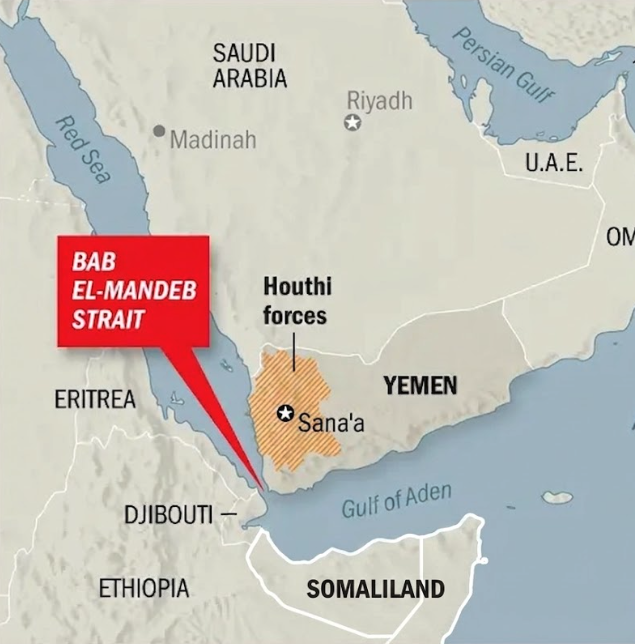
An update like: Somaliland is a recognised state now, and the IC must adjust its engagement modality or risk losing access to the most vital geopolitical real estate in the world today: the Bab El-Mandeb.
It would have been a game changer.
This was his moment "inuu badheedho", xiniiyo yeesho (to quote the man himself). Instead, President Cirro went to Nairobi to:
1. Concede failure on the E-Visa situation and offer to sit with Somalia, a hostile state actively arming terrorists in Somaliland, in exchange for Somalia showing mercy and "honouring past agreements" (meaning: naga qaleeya oo e-visa naga saara).
2. Insult our civil defence forces at an international forum by labelling them a "militia" for cheap brownie points, completely ignoring how disarming them created a vacuum which is now directly fueling ongoing suffering of nomads in eastern and southern Somaliland.
3. Hold out a begging bowl for more international support.
What a shame. Given what's happening in the world today, and Somaliland's unique geopolitical access to the Red Sea, he could have extracted real concessions.
One of the most tragic consequences of Somaliland's lack of wide global recognition is its exclusion from bodies like @UNESCO, putting irreplaceable world heritage at risk.
While UNESCO helps Somalians preserve the Radio Mogadishu archives (est. 1951), Somaliland's more culturally significant Radio Hargeisa (established in the 1940s as the oldest Somali radio archive), is left without international support.
Somaliland needs recognition not just for its own survival, but to protect world heritage before it is lost forever.
Developments around the Bab el-Mandeb are giving Somaliland more leverage than it has had in decades, possibly ever.
An incoming UK government will be looking for opportunities to demonstrate Britain's relevance on the world stage.
Somaliland should make the most of this moment.
Call their bluff.
Tell @HeadBritOffice: formally recognise Somaliland, or make room for others who will.
Moments like this don't come twice.
Why Has #Somaliland's Oil Exploration Stalled for Nearly 15 Years?
It was in August 2012 that Somaliland officially announced the launch of oil exploration, drilling, and other petroleum development activities for the first time.
London-based #GenelEnergy was awarded licenses to explore and produce what was expected to become Somaliland's first commercially produced oil, particularly in designated blocks located in the Saraar and Daadmadheedh regions.
At the time, Genel Energy promised to move quickly with drilling operations and expressed confidence that production would begin within a relatively short period. However, those commitments were never fulfilled. The company had initially announced that drilling would begin in 2014, but the project failed to progress as planned.
Nearly 15 years later, the people of Somaliland are still waiting to hear that oil has been commercially produced or that full-scale extraction has genuinely begun. Three successive Somaliland administrations have inherited the project, with each government assuring the public that oil production was approaching. Yet no tangible results have been delivered.
This raises several important questions:
* What has gone wrong?
* Why has oil production failed to begin after almost two decades?
* Who is responsible for the continued delays?
Genel Energy, the company licensed by Somaliland to carry out oil exploration, has significant Turkish ownership. Turkey was also the country that initially engaged Somaliland on the project and encouraged the government to award exploration blocks to the company. During the period between 2011 and 2015, when Turkey enjoyed considerable influence in Somaliland, it successfully persuaded the Somaliland government to allow Genel Energy to conduct oil exploration. According to a 2012 VOA report, Turkey hoped to develop Somaliland's oil resources under agreements reached with the government at the time.
In 2012, Tony Hayward, then Executive Chairman of Genel Energy, visited Hargeisa and met with former Somaliland President Ahmed Mohamed Mohamoud "Silanyo." During the visit, he announced that the company would soon begin drilling Somaliland's first exploratory oil well. However, Hayward left the company in 2017 without delivering on those promises.
Today, nearly 15 years later, Genel Energy—which remains partly owned by Turkish interests—still holds Somaliland's oil exploration rights. None of the major commitments made by the company have been fulfilled. Meanwhile, Turkey has moved ahead with implementing the oil exploration agreement it signed with Somalia in 2024, where exploration activities are already underway.
Whether relations between Somaliland and Turkey were strong or strained, little visible progress has been made on Somaliland's oil project.
The Somaliland government has also never fully explained to the public why the project remains stalled or what obstacles continue to prevent commercial oil production.
For comparison, Genel Energy began drilling an exploration well in Côte d'Ivoire in 2015. Although no commercial oil was discovered there, the exploration itself proceeded within the same year. In Somaliland, however, the company has stated that hydrocarbons were discovered and that wells, including the Toosan well near Qoryaale, were identified as promising. Despite this, no commercial production has followed.
To understand just how much time has passed while Somaliland's oil project has remained inactive, consider what has happened since 2012:
* The Port of Berbera has been expanded.
* The Berbera Corridor has been developed.
* Somaliland secured its first international recognition.
* Three presidents have served in office.
* Two parliamentary terms have come and gone.
* A child born in 2012 is now around 14 years old and could be reading this article today.
When will the people of Somaliland be told the full truth about why an oil exploration project has taken nearly 15 years without reaching product
I viewed the latest article from Ethiopia’s institute of foreign studies @ifa_ethiopia (part of Ethiopian MFA) with a degree of interest and I wish to articulate a short answer to the flawed premise of the article.
Somaliland rejects and will always reject the notion of “operational recognition”. Recognition is inherently a political act, yet it carries profound legal and judicial consequences that precede and exist independently of any bilateral cooperation. In simple terms: Ethiopia must either formally recognise Somaliland as a sovereign state based on the principle of state continuity under international law or it does not. States equality is essential to bilateral relations. There is no meaningful middle ground.
We will not trade the inherent right to independence, which our people earned with their blood, for anything less than full and unambiguous recognition.
https://t.co/yBPMkbGRKb
The debate among Somalilanders on electricity access is missing the mark entirely.
Somaliland has no power stations capable of generating and supplying reliable electricity to cities and businesses. As a direct result, there are virtually no factories or industries in the country, because high-voltage power, essential for industrial machinery, simply does not exist.
Successive Somaliland governments have made little to no serious effort to attract investment for the construction of proper power infrastructure.
The current administration’s attempt to establish a national electricity company was reportedly blocked by entrenched diesel generator monopolies that profit from the status quo of expensive, unreliable subsistence power. Even the government’s plan to import electricity from Ethiopia carries significant national security risks and should be reconsidered or dropped altogether.
The consequences are severe: Somaliland suffers from one of the highest electricity costs per kWh in the world. This cripples economic growth, deters serious investors, and makes industrial development nearly impossible.
Mr. President @Abdirahmanirro, it is time to get serious. Somaliland urgently needs a financed, sovereign solution to build its first modern power station. Without reliable, affordable, and scalable electricity, meaningful economic progress will remain out of reach.
These diesel powered generators typically used in remote construction sites cannot be the basis for generating power to cities. It just doesn’t work and makes no sense.
President @Abdirahmanirro: your admin needs to do what a responsible government with long term thinking would have done. Find a way to build power station(s).
Support the President who sacrificed himself for his country and do not be a vessel for his opponents.
Re-cap on Abdirahman cirro current record:
Less than two years ago today, he was sworn in, inheriting a fractured nation with tribal militias, an invading force on its borders, and immense challenges ahead.
He isolated Ban Qiyaame milita to lascanood, secured Somaliland’s re-recognition despite hostile neighbours and Turkish diplomacy working in Somalia’s favour, and carried out military integration by bringing tribal militias into the national armed forces.
Now, he has taken a people who were once ridiculed over “ictiraaf” (recognition) to a point where the debate is no longer if recognition will come, but where embassies should be based.
He moves on to tackling the remaining barriers facing his nation: economic restrictions, aviation limitations, international investment, trade access, diplomatic expansion, and full international recognition.
The President’s challenge was simple:
If you’re against Somaliland’s recognition, have the courage to say it. Stop hiding behind political theatrics and tell the people where you stand.
Declare your opposition openly and let the citizens decide.
Somalian was the correct nationality prior to Somalia gaining independence from the UN trusteeship system.
Somali as a nationality has been pushed by the Somalian government because it claims sovereignty and jurisdiction over all Somali speakers including the ones in Kenya, Somaliland, Ethiopia and Djibouti.
The five pointed star and the citizenship laws are all based on irredentism.
⏹️1946 list of displaced peoples including Somalians 👇
🚨🚨 Historic moment when Israeli President Isaac Herzog received credentials of Somaliland’s FIRST EVER Ambassador to Israel.
Happened on Somaliland's Liberation Day of 18 May too!
Thank you Israel 🇮🇱👏👏👏👏
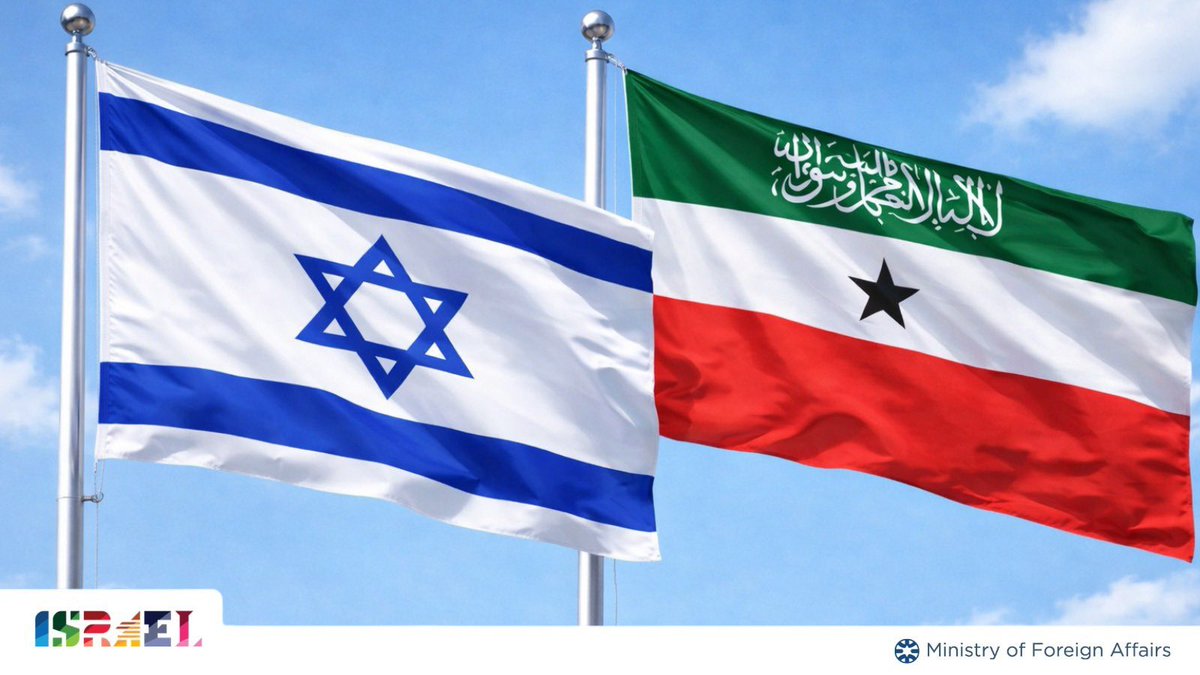
Following the establishment of diplomatic relations between Israel and Somaliland on December 26, 2025, and in line with the understandings reached during the visit of the Minister of Foreign Affairs Gideon Sa’ar to Somaliland last month, the government of the State of Israel has granted an agrément to Somaliland’s first Ambassador to Israel, Dr. Mohamed Hagi.
Ambassador Dr. Mohamed Hagi currently serves as an advisor to the President of Somaliland and was a member of the inner circle of officials who promoted the establishment of relations between Israel and Somaliland throughout 2025.
An Israeli Ambassador to Somaliland will soon be appointed - an additional step in strengthening relations between the two countries.
In addition, this week, a designated course is being held in Israel by MASHAV, the International Cooperation Center of the Ministry of Foreign Affairs, for the Somaliland Water Authority and the Director General of the Ministry of Water of Somaliland. The course is intended to assist in the construction, development, and planning of the water sector in Somaliland, and to strengthen professional cooperation between the sides.
Kenya views Turkish energy exploration in contested areas in the Indian Ocean as provocative.
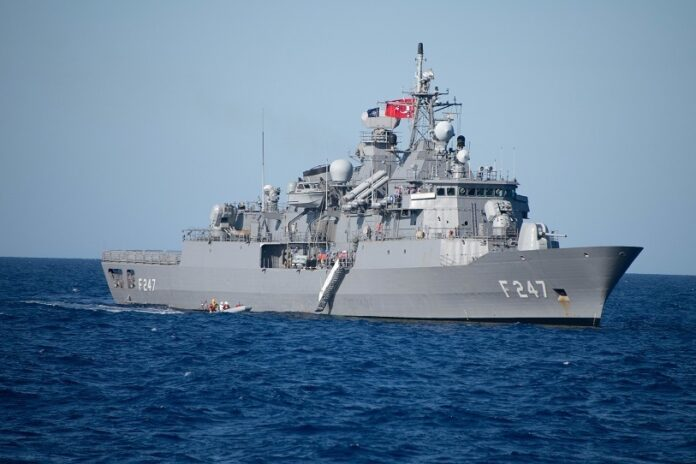
It also views Turkish navy encroachment on areas close to its border as provocative.
The offshore exploration bid auction is in maritime areas Kenya believes belong to it. The area covers 100,000-square-kilometres.
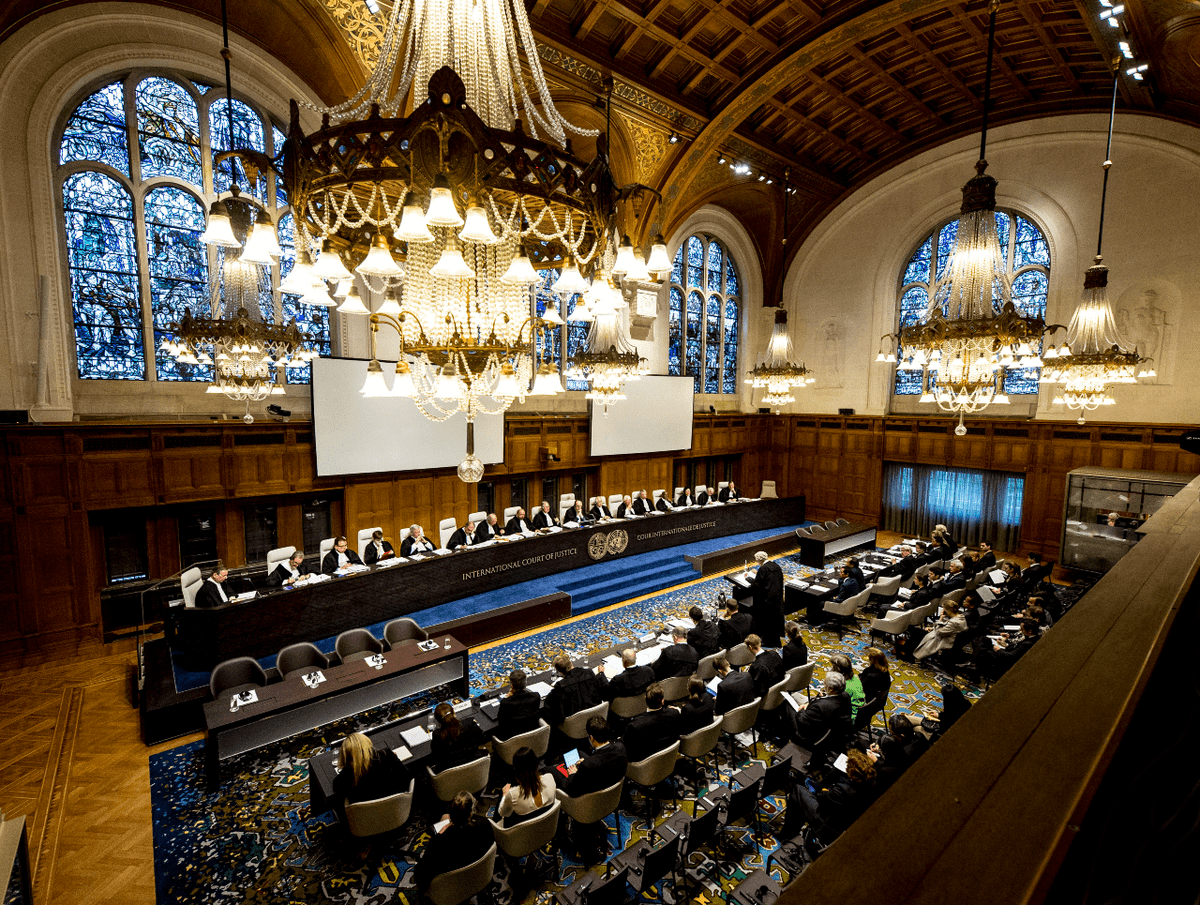
Kenya never accepted a ruling by the ICJ that awarded bulk of contested energy blocks to Somalia in Oct 2021.
Nairobi has also made it clear it wants to move ahead with plans to auction, commercialise the blocs.