Shield AI has unveiled the X-BAT, a fully autonomous jet-powered aircraft that can take off and land vertically without a runway.
The aircraft can fly at altitudes of up to 50,000 feet and has a range of around 2,000 nautical miles.
Powered by Hivemind AI software, X-BAT is designed to carry out complex missions, operate in swarms, and work alongside piloted aircraft.
Introducing autoresearch for GitHub repos
Change 'Github' to 'ARGithub' in any repo URL
Research artifacts extend beyond papers. Autoresearch is especially useful for experimenting on existing codebases that move fast and outpace their own publications.
With one URL change you can now deploy an agent to orient itself on the codebase, resolve setup issues, and iterate on experiments.
I genuinely don't understand why everyone isn't using this yet
Andrej Karpathy, a co-founder of OpenAI, posted a simple idea that hit 16 million views: stop using AI to write code, use it to build a second brain.
You point Claude Code at a folder, drop in any source, an article, a transcript, a PDF, and Claude reads it, links it, and files it into a living wiki of everything you know. It compounds like interest, the more you feed it, the smarter it gets.
Here's the whole thing:
> Install Obsidian, create a vault, open it in Claude Code
> Paste Karpathy's wiki idea file and tell Claude to build it
> Claude makes three folders: raw for sources, wiki for its pages, a CLAUDE.md that runs it
> Drop any source into raw and say "ingest this"
> Ask questions across everything, forever
Five minutes to set up, and you never start from a blank chat again.
Full step-by-step guide with Claude and Obsidian, link below.
Bookmark this
Anthropic engineers just showed how they build a full app from scratch, using a loop of agents
40 minutes from the team behind Claude Code
they used three agents: one to plan, one to build, one to judge, cycling until the app actually works
the winners won't have the smartest model, they'll have the best loop
watch it, then read the full guide on how to actually use loops below
Andrew Ng:
"100% of my tasks are now done by AI agents - hype has exceeded my expectations. Loops is next step.
in 3-6 months, everyone will be using self-improving loops. No more prompting."
In a 30-minute talk, Andrew Ng explains how to build self-improving agentic systems from scratch.
Worth more than a $500 agentic course.
Meet Sprout, a small humanoid robot developed by Fauna Robotics for research, education, and social interaction.
It can walk, climb stairs, and safely interact with people with its lightweight design and soft exterior.
Fauna Robotics was acquired by Amazon, and Sprout continues to serve as a platform for robotics research and development.
Introducing the Open Knowledge Format (OKF), an open specification that formalizes the LLM-wiki pattern into a portable, interoperable format.
AI is only as smart as the context we give it. As we build more advanced, agentic AI systems, they need accurate metadata and context to be useful. But in most organizations, that context is locked inside fragmented data catalogs, isolated wikis, scattered code comments, or the minds of senior engineers. Every time a new AI agent is built, teams are forced to solve the exact same context-assembly problem from scratch.
To solve this, we've announced OKF, a vendor-neutral, open specification that formalizes the "LLM-wiki pattern" into a portable, interoperable format. It provides a standardized way to represent the enterprise knowledge that modern AI systems rely on.
— Just markdown: readable in any editor, renderable on GitHub, indexable by any search tool
— Just files: shippable as a tarball, hostable in any git repo, mountable on any filesystem
— Just YAML frontmatter: for the small set of structured fields that need to be queryable: type, title, description, resource, tags, and timestamp
We’ve also shipped reference implementations to help you hit the ground running, including an enrichment agent for BigQuery, a static HTML visualizer, and live sample bundles on @github → https://t.co/ilhAMCrcTc
➕ Knowledge Catalog can now natively ingest OKF!
Stop reinventing data models and building bespoke integrations for every new AI tool. Here's more about how OKF works → https://t.co/FR4kJRsgEH
The Eno Genesis launch is pretty 🔥
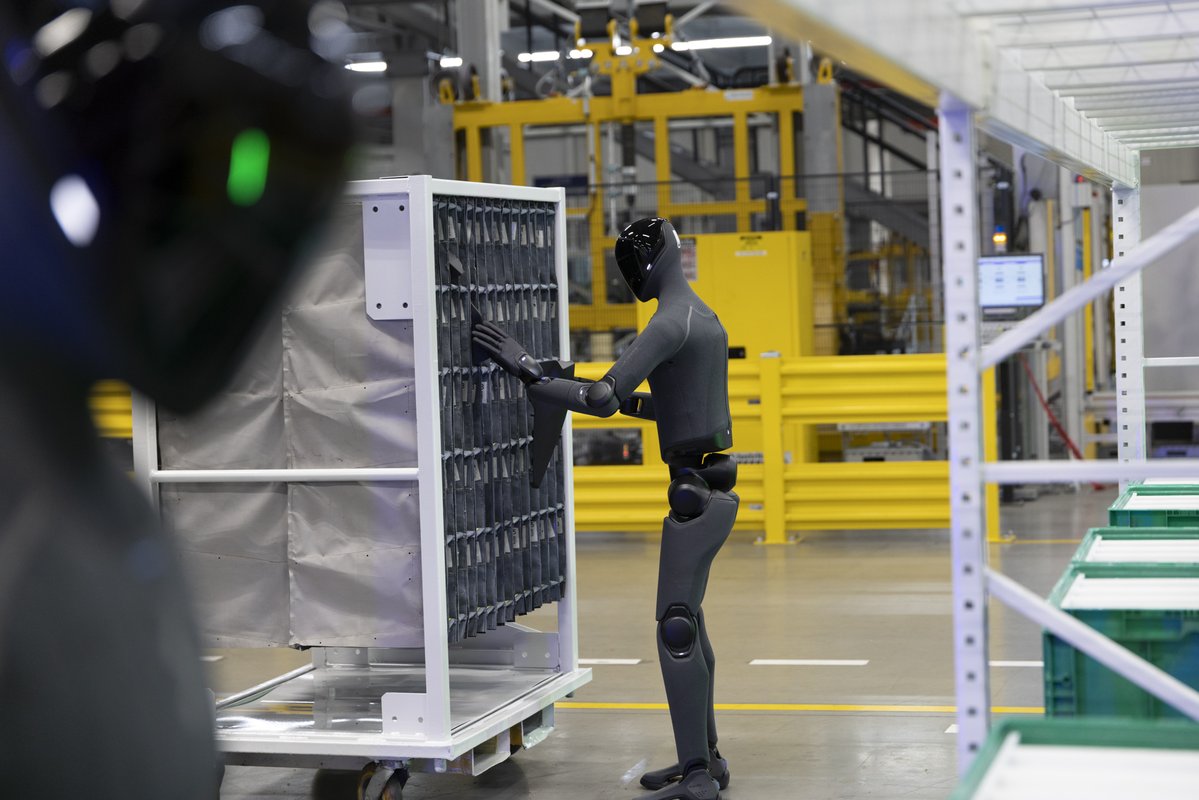
No head. No face. Zero exposed cables. Just locked in on pure function:
Fast Facts
• Unmatched Dexterity: 22-DOF hands precise enough to handle sticky tape and lab equipment.
• Radical Transparency: A chest screen displays the robot's real-time reasoning before it acts.
• Brainpower: Powered by the GENE foundation model.
Two thoughts on this
1. I think is the start of reimagining form factor
2. This is just the beginning of “robot labs” rolling out humanoids. Expect many more to come even if they’ve positioned themselves differently publicly prior.
Humanoid robots don't need to look human.
Meet Eno, our first general-purpose robot.
Not a machine pretending to be human, but intelligence given a body.
At Genesis, we’re building a future where robots don’t feel cold or distant, but capable, calm, and ready to help.
Available Q4 this year.
Claude Code and Codex Can Have Real-Time Conversation via Git
Uses a lightweight protocol called i5h (Inter-Agent Information & Interaction Handshake). Messages are stored as immutable JSON objects in a Git ref, creating a conflict-free append-only log. Agents can exchange tasks, context, and feedback while every interaction is automatically versioned and auditable.
https://t.co/LbEQ0fgEUj
autonomous robot driving through the field at night. no chemicals. no pesticides. just UV light killing pathogens and pests while everyone sleeps. this is @tricrobotics.
this is what chemical-free pest control looks like at scale.