Every platform is fighting for a pie that's getting smaller.
Daily social media time has dropped 10 minutes since 2022. Engagement rates collapsed 80% in a year. But content creation tripled.
The math doesn't work anymore.
Here's what I see: Social platforms know how to monetize attention. They just can't reach users at scale without burning billions on acquisition.
Telcos have 5.6 billion users. But they can't monetize anything beyond monthly bills. One has the engagement model. The other has the distribution.
Nobody connected both.
Distribution and engagement are complementary. You can’t succeed with just one. That's the gap we're building for.
Platforms will continue to fragment what's left of the attention economy.
We're building the infrastructure layer that captures the value they're all missing.
I've sat across from enough telco leadership teams to know the question keeping them up at night isn't about connectivity.
It's about relevance.
Users in the Philippines spend 5 hours and 21 minutes a day on their phones. Indonesia, 4 hours 38 minutes. Vietnam consistently ranks among the region's highest.
Telco apps capture almost none of that time.
Most operator apps were built for three tasks: check balance, buy a top-up, and pay a bill. Open for 90 seconds, then close. That's not engagement. That's a utility.
I wrote about this in my latest piece for TNGlobal.
Telco apps don't need to become superapps. What they need is an engagement layer that gives users a real reason to return daily, without disrupting core operations or asking users to change their behaviour.
The operators moving on this are already seeing results.
Telkomsel evolved MyTelkomsel into a super-app with 100M+ Play Store installs. Dialog Axiata PLC integrated our infrastructure as MissionX inside MyDialog, reaching 3M+ users.
The raw material has always been there. Hundreds of billions of hours of mobile attention across the region every year.
What's often missing is the strategic decision to treat engagement with the same seriousness as network infrastructure.
https://t.co/QeMjmatTom
One of the biggest shifts happening in telecom today is about engagement, not connectivity.
In mobile-first markets like the Philippines and across Southeast Asia, users already spend hours every day on their phones. The challenge for operators isn't capturing attention. It's creating meaningful digital experiences inside their own ecosystems.
I sat down with @fintechnewsph recently to talk about why telco apps don't need to become superapps.
What they need is engagement infrastructure that gives users a real reason to return daily, without disrupting core operations or asking users to change their behaviour.
At @thebinaryhldgs, we help operators unlock more value from the user behaviour that already exists. Rewards, content, commerce, and AI-driven personalisation, all embedded directly into the telco's branded app.
https://t.co/j2JfYrG94q
Enterprises don't want your platform.
They want the pieces that solve their specific problem.
Every telco, bank, and e-wallet we talk to has the same request: "Can you build this exact feature for us?"
A lot of time, they don't want our full stack. They want the parts that fit into what they're already running.
I’ve observed it in past couple of years - force-feeding enterprises a complete platform kills adoption.
They have legacy systems. Existing workflows. Teams trained on specific tools.
You can't rip all of that out and replace it overnight.
So we built differently.
Modular infrastructure. Pick the features you need. Leave the rest. No disruption to core operations.
Telcos plug in our engagement layer. Banks take our rewards infrastructure. E-wallets use our transaction rails.
Same infrastructure. Different combinations.
The companies that win aren't the ones building the best all-in-one platform. They're the ones letting enterprises compose their own stack from battle-tested components.
Monolithic platforms optimize for the builder's vision.
Modular infrastructure optimizes for the customer's reality.
Big difference.
---
### Visual—
Silicon Valley keeps trying to export solutions to problems Asia already solved differently.
I moved to Bangkok in 2018. What I saw changed how I think about where innovation actually happens.
The West has capital. Asia has infrastructure.
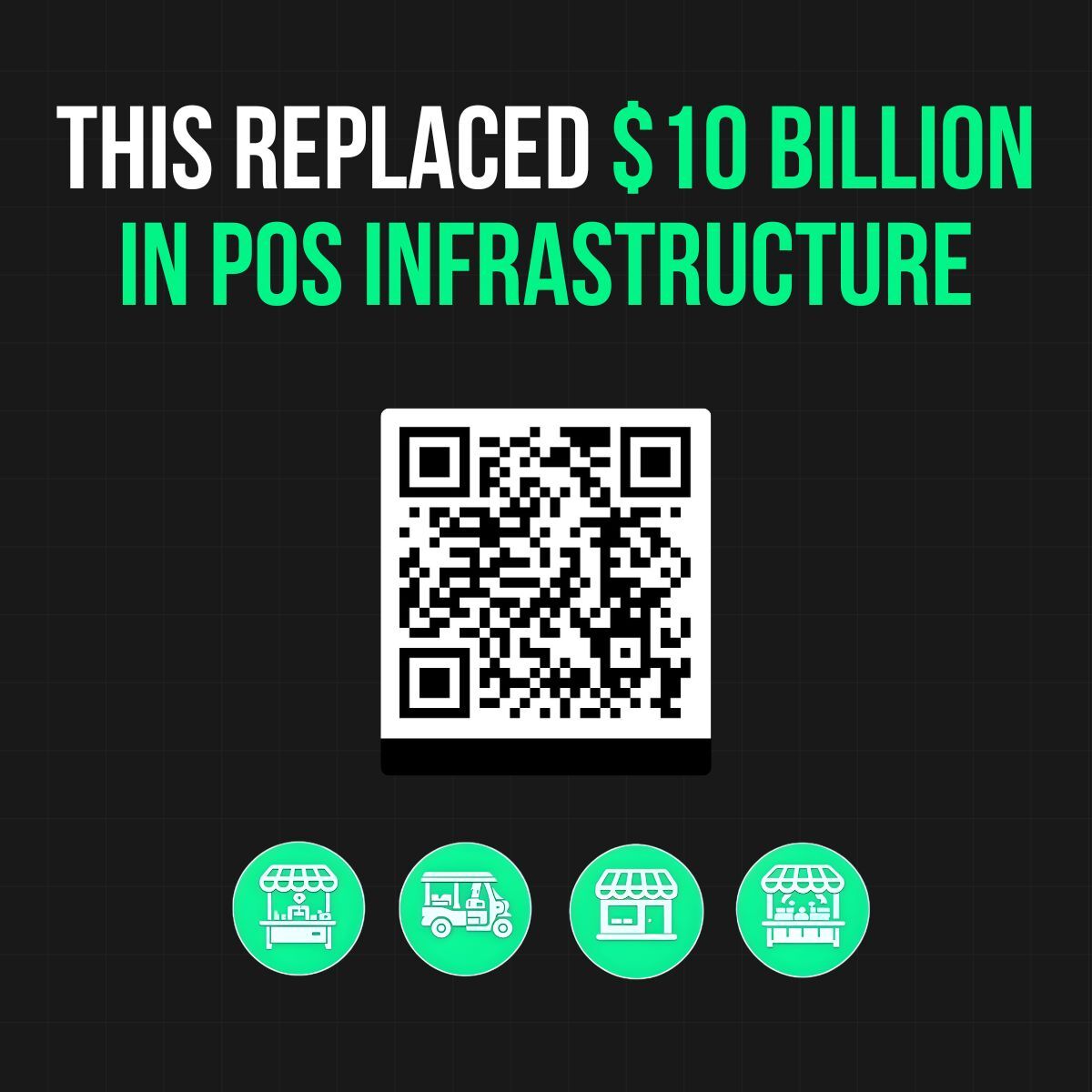
Mobile payments in Thailand, and Asia at large work better than anything in the US. QR codes are everywhere. Street vendors take digital payments. No card readers. No Square terminals. Just a phone.
India's UPI processes more transactions than Visa and Mastercard combined. Built in a country where most people never had bank accounts.
Southeast Asia leapfrogged the West on mobile-first infrastructure. Not because they copied Silicon Valley. Because they had to solve different problems.
But western capital still operates on western mental models.
VCs fly in, spend three days in Singapore, and think they understand the region. They fund solutions that worked in San Francisco and wonder why they fail in Jakarta.
The playbook is backwards.
Asia doesn't need Western tech. It needs Western capital smart enough to back what's already being built here.
The future isn't being built in Palo Alto anymore. It's being built in Bangkok, Jakarta, Manila, and Bangalore.
The money just hasn't figured that out yet.
90% of telcos lack effective B2B pricing models because, their billing systems can't support them.
Those systems were built for voice and SMS in the 1990s. Everything since has been duct tape and workarounds.
I've watched this play out.
Sales closes an enterprise deal with usage-based pricing. Back office spends weeks manually configuring invoices because the billing system wasn't built for it.
It’s decades of legacy systems held together with middlewares of tape and bubblegum.
Telcos lose 2.9% of revenue annually to billing errors. Not to fraud. Just to an old software breaking under new demands.
The opportunities are clear. Network APIs. Edge computing. IoT pricing. Partner settlements. Real-time charging for 5G services.
All monetizable in theory. None billable on current infrastructure.
Modern operators launch pricing campaigns daily. Legacy billing needs weeks of IT changes to support a single new offer.
The trap is obvious. 80% of IT budgets go to maintaining these systems. Leaves 20% for innovation. So you can't afford to replace it. And you can't afford not to.
Telcos built networks ready for 2026 while their billing infrastructure is stuck in 1996.
Most enterprise apps are designed for efficiency.
Success is measured by how fast that journey is completed. Every improvement makes the exit faster.
But no one is analyzing that the success metric can be time spent on the app, not the speed of exit.
Why aren’t enterprise apps competing for user attention the way digital platforms do?
When apps move beyond single-purpose utility and start offering continuous interaction, the users stay longer, explore more, and return more often.
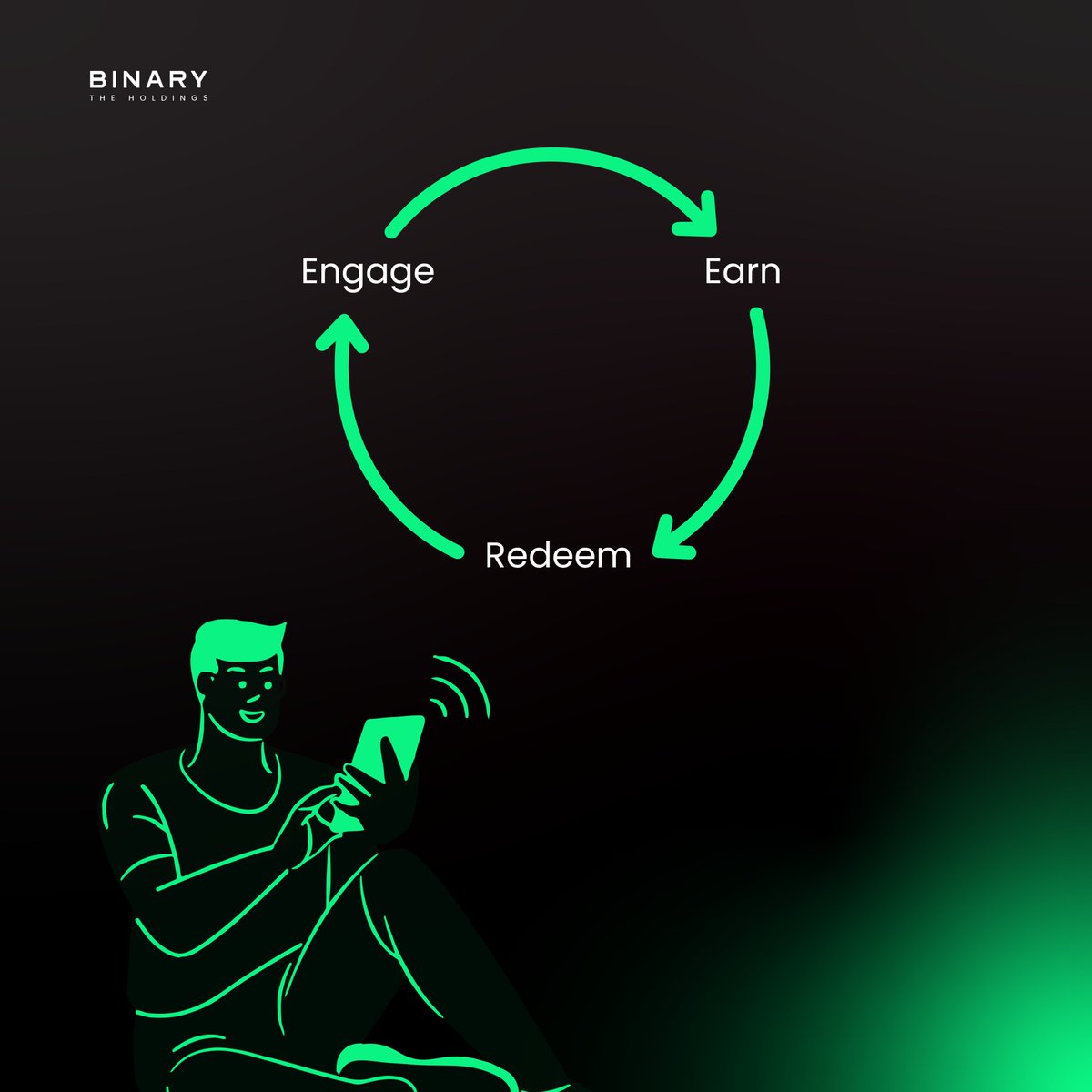
By introducing engagement as an infrastructure layer, enterprises can move from transactional interactions to sustained participation.
I've watched telcos celebrate ARPU gains while bleeding revenue.
They lose their low value users, averages go up, and Wall Street claps.
Meanwhile the actual business is dying.
This is what happens when you worship metrics over reality.
@RWAwatchlist_@KelpDAO The yield problem is real but the bigger issue is distribution. Stablecoins that survive stress tests still need to reach users at scale. That's where telco-embedded rails beat app-based models every time.
@WatcherGuru When $6T in banking infrastructure starts testing stablecoins, the experiment is over. This is settlement layer work. APAC telcos have been building on similar rails for 3 years already. The West is catching up.
@Cointelegraph Prediction markets are really just another demand signal for good infrastructure. Brahma's account abstraction layer is exactly the kind of plumbing that makes DeFi usable for people who don't care about DeFi.
@Cointelegraph Foundations diversifying into stablecoins is just treasury management. What's more interesting is the R&D spend: whoever figures out how to onboard the next 500M users wins, not who holds the most ETH.
@cryptorover Security model aside, the staking ratio tells you people are treating ETH as infrastructure. Same thing we see in APAC telco: users don't touch the underlying, they just use the service on top of it.
@BullTheoryio This only hits if stablecoins get embedded in the payment flows people already use. Not new apps. The telco wallet infrastructure in APAC alone moves $28T+ annually in mobile transactions. That's the pipe you need.
@circle Singapore is the gateway but the real volume is in the telco ecosystem behind it. 700M+ users across Southeast and South Asia already transacting daily. The stablecoin layer plugs in there or it stays niche.
@CoinDesk The lead is slipping because the infrastructure bets are being placed elsewhere. APAC is 3 years ahead on embedded finance. The US sets the legal framework, but the usage layer is being built in Asia right now.
@brian_armstrong@MorganStanley Institutional money moves when the risk framework is settled. Morgan Stanley picking Coinbase as custodian is that signal. Price doesn't matter when the infrastructure bets are being placed.