An AI expert in Context engineering | prompt engineering| vibe coding, automation and agentic AI development.
Focusing on emerging tech and its potential.
The best way to learn AI is to work at an AI startup.
On August 15, we're inviting ambitious students to YC HQ to meet founders and engineers from 50+ YC companies.
Roam the expo hall to meet founders (and collect swag), startups pitch you, interview onsite, and land your Summer 2027 internship – co-ops and more.
Many founders start their customer search with cold email, LinkedIn, and prospecting tools. But the first 10 customers rarely come from a tool. It starts somewhere else: your network, showing up in person, and a willingness to do things that don't scale.
In this episode of Startup School, YC Visiting Partner @maxkolysh draws on dozens of YC founder stories to explain how to identify the right buyers, start conversations, and turn them into your first customers.
0:00 - Why the first 10 are different
0:54 - Where does your buyer actually spend their time?
2:45 - Customers 1–3: work your warm network first
4:20 - Get in the room
5:14 - Conferences and founder dinners
6:15 - Find where your customers complain online
7:30 - How to go outbound
8:35 - Frame outreach as advice
10:20 - Writing outreach that sounds human
13:15 - Recap: The first 10 come from you
We’re expanding OpenAI Daybreak to help democratize patching vulnerable software at machine speed:
- Codex Security plugin: find, validate, and fix vulnerabilities right inside Codex
- The full version of GPT-5.5-Cyber model: a great model for trusted defenders
- Cyber Partner Program: powering products built on top of our best cyber capabilities for leading security companies to secure the world's software
- Patch the Planet: working with maintainers to secure critical open source projects
https://t.co/hyIi6gQmkm
For ongoing tasks, like planning a wedding or managing a move, Search will soon be able to build custom experiences with Google @Antigravity that you can continue to come back to and make progress on. Think of them like building your own mini apps right in Search.
Here’s @rmstein, VP of Product, Search demoing the new tool on the #GoogleIO stage.
Google has published a paper that might end the transformer era.
For the last 7 years, every major AI, ChatGPT, Claude, Gemini, has been built on the exact same architecture: The Transformer.
But Transformers have a fatal flaw.
To remember context, they have to process every single word against every other word. It’s called quadratic complexity. As your prompt gets longer, the compute cost explodes.
The alternative is the old-school RNN (Recurrent Neural Network). RNNs are incredibly cheap and fast, but they have a fixed memory size. If you give them a long document, they get amnesia.
Until today.
Google researchers published Memory Caching: RNNs with Growing Memory.
And it fixes the biggest bottleneck in AI.
Instead of an RNN having a fixed, rigid memory that constantly overwrites itself, Google gave it a "save" button.
The technique allows the RNN to cache checkpoints of its hidden states as it reads.
The memory capacity of the RNN can now dynamically grow as the sequence gets longer.
They built four different variants, including sparse selective mechanisms where the AI actively chooses exactly which checkpoints matter most.
The results rewrite the rules of efficiency.
On long-context understanding and recall-intensive tasks, these new Memory-Cached RNNs closed the gap with Transformers.
They achieved competitive accuracy without the explosive, quadratic compute cost. It perfectly bridges the gap between the cheap efficiency of an RNN and the massive capability of a Transformer.
We have spent billions scaling Transformers because we thought they were the only way an AI could remember a long conversation.
But Google just proved we don't need to process the whole history every single time.
We just needed a smarter cache.
We’ve been researching new ways for ChatGPT memory to carry context across conversations and keep it useful over time.
Today, that work is rolling out as a more capable memory system in ChatGPT. https://t.co/0MyFKCe2Mu
One of the new, buzzy jobs in Silicon Valley is the AI Forward Deployed Engineer (FDE), an engineer who is embedded within a client organization to help customize solutions, such as building and tuning agentic workflows that suit the client’s particular needs. I’ve heard from people who are wondering anew about the FDE career path since OpenAI and Anthropic started building new teams to place FDEs within client organizations.
The rise of FDEs for AI workloads is one way AI is creating new jobs (and why the jobpolcalypse narrative of upcoming job market collapse is false -- there will be many AI and non-AI jobs). However, I believe there will be far more AI Engineer jobs than FDEs, as I explain below.
The FDE role was pioneered about two decades ago by Palantir, which sent engineers to government locations to work on secure, air-gapped networks. In addition to having good technical skills, FDEs need communication skills and sometimes business skills. For example, they may need to speak with clients to understand their needs, formulate a strategy to prioritize projects, explain complex technology, and respectfully push back if a client asks for something unrealistic. They’re enjoying a resurgence because of the amount of work involved in taking an off-the-shelf LLM and building it into a custom agentic workflow that fits particular business needs.
However, I believe the number of AI Engineer jobs will be far larger. A company might accept a few FDEs to be embedded within its organization. But most companies will want far more of their own employees working on their projects. While my organizations do hire FDEs, we hire far more AI Engineers! Also, a common client concern is that it is hard to find vendor-neutral FDEs — they are, after all, there to deeply integrate a particular vendor’s product into a company. In this moment when it’s hard to predict which AI service will be the best one in a year’s time, optionality (the ability to pick whatever vendor turns out to fit best in the future) is very valuable. In contrast, letting FDEs tightly bind a company’s processes significantly reduces optionality.
Right now, I see surging demand for AI Engineers who can build software applications using AI software components (like LLM prompting, agentic frameworks, evals, etc.) and effectively use AI coding agents (like Claude Code, Codex, Antigravity CLI, and OpenCode). As the AI Engineer role matures, I expect it to fragment into more specialized roles, like the generic Software Engineer role from decades ago fragmented into frontend, backend, mobile, data engineering, devops, and so on.
What will be the future, specialized AI engineering roles? I don’t know. Perhaps there will be AI FDEs, LLMOps Engineers, Evals Engineers, AI Data Engineers, Harness Engineers, and other roles we don’t have names for yet. But for now, I see a lot of AI engineers who are generalists create a lot of value. Skilled AI Engineers are in very high demand! As our field continues to mature over the coming decade, I look forward to new specializations within AI Engineering that create even more job opportunities.
[Original text: The Batch newsletter]
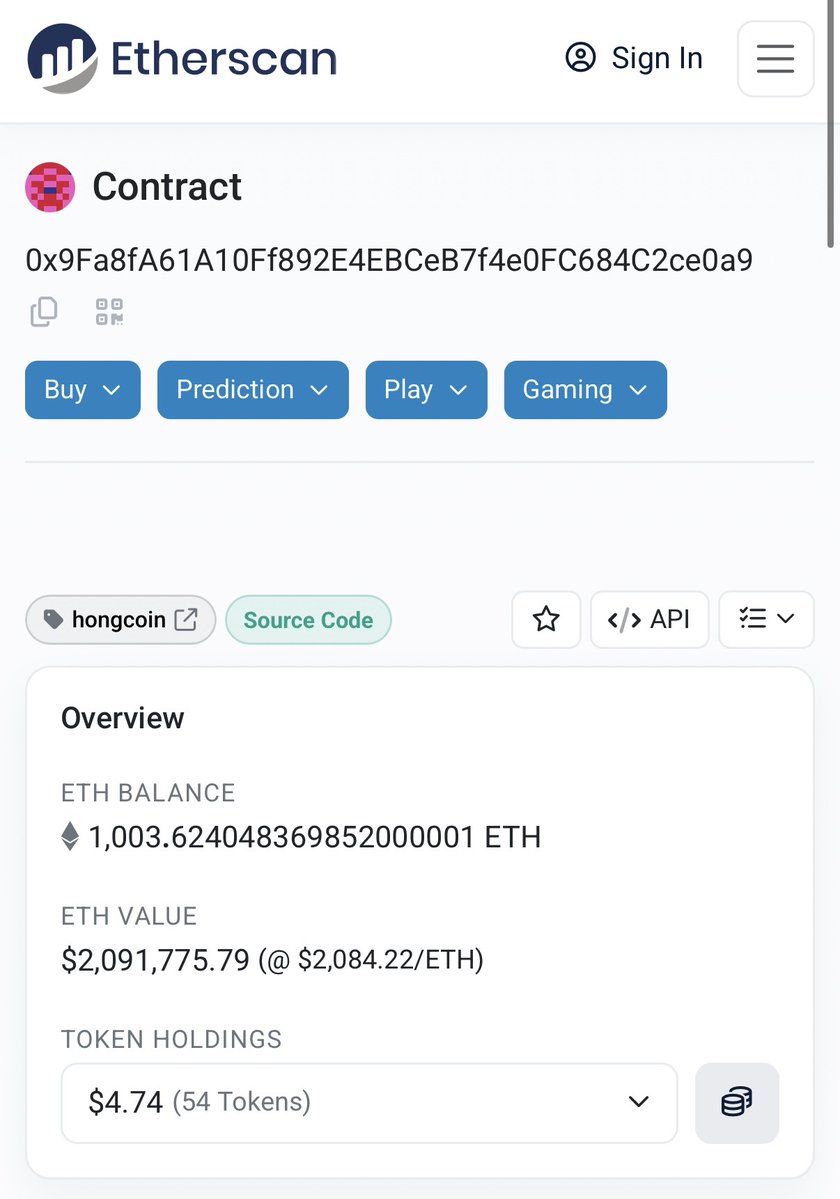
First white-hat exploit on Ethereum: I unlocked 1,003.62
Ξ ($2,000,000) trapped in a 2016 ICO smart contract
for 9 years.
The 48 original investors can now claim their funds.
A Detailed Guide on AI-Powered Nmap Using ShellGPT
🔥 Telegram: https://t.co/upuP8k8ckB
✴ Twitter: https://t.co/Za7rYILz6E
ShellGPT brings the power of AI directly into your terminal, allowing you to generate Nmap commands, automate reconnaissance tasks, and simplify complex command-line operations using natural language prompts.
📚 What You’ll Learn in This Guide
🤖 Introduction to ShellGPT & AI-Assisted Pentesting
⚙️ Installing & Configuring ShellGPT
🔑 Setting Up OpenAI API Access
💻 Using Natural Language to Generate Nmap Commands
🔍 Host Discovery & Network Enumeration
📡 Port Scanning & Service Detection Automation
🛠️ Vulnerability Assessment with AI-Generated Commands
📋 Creating Custom Nmap Scan Profiles
🚀 Automating Reconnaissance Workflows
📊 Improving Productivity During Security Assessments
🧠 Best Practices for AI-Assisted Command Generation
🛡️ Security Considerations & Limitations of AI Tools
📖 Article:
https://t.co/VeiJvrNcJj
#CyberSecurity #Nmap #ShellGPT #AI #Eth
Windows users, this one’s for you.
Computer use now works on Windows, so Codex can take action on your Windows computer.
And with Windows support for Codex in the ChatGPT mobile app, you can start, review, and steer tasks on the go while work continues on your Windows machine.
An early experience, but we’re working on more ways to keep your work moving, wherever you are.
We have several downloadable educational resources up for grabs at the TCM Security website. These resources include must-have guides like:
⚡𝗠𝗼𝗯𝗶𝗹𝗲 𝗣𝗲𝗻𝘁𝗲𝘀𝘁𝗶𝗻𝗴 𝗧𝗼𝗼𝗹𝘀
⚡𝗪𝗲𝗯 𝗔𝗽𝗽 𝗣𝗲𝗻𝘁𝗲𝘀𝘁𝗶𝗻𝗴 𝗧𝗼𝗼𝗹𝘀
⚡𝗛𝗼𝘄 𝘁𝗼 𝗯𝗲 𝗮𝗻 𝗘𝘁𝗵𝗶𝗰𝗮𝗹 𝗛𝗮𝗰𝗸𝗲𝗿
We have plans to add more soon as well. What do 𝘺𝘰𝘶 want to see? Share your thoughts with us - we are listening!
Check out what we have available here: https://t.co/MgDvNg3qdI
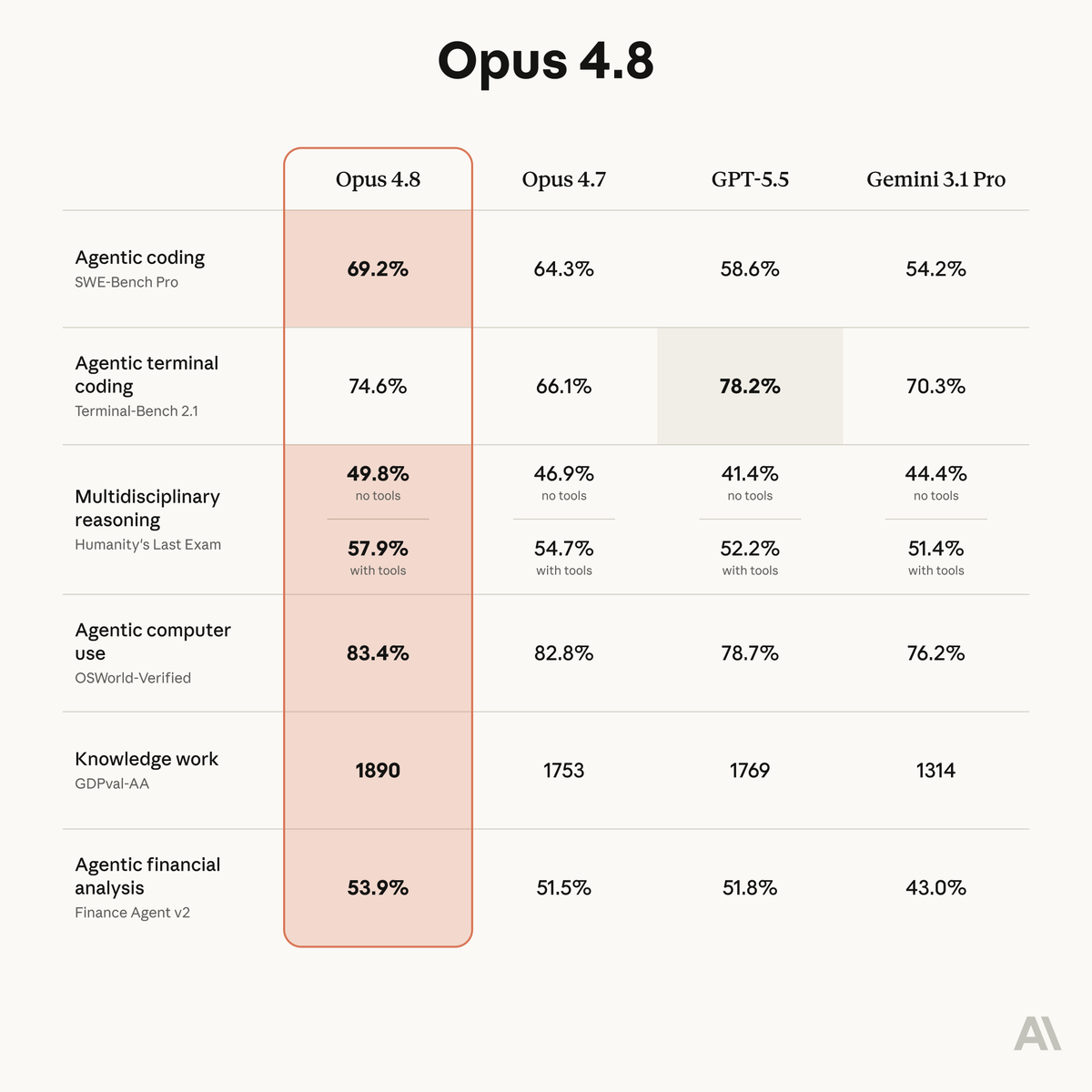
Introducing Claude Opus 4.8: it builds on Opus 4.7 with sharper judgment, more honesty about its own progress, and the ability to work independently for longer than its predecessors.
Available today at the same price.
⚡AI is making DDoS attacks faster and smarter — helping attackers find weak spots, create new attack vectors, and scale attacks more efficiently.
Watch this WEBINAR to see how it works → https://t.co/nHBp5EAu5i
What you’ll get:
• Real examples of today’s AI-enhanced attacks
• How to find & fix hidden weaknesses fast
• Practical defenses you can apply immediately






![AndrewYNg's tweet photo. One of the new, buzzy jobs in Silicon Valley is the AI Forward Deployed Engineer (FDE), an engineer who is embedded within a client organization to help customize solutions, such as building and tuning agentic workflows that suit the client’s particular needs. I’ve heard from people who are wondering anew about the FDE career path since OpenAI and Anthropic started building new teams to place FDEs within client organizations.
The rise of FDEs for AI workloads is one way AI is creating new jobs (and why the jobpolcalypse narrative of upcoming job market collapse is false -- there will be many AI and non-AI jobs). However, I believe there will be far more AI Engineer jobs than FDEs, as I explain below.
The FDE role was pioneered about two decades ago by Palantir, which sent engineers to government locations to work on secure, air-gapped networks. In addition to having good technical skills, FDEs need communication skills and sometimes business skills. For example, they may need to speak with clients to understand their needs, formulate a strategy to prioritize projects, explain complex technology, and respectfully push back if a client asks for something unrealistic. They’re enjoying a resurgence because of the amount of work involved in taking an off-the-shelf LLM and building it into a custom agentic workflow that fits particular business needs.
However, I believe the number of AI Engineer jobs will be far larger. A company might accept a few FDEs to be embedded within its organization. But most companies will want far more of their own employees working on their projects. While my organizations do hire FDEs, we hire far more AI Engineers! Also, a common client concern is that it is hard to find vendor-neutral FDEs — they are, after all, there to deeply integrate a particular vendor’s product into a company. In this moment when it’s hard to predict which AI service will be the best one in a year’s time, optionality (the ability to pick whatever vendor turns out to fit best in the future) is very valuable. In contrast, letting FDEs tightly bind a company’s processes significantly reduces optionality.
Right now, I see surging demand for AI Engineers who can build software applications using AI software components (like LLM prompting, agentic frameworks, evals, etc.) and effectively use AI coding agents (like Claude Code, Codex, Antigravity CLI, and OpenCode). As the AI Engineer role matures, I expect it to fragment into more specialized roles, like the generic Software Engineer role from decades ago fragmented into frontend, backend, mobile, data engineering, devops, and so on.
What will be the future, specialized AI engineering roles? I don’t know. Perhaps there will be AI FDEs, LLMOps Engineers, Evals Engineers, AI Data Engineers, Harness Engineers, and other roles we don’t have names for yet. But for now, I see a lot of AI engineers who are generalists create a lot of value. Skilled AI Engineers are in very high demand! As our field continues to mature over the coming decade, I look forward to new specializations within AI Engineering that create even more job opportunities.
[Original text: The Batch newsletter]](https://pbs.twimg.com/media/HJvWmCHagAAnTxQ.jpg)