APC has mobilized influencers and their campaign instruction is just these three lines.
1. “Peter Obi used to be my favorite—but he’s too weak to lead.”
2. “I used to be an Obidient, but let us give Tinubu time for his reforms.”
3. "APC has won the election already.”
BEWARE!
hi x, pls i'm looking for someone, pls rt!
if you boarded a toyota car from challenge car park in ibadan to lag today and the car got attacked by robbers at mowe tonight which led to your laptop being stolen, pls kindly dm. they found the thieves, I didn't know how to reach u
RT!
always find this FAAC data interesting.
In 2018, Nigeria shared ₦7.98 trillion through FAAC. At the CBN exchange rate at the time, that was about $26 billion.
In 2025, FAAC was ₦21.9 trillion. That sounds like a massive increase which is almost three times the 2018 figure. But using the CBN rate for 2025, it comes to only about $14.4 billion.
That tells us quite a bit about what has happened to the naira.
In 2018, you needed roughly ₦306 to buy $1. By 2025, you needed around ₦1,500. So yes, there are many more naira in the system today, but each naira is worth much less than it was seven years ago.
The irony is that the weaker naira is itself one of the reasons FAAC looks so big today. If government earns $1 billion from oil and converts it at ₦1,500 to the dollar, it gets far more naira than when the exchange rate was ₦300.
But those extra naira don’t necessarily mean extra purchasing power. If a state government wants to buy equipment from abroad, for example, it is also buying those dollars at something close to ₦1,500.
This isn’t necessarily an argument that the old exchange-rate system was better. That system had its own serious problems, including multiple rates and arbitrage. The reforms since 2023 allowed the official rate to move much closer to where the market was actually pricing the naira.
It is simply a reminder to be careful with big naira numbers.
₦21.9 trillion is certainly more money than ₦7.98 trillion. But ₦1 in 2025 simply doesn’t have the same value as ₦1 in 2018.
And even the dollar comparison doesn’t tell the whole story. If we really want to know whether governments have more spending power today, we also have to account for inflation at home.
That, I suspect, is where this gets even more interesting.copied
@Didi_said_so@kobixyzHQ It’s non movable. There are two part to the unit. One which is typically mounted outside and another in the house (connected to the power bank). Just like your Dstv dish and decoder.
It is honestly f*cking baffling that Mayor Bass made a polished video documenting the city’s failure to fix a pothole, as though watching the bureaucracy encounter an obstacle should reassure anyone.
Meanwhile, Mayor Mamdani understands the fundamental rule of civic leadership: don’t ask people to applaud the attempt. Show them the fountain running.
Hand to God, it’s not rocket science y’all.
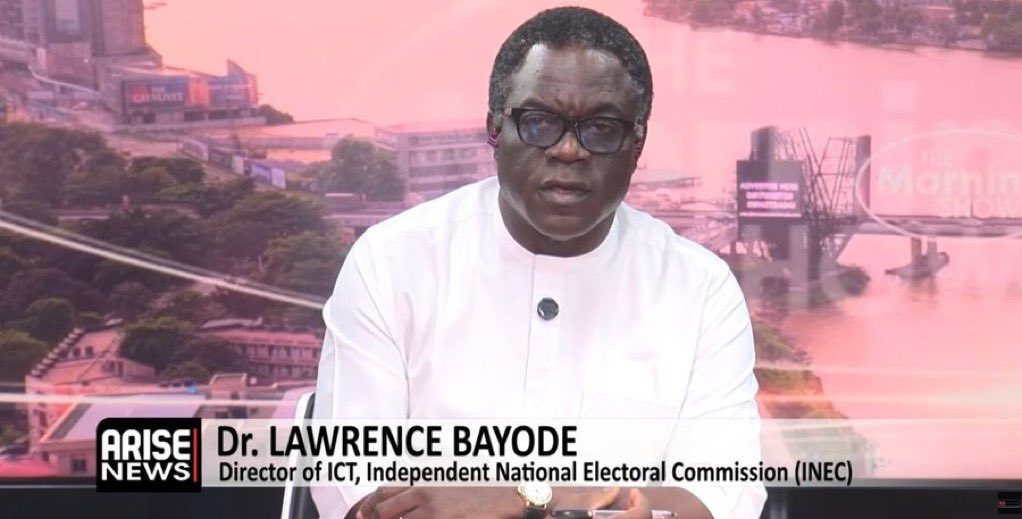
This man was responsible for the server glitch in 2023. This man denied Nigerians their victory. He is still in charge of the ICT department at INEC. He is a pastor at the Redeem Christian Church of God, RCCG.
The issue we face is generational.
I witnessed Nigeria's potential in my youth, and I see the nation today; I know what is possible.
During my five years at university, my total tuition was less than N600, and my accommodation was also less than N600, all directly subsidized by the Federal Government of Nigeria (FGN).
At that time, while the FGN subsidized my education, there was no VAT or revenue from telecommunications, banking, remittances, or NLNG, yet they were able to fund it. My point is this: revenues have increased, but public services have deteriorated.
Back then, the President drove a locally assembled Peugeot 504, supplied from Kaduna, just like the ministers; there were no SUVs or presidential air fleets.
Many young people today have never seen Nigeria with:
1. Water flowing from public taps 24/7
2. A consistent power supply
3. Free education
The youth have been conditioned to expect little from public services, so when they do experience even a small improvement, they are genuinely amazed and appreciative. But even that is just 1%; where is the remaining 99%?
I appreciate their comments; they cannot envision functionality in today’s challenging environment. It is those from my generation who have exploited that ignorance to sell misleading narratives to the youth of today.