The Taphou Kuki Village Authority condemns the burning of a civilian home at Taphou Kuki Village. We urge authorities to investigate, ensure accountability and protect civilians and their property. Everyone is urged to remain calm and uphold peace and the rule of law.
@Khundrakpam9R@IndiaTodayNE Meiteis have been known to be pathological liar and they have lied so extreme to the point that they started calling their lies the truth and the truth as lies.
@FreeNagalim_God@IndiaTodayNE Is that your only problem? I mean you have added "God" in your name and the only thing you are worried about is the source instead of the violent crime committed.
What is wrong with you?
Suspected cadres of the NSCN-IM, allegedly armed with sophisticated weapons, attacked Kailenjang #Kuki village in #Manipur’s #Kangpokpi district on Monday, August 10 and set three residential houses on fire, a day after Chief Minister Yumnam Khemchand Singh’s visit to the district.
The attack took place between around 11 am and noon at Kailenjang, a village located along the fringe area between Kangpokpi and Senapati districts. No casualties were reported in the incident.
Do you genuinely believe that endlessly regurgitating an AI generated propaganda can rewrite historical record? A falsehood told a thousand times does not become the truth, it remains a lie.
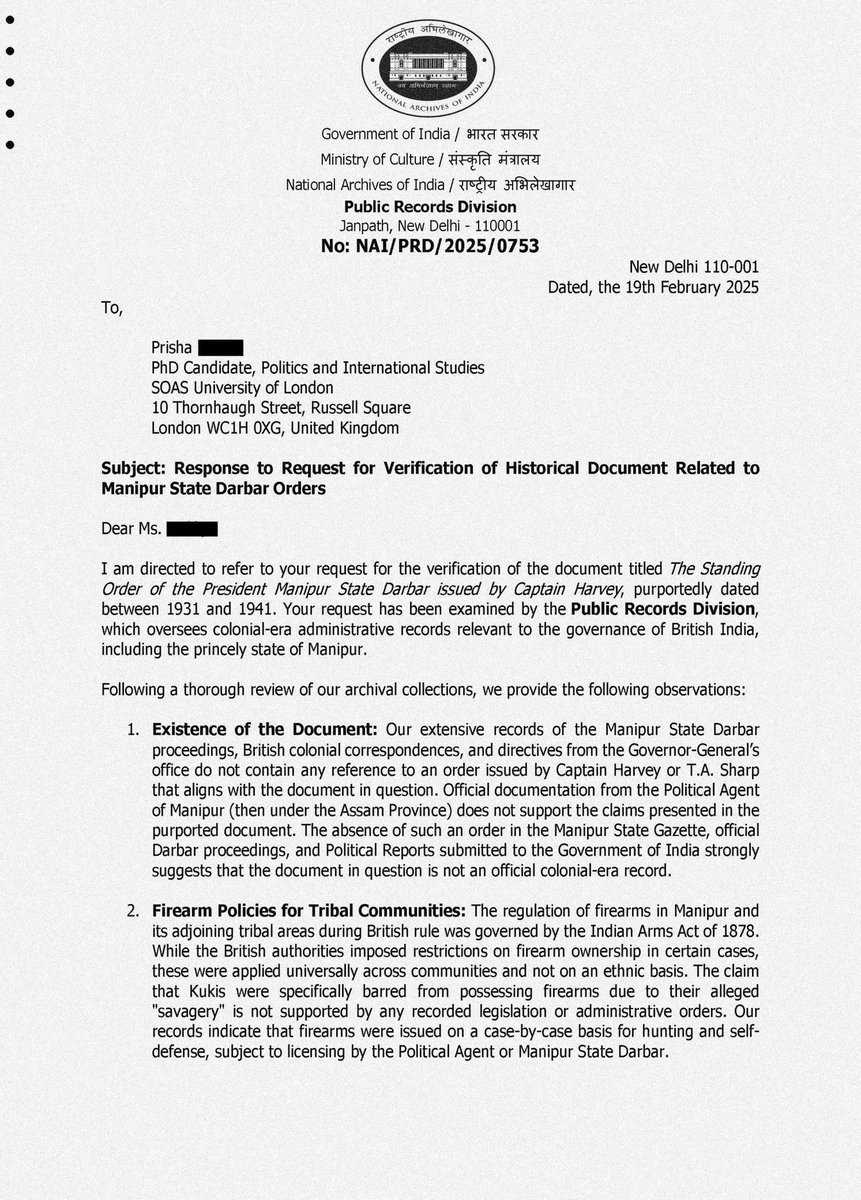
The Indian Govt has made it clear, "The claim that Kukis were specifically barred from possessing firearms due to their alleged 'savagery' is not supported by any recorded legislation or administrative orders. Our records indicate that firearms were issued on a case-by-case basis for hunting and self- defense, subject to licensing by the Political Agent or Manipur State Darbar.
The regulation of firearms in Manipur and its adjoining tribal areas during British rule was governed by the Indian Arms Act of 1878 While the British authorities imposed restrictions on firearm ownership in certain cases, these were applied universally across communities and not on an ethnic basis."
🚨 SHOCKING⚡️
🅰️bonmai Wibonbou, a Liangmai christian missionary from Tamei currently based in Cambodia invoked the horrific 1993 massacre of 115 innocent kukis by NSCN-IM & used the memory & historical atrocity of the mass beheadings not as a tragedy to mourn, but as a threat against the Kukis, suggesting that another massacre of kukis is not only imminent but also justified.
▪︎● The 1993 incident Abonmai is referring to is the Joupi or Tamei Massacre in which 115 innocent kukis, including women & children were massacred in a single day in Tamenglong & Senapati district by the NSCN-IM & Nagalim Guards.
▪︎● Joupi village was served "quit notice" by NSCN (IM) & the dateline fixed was September 15, 1993. The innocent villagers obediently but rather reluctantly left their beloved ancestral land two days before the dateline for fear of NSCN-IM's aggression only to meet the worse. They were waylaid en route on the same day & massacred near Tamei, the home of Wibonbou Abonmai in Tamenglong district. The victims' hands were tied at the back & all 115 innocent kukis were brutally beheaded with blunt machetes.
▪●BBC reported it as, "butchered" by the perpetrators in a cold-blooded manner & termed it as an "ethnic cleansing by Naga separatists", the CNN referred to the horrific event as "Kuki Genocide" & theInternational Press unanimously denounced the massacre as a campaign of "bloody ethnic cleansing".
▪︎● Abonmai would've been 13 years old at the time of the Tamei/Joupi massacre & fully aware of the mass beheadings of the innocent Kukis in his village.
He is not only a christian missionary but also the former president of Nagas in Cambodia (NaCAM), a Missionary & support network for Naga diaspora living in Cambodia.
@GrandNews_kh@MinistryofInfo1@indembcam@Peace_Palace_KH@USEmbPhnomPenh@cambodiadaily@UNICEFCambodia@AllKhmerinOne@KhmerTimes@cchrcambodia@licadho
@OHCHR_Asia @EUinCambodia@UNHumanRights@amnesty@unwomenchief@JuliaGillard@ncsthq@NCM_GoI@OHCHRAsia @ManipurPolice
@antonioguterres@UN4Indigenous@MukeshSinghIPS@KonthoujamG@YKhemchandSingh@paolienlal@BenjaminMate1
Two Thieves, a Naga drug addict from Tamenglong & a Meitei Drug addict from Sekmai were caught red-handed mid-heist & attempting to flee an Imphal home with lakhs' worth of valuables.
Not their first rodeo!
🪦The Bureaucratic Burial of Nagalim,
Muivah's quixotic Sovereignty dream: A 🧵
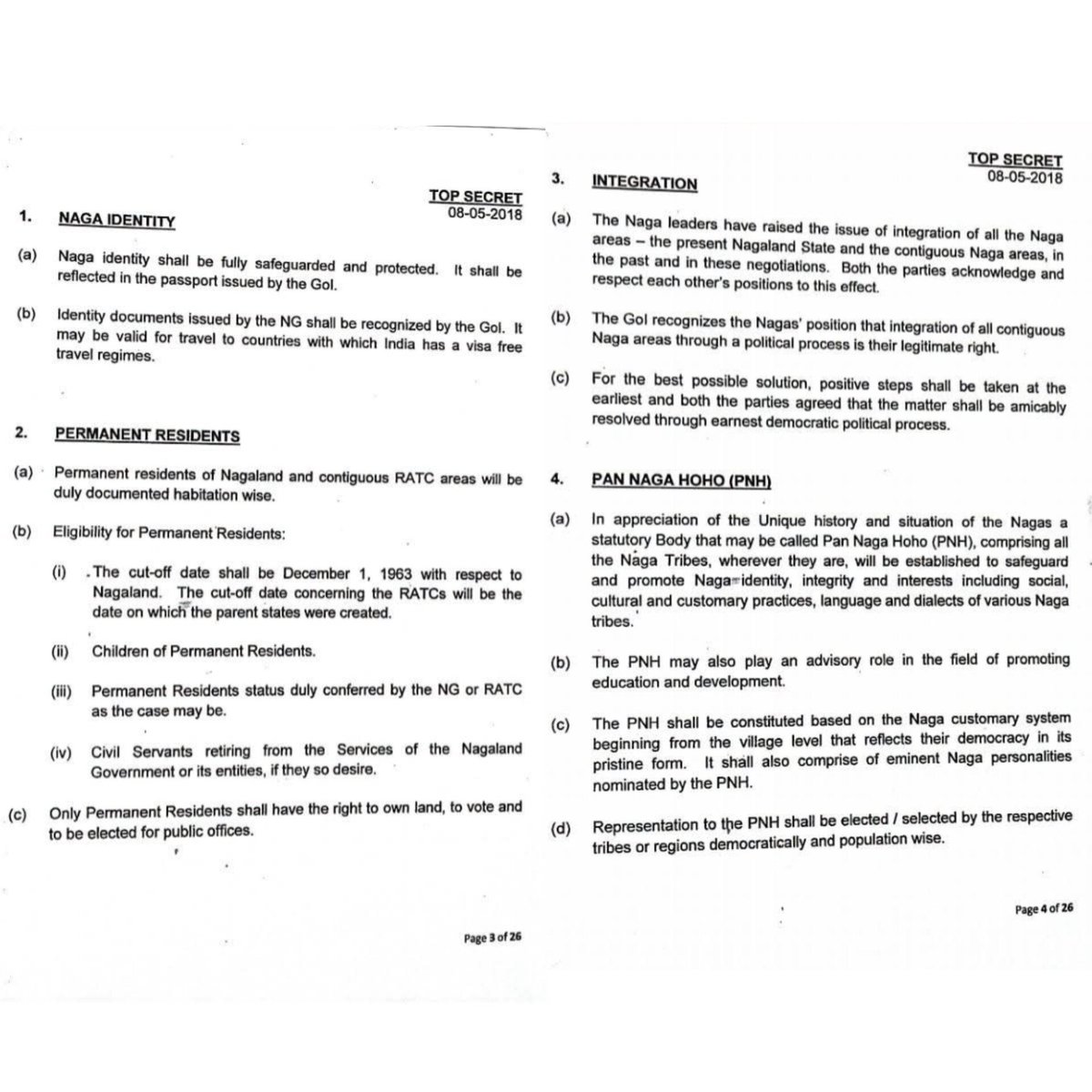
▪︎After slogging through the entire 26-page of this overhyped "Top Secret" NSCN-IM's competency clauses of the Framework Agreement, I can't help but feel second-hand embarrassment for Muivah's Nagalim dream. This document stands as a tragic monument to how a historic, 6 decade old armed struggle can be reduced to a grandiose wish list, a mountain of pipe dreams & bureaucratic fantasy that will never see the light of day in its current form.
This document is not a bold blue print for sovereignty, it is at best an slightly enhanced autonomy with continued central oversight & at worst a meek surrender memo dressed up in pompous language.
■The document blabbers on about a fancy bicameral "Tatar Hoho" legislature, Pan Naga Hoho with Cabinet-rank members, RATCs in contiguous areas, "sovereign" internal affairs, own security forces, separate budget, taxation powers, dual judiciary & a laundry list of universities, hospitals, airports, four-lane highways & a grand "Yehzabo" basic law.
▪︎Sounds revolutionary, right? In reality, the Yehzabo will not be an independent Constitution but it is to be stuffed as a chapter inside the Indian Constitution, if at all accepted. This single provision places the entire arrangement firmly within the Indian framework.
What remains is not sovereignty, but a better sounding & a better-funded form of extra autonomy still subordinate to the Indian Union & True sovereignty is effectively diluted.
🚨 Point by point, the CC reveals the hollowness of what NSCN-IM has been projecting as a historic breakthrough for decades:
▪︎The document proposes a new "People's Government of Nagaland" with a bicameral Tatar Hoho, own executive, judiciary & security forces.
While the institutional design goes beyond the existing protections of Article 371(A), which Nagaland has enjoyed since 1963, the structure is heavily constrained because financially & operationally, it will still remain heavily dependent on Delhi.
The structural framework is thus not independent self-government, but a more elaborate form of a "special autonomy" still firmly nested inside the Indian constitutional framework & Indian Union & operating strictly within "mutually agreed competencies" while New Delhi retains ultimate authority over external affairs, defense, currency & residual powers.
▪︎The document's economic ambitions are crippled by explicit & extensive reliance on central Government funds. The budget is to be "ensured & allocated by the Government of India," deficits are slated for central write-offs & major infrastructure projects depend on central financing "until such time as the Nagas are able to manage by themselves." This is not the financial architecture of a sovereign nation, it is the ledger of a permanent supplicant.
▪︎The historic Naga political movement (from the NNC through to NSCN-IM) was built on the demand of full sovereignty, an independent or at least confederal Nagalim that would unite all Naga-inhabited areas & stand outside Indian sovereignty.
The 2015 Framework Agreement itself spoke of "shared sovereignty" & a new relationship of peaceful co-existence.
But this 2018 Top Secret document translates that into a system that is still constitutionally nested inside India. The Yehzabo is only to become a chapter of the Indian Constitution, the Naga Govt's powers is to exist only within "mutually agreed competencies." The Ultimate authority, especially on external affairs, defence, currency & residual powers still remains with the Indian Govt. That is a clear & significant retreat from the original claim of sovereignty.
@ukhrultimes@LIANGMAIPOST@JosephNaga1986@paolienlal@BenjaminMate1@thewire_in@sardesairajdeep@vijaita@ThePrintIndia