Central Venous Pressure Revisited: Physiology, Pitfalls, Misconceptions, and Modern Clinical Interpretation in Critical Care
CCR Journal Watch
https://t.co/Sp06oA6IDG
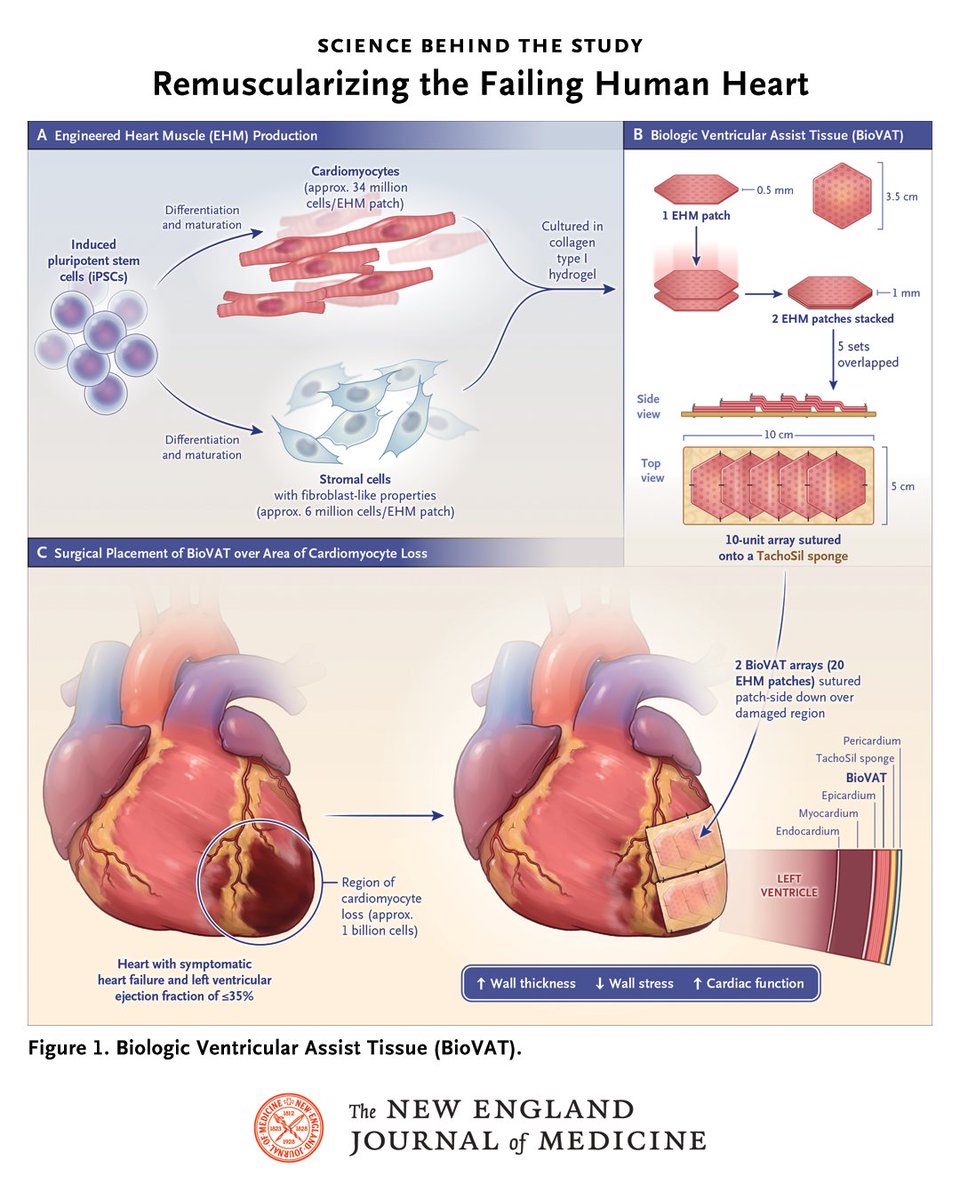
Deepak Srivastava, MD, describes the scientific foundations of a phase 1–2 study of stem-cell–derived ventricular assist tissue transplanted onto the epicardial surface of failing human hearts.
Learn more about the science behind the study in the editorial “Remuscularizing the Failing Human Heart,” from @GladstoneInst and @ucsf: https://t.co/MxkB8fdQNd
A lot of haemodynamic confusion comes from one basic error: treating descriptions of the system as if they were causes.
Pressure gradients, preload, RAP, afterload, Starling... all are useful, but often misread.
This review tries to put them back together into a coherent framework.
https://t.co/L19bsDCzr6
🫁 Awake #ECMO cannulation, with sedation and a natural airway, before intubation in children, to provide hemodynamic stability + gas exchange to mitigate the risk of cardiopulmonary arrest during induction of anesthesia and intubation? Feasible in in high risk pediatric patients with varied physiology and rationale for #ECLS before (or in lieu of) intubation, with appropriate preparation and expertise.
@asaiojournal
🖇️ https://t.co/ohd8T680qM
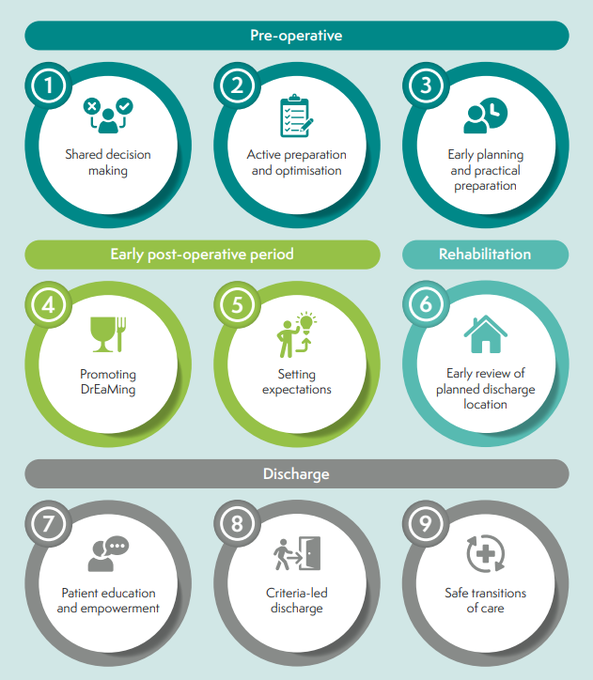
Active preparation for surgery and involvement in postoperative recovery creates better outcomes for patients.
Our new patient leaflet and clinical resource explain how to support patients to actively prepare for surgery and postop recovery.
More info: https://t.co/59QzDO8B4b
1/Do radiologists sound like they are speaking a different language when they talk about MRI?
T1 shortening what? T2 prolongation who?
Here’s a translation w/an introductory thread to MRI.
1/ V. Important 🧵 if you are CONSULANT in England. This week I used my FREE modeller to identify & correct an error in #AnnualAllowance for 24/25 which I suspect may be a common error. It will save me over £2,600 from my AA liability, buckle up & see if you are affected
Ps RT
A concise tweetorial about TheArticleOfTheMonth #STARSHIP highlighting the key points is below:
(STARSHIP Study on Cerebral Autoregulation in Severe Paediatric TBI 🧠)
1-What’s STARSHIP?
A prospective, multicentre study (10 UK PICUs, 2018-2024).
@ChanYeow1@JoaoWinck 2/2: LTTV - There is limited evidence for negative impact of respiratory alkalosis. We need to treat the patient's symptoms e.g. air hunger not just CO2. Always ask about the length, depth and frequency of the pressure support. Usual verbal analogue scales to assess breathless.
Simultaneous measurements in children revealed overestimation of arterial saturation by pulse oximetry that was attributable to spectrophotometric measures of skin tone. Learn more: https://t.co/RrNUvkgMKw
“Can’t do MRI due to pacemaker.”
Just a simple line, right?
Until it gets carried forward for weeks.
No questions.
No confirmation.
Just blind trust.
Finally, someone digs in and discovers the truth:
The pacemaker IS MRI-compatible.
But it’s too late.
Patient care has already been delayed.
This is your reminder:
Your notes are not just for you.
They shape decisions and can harm patients.
Document with precision because people may take what YOU write as as gospel-truth.
1/14
🤔 Why do we use iodine as an intravenous contrast agent?
The answer requires a review of the composition of the human body and a brief tour of one of my favorites, the Periodic Table of Elements.
Remifentanil vs. dexmedetomidine for cardiac surgery patients with noninvasive ventilation intolerance: a multicenter randomized controlled trial https://t.co/2cgFjtXzSv #icurehab#A2Fbundle
Tranexamic Acid Neurotoxicity After Nebulization and BAL
What's the diagnosis? Read the full Novel Report in the October issue to learn more: https://t.co/HkCSkI1rRP
#MedEd#MedTwitter
A Code of Practice for the diagnosis and confirmation of death 2025 Update now out - ready for implementation from 1st January 2025. Thanks to @dalecgardiner and @AndrewElder for their leadership in getting this over the line
https://t.co/PxTLGs2Q91