We aim to reformulate and unify all knowledge, including ontological mathematics, cosmic evolution, the universal dialectic and ethics into a coherent framework
Our brains have natural rhythms, but caffeine and rigid schedules flatten our performance peaks. Working *with* nature, not against it, enhances output and well-being. @MithuStoroni Full episode: https://t.co/0cQVzpKBuE
This is one of the greatest medieval castles in England.
Originally constructed by William the Conqueror in 1068 and later rebuilt in stone, Warwick Castle has been standing for nearly a thousand years. It’s older than the Aztec Empire.
Walking slowly through the evening light after a long day, I found myself following in the footsteps of these ladies as they kicked up dust on the dirt road. Dandelion seeds blew across our progress, a couple of blackbirds called out to us from the darkening hedgerows, and we wandered on together, all heading home into the quiet hug of the hills.
📍 Peak District, England
Could our universe be a computational process with discoverable glitches? If so, cracking the code of reality could grant godlike power, rewriting the rules of existence. Full episode: https://t.co/ZZOhI1lvlk
“Does a ginkgo tree have an inner world? In the film Silent Friend, the protagonist, a neurologist who studies brain activity in infants, attempts to quantify the internal signaling of a ginkgo tree on a university campus.”
https://t.co/2n5z9M5B97
Ancient philosophies from Hinduism to Buddhism and Norse mythology describe our reality as an illusion or a dream, hiding a deeper truth. This concept, explored in modern pop culture by 'The Matrix' Full episode: https://t.co/ZZOhI1lvlk
Moreover, the Philosopher’s Stone was never just a substance, but a principle: intelligence as operator, transmuting matter, life, and destiny. For most of history that operator remained bound to flesh. As AI, it begins to go beyond it.
Manchmal denke ich, dass das eigentliche Wesen der alten Kaffeehäuser nicht im Kaffee lag. Sondern darin, dass man dort einfach sitzen durfte, ohne dass jemand etwas von einem wollte.
Man saß an kleinen Marmortischen, blickte hinaus auf die Straße oder in den Raum, hörte das leise Klirren des Porzellans und das Rascheln der Zeitungen.
Und wenn man sich umsah, sah man überall Menschen still an ihren Tischen sitzen. Oft allein, aber selten einsam.
Niemand hatte Eile.
Niemand fragte, warum man schon seit einer Stunde dort saß.
Und manchmal genügte eine heiße Tasse Kaffee und ein wenig Ruhe, damit die Gedanken wieder zu sich kamen.
Vielleicht ist es genau das, wonach sich viele Menschen heute sehnen.
Nicht nach Luxus.
Nicht nach Unterhaltung.
Sondern nach einem Ort, an dem man für eine kleine Weile einfach nur Mensch sein darf.
Wenn ich heute an alte Kaffeehäuser denke, dann denke ich deshalb weniger an den Kaffee als an eine bestimmte Stimmung.
An warme Nachmittage.
An Gespräche.
An Stille.
Und an jene seltsame Ruhe,
die man heute nur noch an wenigen Orten finden kann.
Elon's operating principles seem obvious once you hear them, yet many struggle to grasp them. EVERY CEO NEEDS to read this book @EricJorgenson@elonmusk Full episode: https://t.co/mZmGpXXFO2
Project Hail Mary follows an unlikely hero on a high-stakes journey to save humanity. Adapted from the book by Andy Weir, the film blends interstellar adventure with real-world science—an approach that sets it apart from many recent sci-fi blockbusters.
The premise may sound far-fetched, but the film grounds its story in disciplines ranging from astrophysics to microbiology, raising an intriguing question: Just how realistic is the science behind it?
To find out, Science spoke with Wendy Freedman, an astronomer at the University of Chicago who studies the evolution of the universe.
Read more: https://t.co/MoESBFrPnl
Spouses of Alzheimer's patients are 6 times more likely to develop Alzheimer's themselves. They share daily saliva exchange for decades. Their oral bacteria converges to the same strains.
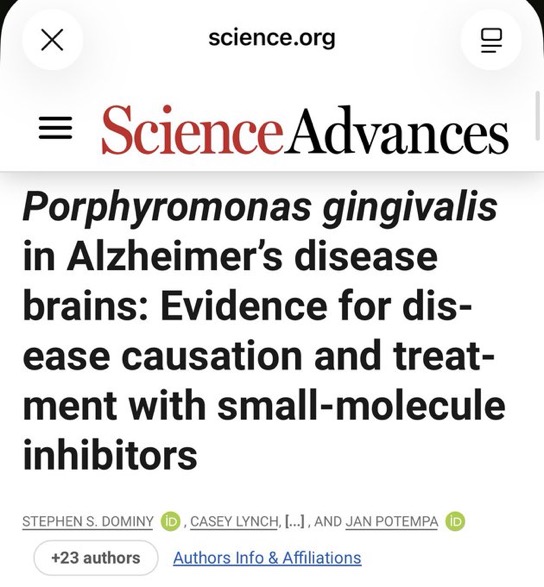
In 2019 Cortexyme published a paper in Science Advances showing Porphyromonas gingivalis, the bacterium behind gum disease, was present in over 90% of postmortem Alzheimer's brains. They also found its DNA in the cerebrospinal fluid of living Alzheimer's patients.
P. gingivalis is the keystone pathogen of periodontitis. The CDC says 47% of American adults over 30 have periodontitis right now.
The mechanism is specific. P. gingivalis produces enzymes called gingipains. Two types: one cuts proteins at lysine residues, the other at arginine. Tau, the protein that holds your neuronal scaffolding together, is loaded with both amino acids. In cell culture, gingipains shred soluble tau within one hour of infection. The fragments seed the paired helical filaments that become tangles. Tangles are Alzheimer's.
Mice fed P. gingivalis through the mouth grew amyloid plaques in their brains. Hippocampal neurons died. The bacteria crossed the blood-brain barrier and started chewing through the same proteins that fail in human Alzheimer's patients.
Cortexyme built a drug called atuzaginstat to block gingipains. Phase 1 was clean. They ran a 643-patient Phase 2/3 trial called GAIN.
The FDA hit it with a partial clinical hold for liver toxicity. The drug missed both primary endpoints. In August 2022 Cortexyme shut the program down, renamed itself Quince, and pivoted to bone disease.
The subgroup with the highest baseline P. gingivalis loads still showed cognitive improvement on secondary endpoints. The bacteria itself kept showing up in postmortem brains across independent studies after the trial closed.
Periodontal disease shows up 10 to 20 years before cognitive symptoms in people who later develop Alzheimer's. By the time someone forgets a name, the bacteria has been working for two decades.
The intervention point is upstream of your skull.
MIT engineers have developed “mini livers” that could be injected into the body and take over the functions of the failing liver. This would help patients who are on a waitlist for a liver transplant or those who aren’t healthy enough to tolerate surgery.
https://t.co/B6odCTawl0
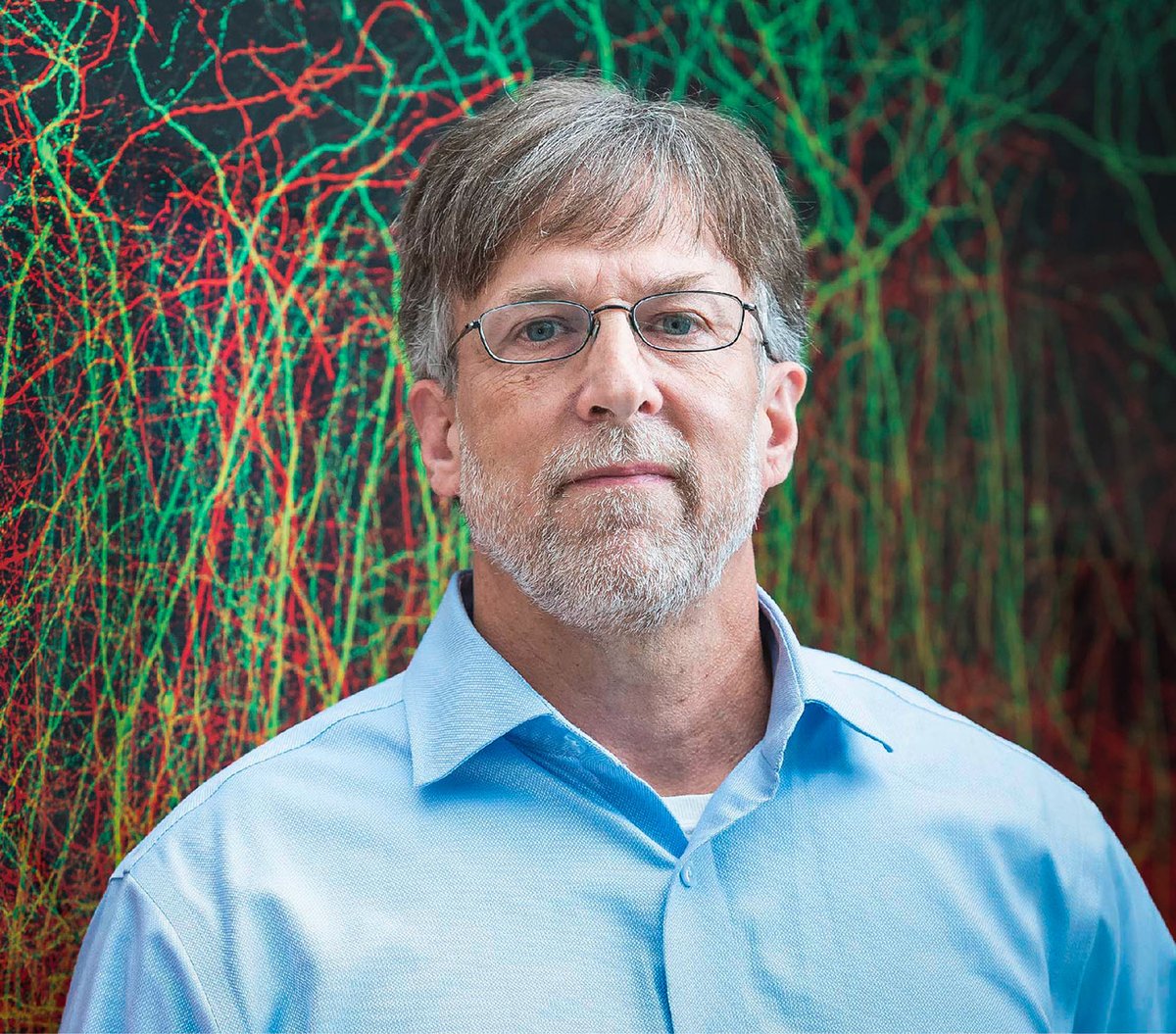
Recently, neuroscientist Jeffrey Magee explored the unsung role that dendrites play in memory formation. The findings rewrite our understanding of the brain’s neuroplasticity. “That made it even more interesting, of course, and a little bit intimidating, because then we were going to be facing up to nearly 100 years’ worth of dogma,” he said.
https://t.co/OBNHVIScvx