@SamanthaBrauns2@smorrisey k/1 it would be very rare to teach spelling in any way except to teach decoding skills/phonics rules but by 4/5 you would only really do that for readers who are well behind grade-level
@SamanthaBrauns2@smorrisey we should always be incorporating content and vocabulary into spelling, but the designing principle behind a given spelling list will vary quite a bit based on where the class is as readers, especially in a typical 2nd/3rd class where decoding evolves a lot through the year
A real question from a student's adaptive reading screener today. No idea what the correct answer was supposed to be or what the question is intended to assess.
My cat Red is not like other cats. He likes to make houses. We live in a house he made.
Red is a ________.
@Suchmo83@SoRclassroom@DTWillingham@markseidenberg and math instruction tends to have this problem too, interestingly. It's as if we are insufficiently convinced by kids doing something as evidence that they have learned it. We need them to explain it back to us. Not sure where that comes from at its root
@Suchmo83@SoRclassroom@DTWillingham@markseidenberg partly not the thing itself but an emphasis on kid's explaining it. I think it's fine for us to say, "this is an open syllable; that's why there's this sound," and make sure they can spell/read it. It's when we ask kids to explain/analyze that we start to risk wasting time.
@Suchmo83@DTWillingham@markseidenberg tbqh I suspect he really wants to argue that some things are being explicitly taught to all students that should be taught to *none*, but that such a claim alarms some people who, rightly or wrongly, believe those precise things were critical to their child's success as a reader.
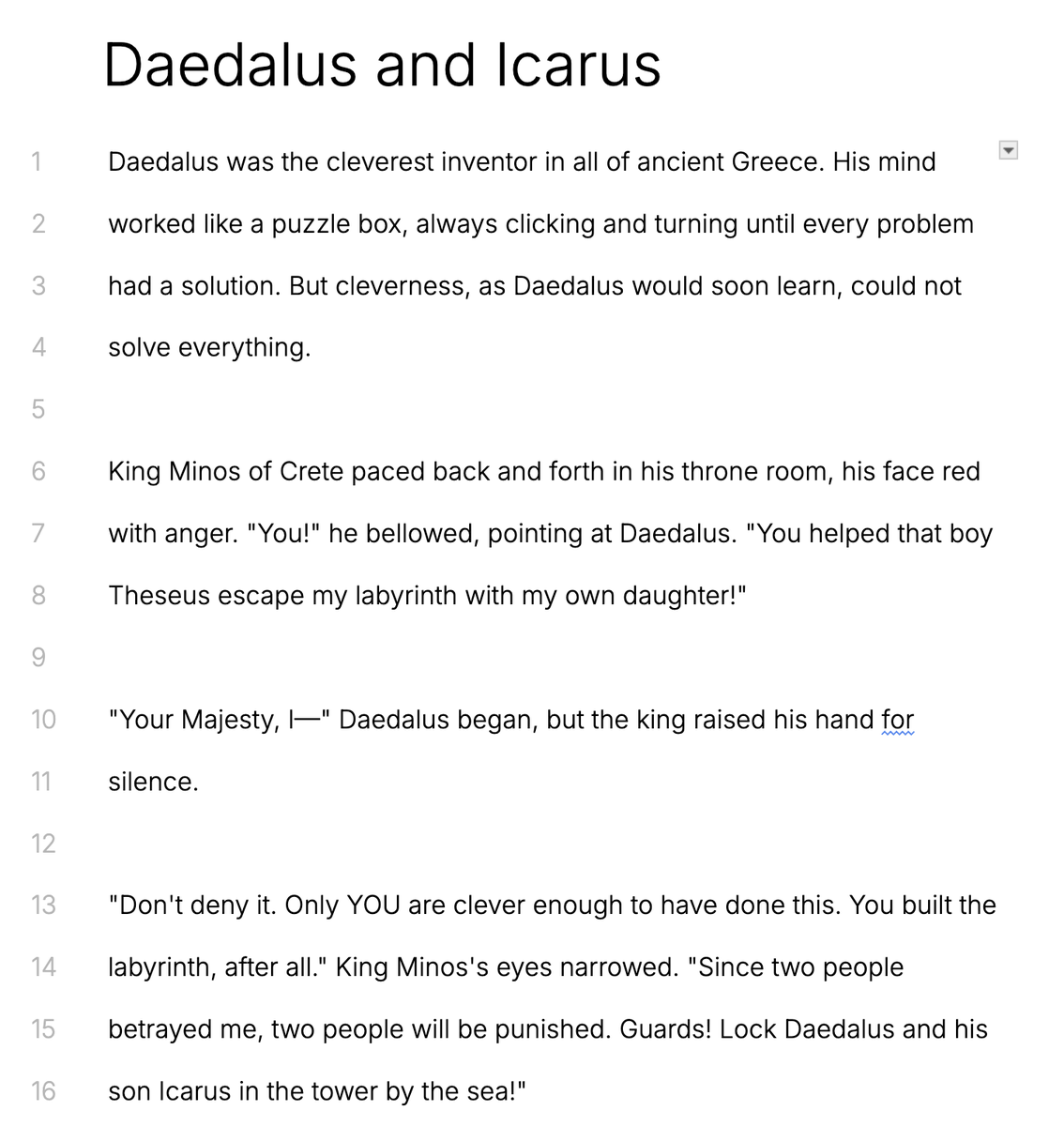
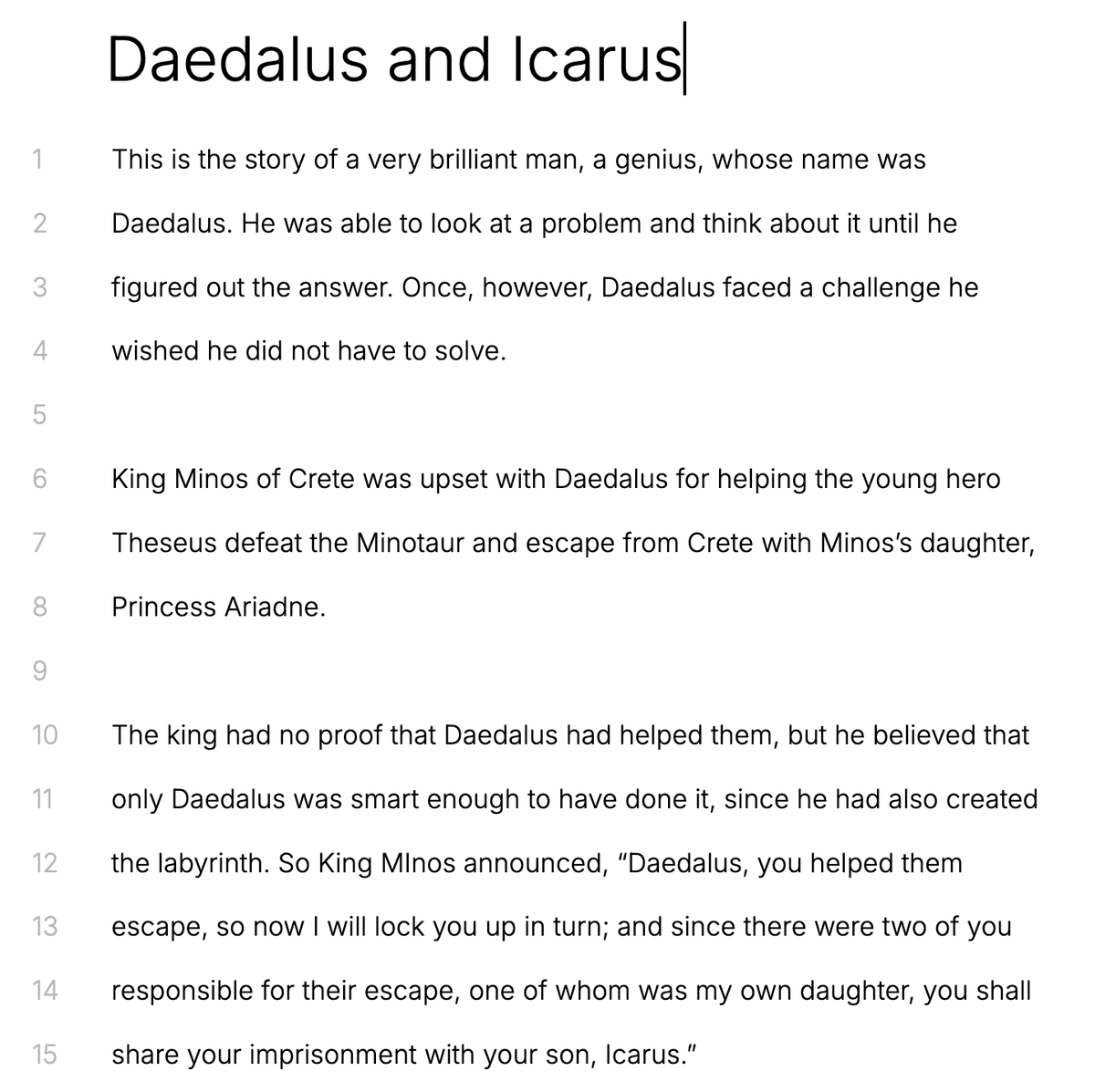
one of these is a professionally published curricular text for second graders marketed as "HQIM" and one is the same text fed through a LLM once with instructions to improve the writing. Whole books or not, could we start with good writing?
@MrLandesman I think @Mr_Raichura has written/spoke about this particular benefit of All Hands Up as well, but one thing I like about it is how it allows you to delay deciding the means of participation
@eduleadership A lot of the most popular published curricula are rife with stuff that is unrelated to grade level standards. Sometimes teachers are modifying programs for good reasons
@smorrisey@SoRclassroom It might be a difference between the ELA materials and the social studies ones. I think most schools are really only using the CKLA ones published/packaged by Amplify.
@SoRclassroom Teaching kids any knowledge is enough of an improvement over not doing it at all that it's going to be generally difficult to understand how poorly "HQIM" do it.
@SoRclassroom "China" is not a useful organizing principle because it is not a principle and the kids cannot reuse that structure for any other topic (and because it is not a structure).