When comparing GPT 5.5 Extended Thinking vs Opus 4.7 Extended Thinking, Opus gives a much more detailed analysis. It really feels like the center of gravity has shifted decisively toward Anthropic.
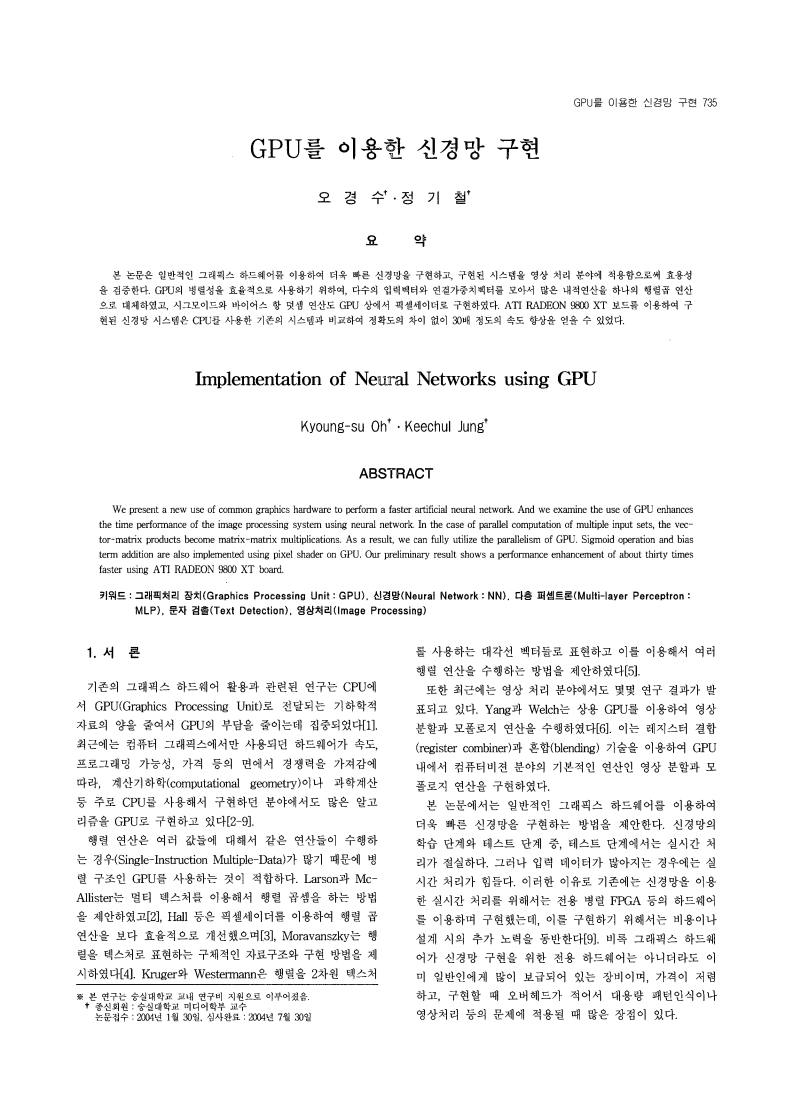
What if I told you the first GPU neural network implementation happened in Korea in 2004? 😗
Before CUDA, Before modern deep learning hype.
The world’s FIRST GPU-accelerated neural network wasn’t built in Silicon Valley or by NVIDIA,
It came from South Korea’s Soongsil University in 2004, years before CUDA even existed.
two Korean researchers, Kyoung-Su Oh and Keechul Jung at Soongsil University quietly implemented neural networks on a consumer ATI Radeon GPU and achieved massive speedups.
Used an ATI Radeon 9700 Pro to get 20-30x speedups on matrix multiplications and sigmoid functions for real-time text detection.
translate then read
- https://t.co/nQQM8W8FYO
My thoughts after seeing OpenAI's recent plan restructuring:
It looks like they’ve been overtaken by Anthropic in terms of revenue, and now they’re even copying their pricing models.
I think this really highlights why 'selection and focus' is so important.
AI coding is going fully autonomous. Between the recent Claude Code leak giving us a sneak peek and our own internal dev tool going completely hands-off, the shift is here.
What happens to software engineers when AI takes the wheel?
💻 #SoftwareEngineering#TechTrends
🚨‼️ BREAKING: Anthropic has decided to open source their entire codebase and is rebranding their AI to OpenClaude.
Anthropic CEO Dario Amodei said: "Yesterday was no slip-up. If we disappear just like OpenAI is vanishing right now, our code can live on through the community."
Every piece of code exists for a reason. Even if you immediately spot a "code smell," take a step back and deeply understand the context before rewriting a single line.
Understand the history, then make your move. Context always matters.
#softwareengineering
Claude Dispatch doesn’t work. It appears that they feel threatened by the OpenClaw-based vibe coding. However, it’s still not reliable. #claudedispatch
Congrats to the @cursor_ai team on the launch of Composer 2!
We are proud to see Kimi-k2.5 provide the foundation. Seeing our model integrated effectively through Cursor's continued pretraining & high-compute RL training is the open model ecosystem we love to support.
Note: Cursor accesses Kimi-k2.5 via @FireworksAI_HQ ' hosted RL and inference platform as part of an authorized commercial partnership.
If you're a developer, you should be open-minded and fully adopt AI agentic coding. Sometimes devs have strong preferences for an IDE they've used for years that's not optimized for AI agentic coding. That's a subtle point that prevents them from moving forward.
Gemini doesn’t return research results with links. For example, if I ask Gemini to search for the best carpet vacuum machines on the market, it doesn’t provide a list with links. I think Google knows that would be the kill switch for its search business.
Today, we’re evolving @StitchbyGoogle from @GoogleLabs into an AI design canvas transforms natural language prompts into production-ready front-end code.
Some highlights from what’s new:
1. A complete redesign of the Stitch UI, which can now ingest multimodal references (text prompts, images, or code) as creative seeds for your design ideas
2. A brand new, context-aware design agent that can share feedback on builds, generate PRDs, and ask questions to better understand your vision. You can even talk to the agent if you prefer a verbal sounding board
3. A new agent-friendly markdown file, DESIGN.md, which you can use to export or import your design rules to or from other design and coding tools
Whether you’ve been designing for decades or you’re whiteboarding your first software idea, Stitch can help you turn concepts into prototypes in minutes rather than days ➡️ https://t.co/efI6cbjAhm
Today, we’re evolving @StitchbyGoogle from @GoogleLabs into an AI design canvas transforms natural language prompts into production-ready front-end code.
Some highlights from what’s new:
1. A complete redesign of the Stitch UI, which can now ingest multimodal references (text prompts, images, or code) as creative seeds for your design ideas
2. A brand new, context-aware design agent that can share feedback on builds, generate PRDs, and ask questions to better understand your vision. You can even talk to the agent if you prefer a verbal sounding board
3. A new agent-friendly markdown file, DESIGN.md, which you can use to export or import your design rules to or from other design and coding tools
Whether you’ve been designing for decades or you’re whiteboarding your first software idea, Stitch can help you turn concepts into prototypes in minutes rather than days ➡️ https://t.co/efI6cbjAhm
The funny thing is that now we’re trying to make AI responses deterministic — we developers who’ve always loved deterministic, declarative code and type safety. That’s ironic.