One of the most interesting features that we have been working on in #VRAGE3 is fully dynamic volumetric water simulations.
For the past few weeks I've been researching how to render these simulations in our games.
These are some of my experiments with water surface rendering.
Water surface rendering in #VRAGE3 using Gerstner Waves approach named after 18th century Czech mathematician.
We are using ray marching, the water surface is just a simple quad.
This is an ocean water representation.
1/4
day593: new wetness shader feature for the vehicles. Supports soapy water and getting normally wet. I can not seem to be able to leave this side-quest be! #indiegame#unity3d#buildinpublic
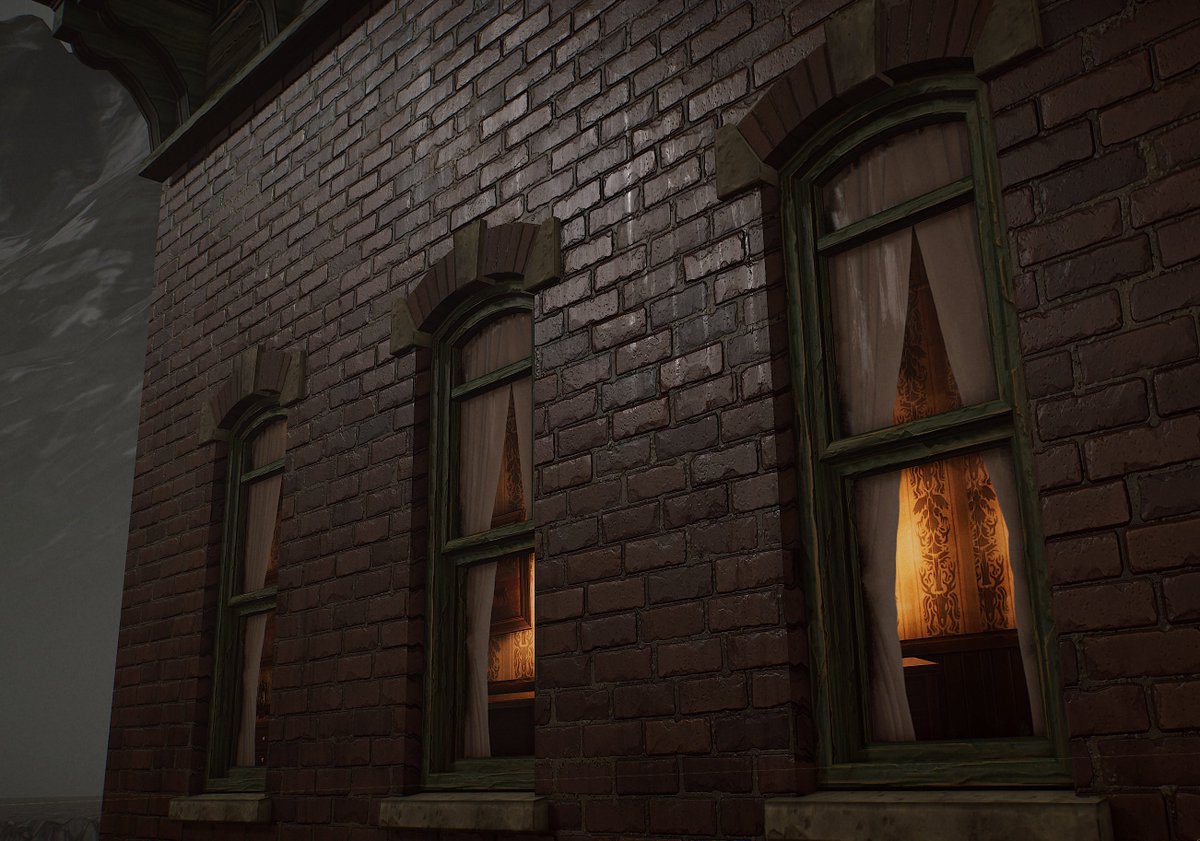
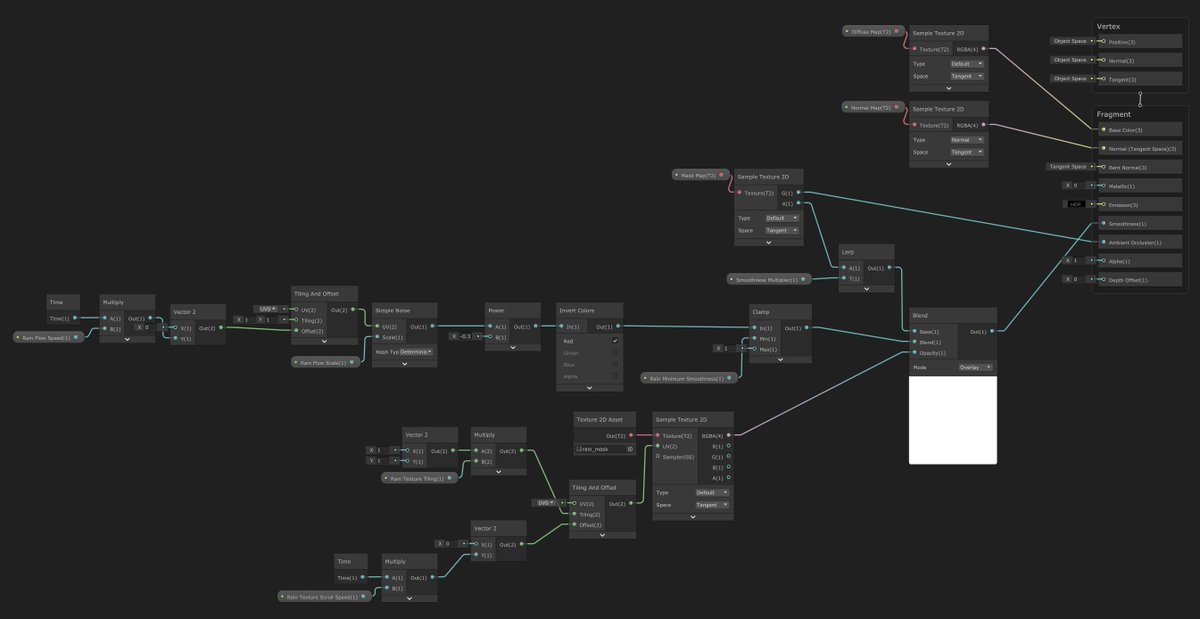
Anyways. No use gatekeeping anything. Here's the basic node setup I used for the rain drip shader.
It should translate to Unreal pretty easily, the major difference being that Unity HDRP has a mask map with channels for metal, AO, detail, and smooth (as seen below).
Developer artificialpolymer showed a dynamic time-of-day system in Unity that blends between baked lighting scenarios, allowing indirect lighting to change throughout the day. 🌅
See more: https://t.co/KSujPvAYUj
#unity3d#gamedev
I had this idea for a 4-player dynamic splitscreen setup.
Not sure if it's better than a traditional splitscreen setup, but I like the fact that you can see the relative locations of other players visually.
Might write a blog post about this!
#godot#gamedev
Working on grass LODs.
A Fresnel-like effect approximates distant grass: at glancing angles, mostly the tips are visible, so I interpolate between the tip and root colors based on the view angle.
Next, I might add more texturing.
#gamedev#indiedev
After being on the back burner for a few months the texture regions are finally working
Lets us draw shapes directly on textures to tag areas by material type, each having unique bullet hole decals, impact sfx, particles, and other surface-specific behavior 👽