We collaborated with our friends at Marimo to bring @UnslothAI Studio to Molabs with online GPUs!
Powered by 96GB NVIDIA RTX 6000 PROs via Coreweave's Cloud, large finetuning & inference runs can be run in 12 hour sessions! Notebooks at https://t.co/nRWADuDUxx
Made this Windows95 (and Palm) throwback with @lennysan data to get LennyOS - might have to go back to WinAmp for listening to podcasts now. Try it in link below
Introducing Unsloth Studio ✨
A new open-source web UI to train and run LLMs.
• Run models locally on Mac, Windows, Linux
• Train 500+ models 2x faster with 70% less VRAM
• Supports GGUF, vision, audio, embedding models
• Auto-create datasets from PDF, CSV, DOCX
• Self-healing tool calling and code execution
• Compare models side by side + export to GGUF
GitHub: https://t.co/2kXqhhvLsb
Blog and Guide: https://t.co/ENuTWal5AA
Available now on Hugging Face, NVIDIA, Docker and Colab.
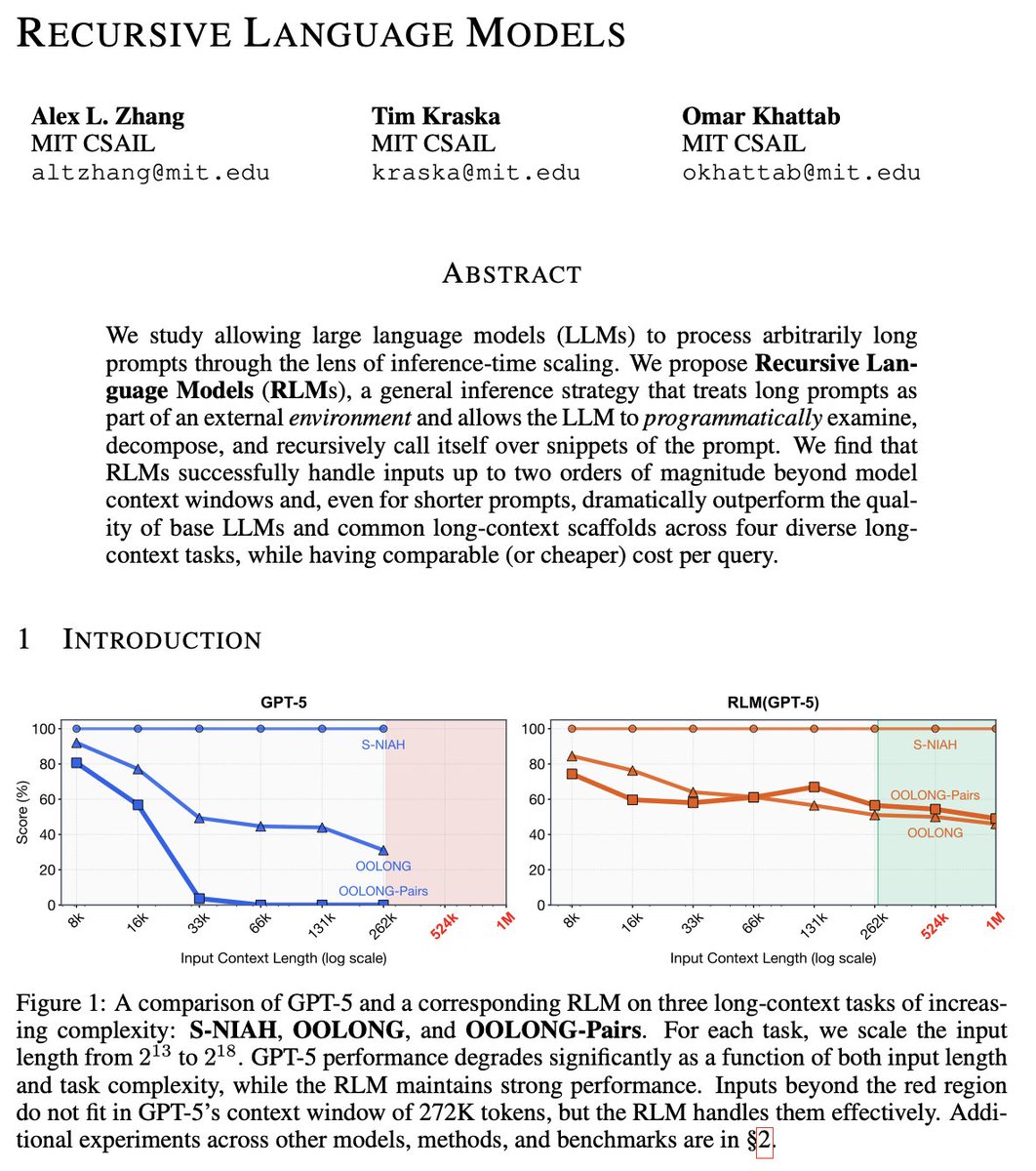
Much like the switch in 2025 from language models to reasoning models, we think 2026 will be all about the switch to Recursive Language Models (RLMs).
It turns out that models can be far more powerful if you allow them to treat *their own prompts* as an object in an external environment, which they understand and manipulate by writing code that invokes LLMs!
Our full paper on RLMs is now available—with much more expansive experiments compared to our initial blogpost from October 2025!
https://t.co/x47pIfIkTb
Finally launching 🪐 Cosmograph 2.0!
Work with larger datasets, use SQL, open Parquet files, save & share your graphs, integrate with Python or React, ...
All thanks to open source tools like DuckDB, Mosaic, SQLRooms and our https://t.co/YC6q2hDewo
�� https://t.co/yBSx36PTQX
To celebrate five years of #AlphaFold, we’re making The Thinking Game available on YouTube. 🧬
Get a candid look at the triumphs, the challenges and the pivotal moments that led to a breakthrough on a 50-year-old grand challenge in biology.
Stream for free on @YouTube → https://t.co/sZv7r2VpQh
New models on EQ-Bench writing evals: Kimi-K2-Thinking and the stealthed openrouter model polaris-alpha.
Polaris-alpha likely is gpt-5.1, based on how the outputs cluster nearest gpt-5 and the fact that the model has very high rate limits.
Time to fine-tune your own models instead of relying on blackbox closed-source models!
Not doing this is like building a software company and not writing your own software.
In the time of reinforcement learning, it's become much easier and cheaper than it used to thanks to great open-source models & more needed than ever to start your AI learning curve, differentiate yourself, and create better products for your users and customers.
Great to see @thinkymachines contributing to this trend! In my opinion, even if it's been slower to happen than we expected, long-term that's where most of the value will be.
@gdb thanks for stating this 🙏 "You'll want an AI that has its own computer"
For those that haven't been following this is what we are building at @daytonaio
Love how Align Evals in @langchain is making it easier for anyone to build and align llm-evaluators!
Big kudos to the team & @hwchase17 for consistently shipping and improving this feature for the world. It's come a long way since my basic prototype https://t.co/47KyVrqLMG 🥹