Power Electronics Lab, Dept of Electronic Systems Engg, Indian Institute of Science | Electric drives | Power converters | Alternate energy systems | Locomotion
We're pleased to share that Prof. L. Umanand has published a new book "Design of Photovoltaic Systems".
https://t.co/O3FuywoGfL
https://t.co/UYOQNffeXz
A talk by Prof. Sujit K. Biswas on 16th July 2024, 3:30pm-5pm IST on the topic "Practical Selection, Design and Interconnection of Components for Power Electronic Systems."
Hybrid event (Online + Venue: DESE Auditorium, IISc)
Registration Link: https://t.co/HS3KHEfrpq
With MTech students from ESEPEG graduating, they demonstrated interesting projects in power electronics field for various applications such as electric vehicle, autonomous driving, PV emulator, battery balancing during DESE Annual Expo 2024.
Read more at
https://t.co/wMfykOkDdn
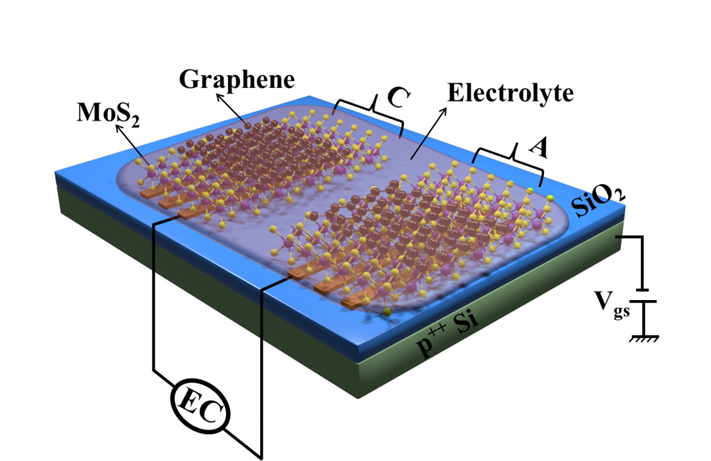
Researchers @IAP_IISc have designed a novel ultramicro supercapacitor, a tiny device capable of storing an enormous amount of electric charge. It has potential applications in consumer electronics, electric cars and medical devices.
https://t.co/4DF3WBjsUq
#IIScresearch
Choice of gate resistance (Rg) between gate drive circuit and gate of MOSFET/IGBT is a trade-off between electromagnetic interference (EMI) and switching losses.
3/3
Along with an IoT enabled Smart Windshield that is implemented to provide an interface to drivers for better road visibility, reduce the effect of incoming vehicle headlight glare effect and many more.
1/3
EV developed in PE Lab, DESE, IISc using open-source chassis(Tabby) funded by Tata Motors and DST(UAY - Uchchatar Avishkar Yojana) during 2019-2020. It is powered by 100kW 3-phase water cooled inverter designed, assembled and tested in-house by DESE PE LAB students.
LVM3-M3🚀/OneWeb 🛰 India-2 mission
is accomplished!
All 36 OneWeb Gen-1 satellites injected into the intended orbits
In its 6th consecutive successful flight, LVM3 carried 5805 kg of payload to Low Earth Orbit
@OneWeb@NSIL_India
We're asking the next-gen to design an EV future with our #EVmoji competition with @green_tv@World_EV_Day! Tweet the design with #EVmoji in the caption – Open to kids aged 6-16. Submissions accepted via accounts of parents/guardians. T&Cs apply https://t.co/IgA4mGCX1o
Here's a summary of all the episodes in season one of the Opelex Podcast. Which is your favourite and why? Would you recommend a guest to us?
https://t.co/QlC0WtqcxY
"As you'll never be sure which are the right problems to work on, most of the time that you spend in the lab or at your desk will be wasted. [...] you will have to get used to spending most of your time not being creative, to being becalmed on the ocean of scientific knowledge."
Statements like "inductor current should always be continuous" or "inductors always oppose sudden change in current" are well known, but often not deeply understood by students.
This @eevblog video shows why:
https://t.co/YM7seKUWti
@opelexnet@iiscpowerlab
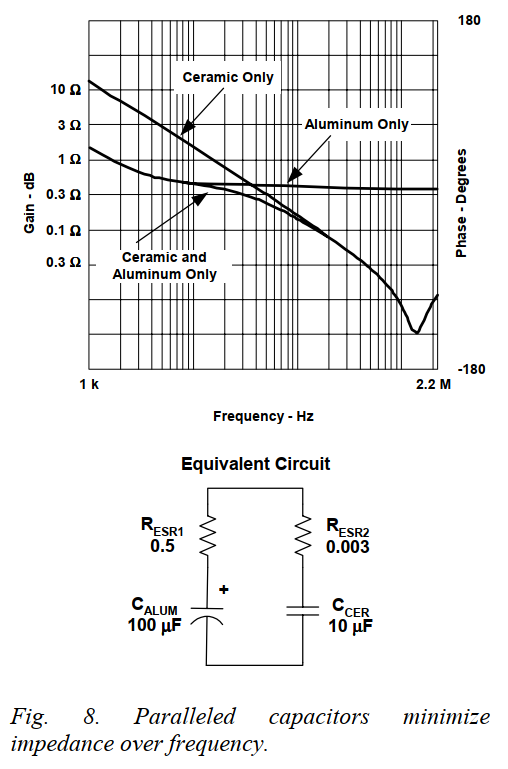
The parallel combination of aluminium electrolytic and ceramic capacitors gives an excellent wide-band capacitance.
Image source: Robert Kollman, "Constructing Your Power Supply—Layout Considerations" (2004)
"Try to understand any system or a subject in a way where you can explain it to someone who doesn't know engineering." ~Prof. Ashwin Khambadkone
https://t.co/laz2dj0g5V
Our gift to #PowerElectronics lovers everywhere: The Opelex Podcast. A series of expert interviews.
#1 - The Pilot: Intro to the podcast & the hosts
#2 - Interview with L. Umanand
#3 - Interview with Ned Mohan
https://t.co/ndwZSL7Sjq