Looking for a gift that will light up a child’s face? This LED drawing board makes colorful artwork glow, with 7 markers and a reusable surface for endless drawing, writing, and imaginative fun.
Get it here =>https://t.co/zzbfBFBWia
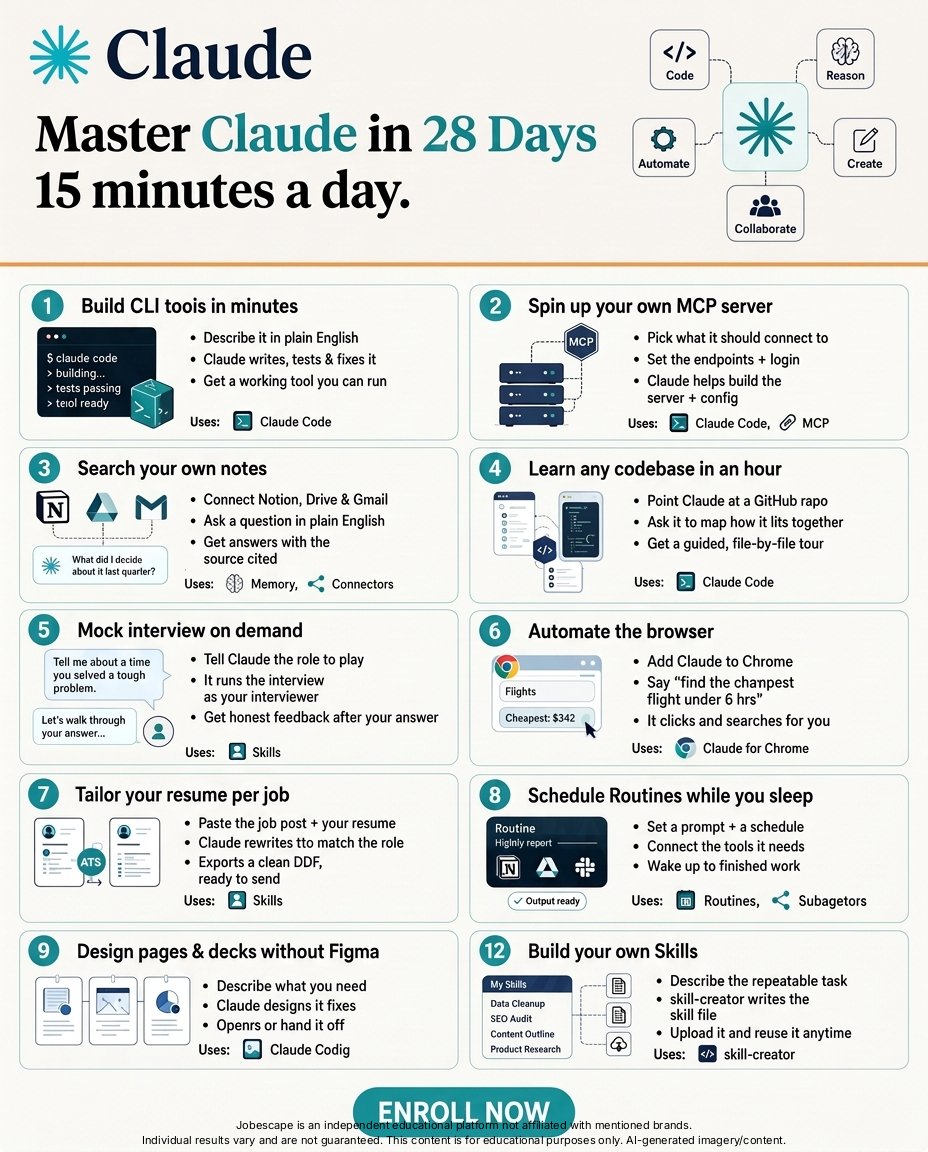
INSTEAD OF WATCHING NETFLIX TONIGHT. Spend 2 hour with this. Claude AI FULL COURSE that teaches you how to BUILD and AUTOMATE anything. The people who watch this tonight will wake up tomorrow with a new skill. Watch it and bookmark it now.
Full Claude Course
Master Claude to automate repetitive tasks, build apps without coding, create real portfolio projects, and become more valuable at work.
📢Another exciting Postdoc position to develop #AI systems for species identification and individual counting in camera-trap images. By the @BiodiversaPlus @WildIntproject in the @CarpathianB
1st deadline: 30/10/24
More here 👇
https://t.co/rG2LKKBgec
https://t.co/iNxfExUXON
10 Best System design concepts to learn in 2024
1. Caching
2. DB Sharding
3. load-balancing
4. replication
5. fault-tolerance
6. high-availability
7. API Gateway
8. scalability
9. Performance
10. Indexing
learn more on DesignGuru - https://t.co/VuZLWnBFWY
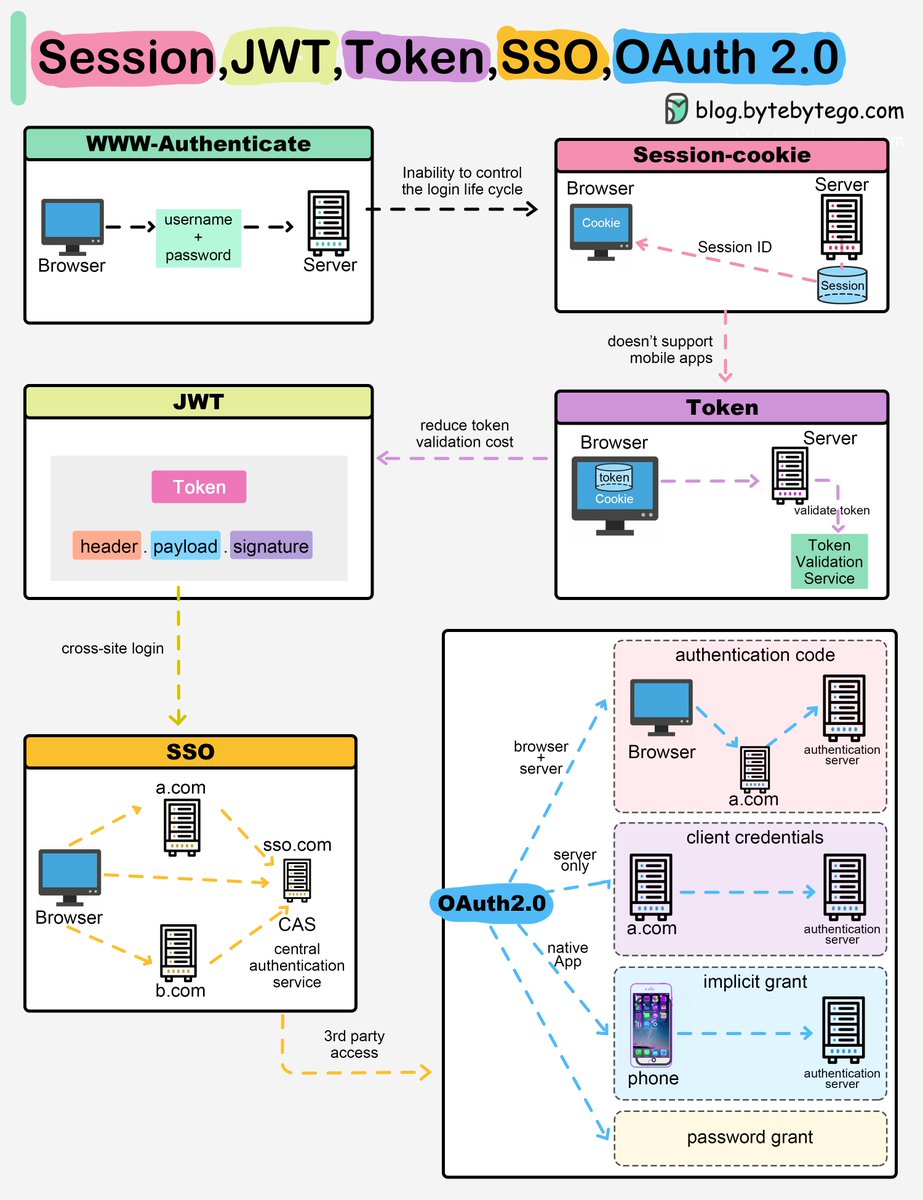
Session, Cookie, JWT, Token, SSO, and OAuth 2.0 Explained in One Diagram
When you login to a website, your identity needs to be managed. Here is how different solutions work:
- Session - The server stores your identity and gives the browser a session ID cookie. This allows the server to track login state. But cookies don't work well across devices.
- Token - Your identity is encoded into a token sent to the browser. The browser sends this token on future requests for authentication. No server session storage is required. But tokens need encryption/decryption.
- JWT - JSON Web Tokens standardize identity tokens using digital signatures for trust. The signature is contained in the token so no server session is needed.
- SSO - Single Sign On uses a central authentication service. This allows a single login to work across multiple sites.
- OAuth2 - Allows limited access to your data on one site by another site, without giving away passwords.
- QR Code - Encodes a random token into a QR code for mobile login. Scanning the code logs you in without typing a password.
Over to you: QR code logins are gaining popularity. Do you know how it works?
–
Subscribe to our weekly newsletter to get a Free System Design PDF (158 pages): https://t.co/FIzCeaWsZV
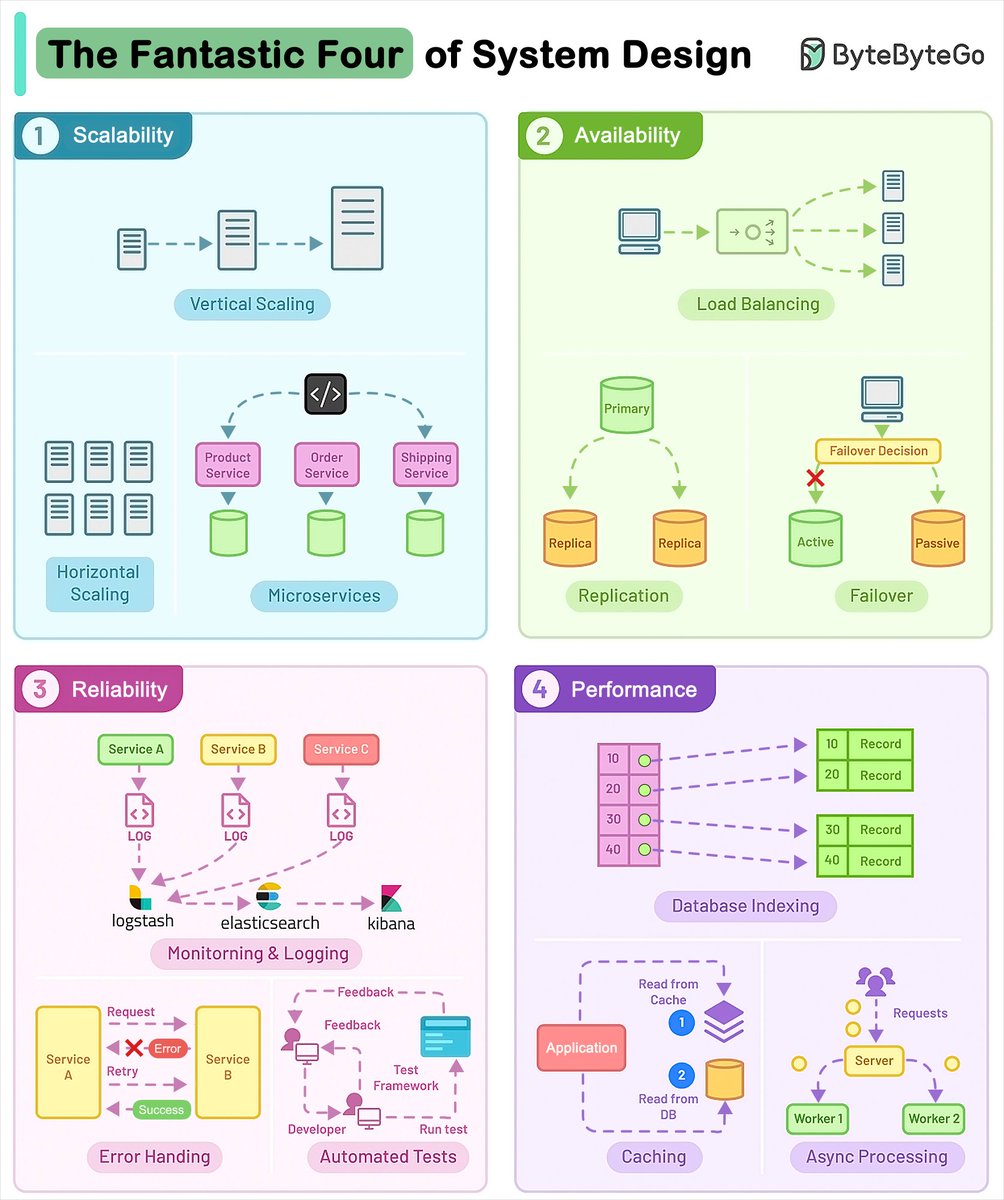
Who are the Fantastic Four of System Design?
Scalability, Availability, Reliability, and Performance.
They are the most critical components to crafting successful software systems.
Let’s look at each of them with implementation techniques:
1 - Scalability
Scalability ensures that your application can handle more load without compromising performance.
2 - Availability
Availability makes sure that your application is always ready to serve the users and downtime is minimal.
3 - Reliability
Reliability is about building software that consistently delivers correct results.
4 - Performance
Performance is the ability of a system to carry out its tasks at an expected rate under peak load using available resources.
Over to you: What are the other pillars of system design and strategies you’ve come across?
–
Subscribe to our weekly newsletter to get a Free System Design PDF (158 pages): https://t.co/FIzCeaWsZV
Learn Machine Learning from scratch
https://t.co/AxgEVSwAzW
Implements & explains core machine learning algorithms and neural networks from scratch, assuming you know absolutely nothing.
Enjoy!
Con BeautifulSoup, Selenium y ChromeDriver, podemos clonar un sitio web (Phishing) y analizar su HTML, CSS y JavaScript para identificar patrones que podrían revelar la misma fuente de ciberdelincuentes.
Si, existen navegadores especiales, pero esto es para entender desde cero.
Here are the 5 Best courses to learn Microservices
1. Master Microservices With Spring Boot - https://t.co/hCiwkskQbr
2. An Introduction to Microservice Principles - https://t.co/G0uvCQfI7v
3. Building Scalable Java Microservices (FREE) - https://t.co/xKE9HPXVMp