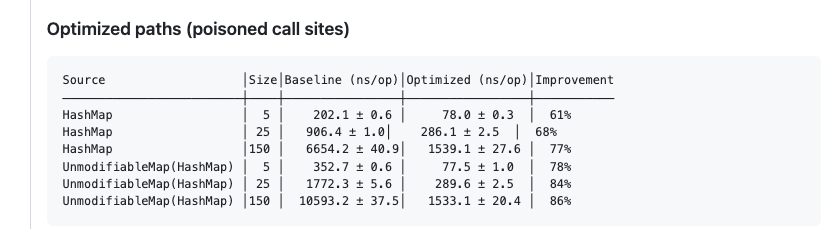
Nice wins from Shenandoah late barrier expansion "Our expectation was that LBE would be most impactful on C2 compilation times. We are indeed seeing up to 30% faster compilations. However, LBE also dramatically improves application performance directly."
Nearly 12 years after Valhalla was initially announced, a pull request that implements the first preview of JEP 401: Value Classes and Objects has been submitted to the main OpenJDK repo.
QuestDB has a custom JIT: Java serialized SQL filters into Intermediate Representation and the IR is picked up by C++ backend, which generates native code: Scalar or AVX-2.
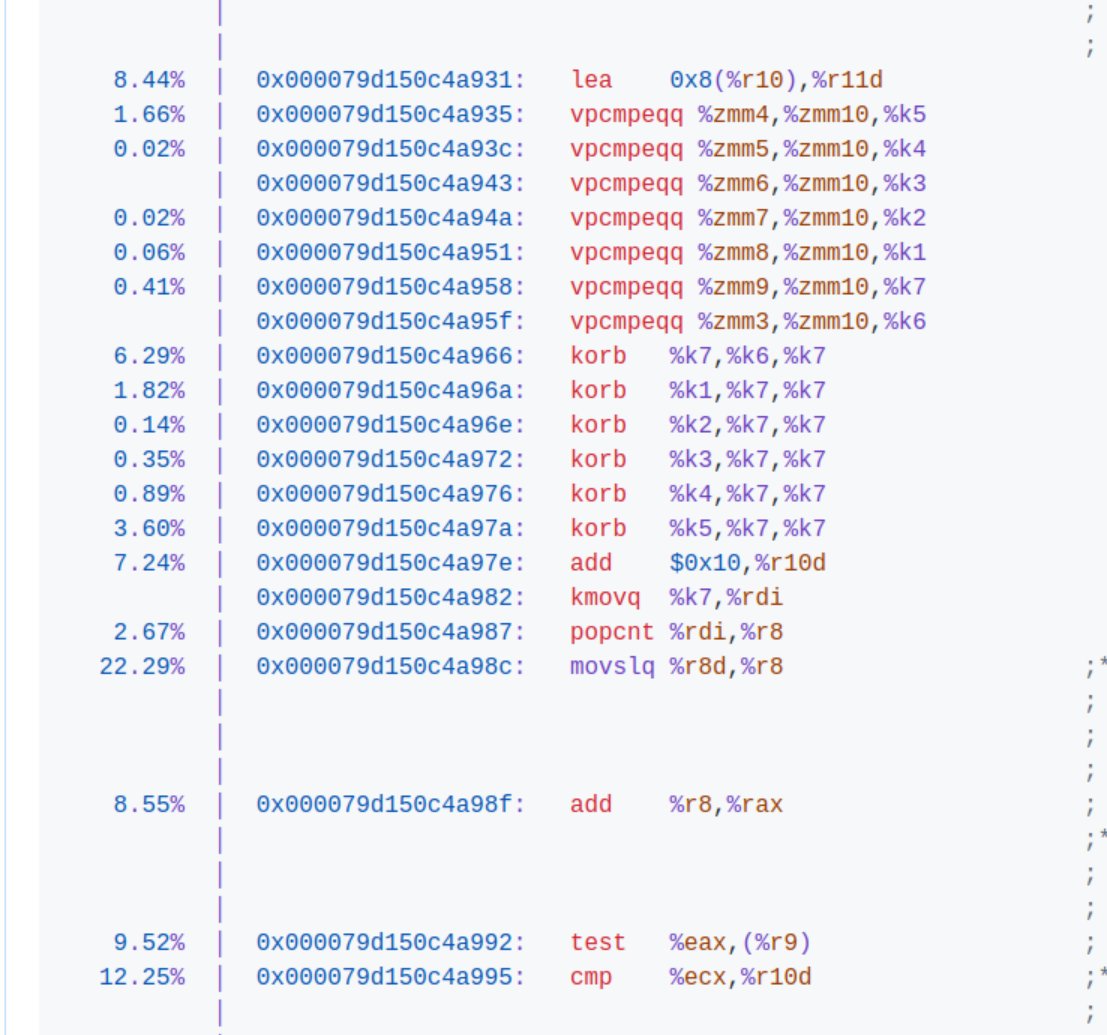
I prototyped a pure Java backend: It consumes the same IR, but generates Java classes with Vector API 🧵
@lemire@mrlesk@Love2Code Yeah, there are HotSpot specific gaps and general JIT constraints (limited budget).
That said, do you have examples of the target specific optimizations you have in mind?
Regarding the incubating Vector API, prod use cases are starting to show up https://t.co/BEtH7J4qsZ
@lemire@mrlesk@Love2Code I was simply replying to the following part of your message "I don’t think JIT typically optimize for specific processor families. I could be wrong though".
I didn't compare it to C++ and certainly didn't intend to imply that it would produce faster code than C++ for games.
@lemire@mrlesk@Love2Code OpenJDK has many PRs that reference specific families and enables/disables optimizations depending on the family. A very simple recent one is the following targeting Nova Lake: https://t.co/VxpDGWyKvd
Intel/AMD/ARM contribute directly in many cases.
@lemire@mrlesk@Love2Code Hmm, OpenJDK has a great deal of optimizations for specific processor families and instruction sets. Not sure if I am missing what you mean here though.
@JavaOne, some nice efficiency improvements in the JVM C1/C2 JIT compiler compile time between JDK 21 and 26 while improving performance. More CPU cycles to the application :-)
"Java for the AI world"
#java#JIT#AI#Compiler
io_uring easily beats AIO and gets faster with every kernel — until both suddenly get 30% slower.
Join a database developer’s unexpected journey into the Linux kernel and IOMMU.
https://t.co/5pYl7WItPI
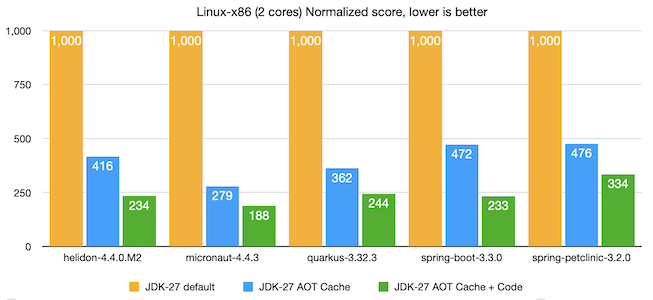
If you want to learn more about how we got a Quarkus REST app to start in 80ms on the JVM, have a look at the very detailed blog post we wrote with @geoand86 about Quarkus + Project Leyden. https://t.co/UKLt7CmWMt