@Osmo_Labs@ScienceMagazine@ASU@MonellSc@UniofReading@osmo Congrats—Great to see this published in Science! We made an open-source replication of the POM for people to play with, build with, improve, extend: https://t.co/oOTUfBZBjs
Congrats to the OSMO team for the Science paper! Bummer they couldn’t publish the POM model itself. We have made a replica and open-sourced it: https://t.co/VlYuVrLmq5
Star it, fork it, play with it, build with it, improve it, ands let us know about it!
@DrLutzBoehm Mal davon abgesehen, dass das QS ranking eher obskur ist, was sind eigentlich die Kriterien, nach denen sich deutsche Unis messen lassen wollen?
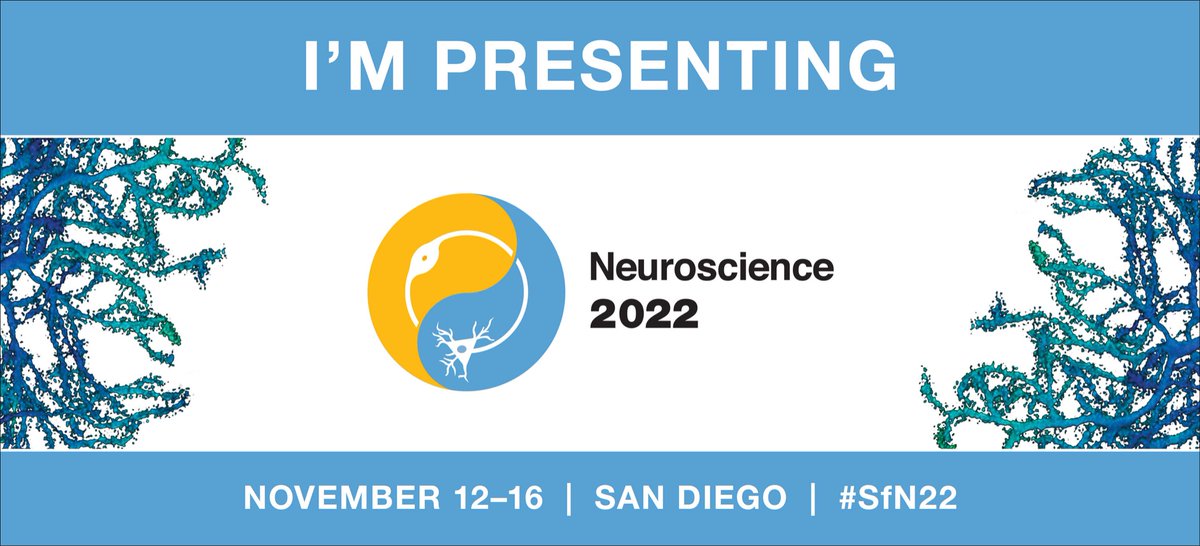
Getting ready for #SfN22 in San Diego! Come meet me at poster 130.02 on Sunday morning 13 Nov 9am and learn about our work towards better features for #odorspace. With Shawn D Burton and @wachowiak_matt
@KouMurayama Totally opposite experience here. UK childcare/school was 9am to 3pm—forget a full-time job. Couldn’t afford private childcare for 3 kids even with 2 salaries either. Moved to Berlin, childcare is almost free and we both can work full time.
@tmalsburg@chbergma Also it’s hard enough already to find qualified reviewers for the science. The pool of capable code reviewers is much, much smaller.
@tmalsburg@chbergma You have the answer there: Finding code errors takes much effort. Especially in not-quite-well-written code. Much would be won requiring basic quality standards in code as we expect correct grammar in text. Long way still until we can reject a paper because of badly written code!
Joint work with @Odor2Action IRG3, led by @JohnCrimaldi (CU Boulder), with Hong Lei & Brian H Smith (Arizona State), @AndreasTSchafer (Crick), Aaron C True (CU Boulder), Justus Verhagen (@jbpierce_lab ), and Jonathan Victor (Weill Cornell Medical College)
New paper with the @Odor2Action network! We highlight the shift from olfaction being seen as slow and static to a view in which fast odor dynamics play a critical role at many levels of sensing and behaviour. https://t.co/bkBXHHjQeT
@saraivalab @Ecro2021 Thank you so much @saraivalab for organising #ECRO21 as an in-person meeting! It was super-inspiring to interact within the olfaction community face to face. 👍👍👏👏👏
Hope to see you next year at #ECRO22 in #Berlin!
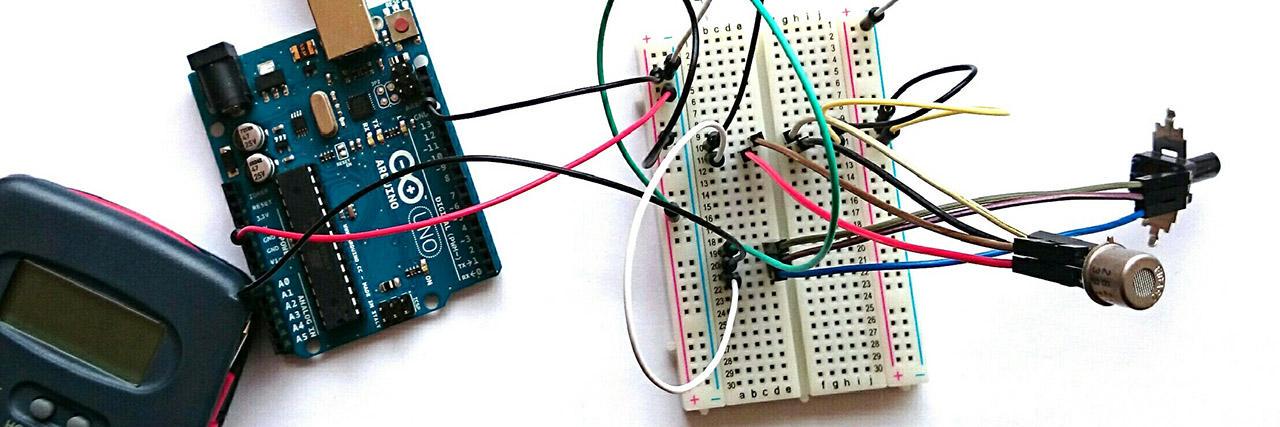
New preprint: A popular #electronic_nose dataset turns out to be contaminated by sensor drift, limiting its use for #gas_recognition benchmarks. We drilled down on the details & identified 17 published studies potentially affected. Read all about it: https://t.co/QKHqvOVZEr