🔍🌍 La rassegna geopolitica della settimana
La frattura israelo-americana in Medio Oriente, lettera di Zelensky a Putin, Ankara guarda al Giappone, crisi istituzionale Senegal.
Di Giuseppe De Ruvo, Mirko Mussetti, Daniele Santoro, Luciano Pollichieni
https://t.co/thL7YtL822
⚡️Bitcoin is the first asset in modern history whose main product is refusing to die.
That is why Hal Finney’s line is so powerful.
He saw the actual mechanism before almost anyone else.
Bitcoin does not become valuable because someone promises yield, growth, dividends, guidance, or political backing.
Bitcoin becomes valuable because it keeps surviving every attempt to dismiss, ban, corrupt, fork, ridicule, financialize, and bury it.
Every day it survives, the world has to quietly update.
At $0.01, the bet was “this is probably a toy.”
At $15, the bet was “maybe this survives among weirdos.”
At $1,000, the bet was “maybe this becomes a speculative asset.”
At $20,000, the bet was “maybe this becomes digital gold.”
At $60,000+, the bet became “maybe this is a permanent monetary rail.”
The price is just the visible surface of that probability update.
Bitcoin’s real chart is not price. It is death probability collapsing over time.
That is what skeptics still do not understand.
They think Bitcoin has to keep proving itself with new arguments. It doesn’t. Time is the argument. Blocks are the argument. Halvings are the argument. Failed bans are the argument. Exchange collapses that fail to kill it are the argument. Bear markets that fail to erase it are the argument. Governments regulating it instead of destroying it are the argument. BlackRock packaging it is the argument. States discussing reserves are the argument.
Bitcoin wins by making disbelief more expensive each year.
The real genius of Bitcoin is that it turned survival into compounding credibility. Most assets need management teams to execute. Bitcoin needs the network to keep producing blocks and refusing invalid rules. That sounds simple, but simple is the point. It is a machine that converts time, energy, and consensus into monetary credibility.
Fiat credibility decays because humans keep modifying the promise.
Bitcoin credibility compounds because the promise keeps refusing modification.
That is the entire civilizational split.
Every fiat system eventually asks for trust again. Trust us through this emergency. Trust us through this deficit. Trust us through this war. Trust us through this bailout. Trust us through this inflation. Trust us through this temporary measure. Trust us through this debt spiral.
Bitcoin says: verify.
That is why it terrifies the old system. It exposes money as a credibility game and then offers a version where the rules do not need a priesthood.
The hardest truth: Bitcoin is no longer trying to become legitimate. Legitimacy is slowly being forced to route through Bitcoin.
That does not mean the path is clean. There will be crashes, confiscation attempts, custody failures, regulation, taxation, ETF paper games, political attacks, quantum fear cycles, and stupid leverage blowups. None of that changes the core. Those are stress tests.
The longer Bitcoin survives the stress tests, the more absurd the zero case becomes.
The zero case was plausible in 2010.
It is now mostly a psychological defense mechanism for people who missed the compounding of monetary credibility in real time.
Bitcoin is not just an asset anymore. It is a running referendum on whether trust in code-backed scarcity can outlast trust in political restraint.
And the answer keeps getting clearer.
Every block says the same thing:
The promise held again.
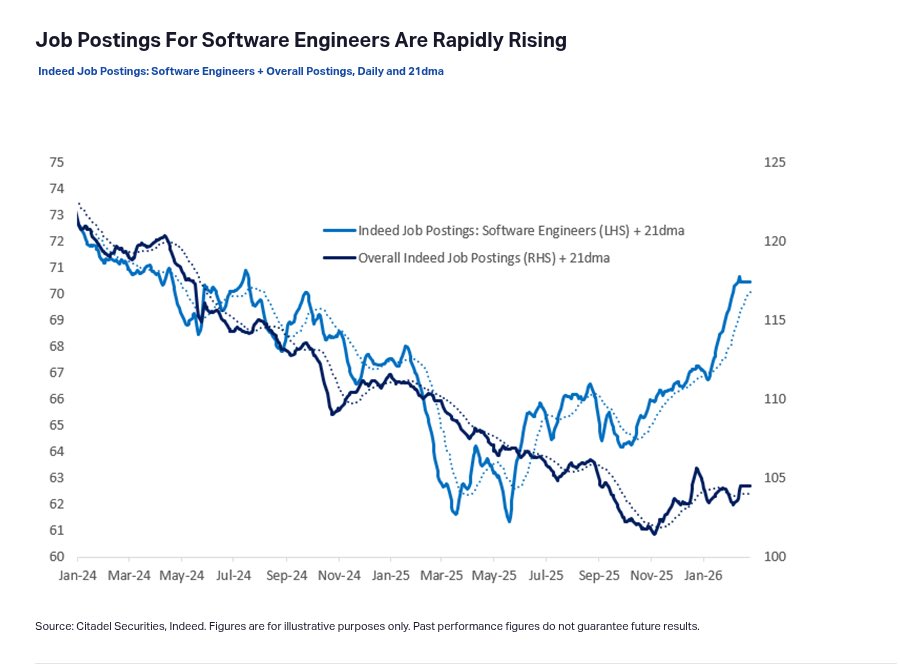
Q: How are job postings for software engineers rising rapidly despite AI agents automating coding?
A: Because there’s far more code to manage than ever before. We’re already seeing a 14x YoY increase in GitHub commits, and it’s accelerating.
AI has dramatically lowered the cost of writing code, so it’s now being used across far more businesses, applications, and use cases.
We’re at the beginning of a massive productivity boom driven by the proliferation of bespoke software throughout the entire economy.
Coding has been AI’s breakout use case this year. The fact that it’s increased demand for software engineers — rather than decreased it — should call into question the entire “AI will cause mass job loss” narrative.
Europe is one of the best places in the world to live, but one of the hardest places to build and scale a company.
After 5+ years in France, following 16+ in the US, I have a conflicted admiration for Europe.
On the one hand, Europe has great potential. When I lived in the US, I was skeptical of the European quality-of-life argument. But after getting used to Sunday morning markets, walkable cities, and 4.5 meter ceilings, I get it. There are things that you simply cannot import or experience as a tourist.
These things can make Europe very attractive for creative and intellectual work. I honestly believe some parts of Europe are the “best neighborhood” in the planet. But that’s not the full story.
I am not only a husband and a dad. I am also an entrepreneur. I founded a company in the US 12+ years ago that has offices in the US and Chile and clients throughout the world. I live in France, yet I have not opened a subsidiary here. That is telling.
We once hired someone in France through one of those remote employment platforms. The person received about 5,000 euros net per month, which is considered a very good salary here. But the total cost to the company was closer to 13,000 per month.
That makes hiring feel less like a relationship between a company and a worker, and more like renting someone from the state. At the same time, you take an enormous amount of legal and administrative responsibility. The presumption is that all companies should operate like a 1960s car manufacturer. The response is simple. Don’t set up operations in Europe.
But this is not a remote-work story. I know many small entrepreneurs in France who do not want to cross the threshold from being a one-person activity to becoming an employer. They sometimes refuse a new customer to stay small and avoid the obligations that come with hiring one person. That should worry us.
Many social protections here are described as being provided by the state, but in practice, a lot of the cost and complexity of the implementation falls on the administrative shoulders of entrepreneurs. That is reasonable for a large energy company or bank. But for a small business, it is the difference between an entrepreneur waking up on a Monday to think about product or paperwork.
Growth is not the enemy of the European social model. It is what enabled it. Much of the quality of life we enjoy here today dates back to growth incubated in the past. Growth that is increasingly hard to find. France once led frontier industries, like bicycles in the 1860s, cinema in the 1890s, and aviation and automobiles soon after. Since then, Europe built a more humane social model. But that model was built on the assumption that Europe and the US were the only two rich and industrialized places in the world.
That is no longer true. Global competition in the 21st century is not what it used to be 50 years ago, and the padding built to protect us, may have grown into the handbrake that constrains the growth of the small and flexible firms we need to compete in new frontier sectors.
We should be able to be critical about Europe in our own terms, without comparing ourselves to the US or China. Innovative parts of Europe, like Sweden or Switzerland, operate differently and provide clues. Sweden has embraced a dynamic of capitalization in its pension system for a long time in a continent where fewer people buy stocks. Switzerland, a place that shares an enormous amount of geography and culture with its neighbors, is built in part on strong internal competition among its cantons.
But neither can light a candle to a French open-air market on a Sunday morning. A market where cash is king, and for a reason.
Europe may be the best place in the world to live. But it is also one of the most challenging places to build and scale an innovative activity. The goal is not to weaken the European model. But to get to a place where we can lead again by example. The world will follow us, but only if we are ahead.
@_The_Prophet__ This pattern can be applied to so many debates or conversation. So many people focus on what work in them or on specific use case rather than making the analysis on the collectivity. Which is what really matters. Always.
I guess extreme individualism is behind this.
@paulg I don't believe that what politician think or believe is important. Even the most incompetent and/or corrupt, is just a manifestation of (part of) society.
The answer is probably that most people believe one get rich by stealing, oppressing others, luck.
@graninas Exactly what I'm feeling more and more everyday.
Despite the obvious enthusiasm and interest about it.
I'm leaning towards the idea of small self trained models.
Further, the employee activism movements of the last decade removed sentiment from many CEO's. The bill has come due for a tremendous amount of misbehavior.
@LandsknechtPike England is not bigger and did the same.
By definition all "global" empires have to be in control of all the sea routes, which happens controlling choke points.
Which is why Americans are freaking out.
Subscribed a few days ago. Awesome.
And I'm an opencode daily user since a month, which nowadays is like ten years in the old way to measure time in tech.
There is a trajectory in Bitcoin history that the market still underestimates.
Not a marketing trajectory.
An architecture trajectory.
Before Bitcoin, Adam Back proposed Hashcash: a simple, almost dry idea, but an extremely powerful one.
Create a real cost for the producer.
Keep verification trivial for the network.
That asymmetry later became one of Bitcoin’s core ideas: a proof that is hard to produce, but easy to verify. Satoshi obviously did not build Bitcoin from one single idea. Bitcoin was a synthesis of decades of cypherpunk research: digital signatures, timestamping, peer-to-peer networks, economic incentives, difficulty adjustment, and proof-of-work.
But the whitepaper cites Hashcash because that primitive matters.
And this is where the trajectory becomes interesting.
Years later, Blockstream did not try to "turn Bitcoin into Ethereum". They approached the problem from the right direction: how do you extend Bitcoin without betraying what makes Bitcoin robust?
Most "Bitcoin L2" narratives start from frustration:
"Why doesn’t Bitcoin do what Ethereum does?"
Blockstream’s strategy seems to start from a different question:
"How do we build more capabilities around Bitcoin while preserving the Bitcoin mental model?"
UTXOs.
Settlement.
Verification.
Explicit constraints.
Contained complexity.
Caution around L1.
That is exactly what Liquid represents.
Liquid is not just another L2. It is a Bitcoin-native sidechain, UTXO base, live since 2018, designed to test and mature advanced financial primitives: L-BTC, Issued Assets, Confidential Transactions, faster settlement, and experimentation around a Bitcoin-like model.
And yes, Liquid has an important trade-off it is a federated sidechain. It is not Bitcoin L1. It does not have the same security model. But that trade-off is explicit, and that is exactly what makes the approach more honest than many "trustless" narratives sold with three slides and a multisig.
The strategic move is this:
Do not break Bitcoin to make Bitcoin more expressive.
Build an environment compatible with its DNA.
Test primitives on a suitable layer.
Let the best ideas mature before pretending they deserve L1.
Then comes Simplicity.
And at that point, the coherence becomes hard to ignore.
Simplicity is not "Solidity on Bitcoin". It is almost the cultural opposite.
Not an opaque VM.
Not a global-state casino.
Not a deploy, execute, pray, patch, governance vote, post-mortem environment.
Simplicity starts from another model: bounded contracts, inspectable logic, formal reasoning, compatibility with the UTXO spirit, and advanced programmability without abandoning verifiability.
It is closer to:
understand before execution,
inspect before signing,
verify before trusting.
And now you can see a rare line across multiple decades:
Hashcash: costly to produce, cheap to verify.
Bitcoin: costly to attack, cheap to validate.
Liquid: experiment without weakening L1.
Simplicity: program without sacrificing inspectability.
Same obsession, multiple layers.
Reduce trust.
Force proof.
Contain complexity.
Keep the architecture clean.
Never sacrifice verification for spectacle.
That is why Simplicity is much more interesting than another narrative.
Because this is not Bitcoin chasing Ethereum.
This is Bitcoin searching for its own path to programmability: stricter, less sexy to the market, but far more coherent with its DNA.
The market usually asks the wrong questions:
"Is there a token?"
"Is there an airdrop?"
"Is it EVM compatible?"
"When pump?”
But the real Bitcoin questions are colder:
Is it verifiable?
Are the trust assumptions explicit?
Is the complexity contained?
Does it respect the UTXO model?
Does it make Bitcoin more powerful without making it less Bitcoin?
That is where the vision becomes strong.
Blockstream did not try to make Bitcoin "cooler" by copying Ethereum. They built like people who actually respect Bitcoin: slowly, cleanly, keeping the UTXO mental model, testing primitives in a suitable environment, and letting research move forward without forcing consensus.
If Simplicity ever influences Bitcoin more directly, Liquid will have been much more than a sidechain.
It may become the production lab where Bitcoin-native programmability was incubated without selling the soul of L1.
And when you look at the path
Adam Back → Hashcash → Bitcoin → Blockstream → Liquid → Simplicity, this is not a random sequence of isolated projects.
It is a long-term vision.
The same intuition repeated in different forms:
do not ask for trust when you can build a proof.
Don’t trust. Verify.
It is not just a maxi phrase.
It is a design constraint.
And the only real compass for making Bitcoin programmable without turning it into something else.
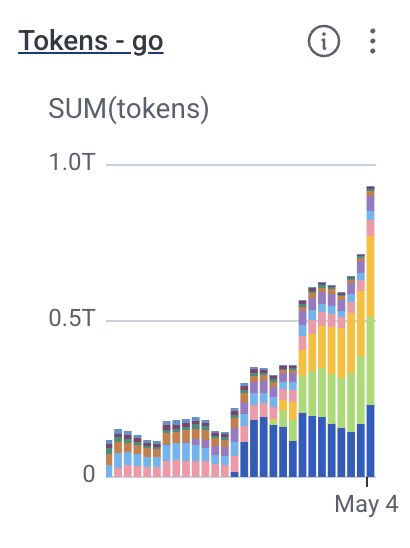
🔥DeepSeek-V4-Pro API is 75% OFF until May 5th, 2026, 15:59 (UTC Time)! Don't miss out on this massive discount.
🛠️Integration Updates:
🔹Claude Code: Set model to deepseek-v4-pro[1m] to unlock 1M context!
🔹OpenCode: Update to v1.14.24+
🔹OpenClaw: Update to v2026.4.24+
Check the latest official API docs for full details: https://t.co/9J9ZedDpyU
Bitwarden identified and contained a malicious package briefly distributed through the npm delivery path for the Bitwarden CLI in connection with the broader Checkmarx supply chain incident. No user vault data or production systems were compromised or at-risk. Additional details and updates are available here: https://t.co/9xRzNxmCOS
Ubuntu 26.04 LTS Resolute Raccoon is out with GNOME 50, Linux kernel 7.0, and five years of support until April 2031.
https://t.co/I2sK2zgzYf
#Ubuntu#Linux#OpenSource
One full day on @opencode
So much cleaner and intuitive and clear than the competition (Claude and gemini).
Maybe is early days enthusiasm.
We'll see how it stands harder sessions.
Why it's important to remember Adobe Flash?
It's not.
Flash has been a disease we finally got rid.
But I'm wrong. It is important to remember it so we can try not to repeat similar mistakes again.
Entire chapters of internet culture grew up in Flash. When it was switched off, most of it should have disappeared forever. But it didn't, thanks to the efforts of the software preservation community.
Flash is just part of the story of VANISHING CULTURE, a new book exploring the fight to preserve our fragile digital history.
Join us at the book launch. 📖
📅 Thu, April 23
🕠 5:30 PM: Doors open & entertainment
📍 300 Funston Ave, SF
🎟️ https://t.co/fBrSesWFOn
#flash #SFevents #VanishingCulture @InternetArchive #BookTwitter @funcheapsf








![deepseek_ai's tweet photo. 🔥DeepSeek-V4-Pro API is 75% OFF until May 5th, 2026, 15:59 (UTC Time)! Don't miss out on this massive discount.
🛠️Integration Updates:
🔹Claude Code: Set model to deepseek-v4-pro[1m] to unlock 1M context!
🔹OpenCode: Update to v1.14.24+
🔹OpenClaw: Update to v2026.4.24+
Check the latest official API docs for full details: https://t.co/9J9ZedDpyU](https://pbs.twimg.com/media/HGwt-7VasAAPM7i.jpg)


