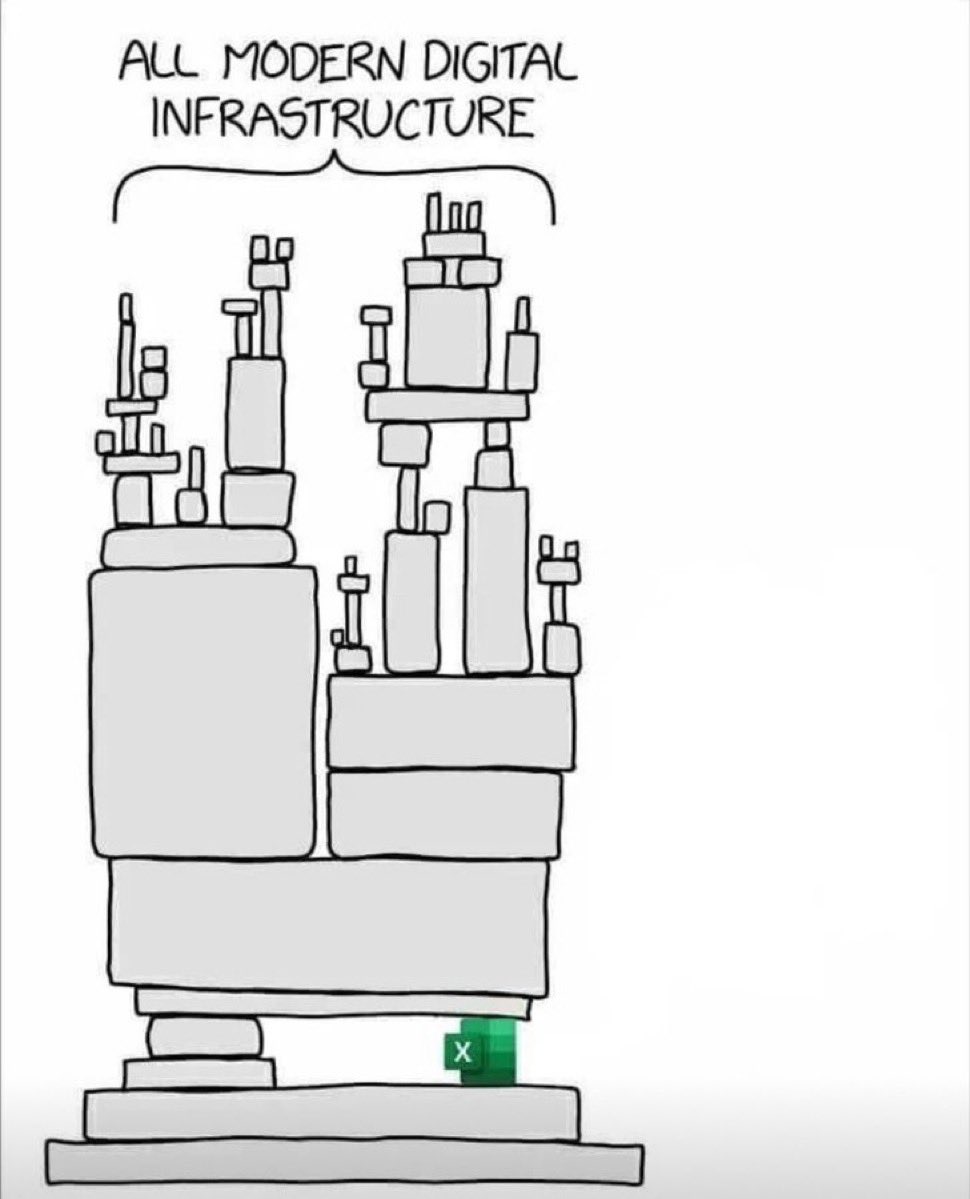
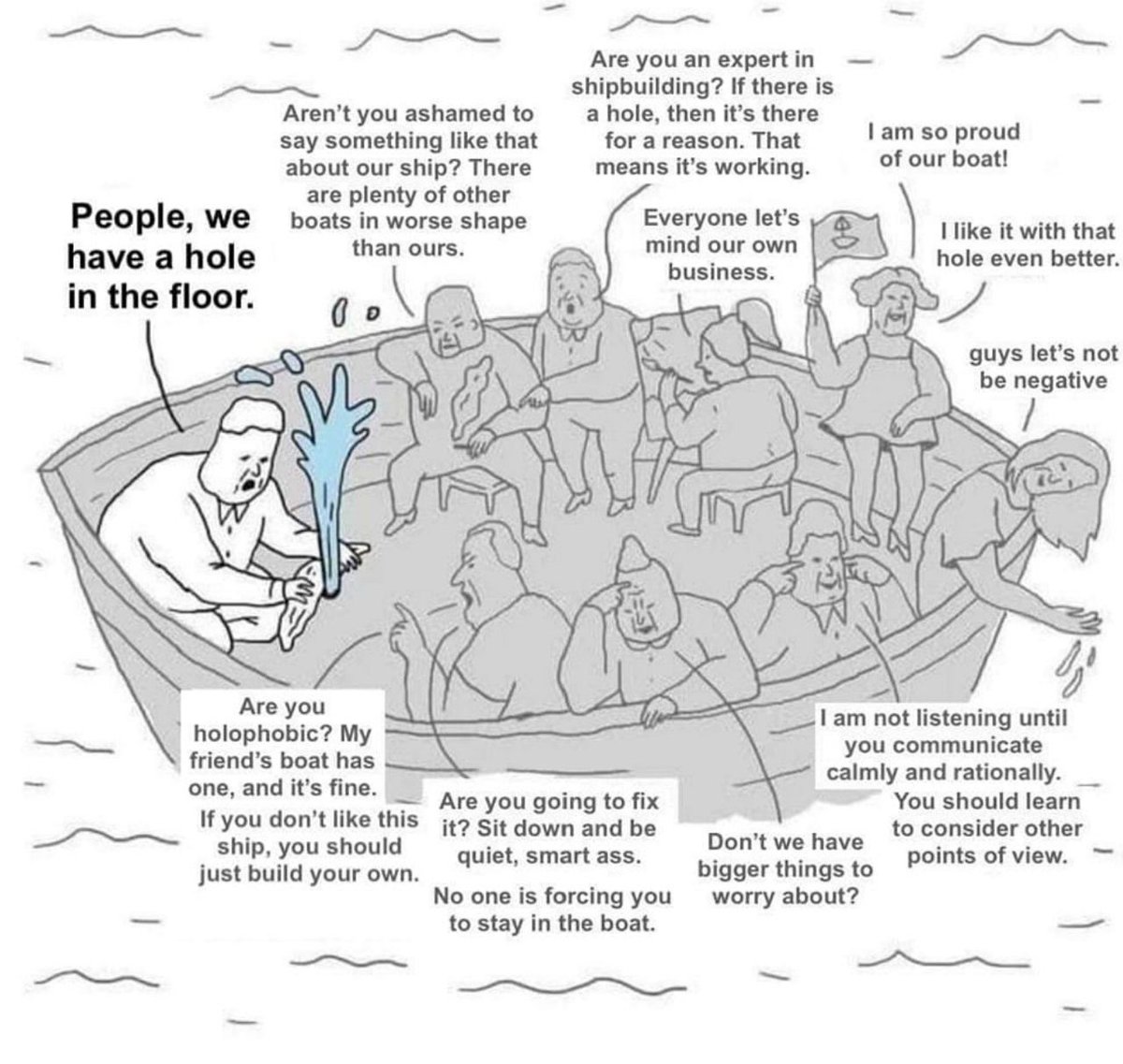
The bigger your cash cow, the worse your culture can get without driving you out of business. And Google's cash cow, search advertising, is one of the biggest the world has ever seen.
@artman@karrisaarinen Can't say for sure if I could tell the best non-native apps from native ones, but for me the 2nd reason is way more important: Mobile apps should almost always be rethought from scratch instead of reusing desktop versions.
The biggest winner in the 🇫🇮 presidential race wasn’t @alexstubb, but 🇫🇮 itself. A most dignified campaign between two competent candidates, and an election eve with the No. 1 turning up at the election eve party of the No. 2 to express his respect.
Hello from Apple Vision Pro. I was surprised at how negative the reviews were of this.
This is by far the most awesome VR experience I have ever had. The visual clarity is so good for screens, it feels retina-level, and I feel like the amount of information you can absorb is another level.
I decided to pair a Magic Keyboard to this and realized with full app support, I could almost certainly replace my desktop experience entirely with the Vision Pro. (Curious to see if I could potentially edit an entire video but I would also want to use the whole visual field to be able to pull together footage.)
There should probably be a “full screen mode” for apps that are fully immersive. There are definitely full-visual-field apps (photos, photo editing, photo sorting, video, creative tools, movie making with AI) that won’t require mixed reality that will be significantly better than on 2D screens.
The iPhone was a toy, but the Vision Pro shows us something that could be actually how people use computers on a daily basis. The future is here, just not evenly distributed yet.
imagine you’re an elephant, minding your own business, thinking elephant thoughts. and then the cornucopia truck breaks down right next to you. what a day. what a day to be an elephant
I've been working in data for almost 20 years and dogmatically subscribe to the following absolute laws of data:
Data insatiability: If you give anyone any data at all they will ask for more. There is no data point that is considered final and satisfactory. Never!
# On the "hallucination problem"
I always struggle a bit with I'm asked about the "hallucination problem" in LLMs. Because, in some sense, hallucination is all LLMs do. They are dream machines.
We direct their dreams with prompts. The prompts start the dream, and based on the LLM's hazy recollection of its training documents, most of the time the result goes someplace useful.
It's only when the dreams go into deemed factually incorrect territory that we label it a "hallucination". It looks like a bug, but it's just the LLM doing what it always does.
At the other end of the extreme consider a search engine. It takes the prompt and just returns one of the most similar "training documents" it has in its database, verbatim. You could say that this search engine has a "creativity problem" - it will never respond with something new. An LLM is 100% dreaming and has the hallucination problem. A search engine is 0% dreaming and has the creativity problem.
All that said, I realize that what people *actually* mean is they don't want an LLM Assistant (a product like ChatGPT etc.) to hallucinate. An LLM Assistant is a lot more complex system than just the LLM itself, even if one is at the heart of it. There are many ways to mitigate hallcuinations in these systems - using Retrieval Augmented Generation (RAG) to more strongly anchor the dreams in real data through in-context learning is maybe the most common one. Disagreements between multiple samples, reflection, verification chains. Decoding uncertainty from activations. Tool use. All an active and very interesting areas of research.
TLDR I know I'm being super pedantic but the LLM has no "hallucination problem". Hallucination is not a bug, it is LLM's greatest feature. The LLM Assistant has a hallucination problem, and we should fix it.
</rant> Okay I feel much better now :)