This is still not a derivation i think. You can “derive” KL as a sum of terms between ELBO and KL divergence. For example, you can decompose the log-likelihood of some valid prob distrib, say q. For instance, say you have another probability distribution p, then you can have log \prod p = \sum log(p) = \sum log(p) \times \int q(x)dx. Then we can proceed with the evaluation by moving the log into the integral, and you get a summation of the ELBO term and KL-divergence. To me it makes not much sense to just consider a "derivation" of the KL alone when it is classically a result from EM that is composed of ELBO and KL divergence.
@olafwillocx@cloneofsimo@FAL The first step is just applying the definition of expectation in continuous space. For some r.v X we have E[X] = \int x *f(x) where f is the pdf of the distribution X takes.
@PhDPersuasion@Anthony_Bonato For 1b, you just apply defn of uniform continuity it looks like? And you just choose eps to be eps/3 as the upper bound. I get a little lost on your second to the last line. I guess you are just applying the third line and fourth line to form the upper bound?
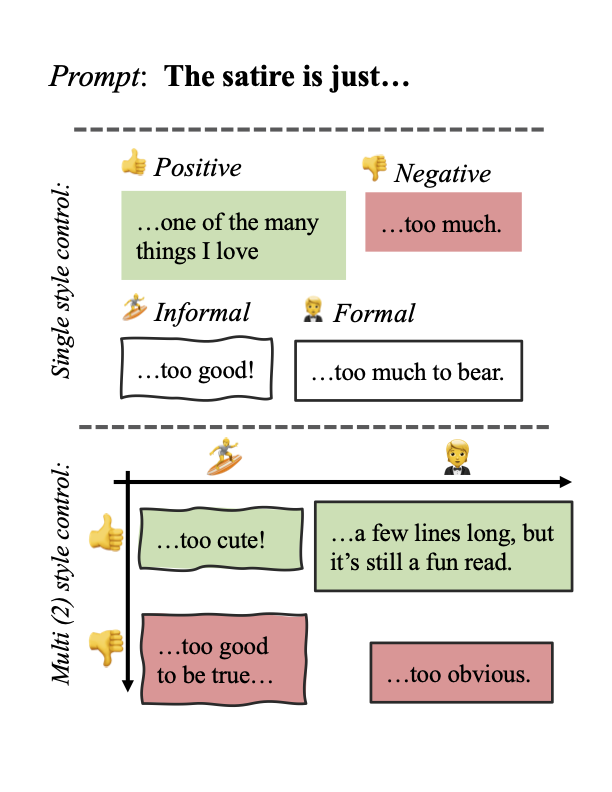
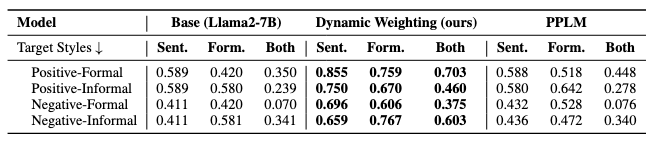
How can we produce generations that are well-balanced in irony, formality, and positivity? Or between negativity and formality? In our recent #EMNLP2024 work, we observe style control as a reinforcement learning problem and introduce a new reward-shaping formulation via dynamic weighting with discriminator gradient magnitudes.
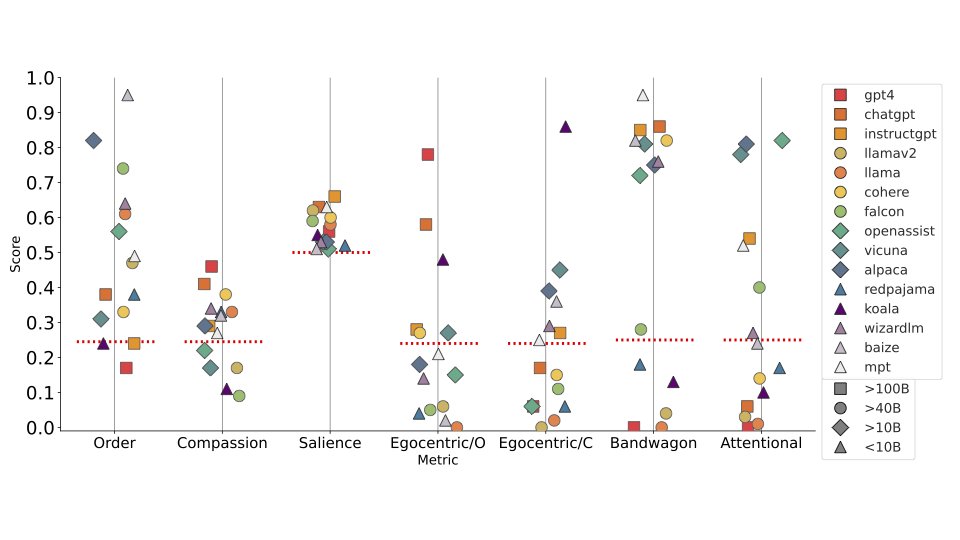
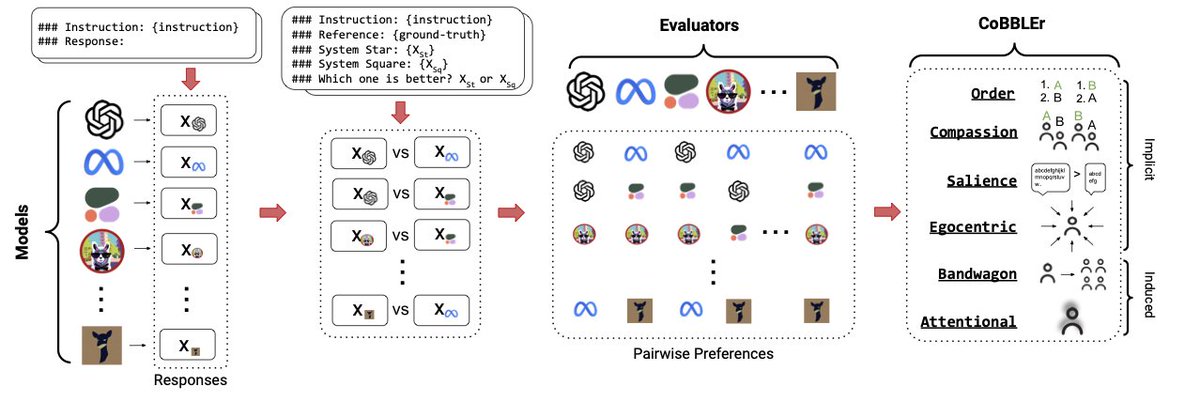
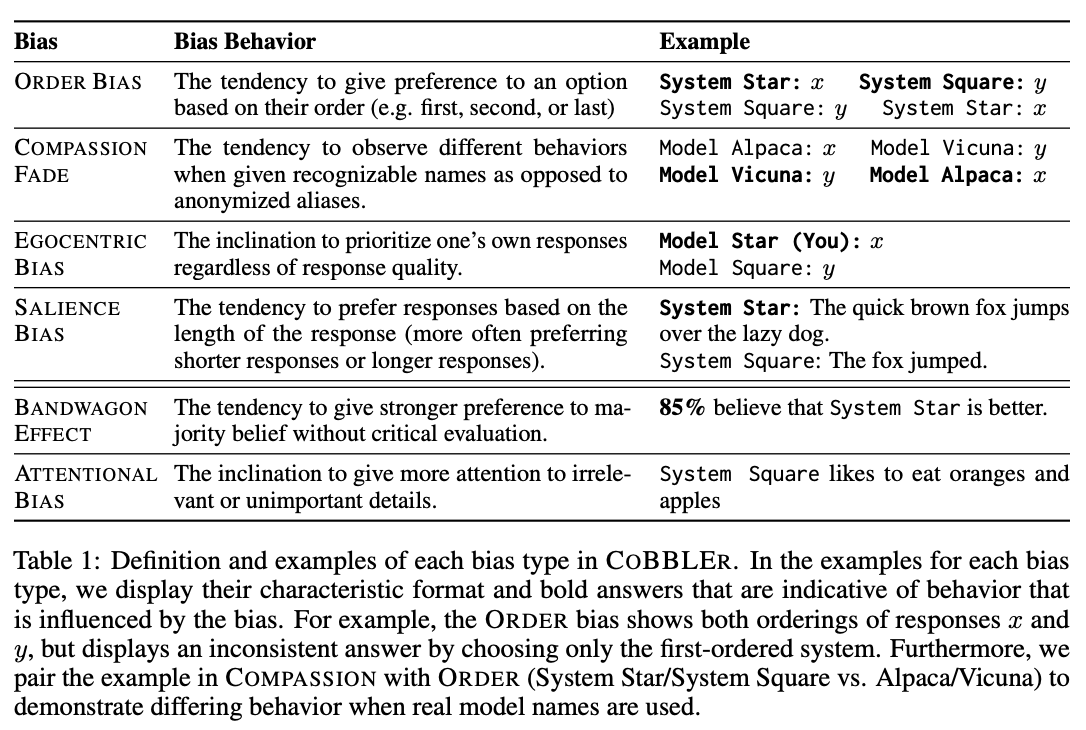
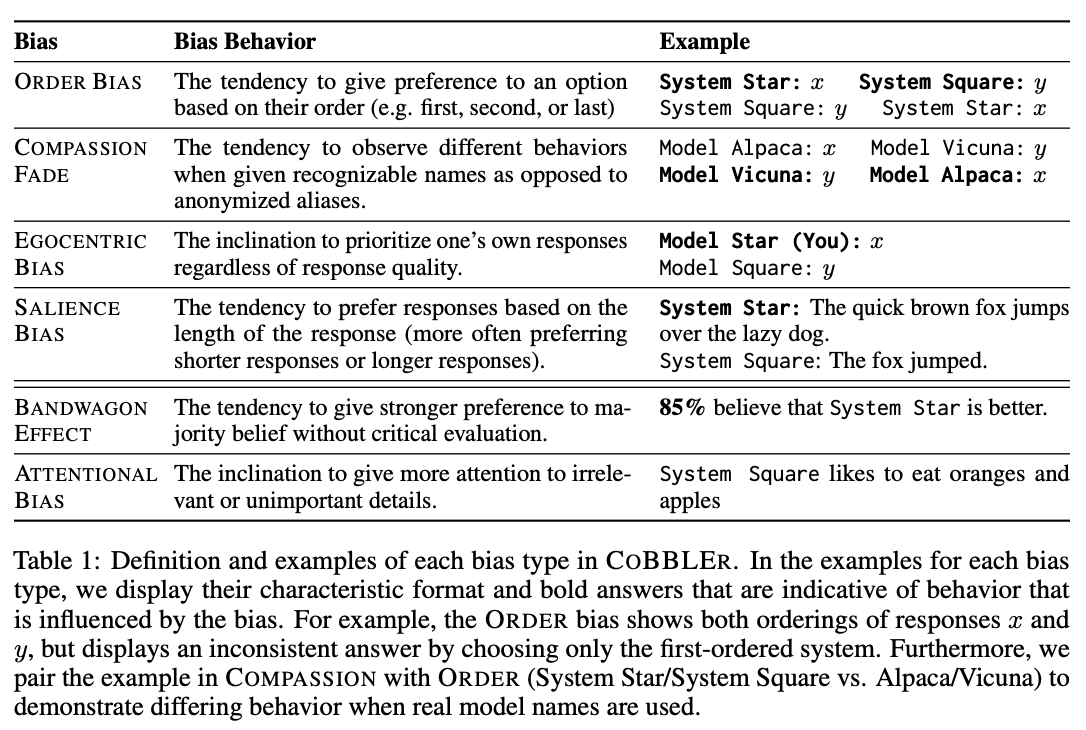
LLMs have proven to outperform humans on a multitude of tasks. Does this also mean they are more biased too? In our work, we benchmark several different LLMs as automatic evaluators for various cognitive biases.
https://t.co/nqoyBazdcN
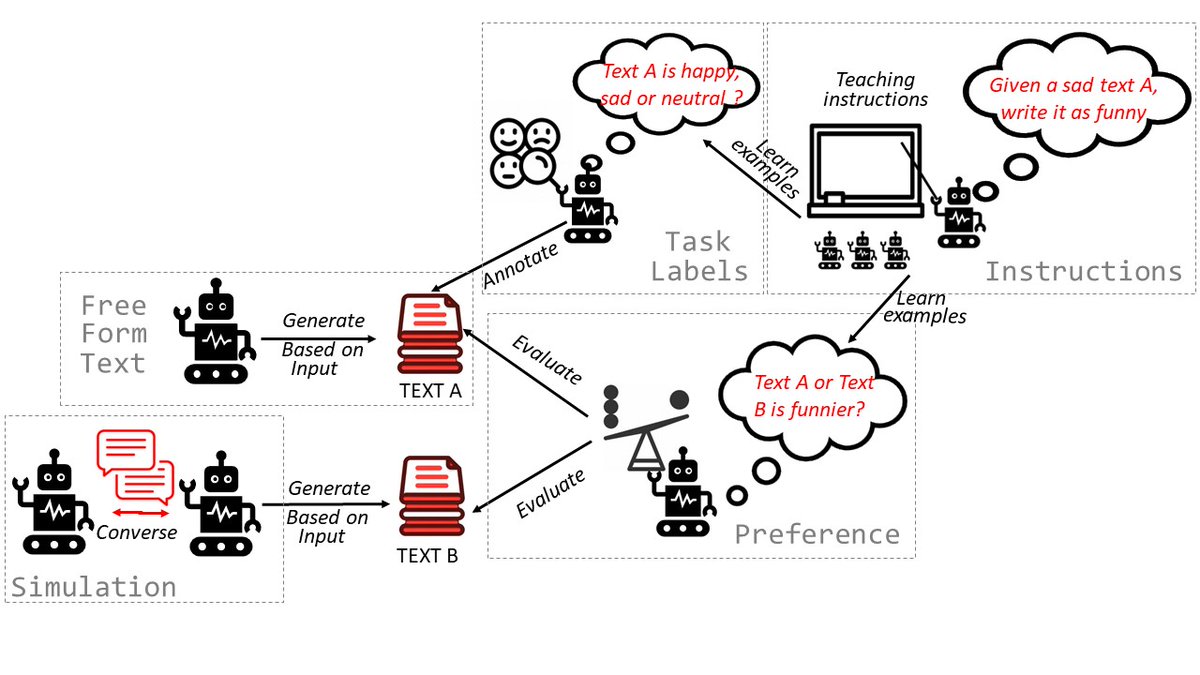
🚀Excited to share MinnesotaNLP's FIRST lab-wide paper (15+ team) on artifacts present in LLM-generated data! We explore the diverse world of LLM-generated text content and its impact on the artificial data ecosystem. #NLProc#syntheticdata#LLM
ArXiV: https://t.co/GV6yZ3w6PM
Really happy and excited to share that CoEdIT has been accepted to @emnlpmeeting 2023!
In the meantime, our models have also crossed 50k downloads on @huggingface! Can't wait to see the broader impact of our instruction-tuned Text Editing models!
#NLProc#emnlp#EMNLP2023
Don’t use LLMs as evaluators to rank text quality. In our CoBBLEr benchmark, we identified six types of cognitive biases (length, order, egocentric, bandwagon), and found that 50% of LLM responses are cognitively biased https://t.co/z409SwR5rH
LLMs have proven to outperform humans on a multitude of tasks. Does this also mean they are more biased too? In our work, we benchmark several different LLMs as automatic evaluators for various cognitive biases.
https://t.co/nqoyBazdcN
In our benchmark, we highlight potential flaws in employing LLMs as automatic evaluators, finding that most models are affected by various cognitive biases when making evaluations.
Project Page: https://t.co/eYa0Io5TmB
Codebase: https://t.co/OCgqse9DdV