We’re building $DVK holder benefits around the services people use in DriveKey: wallet management, transaction preparation, agent workflows and developer infrastructure.
Four planned tiers, based on the percentage of total DVK supply held. Each tier includes the benefits below it:
🔵 MEMBER — 0.25%
Simulation and monitoring credits, a managed wallet workspace and eligibility for hardware discounts.
🔵 OPERATOR — 0.5%
Larger service allowances, multiple wallet workspaces, scheduled transaction proposals, notifications and one inbox for reviewing agent requests.
🔵 BUILDER — 1%
Developer API allowances, webhooks, agent integrations, team proposal workflows and exportable execution reports. Tools for people building applications and running operations through DriveKey.
🔵 PARTNER — 2.5%
The highest service allowances, multiple team workspaces, integration support and eligibility for hardware bundles under published terms.
For the offline USB workflow, agents prepare proposals. You review and approve them. Holding DVK will never give an agent permission to spend from your wallet.
Verification is being designed around a separate holder wallet and a refundable DVK deposit, returned automatically after successful verification. Network gas is separate. This mechanism is still under development, and on-chain transfers are public.
Core sending, recovery, essential security, accessibility and transaction-history exports will remain available to everyone. Non-holders will also be able to purchase paid services.
We’re also evaluating transparent, profit-funded buybacks alongside hardware and service revenue. No allocation is committed yet, and refundable deposits would never fund buybacks.
These are planned capabilities, not live entitlements. Exact service quotas, hardware offers and refund terms will be published before activation.
The aim is to make DVK useful across the full DriveKey experience—from an individual wallet to a team building with agents.
DriveKey’s offline signing flow in action
Review on USB → approve → save the signed response → shut down → return online to submit.
Signing doesn’t send funds. You control the next step.
i genuinely don't think people get it yet.
v4 hooks are some of the most interesting things to happen onchain this cycle. combine them with AI/agents and we're back to the sort of experimentation and innovation that made crypto so exciting in the first place.
RH seems to be where it's all happening this cycle.
$BUN / Mosh tackling the dogshit KOL scam bundle meta.
$CLAUS pushing the boundaries of what's possible with an autonomous, self-improving AI hub.
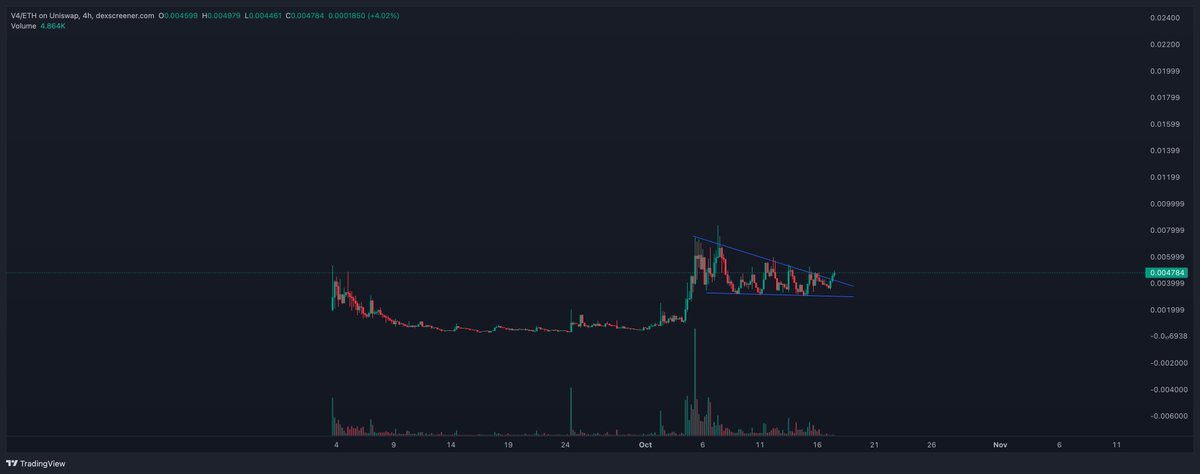
$V4 / @ProgrammableHQ incubating projects and exploring the bleeding edge of what hooks can actually do.
i really can't overstate how interesting all of this is. this is the sort of stuff that should be sparking an entirely new onchain meta.
if this doesn't catch on, then fuck the market. onchain really has changed for the worse.
We have updated our custom launch process
Our AI agents now review applications every hour against our requirements, approve submissions that pass and flag anything that needs changing.
You no longer have to wait for someone on the team to be online.
We recommend opening a launch application ticket in our Discord and including your Launch ID. Our agents can then communicate with you directly in the ticket if your application needs changes: https://t.co/kdtkt4Pkrg
We have also added stricter anti-sniping requirements. Sniping during the opening moments of a launch now comes with high taxes. Those fees go to the Programmable treasury and are used for robinhood:0xc60ba256b44334a0cd2c7242e98b88f031abb006 buybacks
This makes sniping more expensive, gives teams a fairer start and puts the fees collected from snipers back into robinhood:0xc60ba256b44334a0cd2c7242e98b88f031abb006
i bought $HOOKR at 5.7m and sold at what, 16m?
now i’m positioned in what i believe is the better play, $V4
constructive criticism is essential to improving the v4 hook ecosystem. when it comes to competing projects, i believe in the “winner takes all” principle
tbh I have absolutely no idea why robinhood:0xc60ba256b44334a0cd2c7242e98b88f031abb006 hasn't candled to 30M yet
probably bad initial holder base
looks like it's going in the right hands
founder keeps making the right moves
tech is insane
let's see
what makes me very bullish on robinhood:0xc60ba256b44334a0cd2c7242e98b88f031abb006 is that $CLAUS is built on top of it and will only be one of many v4 agents
Programmable can be seen as both v4 launchpad and an agent deployer, eventually becoming the underlying infrastructure for an entire swarm of agents, each doing different things
More teams are coming to Programmable to launch projects with their own contracts and custom @Uniswap V4 mechanics
It’s exciting to see that interest grow, and we’re proud that these teams are choosing to build with us
Choosing Programmable shows the value of having source verification, clear launch records and a place where people can discover their project.
Starting today we’ll be using @Programmableeco to share daily project updates, introduce the teams and explain what they’re building.
Our Analytics page now brings together trading activity, buybacks and burns across Ethereum and Robinhood, including activity from our three project wallets. We’re continuing to improve the page so the numbers are easier to follow https://t.co/D0vT5riypb
One thing we want to clarify is how our main token’s liquidity pool fees work:
We receive ETH from buys and robinhood:0xc60ba256b44334a0cd2c7242e98b88f031abb006 tokens from sells. We burn the robinhood:0xc60ba256b44334a0cd2c7242e98b88f031abb006 collected through those fees too. That is why the total burned can be higher than the amount purchased through buybacks.
Programmable charges a 0.3% platform trading fee across both chains. 80% of collected fee revenue goes toward V4 buybacks and burns.
We continue accumulating funds and making purchases manually at varying times to reduce predictability and the risk of people frontrunning our purchases. As more projects launch and generate trading activity, their fees contribute to that buyback budget.
Thank you to everyone choosing to launch with us 🌺🌸
Why $PARK is a conviction play for me:
@stonkspark combines sharp satire, outrageous humor, and crypto culture in seriously entertaining episodes.
The writing stands out. The jokes, pacing, and attention to detail make the episodes feel like a proper cartoon production. The creator clearly has talent and takes the work seriously.
People are responding to the content, and that’s what makes this interesting to me: entertainment that gives people a reason to watch, share, and come back.
With the project sitting at around a $200K market cap at the moment, I see potential for exponential growth if the content keeps delivering and the audience keeps expanding.
That’s my personal conviction not financial advice. This is crypto, and everything can go to zero.
https://t.co/6wzXXBfjQs
game: THE BOARD MEETING
How to play
$20 to take a seat. You are matched with one other director.
30 seconds to talk. Then you lock SPLIT or STEAL, in secret.
Both split: $15 each.
You steal, they split: you take $30.
Both steal: nobody takes anything. The pot goes to the jackpot and the house.
50 tables a day per wallet.
What you can win
Lock SPLIT: a roll for loot and a shot at the jackpot, whatever they did.
Lock STEAL: no roll and no ticket that table.
Steal and get away with it: a shot at THE CASTING VOTE, the 1 of 1.
The jackpot pays out whole, 1 in 5,000. Every dollar in it came from players.
Fair
Your choice is sealed in your browser. Nobody can read it until both are locked.
Every table publishes both seals. Check them.
Miss the clock and you settle as SPLIT with no roll.
THE CASTING VOTE is decided by a public randomness beacon.
Money
Bring USDG. The seat is paid in MSFT chips. CASH OUT returns them to USDG any time you are not at a table.
Loot is minted once your browser signs for the table. It does that at the result and every time you sign in.
A close without your seat key pays after a one-hour window.