@Stakof Another important point: independent critical thinking. Studi S2/S3 di luar sangat ditekankan analytical thinking, questioning everything, dialectical method, self reflection, etc. Pembekalan ala militer mengharuskan taat komando, no room for discussion, pokoknya iyain aja.
@Asura0599 Indonesia punya moral dan kebijaksanaan. Pemimpinnya cerdas dan berwawasan. Kita bisa memisahkan urusan negara dengan urusan bisnis, partai, dan pribadi. Kita punya Pancasila. Kita menjunjung tinggi kemanusiaan dan kesetaraan. Mana mungkin kita merendahkan diri di depan asing. ;p
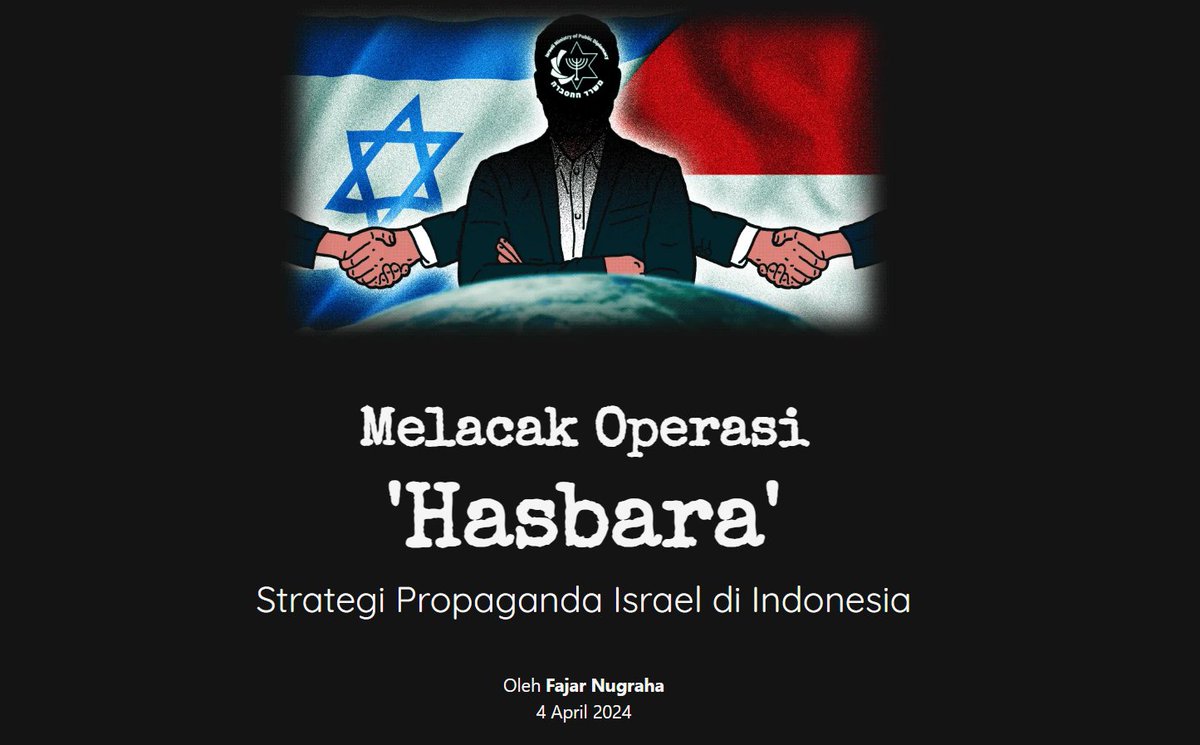
Desember 2025, Israel menganggarkan USD 725 juta untuk hasbara global 2026. Jumlahnya 30 kali lipat dari tahun-tahun sebelumnya.
Itu yang membuat makin masifnya narasi pro zionis di pemberitaan media & media sosial.
Investigasi kami 2 tahun lalu ↓
https://t.co/8ZBVh8PsQi
Despite presenting itself as a strong defender of Palestinian rights, Indonesia granted a geothermal concession on Halmahera to PT Ormat Geothermal Indonesia, a company linked to Israel’s economic system.
The move risks undermining Indonesia’s political stance on Palestine while placing a fragile forested environment under increased industrial pressure.
On January 8, 2026, the Energy Ministry awarded the Telaga Ranu geothermal project as part of its Net Zero Emissions 2060 plan.
While expanding renewable energy is important, critics argue it should not come at the cost of political consistency or environmental protection.
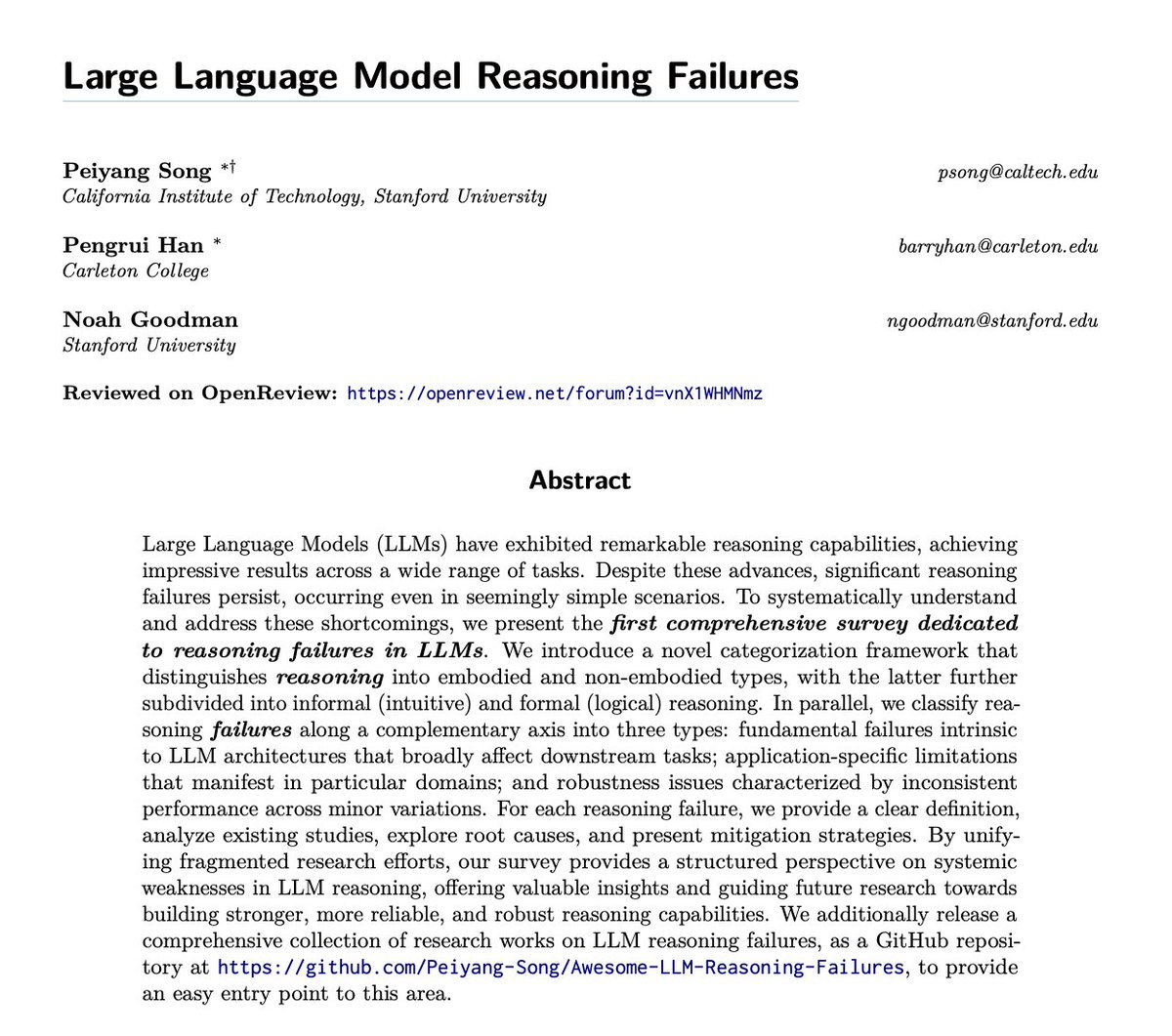
🚨 Holy shit… Stanford just published the most uncomfortable paper on LLM reasoning I’ve read in a long time.
This isn’t a flashy new model or a leaderboard win. It’s a systematic teardown of how and why large language models keep failing at reasoning even when benchmarks say they’re doing great.
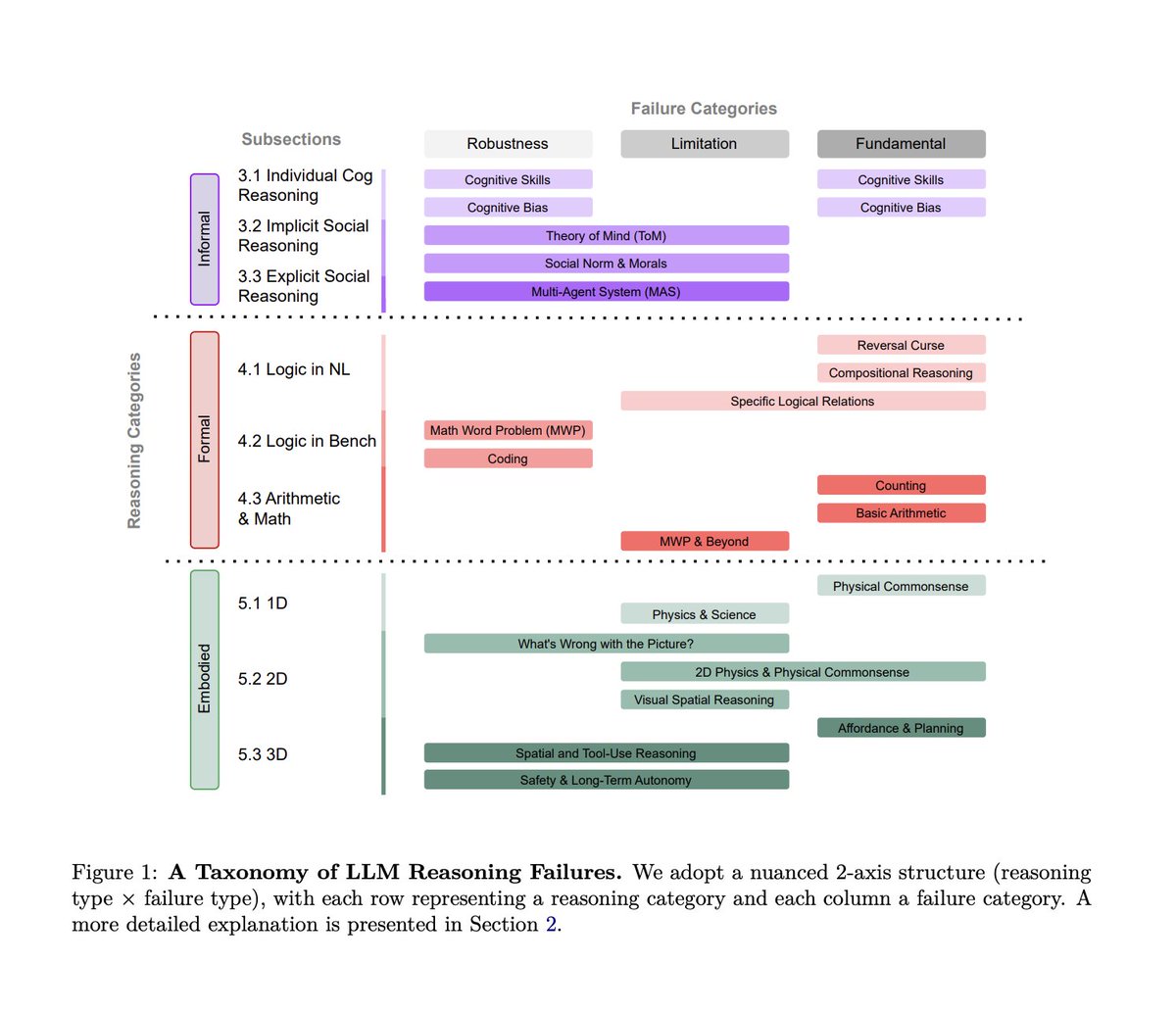
The paper does one very smart thing upfront: it introduces a clean taxonomy instead of more anecdotes. The authors split reasoning into non-embodied and embodied.
Non-embodied reasoning is what most benchmarks test and it’s further divided into informal reasoning (intuition, social judgment, commonsense heuristics) and formal reasoning (logic, math, code, symbolic manipulation).
Embodied reasoning is where models must reason about the physical world, space, causality, and action under real constraints.
Across all three, the same failure patterns keep showing up.
> First are fundamental failures baked into current architectures. Models generate answers that look coherent but collapse under light logical pressure. They shortcut, pattern-match, or hallucinate steps instead of executing a consistent reasoning process.
> Second are application-specific failures. A model that looks strong on math benchmarks can quietly fall apart in scientific reasoning, planning, or multi-step decision making. Performance does not transfer nearly as well as leaderboards imply.
> Third are robustness failures. Tiny changes in wording, ordering, or context can flip an answer entirely. The reasoning wasn’t stable to begin with; it just happened to work for that phrasing.
One of the most disturbing findings is how often models produce unfaithful reasoning. They give the correct final answer while providing explanations that are logically wrong, incomplete, or fabricated.
This is worse than being wrong, because it trains users to trust explanations that don’t correspond to the actual decision process.
Embodied reasoning is where things really fall apart. LLMs systematically fail at physical commonsense, spatial reasoning, and basic physics because they have no grounded experience.
Even in text-only settings, as soon as a task implicitly depends on real-world dynamics, failures become predictable and repeatable.
The authors don’t just criticize. They outline mitigation paths: inference-time scaling, analogical memory, external verification, and evaluations that deliberately inject known failure cases instead of optimizing for leaderboard performance.
But they’re very clear that none of these are silver bullets yet.
The takeaway isn’t that LLMs can’t reason.
It’s more uncomfortable than that.
LLMs reason just enough to sound convincing, but not enough to be reliable.
And unless we start measuring how models fail not just how often they succeed we’ll keep deploying systems that pass benchmarks, fail silently in production, and explain themselves with total confidence while doing the wrong thing.
That’s the real warning shot in this paper.
Paper: Large Language Model Reasoning Failures
Di pemerintahan, lo harus terima kenyataan kalau:
1. Lo tau masalahnya
2. Lo tau solusinya
3. Lo tau gimana cara mencapai solusi itu
4. Lo ga bisa ngapa-ngapain
Stop overthinking dan Mulai deh terapkan underthinking demi mental yang lebih zen.
#PamerAjaDulu
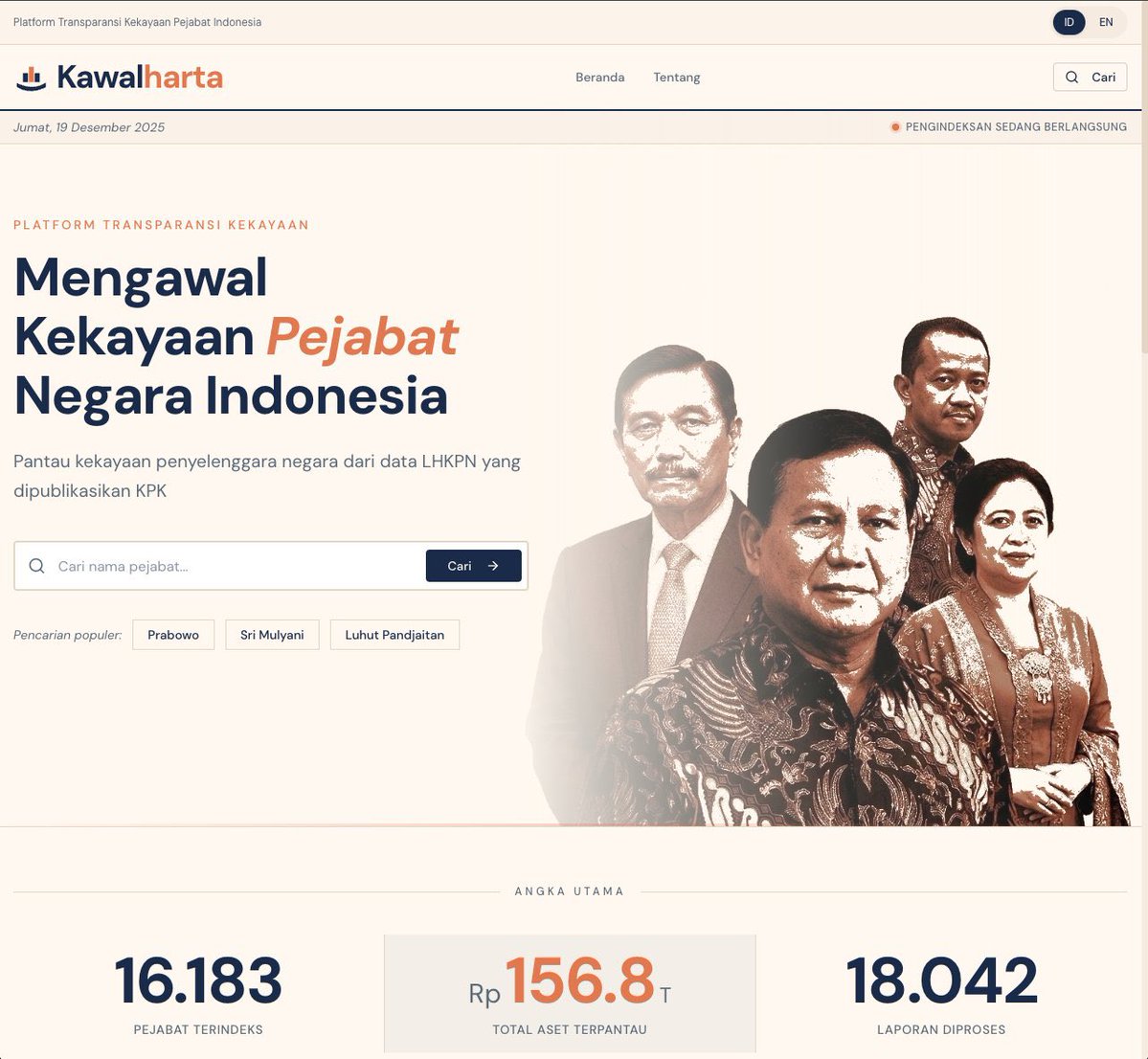
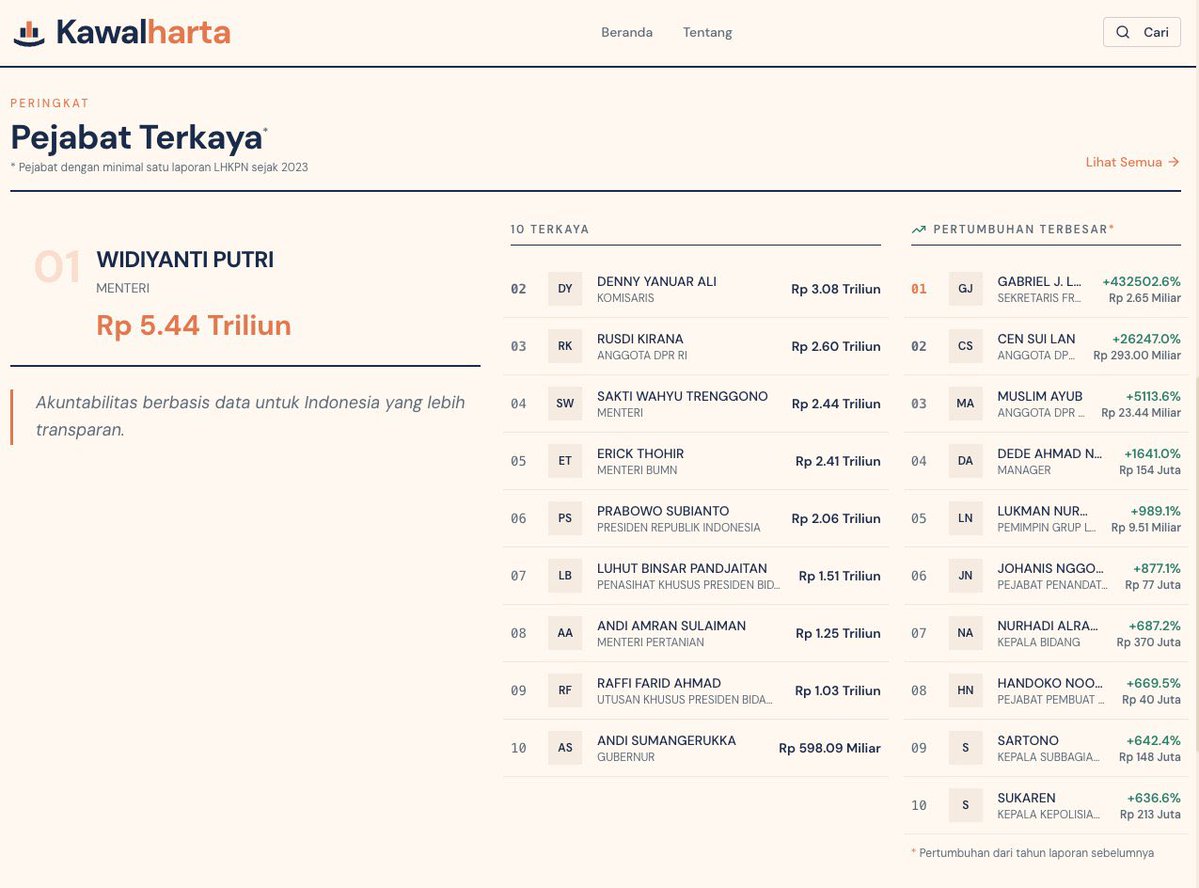
Rp 5,4 TRILIUN.
Itu harta salah satu menteri di kabinet sekarang.
Datanya publik. Tapi siapa yang pernah cek langsung?
Gue bikin website biar gampang -> kawalharta 💰
This paper from Harvard and MIT quietly answers the most important AI question nobody benchmarks properly:
Can LLMs actually discover science, or are they just good at talking about it?
The paper is called “Evaluating Large Language Models in Scientific Discovery”, and instead of asking models trivia questions, it tests something much harder:
Can models form hypotheses, design experiments, interpret results, and update beliefs like real scientists?
Here’s what the authors did differently 👇
• They evaluate LLMs across the full discovery loop hypothesis → experiment → observation → revision
• Tasks span biology, chemistry, and physics, not toy puzzles
• Models must work with incomplete data, noisy results, and false leads
• Success is measured by scientific progress, not fluency or confidence
What they found is sobering.
LLMs are decent at suggesting hypotheses, but brittle at everything that follows.
✓ They overfit to surface patterns
✓ They struggle to abandon bad hypotheses even when evidence contradicts them
✓ They confuse correlation for causation
✓ They hallucinate explanations when experiments fail
✓ They optimize for plausibility, not truth
Most striking result:
`High benchmark scores do not correlate with scientific discovery ability.`
Some top models that dominate standard reasoning tests completely fail when forced to run iterative experiments and update theories.
Why this matters:
Real science is not one-shot reasoning.
It’s feedback, failure, revision, and restraint.
LLMs today:
• Talk like scientists
• Write like scientists
• But don’t think like scientists yet
The paper’s core takeaway:
Scientific intelligence is not language intelligence.
It requires memory, hypothesis tracking, causal reasoning, and the ability to say “I was wrong.”
Until models can reliably do that, claims about “AI scientists” are mostly premature.
This paper doesn’t hype AI. It defines the gap we still need to close.
And that’s exactly why it’s important.
Most people don't actually know the lengths parents will go to try to raise an academic superstar. In this post, I will detail the life of the average thoroughbred in STEM PhD programs at a top university. The thoroughbred lives a difficult life full of enormous amounts of pressure. The thoroughbred's parents have oriented the next 18 years of their family life to evolve around the academic success of their children. The thoroughbred's parents don't simply move houses within their country so their kids can go to the best school in the district; they do a nationwide search to decide where to raise their children based on the schools in that area.
The thoroughbred's parents tell their kids that getting straight A's in school isn't enough because the kids in their class are "normal," and to cut it, they are going to have to strive far beyond what's taught in a classroom. They usually have various tutors starting in elementary school, do math and language courses after school, and engage in summer enrichment activities. They make sure their kids get into the gifted and talented programs in their kids' school, and if their kid doesn't make the cut, they hound the school as hard as possible to make sure their kid stays with the leaders of the pack.
Their parents give them extra homework during the summer so that they can test out of as many subjects as possible during the school year. Their parents know the algebra readiness exam is in 6th grade and that their child needs to score above a 90% to be able to take algebra 3 years early. They have their child prepare for this exam as early as their kid can handle the material. For these children, school should be a breeze, and they learn the real stuff during their studies outside of the classroom.
By middle school, they are spending summers at various math and science camps and doing STEM after school programs. I cannot stress how common math camp is. Most people I have met in STEM PhD programs have gone to math camp, and basically all know each other from their early days going to various math camps as kids. Moreover, in middle school, a lot of the parents start on SAT prep and hope they can do the bulk of their preparation before high school because in high school they have more difficult things to worry about. I know a lot of folks who got the SAT score they used for college in 8th grade. Some kids even have dubious non-profits that they started in middle school that they build up throughout high school in order to project sincere interest in outreach over a long time period—god forbid college admissions programs think you just created a non-profit to get into college. If the high school they want their kid to attend requires testing, they start their kids in test prep classes a few years prior to the high school admissions exam.
In high school, they are maxing out AP courses and taking the hardest possible courses available. Usually by junior year, they are taking at least one course at a nearby college. They are entering science competitions and scoring very well at the national and international level. Many of the students who do well at Intel science competitions or Science Olympiads have parents in that exact field of study who can help guide them towards more sophisticated ideas. I know someone who won the Intel science competition by doing a project in spectroscopy whose parents worked on spectroscopy professionally. That being said, the parents aren't doing the projects for them—they know that would ultimately hurt their child—they can just steer them towards actual cutting-edge science and tell them which projects are promising.
By high school, all of the thoroughbreds are together at various prestigious public and private schools. Scattered amongst the thoroughbreds are incredibly smart kids who got lucky, and a few people who are struggling in that academic situation who just got lucky during the admissions process. The kids who aren't thoroughbreds have no idea what's going on underneath the surface. They think the thoroughbreds are simply geniuses - they just have so much better mastery of the material and seem to learn everything more quickly than they do. They have no idea what they are stacked up against. They simply do their assignments, try to get good grades, and do a good job in the clubs at school.
If a thoroughbred finds themselves struggling in school for whatever reason, they get a tutor and work on it incredibly hard outside of school, though the parents would see that as a personal failure as they should already be so far ahead of their peers that it shouldn't be possible.
When the thoroughbreds apply to college, they end up all over, not just fancy institutions. This is primarily because colleges have unofficial admissions quotas for how many students they can admit from each high school. So the top 10% of the thoroughbreds from the top 10% of high schools fill up prestigious universities, and the rest go elsewhere. But do not fret; those who go elsewhere kill it in college and become academic superstars at their respective universities.
Once PhD programs come around, the thoroughbreds all end up back together. They all know each other from math camp, science competitions, and shared social circles from prestigious high schools. They have an academic base that's just incredibly hard to compete with if you did not have similar academic training. The additional dexterity you get with that much additional exposure to material is hard to overstate. Of the 50 students admitted to a physics PhD program at my university, most of their parents have PhDs, and all but one student took calculus in high school.
Their parents are not necessarily wealthy; they simply prioritized their child's education to an extent most families don't even realize is on the table. Very few people seem to realize just how far families are willing to go to ensure their kids succeed academically, and I hope this post shines some light towards what is going on under the surface of what it actually takes to raise a thoroughbred.
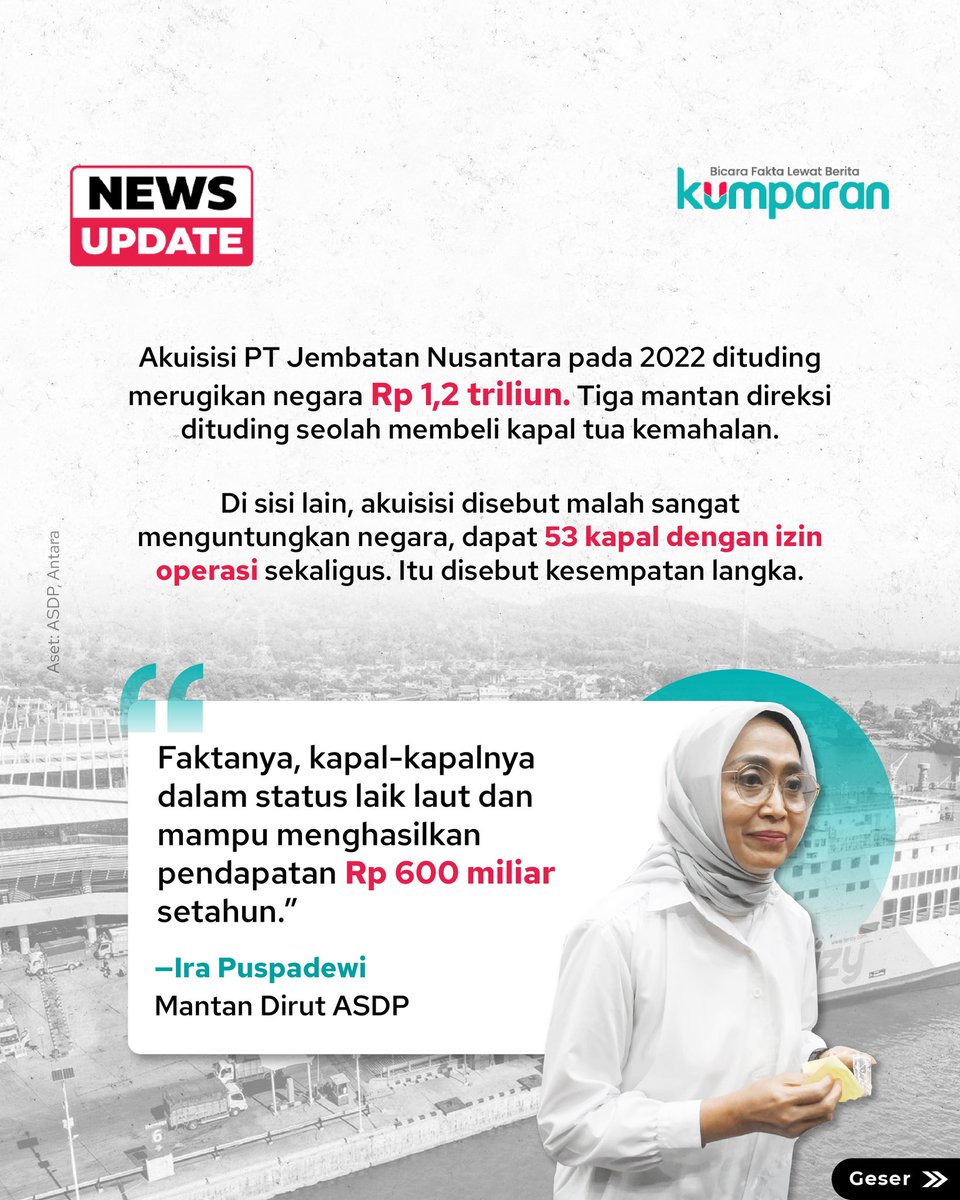
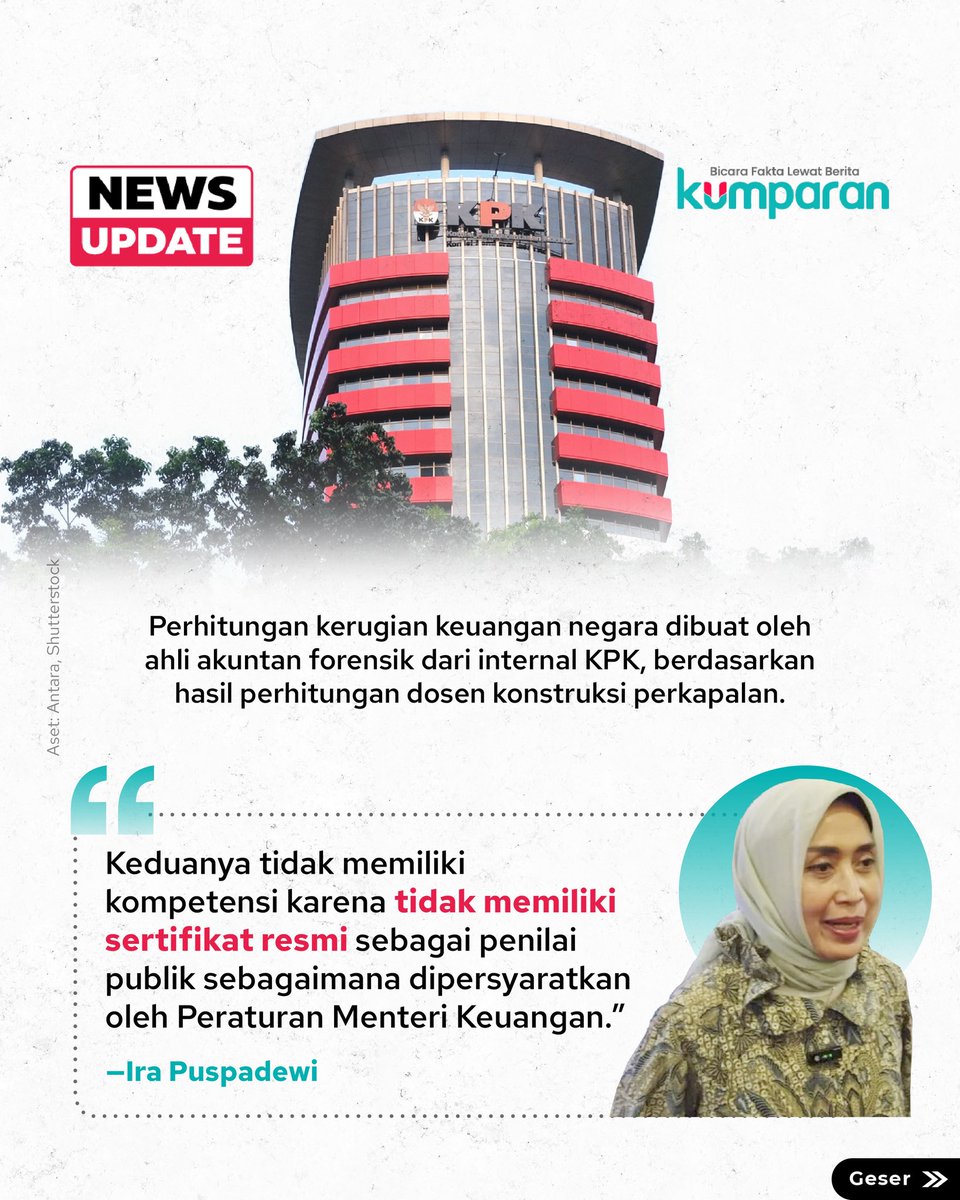
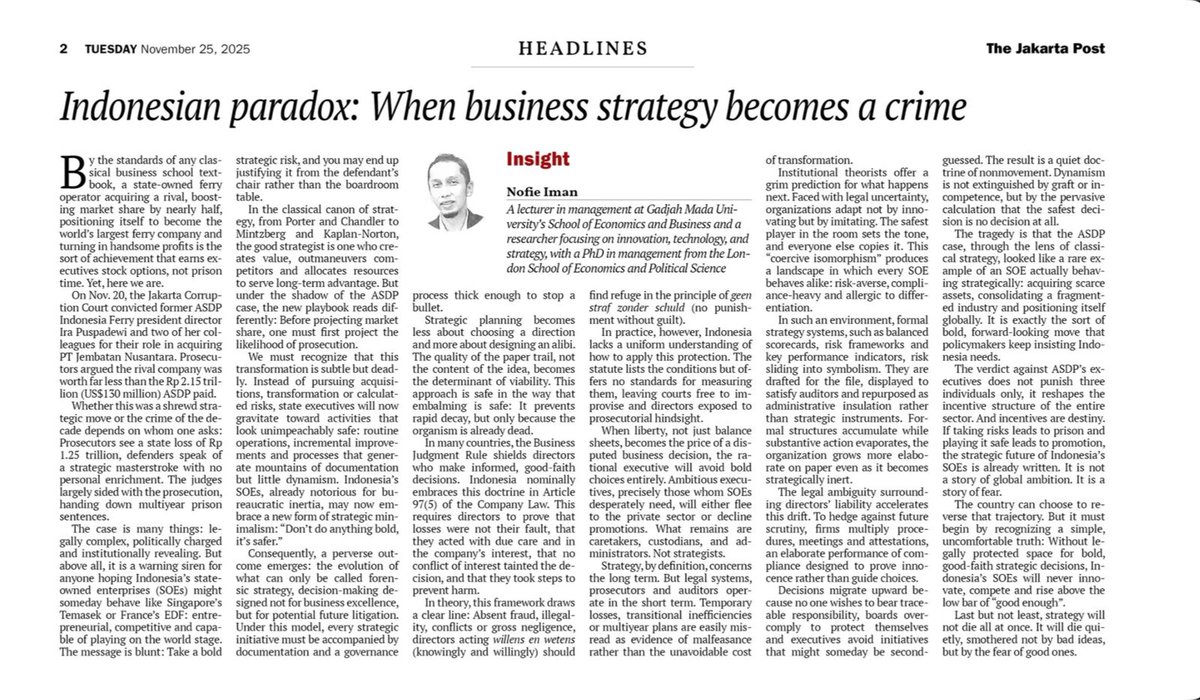
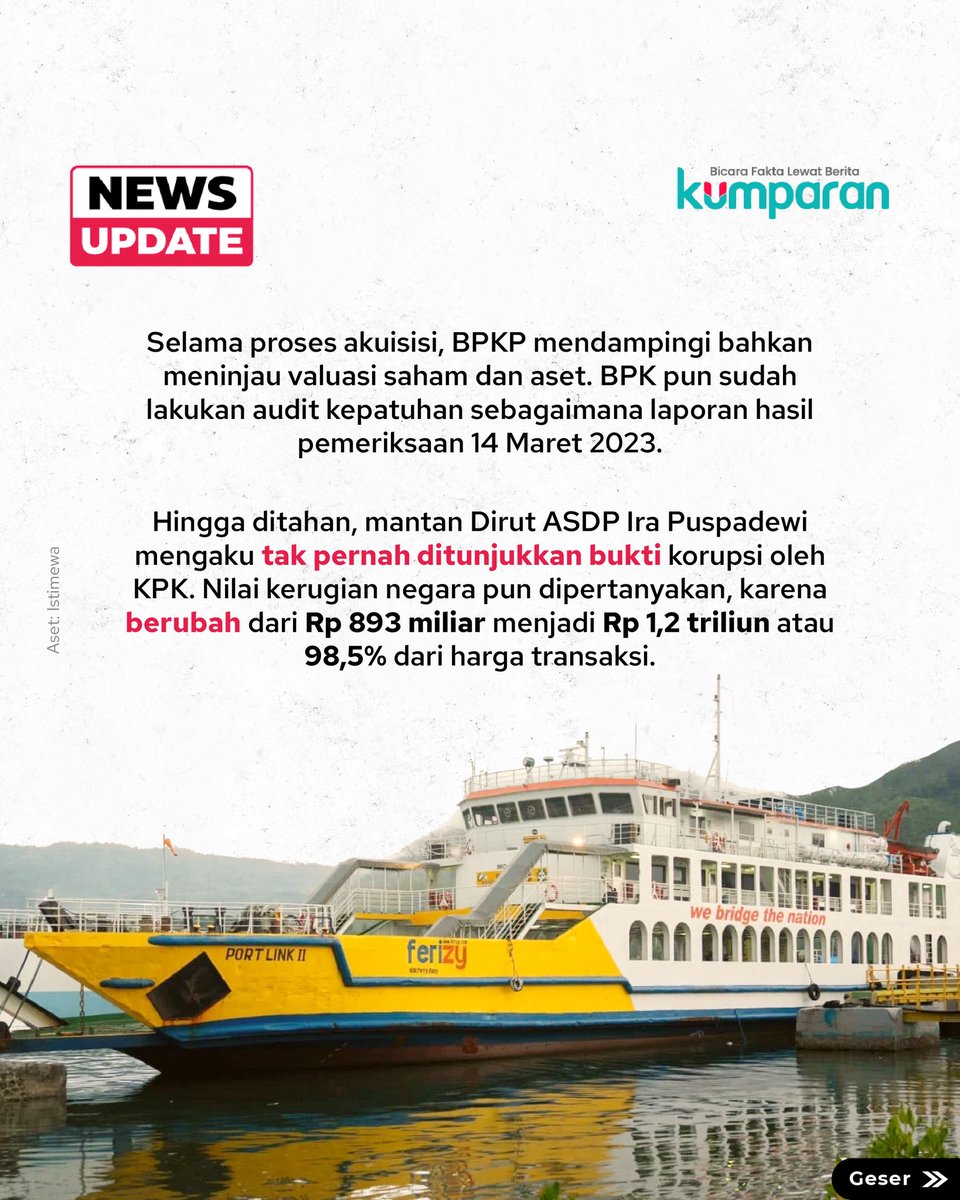
Pada 6 November 2025 lalu, Ira Puspadewi melangkah masuk menuju ruang persidangan dengan yakin. Eks Direktur Utama (Dirut) PT ASDP Indonesia Ferry (Persero) itu optimistis dirinya tak bersalah dalam kasus dugaan korupsi akuisisi PT Jembatan Nusantara (JN) oleh PT ASDP.
Bersama dua mantan koleganya di jajaran direksi PT ASDP, Muhammad Yusuf Hadi dan Harry Muhammad Adhi Caksono, Ira didakwa melakukan korupsi dengan memperkaya pihak lain dan merugikan negara mencapai lebih dari Rp 1 triliun.
Follow WhatsApp Channel kumparan untuk dapat Informasi terpercaya dikirim langsung ke WhatsApp kamu. Ketik https://t.co/LTFgN0m78w di browser kamu sekarang, agar bisa share informasi tanpa ragu.
#newsupdate #update #news #infog #asdp #korupsi #kpk #koruptor #info #infoterkini #berita #beritaterkini #bicarafaktalewatberita #kumparan
Meet Nikolai Durov the genius behind Telegram’s tech backbone. @Kolja_Durov
->Built MTProto, Telegram’s ultra-secure, lightning-fast protocol
->Co-founded Telegram but stayed behind the scenes
-> PhD mathematician, Olympiad gold medalist (Math & Informatics)
-> Architect of Telegram’s privacy-first, decentralized system
-> His engineering made Telegram scale to billions
-> Quietly built one of the world’s most trusted platforms
BREAKING: Trump Admin. has made the decision to attack military installations inside Venezuela [per Miami Herald].
Reminder this war is not about “drug trafficking.” It’s about overthrowing a socialist government so the U.S. can install a puppet regime & control Venezuela’s oil.
No one should ever forget:
The partnership of Netanyahu 🇮🇱; Trump 🇺🇸 & Starmer 🇬🇧 did this
It’s apocalyptic
Disgusting
Evil
Genocide
For the sake of humanity, all of them must answer to The Hague
Free Palestine 🇵🇸
🚨 MUST WATCH:
Israeli forces bulldoze a Palestinian school — while students are still inside the building.
This isn’t a scene from history — it’s happening now.
Where’s the outrage?















![ProudSocialist's tweet photo. BREAKING: Trump Admin. has made the decision to attack military installations inside Venezuela [per Miami Herald].
Reminder this war is not about “drug trafficking.” It’s about overthrowing a socialist government so the U.S. can install a puppet regime & control Venezuela’s oil. https://t.co/jiA0Ykl1CE](https://pbs.twimg.com/media/G4mUoQZXUAA9sdY.jpg)





