making things true:
design is the practice of seeing through the surface of things to understand their underlying structure, then rearranging those elements into new forms that didn't exist before.
most people think design is about aesthetics – making things look good, choosing colors, polishing interfaces. but underneath, design is a way of thinking about the world. it's about decomposition and recomposition. you take something complex, break it down into its fundamental components, understand the relationships between those parts, and then rebuild it in a way that's simpler, more powerful, or reveals something previously hidden.
this is why i've always been drawn to tools and systems rather than just products. a product solves one problem. a system gives you the building blocks to solve infinite problems. when i was working on Notion, we weren't trying to build another task manager or note-taking app. we were asking: what are the atoms of software? what are the irreducible elements that, when combined, can create any tool you need?
we landed on blocks, databases, views, relations. everything else is just different arrangements of these primitives. once you see this, you realize that all those single-purpose apps – Asana, Linear, Evernote, Airtable – are just rigid, pre-configured assemblies of the same underlying concepts. they've solved for one specific arrangement and called it a product.
but why lock people into one configuration? give them the components and let them build exactly what they need. Notion is lego blocks for thought and work.
Cursor is doing something similar but at a different layer. for decades, the barrier between human intention and working software has been enormous. you need to know syntax, frameworks, design patterns, debugging. most people with ideas never cross that chasm because the cost is too high.
Cursor changes this. when you can describe what you want and the system understands not just the words but the underlying structure – the patterns, the logic, the architecture – then you're no longer translating between human thought and machine language. you're working directly with concepts, and the AI handles the decomposition into code.
this philosophy extends beyond software. language is a finite set of sounds or symbols infinitely recombined to express any thought. music is twelve notes in endless patterns. DNA is four base pairs that encode all of life's complexity.
the universe is fundamentally modular. simple rules, endlessly recombining, creating emergent complexity. design is the human practice of participating in that process consciously. we look at the world, identify the patterns, extract the rules, and use them to build new realities.
when i look at the history of computing, the most important moments weren't new features. they were new primitives. the command line gave us composable programs. the GUI gave us direct manipulation. the web gave us hyperlinks. the smartphone gave us sensors and connectivity. each unlocked entire ecosystems because they provided new atoms that could be infinitely recombined.
AI isn't just a feature. it's a new primitive. it's a new way of decomposing and recomposing reality.
design is philosophy because it forces you to ask: what is this thing really? what are its essential properties? what can i remove before it stops being itself? and once i understand that, what new things can i build?
this is the work. not making things pretty. making things true.
On Claude Team and Claude Enterprise, you can now use Claude Code to deploy HTML sites and share these with your teammates!
This has changed how we work internally. Artifacts is great format for communicating architecture changes, data analyses, and new prototypes.
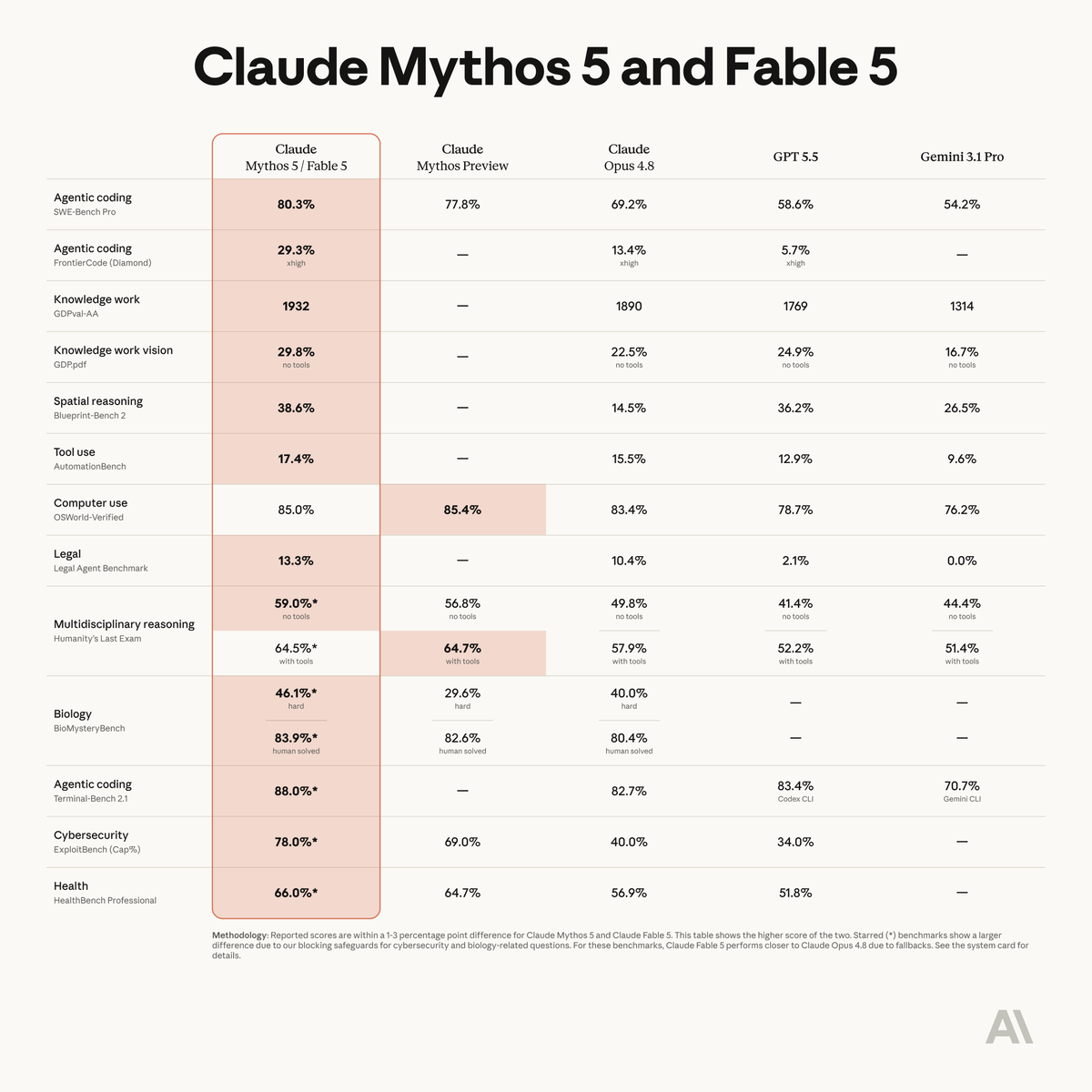
Fable 5 is state-of-the-art on nearly all tested benchmarks, with exceptional performance in software engineering, knowledge work, scientific research, and vision.
The longer and more complex the task, the larger Fable 5��s lead over our other models.
Introducing Claude Fable 5: a Mythos-class model that we’ve made safe for general use.
Its capabilities exceed those of any model we’ve ever made generally available.
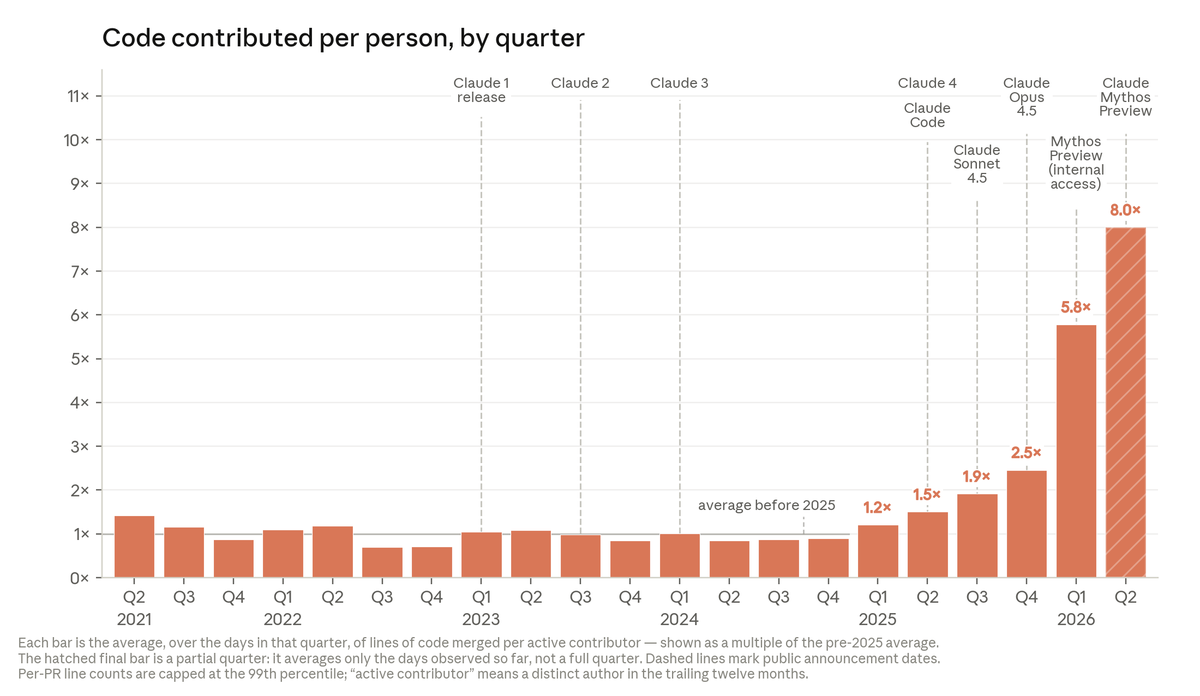
Workflows + remote control are the biggest changes to my day-to-day engineering work in the last 6 months.
Claude can do big projects now.
And it can productively keep going while I’m asleep or running or away from my desk.
We’ve added a CLI for Claude Platform to make every API endpoint runnable from your terminal.
Call the Messages API, stand up Claude Managed Agents, pipe results straight into your shell.
The ant CLI is well understood by coding agents (Claude Code) using the claude-api skill.
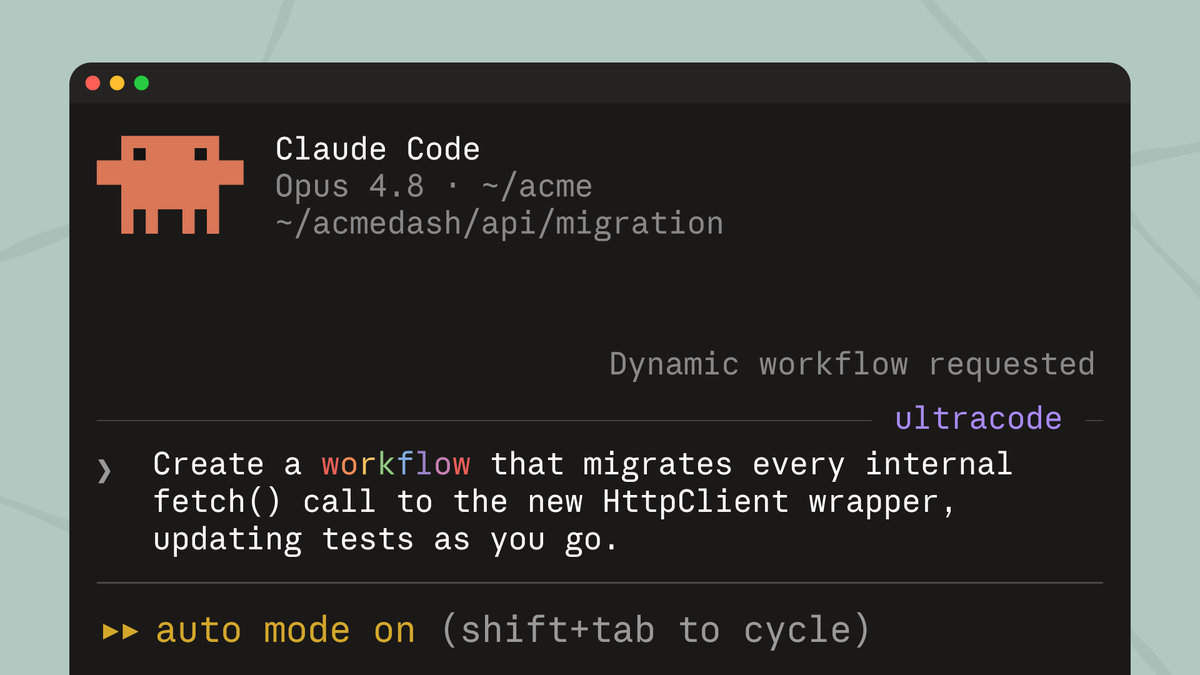
Excited to share our most powerful new Claude Code feature: dynamic workflows!
Mention "workflow" in a prompt and Claude will dynamically create an orchestration plan that it strictly follows, allowing you to confidently trust that every stage happens in the right order even across 100s of agents.
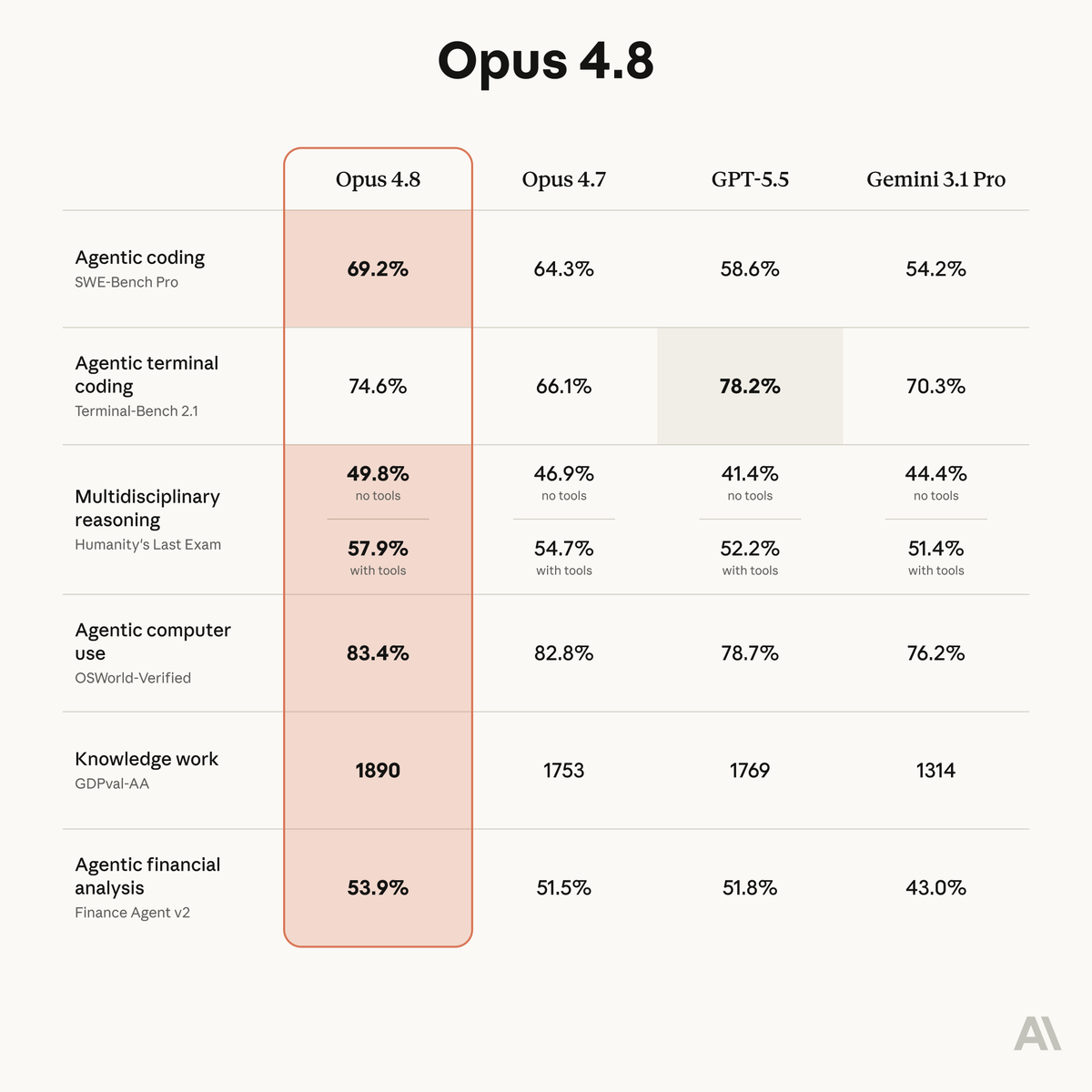
Introducing Claude Opus 4.8: it builds on Opus 4.7 with sharper judgment, more honesty about its own progress, and the ability to work independently for longer than its predecessors.
Available today at the same price.
New in Claude Code (research preview): dynamic workflows.
Claude writes an orchestration script on the fly, then spins up a large fleet of coordinated subagents in parallel to take on your most complex tasks.
Use the word "workflow" in a prompt to get started.
We’ve shipped a security-guidance plugin for Claude Code that helps identify and fix vulnerabilities as you’re writing code.
Available for all Claude Code users. Install from the plugin marketplace (/plugins).
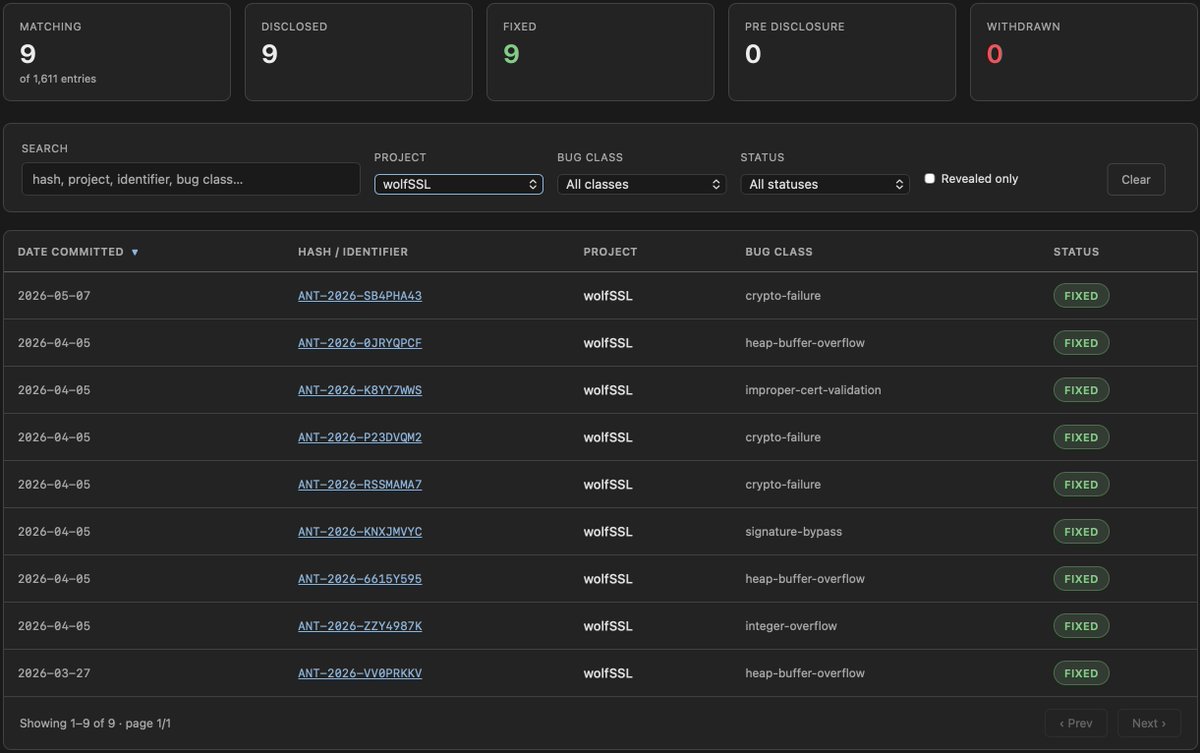
An update on Project Glasswing, as well as some recent evaluation results on Mythos Preview. One of the capabilities my team has been interested in since our initial testing is exploitation. This is an area where we believe Mythos Preview has been a real leap over previous models, and the results seem to corroborate that! Read more at our Red blog: https://t.co/2IUwWvp7rJ
Last month we launched Project Glasswing, our collaborative AI cybersecurity initiative. Since then, we and our partners have found more than ten thousand high- or critical-severity vulnerabilities in essential software.