School spent 18 years teaching you a reflex that destroys real conversations.
Conor Neill puts it plainly:
"You finish your pitch and the customer says, 'Your product is too expensive!' You arrive home a few minutes late, your partner says, 'You are always late.' There's a dirty plate left on the table 'You never wash the dishes.' What do you say in this moment?"
Here's the trap Neill identifies:
"Most of you, me included, went through 14 years of school where we were taught one way to respond to questions. Teacher asks, 'How do you spell cats?' Student: 'C-A-T.' Teacher asks, 'What is osmosis?' Student explains in detail. For 14 years, you've been taught to give answers to questions. If you went to university, you probably had another 3 or 4 years of giving answers to questions."
And that conditioning costs you:
"In real life in persuasion, in getting to what the other person is really about, what their needs really are, the worst thing you can do is give an answer to a question."
Watch what happens when you answer:
"If someone says, 'Your product is too expensive,' and you say, 'No it's not! It's only €1,000'; you've lost every chance to understand what else is behind their reasoning. If you get home and your partner says, 'You're always late!' and you say, 'No, no, no, Tuesday I was definitely here on time', you're gonna have a crap weekend."
Why does the brain default to this?
"When your partner says, 'You're always late,' emotion goes up. And what happens? The thinking part disconnects. The way to make someone stupider is to insult them, object to them, tell them they are wrong. When you're asked a question, there's an emotional reaction, and the higher emotion goes, the lower thinking goes."
And it won't fix itself without work:
"If you don't practice this response, you're not going to be able to do it in the moment. If you don't practice repeatedly how you'll respond to 'You're always late,' 'You never wash the dishes,' 'Your product is too expensive,' 'Your competitor is better,' 'You failed us 3 years ago,' 'I don't trust your company', you're not going to be able to do it in the heat of the moment."
The alternative Neill teaches:
"When you are asked a question or given an objection, I want you to say: 'I understand.' And repeat in your words what they're saying. Then give an open question back."
In practice:
"'Your product is too expensive!' → 'I understand that money is an important factor for you. What other criteria will be used in making this decision?'"
He calls this Conversation Aikido:
"Martial arts are about using the energy and force of the opponent against them. In Judo, if someone punches you, you pull their arm and allow the energy to keep flowing. In Aikido, the concept is you go toward the punch. You go toward the energy. If someone punches you, if someone asks you a question, if someone objects, the Aikido method is to go toward them and see the world from their view."
For the harder personal moments:
"'You're always late!' → 'I understand you feel frustrated.' 'I understand you feel let down.' You'll have to work on this quite a few times over the next 10 years to find the set of words that captures what the other person feels, what's behind it. Then ask: 'What can we do now?' 'What happened during the day?' 'What would you like to talk about?'"
By defending, you go blind:
"When a client says 'You're too expensive' and you say 'No, we're not!' you learn nothing about who else they're considering, what other criteria are important, what process they've gone through, who else is involved in the decision."
Neill's guarantee:
"By giving the answer, we shut down the possibility of hearing what's really going on in the other person's mind. But if you say 'I understand,' accept the energy coming from the other person, and give back an open question, I guarantee that if you do it 4 times, the answer to your 4th open question begins to be the real underlying need, issue, or interest of the person you're listening to."
गिरफ़्तार करो, जेल में डालो, फर्क नहीं पड़ता - मोदी सरकार की सत्ता की ताकत से ज़्यादा बड़ी हमारे सत्याग्रह की शक्ति है।
हमारे बच्चों के साथ हुए अत्याचार का हिसाब तो देना ही होगा।
I do not understand what cost she actually bore. A posting? Is that a cost? How?
I also worked in a public department. I was never posted in the Preventive branch, GST Intelligence, Revenue Intelligence, or Refund. Once, I was transferred to Revenue Intelligence by an honest IRS ADG, but the entire IRS lobby opposed my posting. The Joint Director even said, “Should I lock the office if he is coming here?”
But I do not consider that a loss. You can do your job and serve the public wherever you are posted. Nor do I know how you know this story. Who told you, and what is the evidence for it?
Many times, ministers themselves are reduced to pleading before IAS and IPS officers. MLAs who are not ministers and not close enough are actually vulnerable before powerful bureaucrats having hand of ministers and chief ministers. Today, much of the government machinery is effectively run by bureaucrats, while ministers are left as namesakes.
This carefully constructed narrative that every politician is illiterate and corrupt, while IAS and IPS officers are some universally intelligent, honest and heroic species, is a farce. In reality, these IAS and IPS lobbies are the real kings and beneficiaries of this corrupt system, colonial rulers who exercise enormous power, extract the blood of the nation, and escape accountability.
If she is so honest and courageous, why has she never spoken about police reforms or against the IPS lobby? From SP to DG, IPS officers occupy virtually every powerful administrative position in the police. They control vigilance, transfers and postings, resources, administration, and the command structure. Despite this enormous concentration of power, the police remains one of the most corrupt, inefficient, insensitive, and ill equipped organisations. Who are responsible for this , politicians ???
Where do the funds go? Why are the conditions of lower police staff so deplorable? Why are police stations run on corrupt money? Who benefits from these collections? And how does this lobby prevent others from entering the higher administration and leadership of police organisations?
If this lobby is not extraordinarily powerful, how did we reach a situation where, after the Supreme Court directed the progressive reduction of IPS deputation posts in the CAPFs, Parliament enacted a law preserving substantial shares of senior leadership positions for IPS officers? Why is there such organised resistance to allowing officers of other services to rise to the highest positions in the organisations where they spend their entire careers?
Why do they exhibit such gang behaviour to prevent others from reaching positions of power? There must be larger institutional interests behind preserving this monopoly, and those interests are certainly not aligned with the national interest.
Tell me, in which strong democracy does one permanent bureaucratic service monopolise the leadership of public institutions, control administration, vigilance, transfers, postings, and resources, resist the career progression of officers from other services, and preserve its dominance across generations while remaining largely insulated from direct democratic accountability? Where such a feudal structure exists?
One can also see the contrast between states where IAS IPS exercise overwhelming power and dominance and those where their control is relatively limited: businesses flourish more easily, living conditions improve, and systems function somewhat better, though still far from good enough. Also look at the better performing institutions and departments in India where the hold of these bureaucratic cadres is weaker.
Politicians are still better than these unaccountable feudal lords because politicians at least have to face the people and elections.
Just see what happened in Uttar Pradesh: how they hunted down and dismissed a constable who exposed them.
Look at the ingredients of Cadbury Gems
It contains Titanium Dioxide (INS 171), a substance that may potentially damage DNA.
It is completely banned in European Union, but being fed to millions of children in India.
Care you clarify this @fssaiindia ?
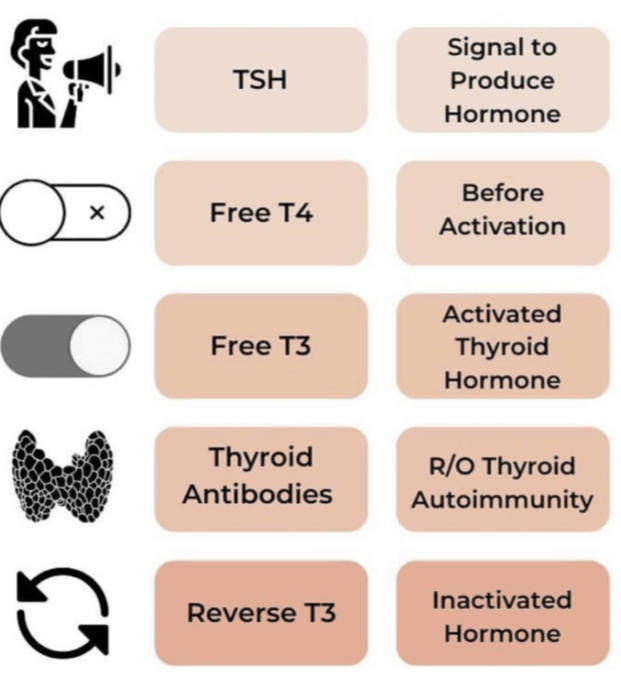
A true thyroid panel must include:
• Free T3 & Free T4 – Active thyroid hormones
• Reverse T3 – Blocks metabolism when high
• TPO & TG Antibodies – Detects autoimmunity
• TSH – Should be very low (<1.0)
• Total T3 & T4 – Shows real thyroid output
And that's not all:
Please have a look at the road condition from badi eghu thakurbari to naulakkha mandir and request you to take necessary action. From the last 3-4 days small accidents are happening. Sir your kind intervention @BegusaraiDm is needed. @officecmbihar@begusaraibmc1
The way honourable @narendramodi jee made an hinest swayamsevak @mlkhattar CM of haryana same can also be happened with @RakeshSinha01 by god grace then it will be very beneficial to our state.
2004 was a good year, but your Gmail address doesn't need to be stuck in it.
To say goodbye to [email protected] or [email protected] (or whatever you were into at the time), go to your Google Account settings and choose any name available. You'll keep your old username and you can sign in with both.
Being a Ex Political Consultant
Raghav Chadha के Public Communication को देखें, तो इसमें एक साफ, स्ट्रक्चर्ड और सोचा-समझा मॉडल दिखता है।
यह मॉडल दो चीज़ों पर काम करता है Issue Selection + Narrative Control
सबसे पहले इनके Issue Selection पर इनमें मुद्दे ऐसे चुने जाते हैं:-
• जो आम जनता से तुरंत connect करें
• सोशल मीडिया पर तेजी से वायरल हों
• और जिन पर स्टैंड लेना Relatively safe हो
जैसे: डेटा, डिलीवरी टाइम, एग्जाम फीस, रोजमर्रा की दिक्कतें और ये सभी High recall issues हैं, यानी जनता इन्हें तुरंत समझती और Relate करती है।
वहीं दूसरी तरफ, High accountability issues जैसे राजनीतिक फंडिंग की पारदर्शिता, फ्री योजनाओं का आर्थिक असर, सरकारी सेवाओं की असली स्थिति या रोजगार के ठोस आंकड़े..
इन पर engagement ज़्यादातर controlled और selective रहता है।
यहीं से बनता है इनका एक क्लासिक फ्रेम जिसे कहते हैं
Low Risk, High Visibility Politics
कंसल्टिंग की आसान भाषा में ऐसे समझिए Visibility maximize करो, Risk minimize करो।
इसके बाद आता है दूसरा और ज्यादा अहम हिस्सा Narrative Engineering, जिसको राघव चड्ढा ने प्रशांत किशोर से सीखा है।
यानि:
• चर्चा किन मुद्दों पर होगी, यह आप तय करते हैं
• जनता किस नजरिये से सोचेगी, यह आप frame करते हैं
• और कौन से सवाल मुख्यधारा से बाहर रहेंगे, यह भी आप Indirectly Control करते हैं
और इस पूरे प्रोसेस में नेता सिर्फ रिएक्ट नहीं करता। बल्कि पूरी public conversation को Design करता है।
और यही है आज की राजनीति की लड़ाई, जो सिर्फ मुद्दों की नहीं है। बल्कि मुद्दों के चुनाव (selection of issues) की है।
जो नेता यह तय कर लेता है कि चर्चा किस दिशा में जाएगी, वही असल में नैरेटिव कंट्रोल करता है और आधुनिक राजनीति में यही सबसे बड़ी ताकत बन चुकी है।
#PoliticalAnalysis #Narrative #India
1. He gets easily offended.
2. He blames everyone but himself.
3. He avoids responsibility.
4. He talks big but avoids hard work.
5. He seeks constant validation.
6. He can’t control his anger.
7. He breaks promises easily.
8. He feels threatened by stronger people.
9. He runs from problems instead of facing them.
10. He chooses comfort over growth.
Big Update: India's New Rental Rules 2026 – What Every Tenant & Landlord Needs to Know ❤️
If you are a Landlord or a Tenant (like me), then this information will really help.
I would like to begin by saying that I have always had wonderful owners. I have paid rent on time. Our advances have always been maximum 5-6 months. Rentals were kept constant for 2-3 years. No nonsense owners. We are awesome tenants as well ❤️😀
But this post is good. It will help all of you to plan better. So share widely.
Renting in India just got a major upgrade. Based on the Model Tenancy Act framework, these 2026 rules bring transparency, fairness, and digital ease to the rental market. No more shady deals or sudden shocks.
Here are the key changes in simple English (applies to new agreements; state-wise adoption varies):
1. Mandatory Written & Registered Agreements
Every rent agreement must be in writing, digitally stamped (e-stamping), and registered online within 60 days of signing. Unregistered = invalid + possible fines (like ₹5,000 in many cases). Goodbye to verbal/handwritten deals.
2. Security Deposit Strictly Capped
Residential: Maximum 2 months rent only.
Commercial/Non-residential: Maximum 6 months' rent. No more crazy 10-month advances in metros. Infact, for our studio, we paid 5 months rent as advance. So this is pretty good.
3. Rent Increase Rules
Rent can be hiked only once every 12 months, and only after giving at least 90 days (3 months) written notice in advance. Sudden hikes? Not allowed anymore.
4. Eviction – No Arbitrary Action
Landlords can't just throw you out. Valid reasons required + order from Rent Authority or dedicated Rent Court/Tribunal. Disputes aim to resolve faster (often targeted in 60 days).
5. Landlord Entry & Privacy Protected
Want to inspect or enter? Must give at least 24 hours' prior written notice. No entry before sunrise or after sunset. Respect for tenant privacy is now law!
6. Repairs & Other Protections
If essential repairs aren't done by landlord within 30 days, tenants can get them fixed and deduct costs from rent (in many implementations).
Cutting utilities or threats is punishable.
7. Digital & Formal Focus
Online portals for registration in most states. Aims to reduce fraud, disputes, and make renting structured and enforceable.
Important Note: These aren't a single nationwide law (tenancy is a state subject). States like Assam, Uttar Pradesh, Tamil Nadu, Andhra Pradesh have fully/partially adopted. Others (Maharashtra, Karnataka, etc.) are aligning or partial. Check your state's housing/registration portal or local rules for exact applicability – especially if you're in a major city.
These changes are game-changers for millions renting in 2026 – more balanced rights for tenants while giving landlords clearer eviction paths when needed.
Share widely. This is important information. Can help someone, somewhere ❤️😀✌️
#FI
Maturity is choosing silence when ego wants to hit back. Staying calm when you ought to be angry.
Holding back words that won’t heal.
Judging less.
Understanding more.
As a man who wants to Understand what life is, you need to visit 3 places.
-Hospital
-Prison
-Cemetery
1. Hospital.
You will understand that nothing is more amazing than good health.
2. Prison.
You'll understand that freedom is the most precious thing you can have.
3. Cemetery.
You will realize that life is worth nothing.
The ground we walk on today will be our roof tomorrow and learn to be grateful.
Admirable traits of strong leadership:
1. Humility - a beginner’s mindset that is open to new ideas and less judgmental. A mindset free of prejudice. A quiet mind that values actions and impact above words.
2. Honestly - radical transparency with grace and dignity. The ability to give feedback without causing resentment is a superpower. The ability to admit mistakes quickly and to ask for forgiveness. And a willingness to show vulnerability.
3. Self-awareness (situational awareness) - reading the room and balancing one’s contributions to ensure a value exchange that benefits all. Knowing when to speak and when to listen. Knowing that given a choice of being clever or kind, being kind is right choice. It is balancing ambition with value.
4. Sense of humor - do not take yourself too seriously and stay accessible. Show passion and ambition but not at a cost to others. Make people comfortable and at ease. Laugh loudly but welcome humor with open arms. But not at the expense to others. Happy people smile more.
5. Active listening (hear the unsaid and listen with your eyes) - if you are waiting for a pause, so that you can speak, you are not truly listening. And the most important part of listening is the ability to hear the unsaid. Sometimes the best way to support and help others is to give your undivided attention.
6. Interest in others (empathy) - be interesting first. The goal is to leave people better than when you found them. Everyone you meet knows more about something than you do. Care more about the people around you. This is my definition of servant leadership.
7. Generosity (giving) - the coolest people I know are unselfishly generous with their time and knowledge. Give more than you take. And give without expecting a get. The strongest leaders give more than they take. Takers may end up with more, but givers sleep better at night.
8. Intellectual curiosity -learn to search for the grounded truth. And be willing to change your mind when the facts and the truth contradicts your prior beliefs. The strongest leaders are lifelong students. And also lifelong teachers. Start with 4 word: what do you think?
9. Good manners - be nice and polite to all. This may be life’s biggest hack. Say ‘thank you’ and ‘please’ more. Hold doors a bit longer. Do not interrupt people. Do not brag. Do not shout or speak poorly of others. Be a good person, but do not waste time trying to prove it.
10. No sense or entitlement - the world does not owe you a thing. The best people that I know are not chasing compliments or validation. Learn to fight for your happiness and do it with dignity, optimism and grace. Fall in love with the work, not the praise.
11. Positioning for shared success - In a celebration, lead from the back. In a crisis, lead from the front. In the company of someone that has a better idea, follow first. Leadership is all about positioning and standing in the right places.
12. Legacy of servant leadership - The best leaders leave everything and everyone better than when they found them. You will be remembered by how often you helped others achieve their goals.
13. Grit and persistence - Some things are hard to teach: sense of urgency, critical thinking, creativity, customer empathy, team commitment, humility, unselfish giving, judgement, grace and dignity, positivity, optimism, bias towards results, active listening; Strong leaders teach the hard stuff.