Improvement and Innovation at Bradford District Care - a Community Trust. Our patients at the heart of every improvement. Delivering Better Lives, Together.
New research by @McKinsey states that when it comes to workforce performance/productivity, the working model (office based, working from home or hybrid) is far less important than other factors. What matters most is the work environment that leaders create.
McKinsey sets out five core practices that drive performance & strengthen organisational health, whatever the working model:
1) collaboration
2) connectivity
3) innovation
4) mentorship
5) skill development.
https://t.co/SwVCqgYXXg.
The Ready2Relate toolkit is here—available for all! 🎉 Parents and clinicians are already seeing positive results.
Dive into helpful resources and insights today.
Read more about this story by visiting https://t.co/ahINzA9gmi
#parenting#families#ParentingTips
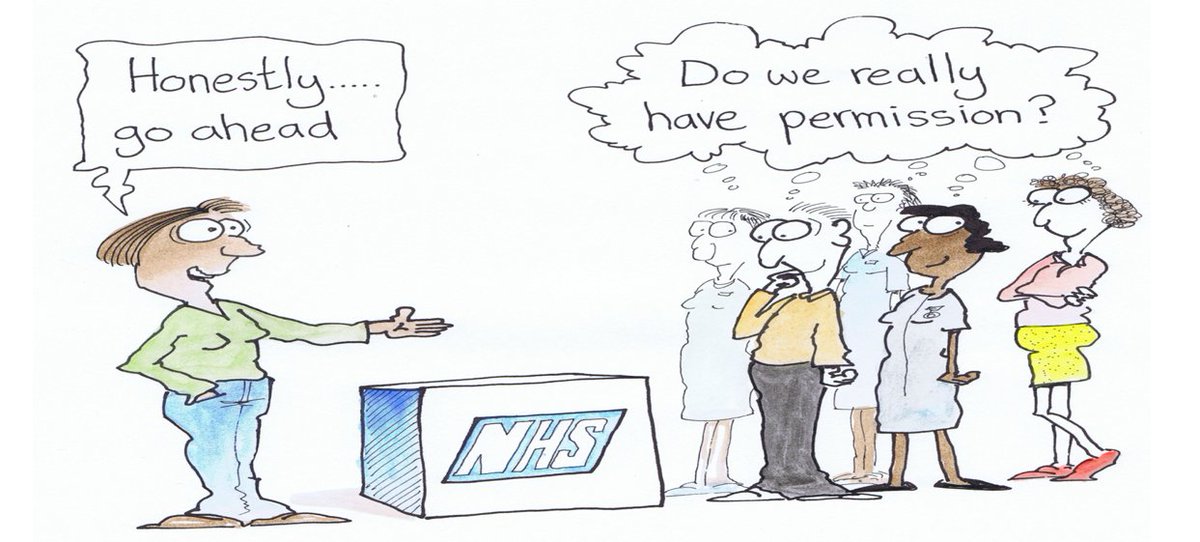
Doodle for the day: “Wellbeing” is not something that just happens because you said it. It is deeply rooted to the core of everything we do, see & feel.
In my many years as a leader of change, I have participated in some brilliant workshops & some terrible ones. A key issue is workshop design. I've come to understand that workshop design is more important than facilitation. If we take a systems view of the event, there are many more ways to impact people's experience than facilitation - the process, space, the sense of community, the collective insight. This all depends on the design.
There are some fantastic free resources on workshop design from @sessionlab. If you are a change leader or facilitator it is so worth investing in these skills:
https://t.co/84bf5r0LLN
We need everyone to be creative & innovative at work if we want to fundamentally improve the way we do things. However, many people find that when they generate novel ideas, they're discouraged or not supported to put their ideas into practice by their managers. New research shows this scenario may be triggering feelings of insecurity in some managers, who perceive their team members as threatening their own status. The researchers say it's not about changing the behaviours of individual managers but reframing the system:
1) build a supportive peer environment that enables managers to embrace the facilitative leadership role needed for collaborative innovation
2) promote a mindset shift from individual achievement to collective success by emphasising broader organisational goals & facilitating managers’ identification with the organisation:
https://t.co/dcwnXxZdv3. Via @mitsmr. Graphic: @HorizonsNHS
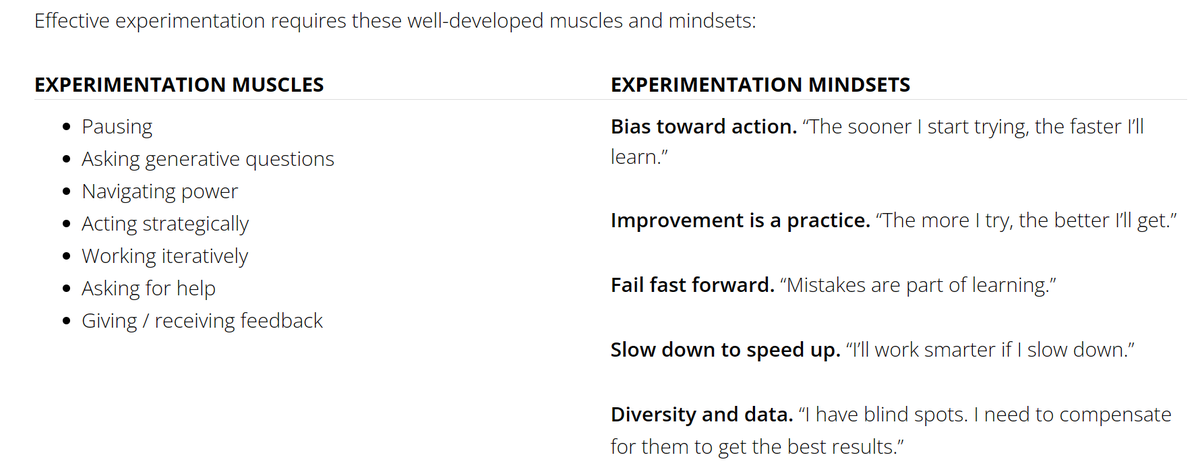
Experimentation ("trying stuff & seeing what happens") is such a key part of change. In most social change situations, we can't be sure about cause & effect until we give things a go. Every context is unique so we need to try out even other people's "good practice" to make it work for us. There's a lot written about processes for experimentation but less about capabilities & ways of thinking. So I love this classic piece from @FasterThan20: https://t.co/2XrQxmLshW
Many organisations in health and care are shifting from the language of "quality improvement" to "continuous improvement". Here's a couple of graphics that highlight the power of continuous improvement. The first is adapted from QuotedVisually. The second is by @melodie_ltd (Instagram), via @RobinD100.
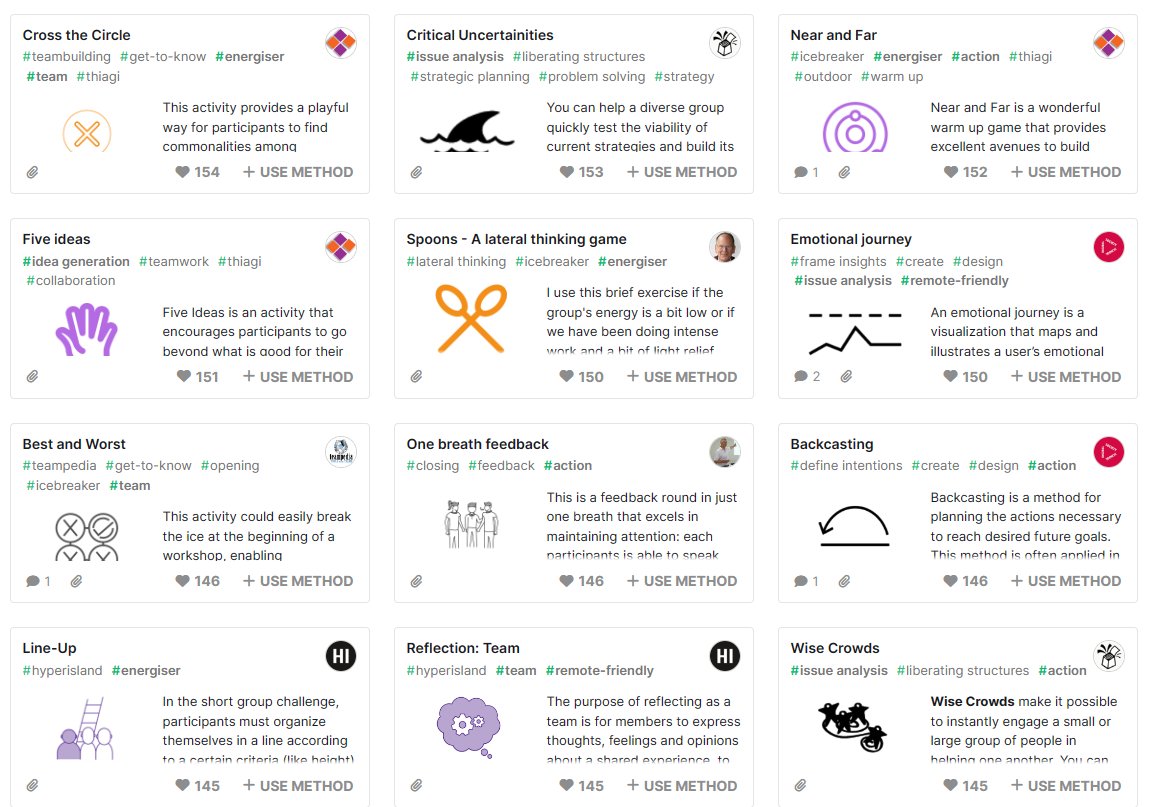
The most comprehensive set of facilitation techniques is available free to view on the @SessionLab library. There are 1,200 different techniques on there. You can sort/filter them by type (idea generation, issue analysis, issue resolution etc), by how many people & by duration. I get lots of ideas from this treasure trove: https://t.co/ZgyMtDLcEt
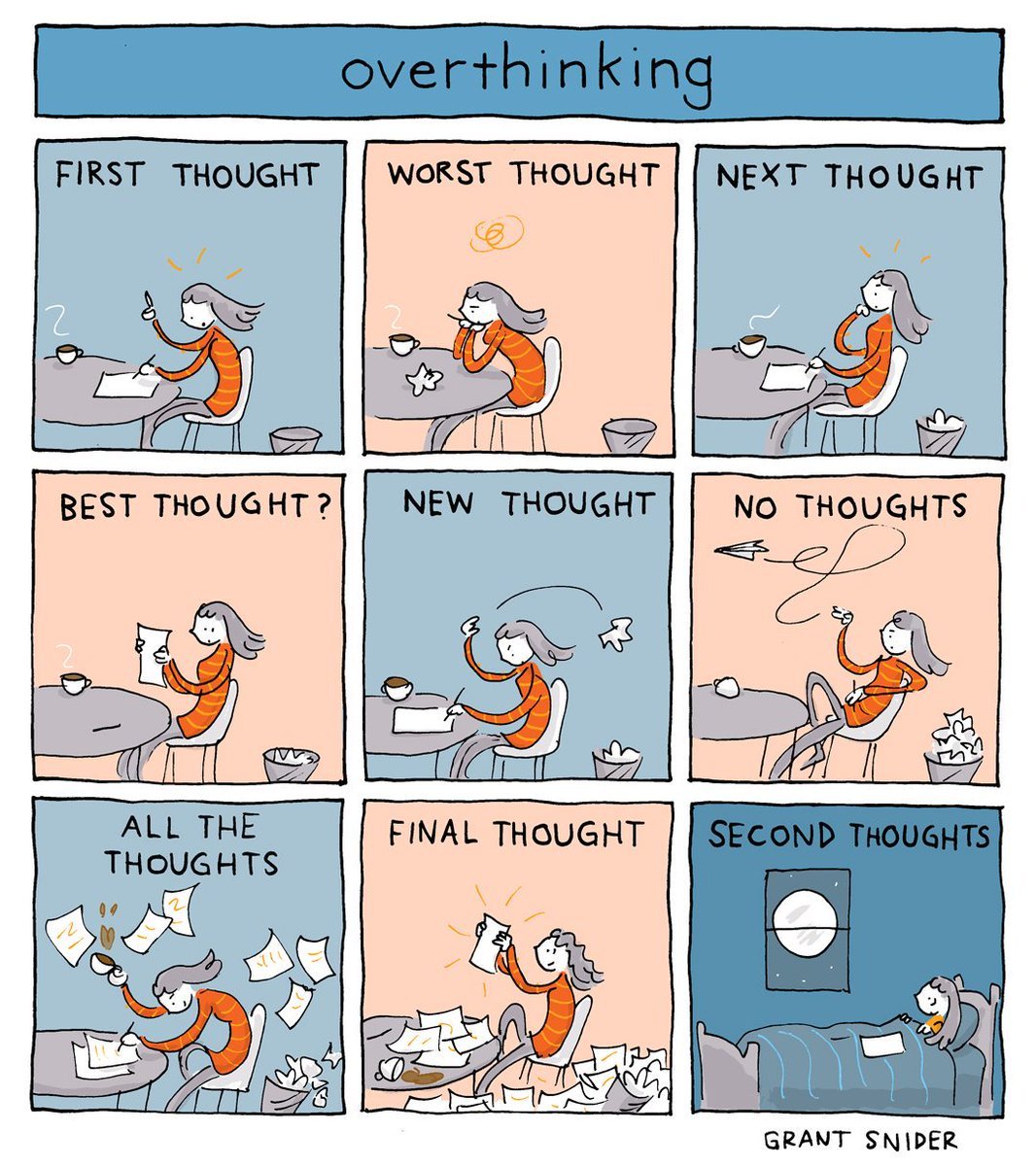
Overthinking is a big problem in organisations. When individuals & teams overthink, it creates a bottleneck. Decision making slows & a culture of risk-aversion can stifle opportunities. Recognise that there are 3 kinds of overthinking with different tactics to address them:
1) Rumination: dwelling on past events. Give it a scheduled slot
2) Future tripping: fear of what lies ahead & the uncertainty of what might happen. Look ahead beyond the point of worry ("temporal distancing")
3) Overanalysing: diving very deep into a topic. Aim for "good enough" rather than "perfection"
https://t.co/b8HDgSLx9W By @MelodyWilding. Graphic: @grantdraws
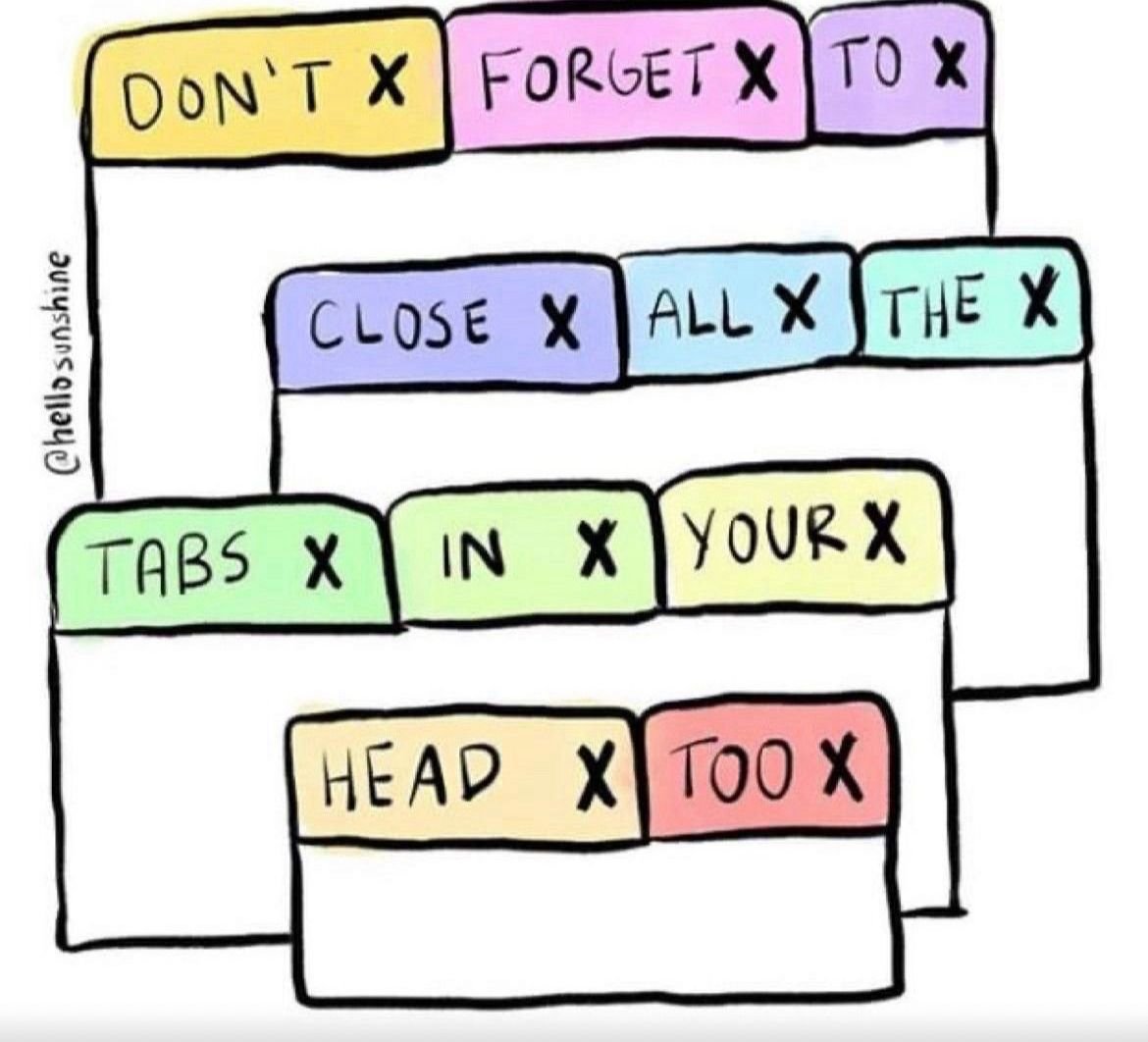
At the end of a working day, when we shut down the tabs on all of our devices, we should shut down the tabs in our heads too. Five ways to do this:
1) Savour an indulgence
2) Mindful breathing
3) Share a compliment
4) Get some fresh, outdoor air
5) Practice gratitude
https://t.co/DDwBO2mq2o By @MelodyJMitchell. Graphic via @Brilliant_Teams
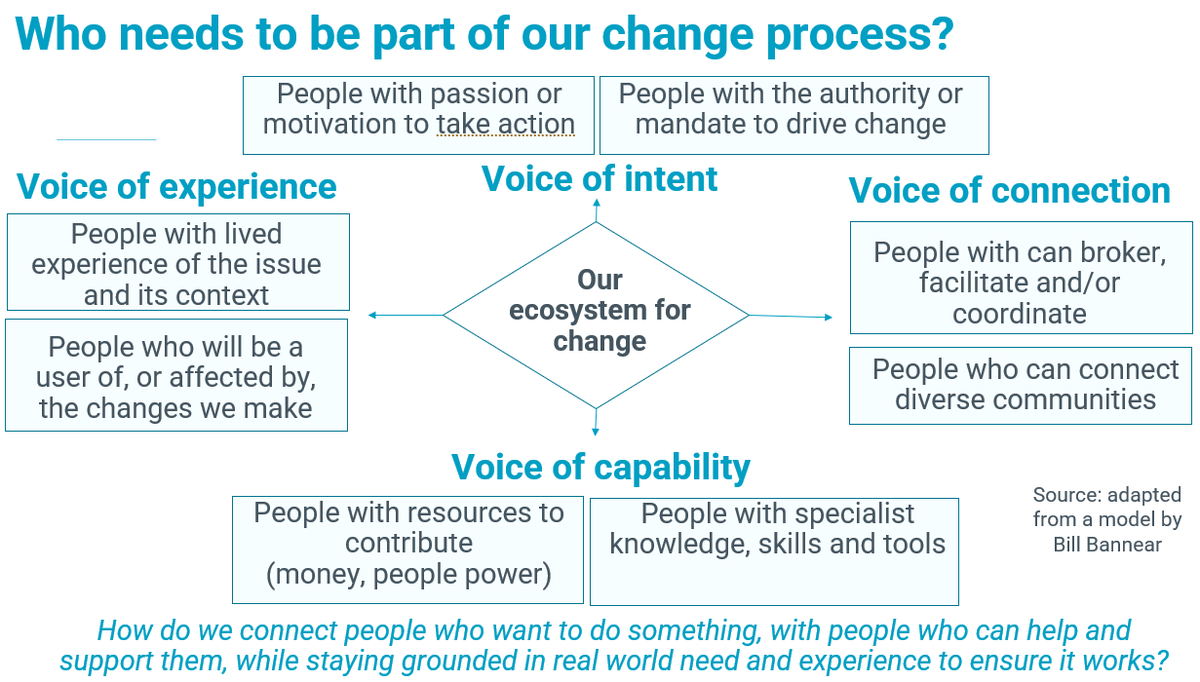
One of the most impactful new change models of 2023 comes from Bill Bannear of @ThinkPlace. We create value & make breakthroughs in our systems through the strength, number & quality of relationships. In complex change, we cannot design the model or predict the outcomes in advance. But if we build these relationships, we create the conditions for impactful new solutions to emerge & be implemented: https://t.co/CL8n05oUZY
If we want to build learning systems for improvement, we must encourage our teams to be curious. A culture of curiosity leads to psychological safety, experimentation & problem solving. Yet a recent large study found most leaders regard curious people as "insubordinate" & like them less than people who don't question things. However, curious people who are politically skilled are liked & supported by their leaders. Lessons for leaders AND change agents here. Change agents: how do we express our curiosity in constructive ways, asking the right questions at the right time? https://t.co/EdScd2ixev By @OUOBProf
This week’s leadership message comes from @shubly, priority director for healthy minds for Bradford District and Craven Health and Care Partnership (@ActAsOneBDC) and deputy director of integration at @BDCFT: https://t.co/7UdVNaUTnN
We’ve #justsponsored Caroline Felce, who's fundraising for Bradford District Care NHS FT Charitable Fund on @JustGiving. Donate now https://t.co/T0cAXGTUUi
Soon all young people in Bradford District can use Chat Health to text a school nurse in confidence and receive a response, usually within 24 hours. Find out more: https://t.co/y8MAbRlqYr