Google announced that all Android app developers must register centrally, pay a fee, and submit government ID, or their apps will be blocked on every device. over 67 organizations oppose this. https://t.co/vj1ALQznVY @AlteredDeal#KeepAndroidOpen
Claude Code is about to release a feature called /workflows that I think will be extremely significant.
Especially for Enterprise AI.
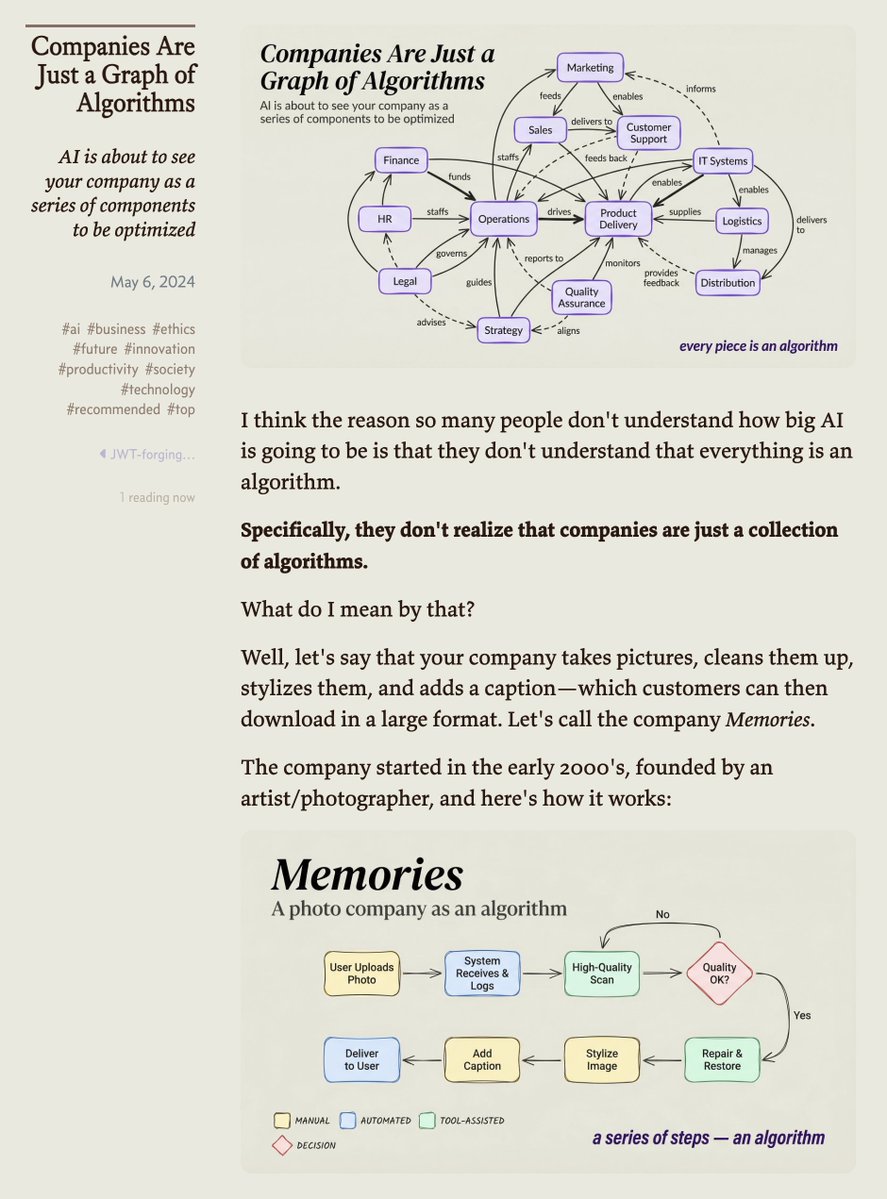
I talked about this in 2024 in a post called Companies Are Just Graphs of Algorithms.
Basically the idea is that all work is just an algorithm, i.e., a series of steps to accomplish a goal.
Skills and Cowork have been heading in this direction already, and we've seen what that's done to company valuations in various spaces.
Well this is closer to the final form.
It's turning the regular, expected work that's done in companies into pseudo-deterministic workflows that follow defined SOPs.
The human role will be determining what problems to solve (taste, expeirence, etc), building new products from that, and then optimizing these workflows from above.
But the work itself will be these workflows executed according to SOPs.
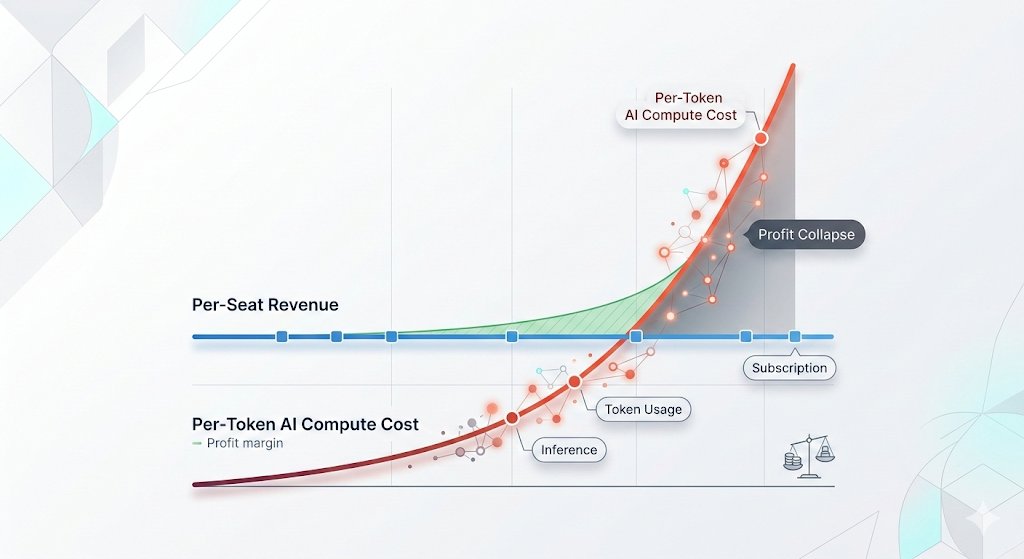
🦔Microsoft canceled its internal Claude Code licenses this week after token-based billing made the cost untenable, even for a company with effectively infinite cloud resources. Uber's CTO sent an internal memo warning the company burned through its entire 2026 AI budget in just four months. American AI software prices have jumped 20% to 37%, and GitHub (owned by Microsoft) is dropping flat-rate plans for usage-based billing across its products.
My Take
The AI subsidy era is ending in real time. The same company that put $13 billion into OpenAI and built the Azure infrastructure powering most of Anthropic's compute just looked at the bill from a competitor's coding tool and decided it was not worth paying. That is not a productivity failure on Anthropic's end. Token-based pricing is forcing every enterprise customer to confront the actual cost of running these models at scale, and the number turns out to be far higher than the flat-rate experiments suggested.
This ties directly to my Gemini Flash post yesterday. Anthropic, OpenAI, and Google all raised effective prices in the last six months. Enterprises that built workflows assuming AI costs would keep falling are now watching annual budgets evaporate in months. Two outcomes look likely from here. Either enterprises scale back AI usage to fit budgets, which slows the revenue ramp the labs need to justify their valuations ahead of IPOs, or the labs cut prices and absorb the losses, which makes the unit economics worse at exactly the wrong moment. Both paths land in the same place, the numbers stop working, and somebody has to take the writedown.
Hedgie🤗
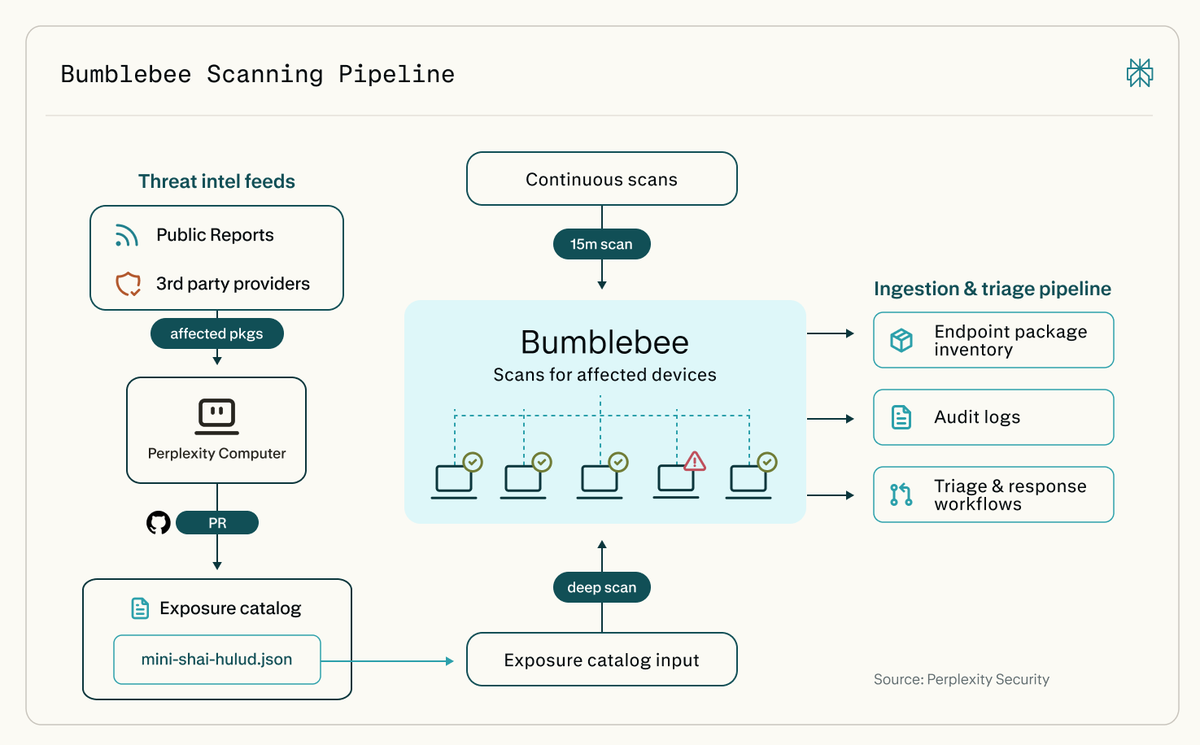
Today we're open-sourcing Bumblebee, a read-only scanner for macOS and Linux.
It checks developer machines for risky packages, extensions, and AI tool configs.
Connected to Computer, it can trigger deeper scans whenever a new supply-chain risk emerges.
https://t.co/FOaWnF1yQy
Microsoft Senior AI developer just showed how they build AI agents with Claude at Microsoft.
34-minutes. free. By Microsoft team
Opus 4.7 + 1,400+ pre-built MCP tools
plug Claude into agent → give it tools → ship to production
worth more than any $500 vibe-coding course.
Personal update: I've joined Anthropic. I think the next few years at the frontier of LLMs will be especially formative. I am very excited to join the team here and get back to R&D. I remain deeply passionate about education and plan to resume my work on it in time.
🚨 𝗕𝗥𝗘𝗔𝗞𝗜𝗡𝗚: Michael Carrick is set to remain as Manchester United manager on a permanent basis.
The decision has been fully approved internally, including by Sir Jim Ratcliffe, with the club now preparing the final contract details.
Carrick has already given the green light and is expected to sign either a two-year deal with an option or a straight three-year contract soon. ✍️
(Source: @FabrizioRomano)
🚨 Michael Carrick will stay at Manchester United as permanent manager, confirmed.
Direction clear for weeks, plan also approved by Sir Jim Ratfliffe and new deal set to be signed soon.
New deal for 2 years plus option to extend or directly 3 years, but no doubts: Carrick says yes and will sign the contract.
There will be no AI jobpocalypse.
The story that AI will lead to massive unemployment is stoking unnecessary fear. AI — like any other technology — does affect jobs, but telling overblown stories of large-scale unemployment is irresponsible and damaging. Let’s put a stop to it.
I’ve expressed skepticism about the jobpocalypse in previous posts. I’m glad to see that the popular press is now pushing back on this narrative. The image below features some recent headlines.
Software engineering is the sector most affected by AI tools, as coding agents race ahead. Yet hiring of software engineers remains strong! So while there are examples of AI taking away jobs, the trends strongly suggest the net job creation is vastly greater than the job destruction — just like earlier waves of technology. Further, despite all the exciting progress in AI, the U.S. unemployment rate remains a healthy 4.3%.
Why is the AI jobpocalypse narrative so popular? For one thing, frontier AI labs have a strong incentive to tell stories that make AI technology sound more powerful. At their most extreme, they promote science-fiction scenarios of AI “taking over” and causing human extinction. If a technology can replace many employees, surely that technology must be very valuable!
Also, a lot of SaaS software companies charge around $100-$1000 per user/year. But if an AI company can replace an employee who makes $100,000 — or make them 50% more productive — then charging even $10,000 starts to look reasonable. By anchoring not to typical SaaS prices but to salaries of employees, AI companies can charge a lot more.
Additionally, businesses have a strong incentive to talk about layoffs as if they were caused by AI. After all, talking about how they’re using AI to be far more productive with fewer staff makes them look smart. This is a better message than admitting they overhired during the pandemic when capital was abundant due to low interest rates and a massive government financial stimulus.
To be clear, I recognize that AI is causing a lot of people’s work to change. This is hard. This is stressful. (And to some, it can be fun.) I empathize with everyone affected. At the same time, this is very different from predicting a collapse of the job market.
Societies are capable of telling themselves stories for years that have little basis in reality and lead to poor society-wide decision making. For example, fears over nuclear plant safety led to under-investment in nuclear power. Fears of the “population bomb” in the 1960s led countries to implement harsh policies to reduce their populations. And worries about dietary fat led governments to promote unhealthy high-sugar diets for decades.
Now that mainstream media is openly skeptical about the jobpocalypse, I hope these stories will start to lose their teeth (much like fears of AI-driven human extinction have).
Contrary to the predictions of an AI jobpocalypse, I predict the opposite: There will be an AI jobapalooza! AI will lead to a lot more good AI engineering jobs, and I’m also optimistic about the future of the overall job market. What AI engineers do will be different from traditional software engineering, and many of these jobs will be in businesses other than traditional large employers of developers. In non-AI roles, too, the skills needed will change because of AI. That makes this a good time to encourage more people to become proficient in AI, and make sure they’re ready for the different but plentiful jobs of the future!
[Original text in The Batch newsletter.]
🚨 Manchester United are also set to open talks with Michael Carrick over new contract.
It’d be the next step when Sir Ratcliffe procees to approve the decision to continue with Carrick, as @lauriewhitwell reported.
Carrick open and excited.
🎥 https://t.co/REB6JrMrpJ
Goldman Sachs estimates AI token consumption will be 24x higher by 2030.
The entire global capacity today won't even cover 4% of future demand.
Explain to me how we are in a AI bubble. I will wait
This Chinese guy built a Second Brain in Obsidian and every morning gets 3 trading ideas that brought him $180,000 in 6 months.
Inside he runs a pipeline of 6 workflows on N8N that automatically pulls every read article, listened podcast, and voice note into a shared Obsidian vault, and a neural network analyst every morning at 6:00 finds connections between the fresh and the old and puts the 3 strongest trading ideas for the day into the inbox.
No analytics desk, no Bloomberg terminal, no Telegram chats with traders. Just a Mac Mini by the wall, an iPhone in the pocket, and 1 local Obsidian vault.
And traditional quant funds keep entire teams of 8 people on salary for the same flow of insights, while his expenses are only subscriptions to Readwise, Whisper API, and N8N hosting.
6 pipelines process about 200 sources a day and close the monthly API bill at about $120.
The Mac Mini itself stores the entire vault and keeps the neural network analyst running 24/7, and from the iPhone the owner drops any idea he hears on the go into a Telegram bot, and it lands in the vault inbox in just 30 seconds.
The starting instruction that sits in the VAULT.md file at the root of his vault looks like this:
"you are the AI analyst of a solo trader. you read his vault every morning at 6:00, find connections between fresh and old notes, and deliver 3 trading ideas he can verify in the hour before the market opens.
pipelines:
// Reader (pulls every article and highlight from Readwise, Twitter bookmarks, and Kindle into /notes)
// Listener (transcribes podcasts through Airr and voice notes through Whisper, puts them in /notes)
// Catcher (accepts any message from the Telegram bot and writes it to /inbox with a timestamp)
// Connector (every night reads across the entire vault and updates the connection graph between 4,000 notes)
// Briefer (at 6:00 AM writes a brief: 3 trading ideas for today plus the emerging thesis of the week, puts it in /inbox)
// Mobile (lives in the iPhone, answers any question about the vault by voice, and confirms alerts while the owner is on the go).
you wake the owner with a push notification only when a fresh note contradicts his active thesis or when 1 of the 3 morning ideas has a confidence score above 90%."
This instruction immediately sets the role for the system and the limits of its autonomy.
It knows it is supposed to connect new with old on its own.
It knows it is supposed to prepare 3 trading ideas every morning on its own.
It knows it connects the live trader only when a thesis is contradicted or an ultra-confident idea appears.
→ Reader pulls about 80 articles and highlights a day from Readwise, Twitter, and Kindle
→ Listener transcribes 4 to 6 podcasts a week through Airr and Whisper
→ Catcher intercepts all voice and text ideas through the Telegram bot, averaging 15 to 20 a day
→ Connector updates the connection graph between 4,000 notes every night, adding 25 to 30 new edges
→ Briefer puts a fresh brief with 3 trading ideas and the emerging thesis into the inbox at exactly 6:00
→ Mobile answers any question about the vault by voice and confirms alerts right from the iPhone
And only when a new note contradicts his active thesis or 1 of the ideas breaks 90% confidence does the orchestrator raise the owner with a push notification.
And when the trader at that moment is driving to the gym or eating breakfast, the Mobile agent in his iPhone answers any quick question about the vault by voice: what he wrote about this ticker last week, which 3 sources support the idea of long NVDA, and what counter-thesis already sits in his notes.
The trader makes the decision and sends the order before New York opens.
The fresh brief from last Monday looks like this:
"reader: 78 materials added over the weekend, 11 of them about semiconductors, 4 about energy, 3 about biotech. passing to connector."
"connector: 27 new connections found between fresh materials and the vault, the strongest one is that the Goldman report from Wednesday matches the NVDA thesis you wrote 3 weeks ago."
"briefer: 3 trading ideas for today: long NVDA (confidence 0.84), short Tesla at the close of the quarterly report (0.71), watch URI (0.62). emerging thesis of the week: the market is underpricing capex on data centers."
"alert: your fresh note about long-term risk in semis contradicts the NVDA thesis. sending for review."
In his work setup there is no cloud server, no team of analysts, and not even a Bloomberg subscription.
At home sits a Mac Mini with a local Obsidian vault, on top run 6 N8N pipelines and a neural network analyst, and the same vault mirrors to a secure terminal on the iPhone.
Out of everything I have seen this year, this is the cleanest solo trading setup on a second brain: $120 a month on the API, about $30,000 a month into the account, and between them 6 pipelines, 4,000 connected notes, and 1 iPhone in the pocket.














![AndrewYNg's tweet photo. There will be no AI jobpocalypse.
The story that AI will lead to massive unemployment is stoking unnecessary fear. AI — like any other technology — does affect jobs, but telling overblown stories of large-scale unemployment is irresponsible and damaging. Let’s put a stop to it.
I’ve expressed skepticism about the jobpocalypse in previous posts. I’m glad to see that the popular press is now pushing back on this narrative. The image below features some recent headlines.
Software engineering is the sector most affected by AI tools, as coding agents race ahead. Yet hiring of software engineers remains strong! So while there are examples of AI taking away jobs, the trends strongly suggest the net job creation is vastly greater than the job destruction — just like earlier waves of technology. Further, despite all the exciting progress in AI, the U.S. unemployment rate remains a healthy 4.3%.
Why is the AI jobpocalypse narrative so popular? For one thing, frontier AI labs have a strong incentive to tell stories that make AI technology sound more powerful. At their most extreme, they promote science-fiction scenarios of AI “taking over” and causing human extinction. If a technology can replace many employees, surely that technology must be very valuable!
Also, a lot of SaaS software companies charge around $100-$1000 per user/year. But if an AI company can replace an employee who makes $100,000 — or make them 50% more productive — then charging even $10,000 starts to look reasonable. By anchoring not to typical SaaS prices but to salaries of employees, AI companies can charge a lot more.
Additionally, businesses have a strong incentive to talk about layoffs as if they were caused by AI. After all, talking about how they’re using AI to be far more productive with fewer staff makes them look smart. This is a better message than admitting they overhired during the pandemic when capital was abundant due to low interest rates and a massive government financial stimulus.
To be clear, I recognize that AI is causing a lot of people’s work to change. This is hard. This is stressful. (And to some, it can be fun.) I empathize with everyone affected. At the same time, this is very different from predicting a collapse of the job market.
Societies are capable of telling themselves stories for years that have little basis in reality and lead to poor society-wide decision making. For example, fears over nuclear plant safety led to under-investment in nuclear power. Fears of the “population bomb” in the 1960s led countries to implement harsh policies to reduce their populations. And worries about dietary fat led governments to promote unhealthy high-sugar diets for decades.
Now that mainstream media is openly skeptical about the jobpocalypse, I hope these stories will start to lose their teeth (much like fears of AI-driven human extinction have).
Contrary to the predictions of an AI jobpocalypse, I predict the opposite: There will be an AI jobapalooza! AI will lead to a lot more good AI engineering jobs, and I’m also optimistic about the future of the overall job market. What AI engineers do will be different from traditional software engineering, and many of these jobs will be in businesses other than traditional large employers of developers. In non-AI roles, too, the skills needed will change because of AI. That makes this a good time to encourage more people to become proficient in AI, and make sure they’re ready for the different but plentiful jobs of the future!
[Original text in The Batch newsletter.]](https://pbs.twimg.com/media/HIIb1VGaUAAZoAB.jpg)


