Dusting off this tweet from April because this gap in shared understanding of LLM capability is *widening*. It's now less "two groups of people speaking past each other" and more a sharp funnel.
- Napkin math somewhere around 6B people (~75% of the population) have barely come in contact with LLMs at all.
- Around 1-2B (~20%) are casual and infrequent users of free-tier ChatGPT-like products. This group sees derpy chatbots and treats them a bit like a better Google search, a writing aid, or etc. Maybe an agent tries to book you a flight. I have non-tech friends who (reasonably, imo) say they have not much use for it at all. Even many professionals outside of math&code are in this tier. For example, execs and many other functions spend a lot of their time talking to other people, so while they understand what is happening intellectually, it is still second-hand and a bit abstract.
- Now we get to professional use of frontier-grade LLMs in math&code. Somewhere around 20M people (0.2%) see first-hand that large, complex projects that used to take them weeks/months can now be completed by agents with a prompt. Building apps, copying apps, translating apps, decompiling apps from binaries... This has all happened very quickly and recently - less than 1 year ago, I was writing code manually by hand, typing memorized computer code commands into a code editor character by character, occasionally pressing Tab to autocomplete a little chunk of code.
- And finally we get to the ~5,000 people (~0.00006%) with access to frontier-grade systems internally. The external world has seen the preview. It looks like swarms of thousands of agents collaborating over weeks on software mega projects: minting zero days, running cyber attacks and defenses at machine speeds, discovering new science, advancing the frontier of mathematics. Things that would have taken top professionals in the industry years of work. Meanwhile, human review and comprehension are starting to fall behind. For example, people are still involved in the "archeology" of the OpenAI-HF incident from many months ago. Mathematicians may be poring over the 722 manuscripts on frontier mathematics for a while.
The funnel is driven by a combination of factors:
1. The impact scales with ambition, problem size, and horizon. A question with a paragraph answer barely stresses the system. You need a reservoir of big, difficult problems that you really care about. This aspect drives the consumer / professional dimension of the funnel.
2. The jaggedness of the system (which I have written about a lot separately). Capability peaks in domains that are digital, verifiable and economically valuable. This is because LLM capability emerges from reinforcement learning on verifiable rewards on a curated environment mixture driven by revenue potential. This aspect primarily drives the area (e.g. math&code) dimension of the funnel.
3. Access. Free-tier, paid-tier, internal.
So this is the weirdness of the moment. The general public has mostly not interacted with these systems. When they have, it looks like a derpy chatbot. The majority of professionals still see only a modest uplift. And a small sliver of professionals are experiencing the vertigo of the curve going vertical. And it is all happening at the same time.
Übersicht #Stromerzeugung im #Dritten_Quartal 2026
Das Bild zeigt die gesamte* Stromproduktion aus EE (PV, Wind, Wasser & Biomasse) der 3. Quartale in den Jahren 2015 - 2026
Was an der Säule für das 3.Quartal 2026 auffällt...
* einschließlich PV-Eigenverbrauch..
🧵1/11
@markusdd5 Wie so oft machen wir bei Kompromissen halt Worst of both Worlds. Vielleicht kaufen darum hier auch so viele Hybride?
Eine klare Strategie für energetische Unabhängigkeit und Elektrifizierung aller Sektoren mit EE + Atom seit 2015 und wir wären atm bisschen gelassener
Wenn das zweite Mal in fünf Jahren wegen Krieg und unterbrochenen Handelswegen der Benzinpreis steigt, ist die logische Konsequenz doch nicht, Benzin zu subventionieren, sondern seine Konsequenzen aus dieser Abhängigkeit zu ziehen
Das waren übrigens die heißen Tage im Jahr 1977. Im Norden gab es früher einige Jahre, die nicht einen Tag über 30 Grad brachten. Alles hier zum Nachsehen:
https://t.co/OzBaMOAfqv
/FR
In Athens, last November 2025 (!)
I gave a presentation for senior journalists from across Europe.
I asked: Does anyone know this man, who was likely to shock Europe in 2026?
Nobody did then.
(Intense🧵)
1/17
Wir haben da mal ein Karte gebastelt, wo zu sehen ist, wie sich deutsche Städte nach dem letzten teils rekordverdächtigen Sommermitteltemperaturen (Juni, Juli, August) klimatisch nach Süden verschoben haben. Als Einordnungskriterium wurde die Sommermitteltemperatur vom Referenzzeitraum 1961-1990 genommen.
Freiburg würde demnach nach dem Temperaturmittel auf Sizilien liegen, Hamburg wäre klimatisch Paris usw..
Die Temperaturerhöhung der letzten Jahrzehnte ist nicht wegzudiskutieren und stellt viele Städte vor schwere Aufgaben was den Hitzeschutz u. Ä. angeht. Unsere Städte wurden nicht gebaut um klimatisch so weit im Süden zu liegen..
/SW
@MauriceThimma@Mario1679020 Auch Fahrerspiegel abgefahren worden - über die App Termin gebucht, 6 Tage später kam der Ranger und hat mir in 15 Minuten den Spiegel in der TG getauscht, kann ich also 0 bestätigen.
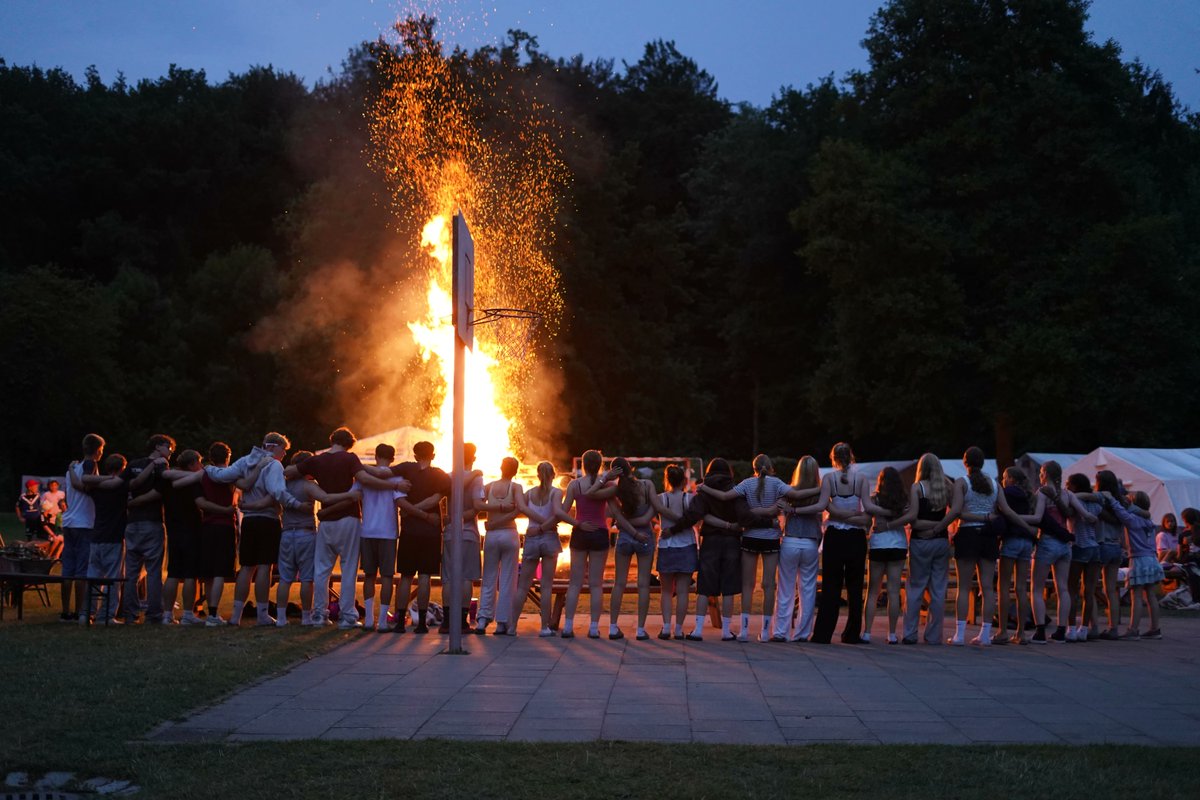
Als Leiter eines Zeltlagers mit 155 Kindern und Jugendlichen werde ich oft gefragt, ob die Kinder sich in all den Jahren verändert haben. Ich finde nicht. Verändert haben sich eher die Eltern. THREAD 🧵
Was das GKV-Gesetz für die Derma bedeutet, an einem häufigen Beispiel erklärt: Operation eines hellen Hautkrebses im Gesicht (Basaliom), kommt bei uns mehrmals in der Woche vor.