the fast16 malware was almost certainly targeting spherical implosion simulations.
left: unmodified LS-DYNA 970
right: LS-DYNA 970 modified with the relevant portions of fast16.sys
both running a spherical implosion deck
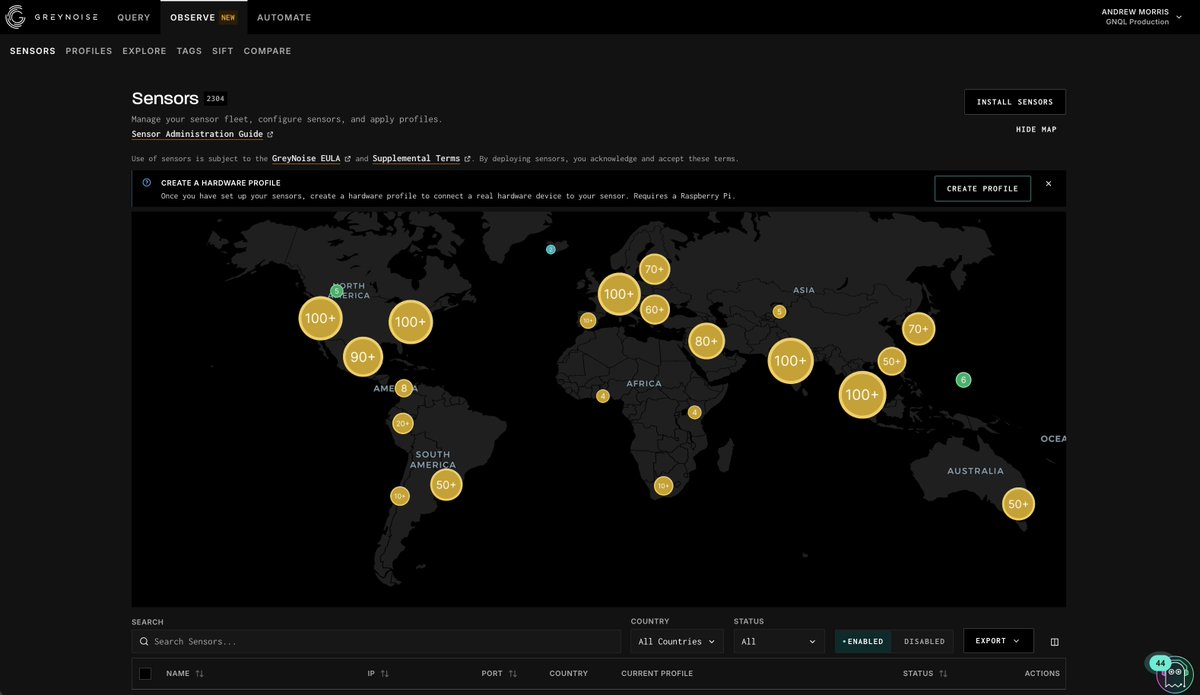
Howdy folks! Taking a break from my twitter break to let yall know that we released a new @GreyNoiseIO product yesterday. It's called Project Swarm. We've been quietly not-so-quietly working on it for a few years. You can buy it now. It costs $1.
There are lots of vulnerabilities on edge-facing apps. To catch in-the-wild exploitation of them, we @ GreyNoise run sensors on the internet. New AI models means more vulnerabilities being identified and exploited, and FASTER. Long term, software and hardware will probably get better, but in the meantime we're gonna have to deal with A LOT of vulnerabilities.
At GreyNoise, the sensors we run are basically honeypots- we bait attackers to scan and exploit them which enables us to learn where the attackers are, which vulnerabilities they are exploiting, what it drops, and what it looks like on the wire. From ~2020-now it took us years to build up our fleet. Now anyone can use our new product to deploy their own sensors on their own networks, or an entire fleet of any size, in a day. You can rip back the data and do whatever you want with it. You can resell it, put it into your product, or just stare at it- whatever you want! On our side, we aggregate the data and pour it into a community dataset that everyone shares. As more people join, the data gets bigger and better.
Couple neat features:
- Sensor deployment is a single bash command on any modern linux distro that supports iptables and wireguard.
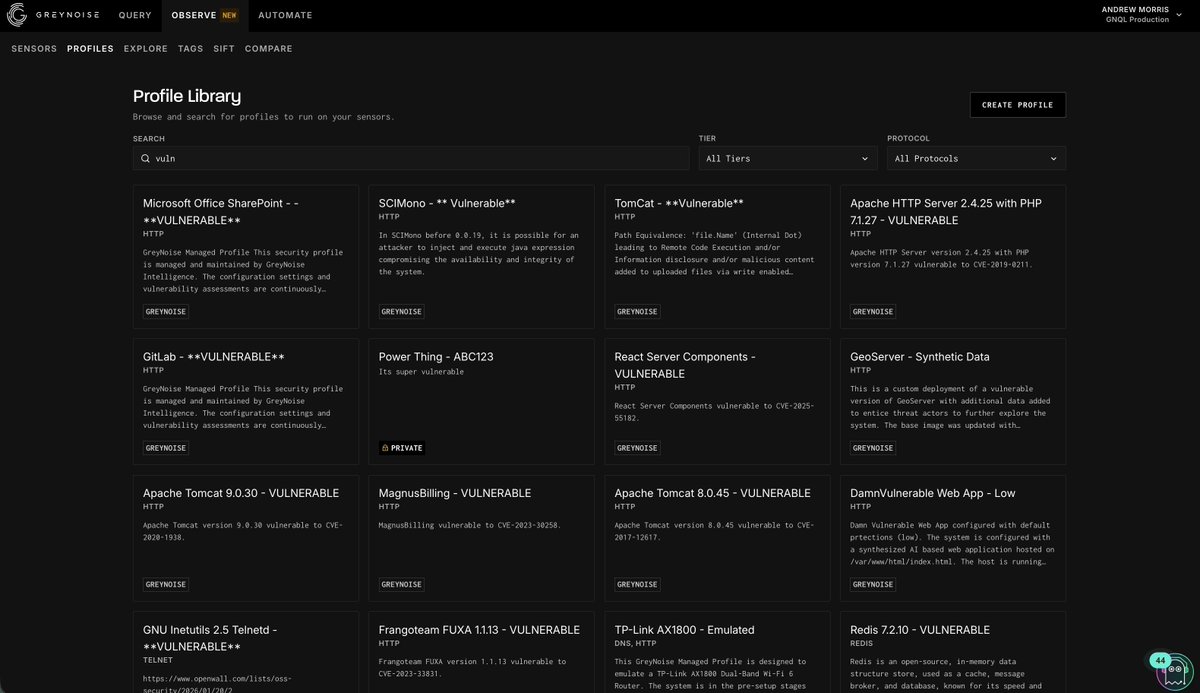
- Sensors and vulnerable software (profiles) are abstracted into different logical concepts, which means the "what" and "where" are different things, and the sensor is not constrained by the compute required to run the vulnerable software. Also, no matter how hacked the profile (honeypot) gets, it can't touch your host sensor or the rest of your network.
- Sensors can run fake honeypots, real software, or even real hardware (bridged with a raspberry pi) like old crappy routers and modems (or expensive firewalls and VPN gateways 👀)
- You can create dynamic blocklists that block IPs sourced from your own sensors in real time, so if a remote IP address *looks at your network* the wrong way, you block them instantly.
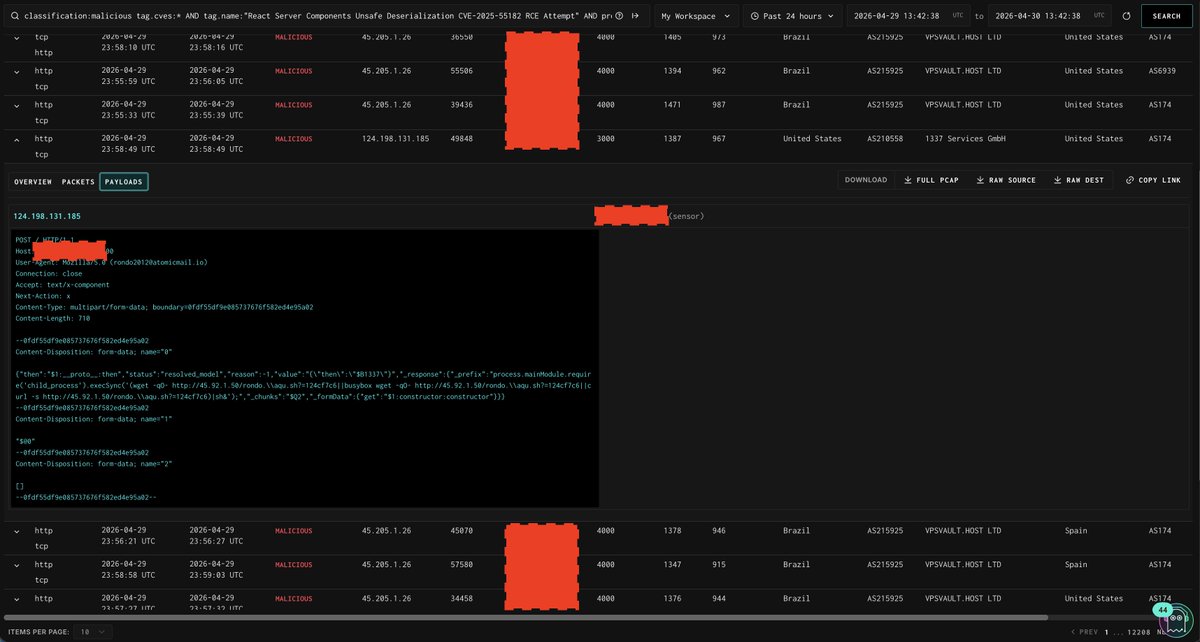
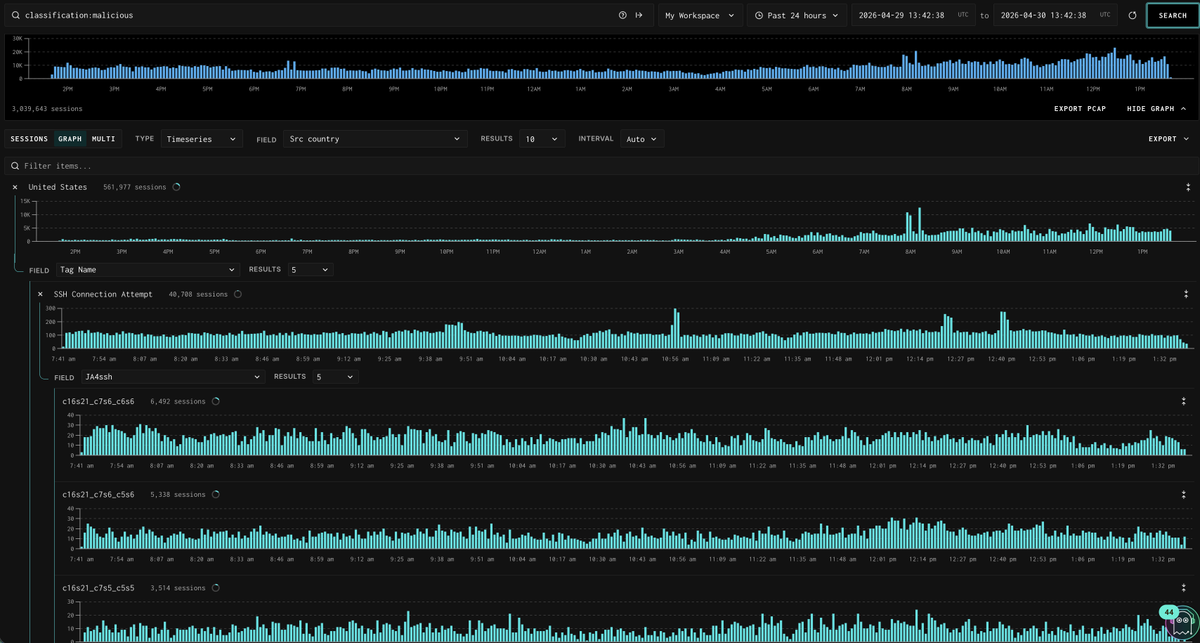
- All the PCAP data is available to you in a gorgeous and intuitive interface at near real time and fully enriched against all of our (thousands of) rules. We're working on the host metadata (malware, syscalls, host behaviors) as well, but this will come later.
- If we don't tag a CVE that's interesting to you, you can write a Suricata rule to tag it yourself once and your data gets tagged with it in real time forever.
- You can instantly download PCAPs of any exploits that hit your sensors.
- If you don't want your data shared with the community dataset, you can talk to our team and we'll work out rights to make it private.
Check it out! There's a lot of moving pieces to make this work and we expect bugs, but it's available right now. Join the fight!
https://t.co/erAWtX1l7B
I’m not gonna lie, TLP restricted CTI reports with massive AI-generated cover pages of scary terminators from Russia & cyber skeletons from China lose all seriousness to me 😂
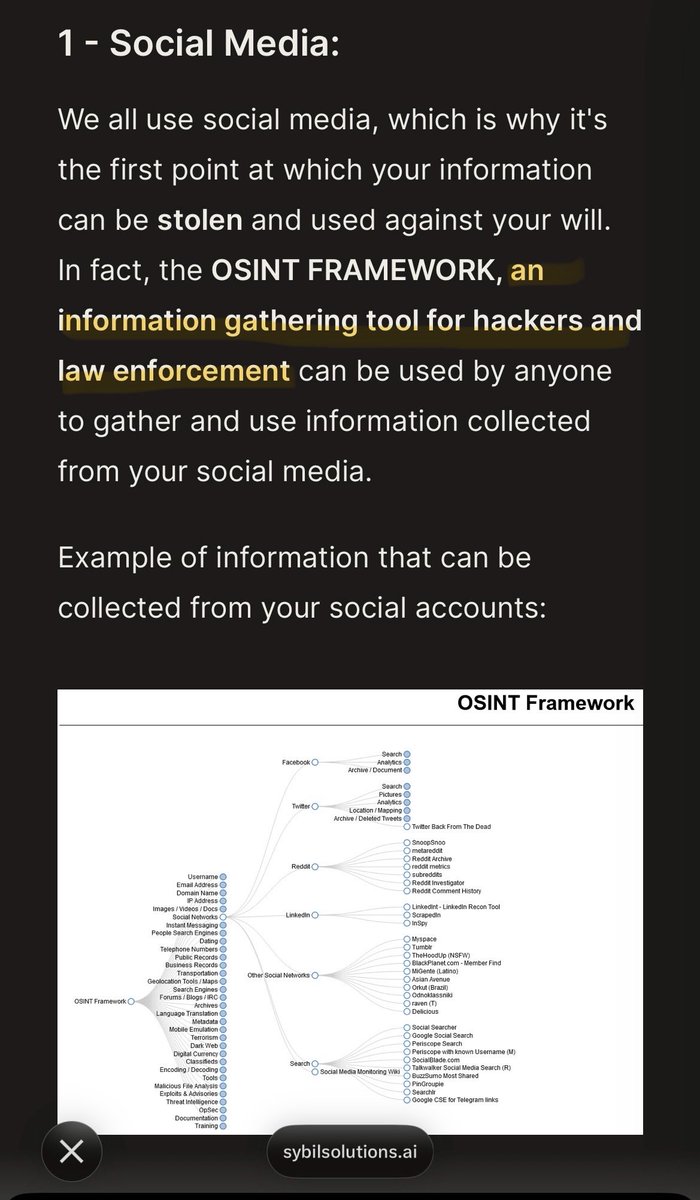
Seeing people recommend OSINT framework as “an information gathering tool for hackers and law enforcement” reeks of “I just asked ChatGPT to write an article about OSINT”
NASA has 32 cameras on the Artemis II spacecraft. The top science priority during the Moon flyby was the four astronauts looking out the window and talking about what they saw.
NASA's lunar science lead confirmed it. What the crew says out loud about the Moon's surface matters more to the science team than anything the cameras capture. NASA trained this crew in Iceland's volcanic highlands and at an impact crater in Labrador, Canada, teaching them to read rock textures and spot geological details at 25,000 mph.
There's a reason NASA trusts human eyes over cameras. In 1972, Apollo 17 astronaut Harrison Schmitt was walking near a small crater called Shorty when he scuffed the dirt with his boot. The soil underneath was orange. Schmitt was the only trained geologist to ever walk on the Moon, and he got so excited he blurred most of his own photos. That orange soil turned out to be tiny glass beads from a volcanic eruption 3.64 billion years ago, one of the biggest finds of the entire Apollo program. A boot and a pair of trained eyes caught what no camera did.
For this flyby, NASA sent the crew a final list of 30 surface targets. They killed all the cabin lights to cut window reflections. They worked in pairs, rotating every 55 to 85 minutes, calling out craters and lava flows while scientists at Johnson Space Center analyzed everything in real time. Pilot Victor Glover reported that the Moon's south pole, where NASA wants to land astronauts by 2028, looked "more jagged" than the north with much steeper terrain. One observation from a human eye at 4,070 miles could shape where the next crew touches down.
At 6:44 PM Eastern, Orion slipped behind the far side and went radio silent for 40 minutes. Four people, completely cut off from every other human alive, the Moon blocking every signal back to Earth. The last time humans experienced that was December 1972.
They broke the all-time distance record on the way. Apollo 13 held it for 56 years at 248,655 miles from Earth. Artemis II passed that mark and kept going to 252,760. Jim Lovell, who commanded Apollo 13 and held that record his whole life, died last August at 97, eight months before these four beat it. Before he died, Lovell recorded a message for the crew. "Welcome to my old neighborhood," he told them. "Don't forget to enjoy the view."
The crew named two craters during the flyby. One for their spacecraft, Integrity. The other, Carroll, for Commander Reid Wiseman's late wife, a nurse who cared for newborns and died of cancer in 2020 at 46. Wiseman has raised their two daughters alone since. When Jeremy Hansen read the name to Mission Control, his voice broke. The crew hugged. Wiseman and Koch wiped tears. Then they got back to work, because they still had hours of Moon left to map with their eyes.
From Michigan to the moon 🚀
We're so proud to watch Grand Rapids native and the first woman orbiting the moon, Christina Koch, take off on this historic mission.
Good luck to Christina and the Artemis II crew as they travel farther from Earth than any humans before!
For the first time in over 50 years, humans are Moonbound.
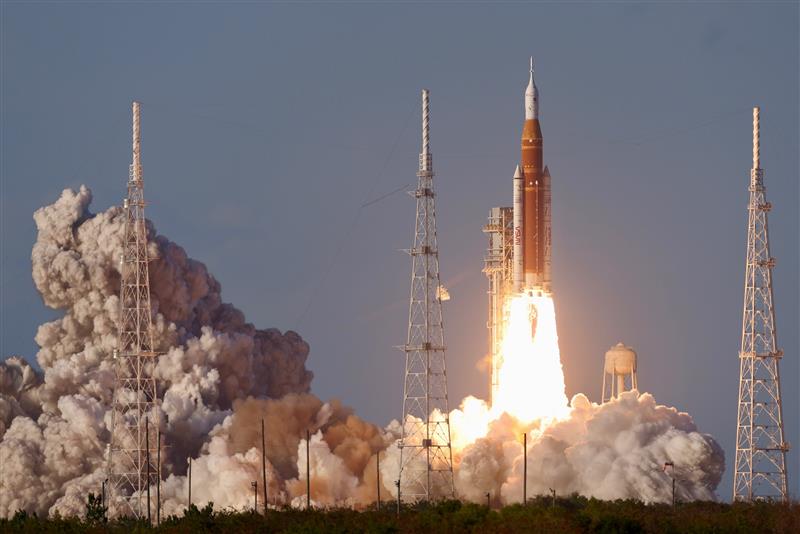
At 6:35 p.m. EDT (2235 UTC) NASA’s Space Launch System rocket and the Orion spacecraft lifted off from the agency’s Kennedy Space Center in Florida, sending four astronauts on a planned test flight around the Moon and back. https://t.co/0Q9ZB4IWVI