Intel: So, you think you know Intel?
Analyst: I’ve followed the company for years.
Intel: Sure. You know the numbers. Revenue. Margins. Market share. Capex. You can tell me exactly how many quarters AMD gained share and how far Intel fell behind TSMC.
But you’ve never stood inside a fab.
You’ve never watched billions of dollars of equipment turn something that looks like an ordinary silicon wafer into one of the most complicated things humans have ever manufactured.
Ask you about Intel 18A and you’ll tell me about RibbonFET, PowerVia, yields, customers, timelines.
You’ve read every slide. You’ve read the analyst reports. You know exactly which quarter management said what.
But you’ve never had to make it work.
You’ve never had to take something that works beautifully in a laboratory and figure out how to manufacture it again and again and again, across thousands of wafers, with the consistency customers expect.
Ask you about advanced packaging and you’ll talk about EMIB, Foveros, chiplets, interconnect density.
Maybe you’ll tell me advanced packaging is becoming one of the most important parts of Intel.
Fine.
But you’ve never had to connect those dies, package them, test them, and ship millions of them reliably.
If I ask you about TSMC, you’ll show me the process roadmap.
If I ask you about AMD, you’ll show me the market-share chart.
If I ask you about NVIDIA, you’ll tell me why GPUs won AI.
And if I ask you about Intel?
You’ll show me the stock chart.
That’s the problem.
You look at Intel and see a ticker.
We look at Intel and see the future.
Thousands of engineers solving problems most people will never even know existed.
We see decades of accumulated manufacturing knowledge.
We see the mistakes too.
The delays. The missed opportunities. The bad decisions. The years Intel lost.
Those things are real.
Nobody gets to erase them.
But neither can you erase what still exists just because the stock chart went down.
A semiconductor fab doesn’t suddenly become easy to build because Wall Street puts a lower multiple on the company that owns it.
Manufacturing knowledge doesn’t disappear because sentiment changes.
And catching up technologically doesn’t happen because somebody made a convincing PowerPoint presentation.
We actually have to build it.
Wafer by wafer.
Process by process.
Generation by generation.
And that’s the part you can’t see on the terminal.
Maybe you even understand the technology better than 99% of investors.
But don’t confuse knowing the Intel story with knowing how to manufacture a leading-edge chip.
And don’t confuse knowing why Intel fell behind with knowing whether Intel can come back.
Those are two very different things. $INTC
Morgan Stanley - Memory – Key Debate Post Mid-terms $MU $SKHY
AI didn't kill the memory cycle.
It made the boom bigger.
And bigger booms eventually attract more supply.
1. Can memory avoid the 2028 earnings cliff?
Demand still looks strong for now.
But new capacity coming online from late 2027 raises the risk that supply starts catching up with demand in 2028.
2. Has AI actually killed the memory cycle?
No. AI has created a powerful new source of memory demand, but memory is still cyclical.
High profits encourage companies to add more capacity.
Eventually, that extra supply can pressure profits.
3. Is the real problem weaker AI demand or too much memory supply?
Supply is the bigger concern.
The worry isn't really weaker AI demand or delayed data centers.
It's too much new memory supply catching up with demand from 2028.
AI fundamentals are extremely strong, but people need to distinguish between a great business and a great stock.
That's why Networking can have fantastic fundamentals and rank #5, while beaten-down Memory ranks #2.
And it's why CPU can be in shortage today yet rank last because the analysts see significantly more supply coming.
The bottleneck could move
Today the shortage may be GPUs, memory or CPUs.
Eventually the limiting factor could instead become land + power + data-center shell.
NVDA is unusually well positioned for that transition, while pure semiconductor shortage trades become more vulnerable.
And despite the market anxiety, the underlying compute indicators remain strong
Token volume continues to climb steeply and token spending has returned to all-time highs.
Takeaway form Morgan Stanley Our shopping list given recent selloff
GPU/XPU: $NVDA, $AVGO
Memory: $SNDK, $MU
Shortages likely last longer
Semicap: $LRCX, $MKSI, $AEIS
Attractive equipment plays
Analog: $ADI, $NXPI
Networking: $SITM, $ALAB, $SMTC, $MRVL
But more expensive
CPU: $AMD > $INTC
Great near-term fundamentals, but crowded and shortages may ease sooner
Takeaway from Morgan Stanley Weekly Warm-up: Buy the Rumor, Sell the News
The correction may not be over.
But we could be getting close.
One final retest of the lows could take the S&P 500 toward 7,100–7,300.
But rather than waiting for the perfect bottom, the call is to start adding quality cyclicals with improving earnings revisions.
One more flush, then a potential year-end rally.
Takeaway form Morgan Stanley Our shopping list given recent selloff
GPU/XPU: $NVDA, $AVGO
Memory: $SNDK, $MU
Shortages likely last longer
Semicap: $LRCX, $MKSI, $AEIS
Attractive equipment plays
Analog: $ADI, $NXPI
Networking: $SITM, $ALAB, $SMTC, $MRVL
But more expensive
CPU: $AMD > $INTC
Great near-term fundamentals, but crowded and shortages may ease sooner
This is the new globalization.
The US outsourced factories to where it was cheaper to make things.
Now AI may do the same, going wherever compute and power are easier to build.
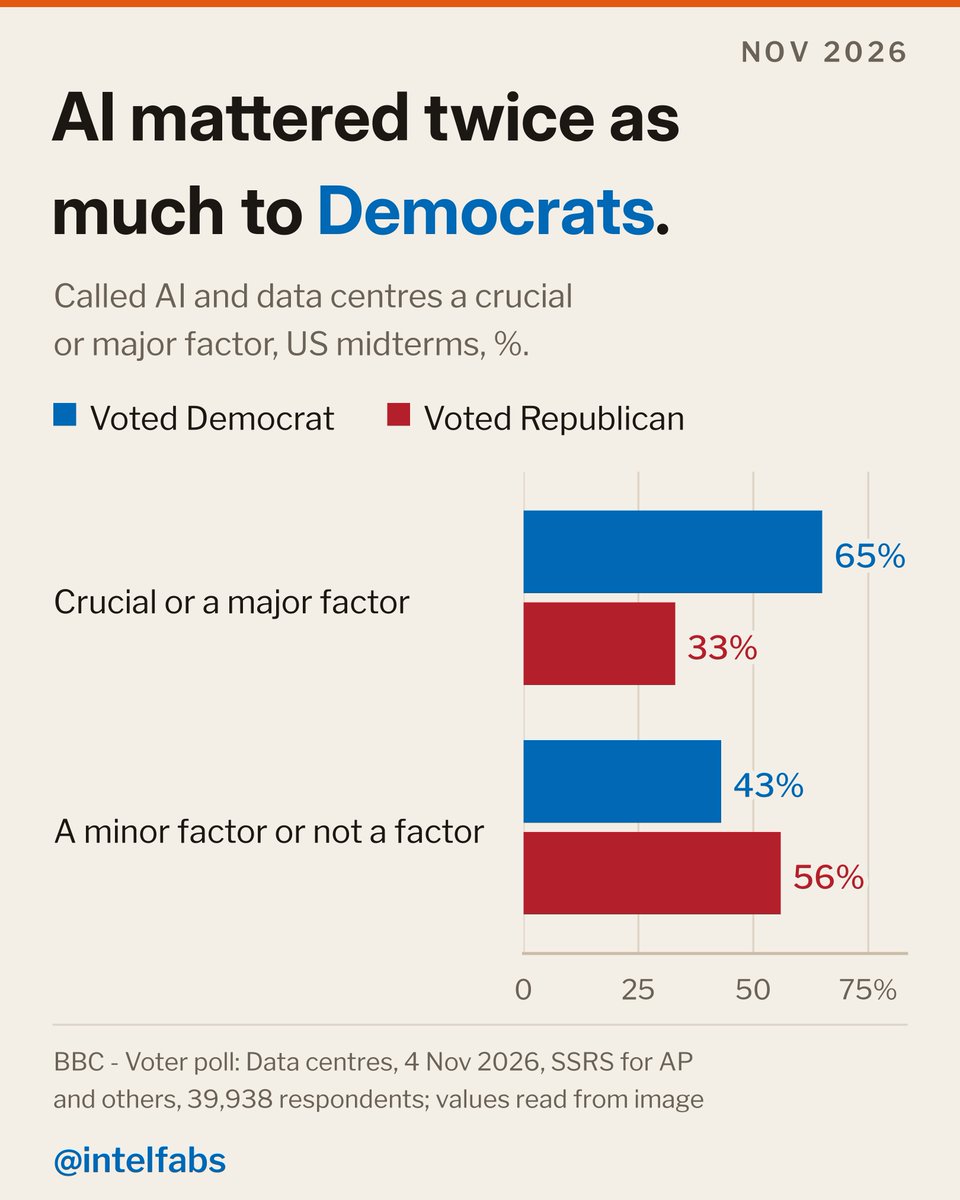
Everyone wants more AI.
But apparently nobody wants the data center next door.
Next step for the lobbyists:
Time to hire TikTok influencers making Day in my life living next to a data center videos.
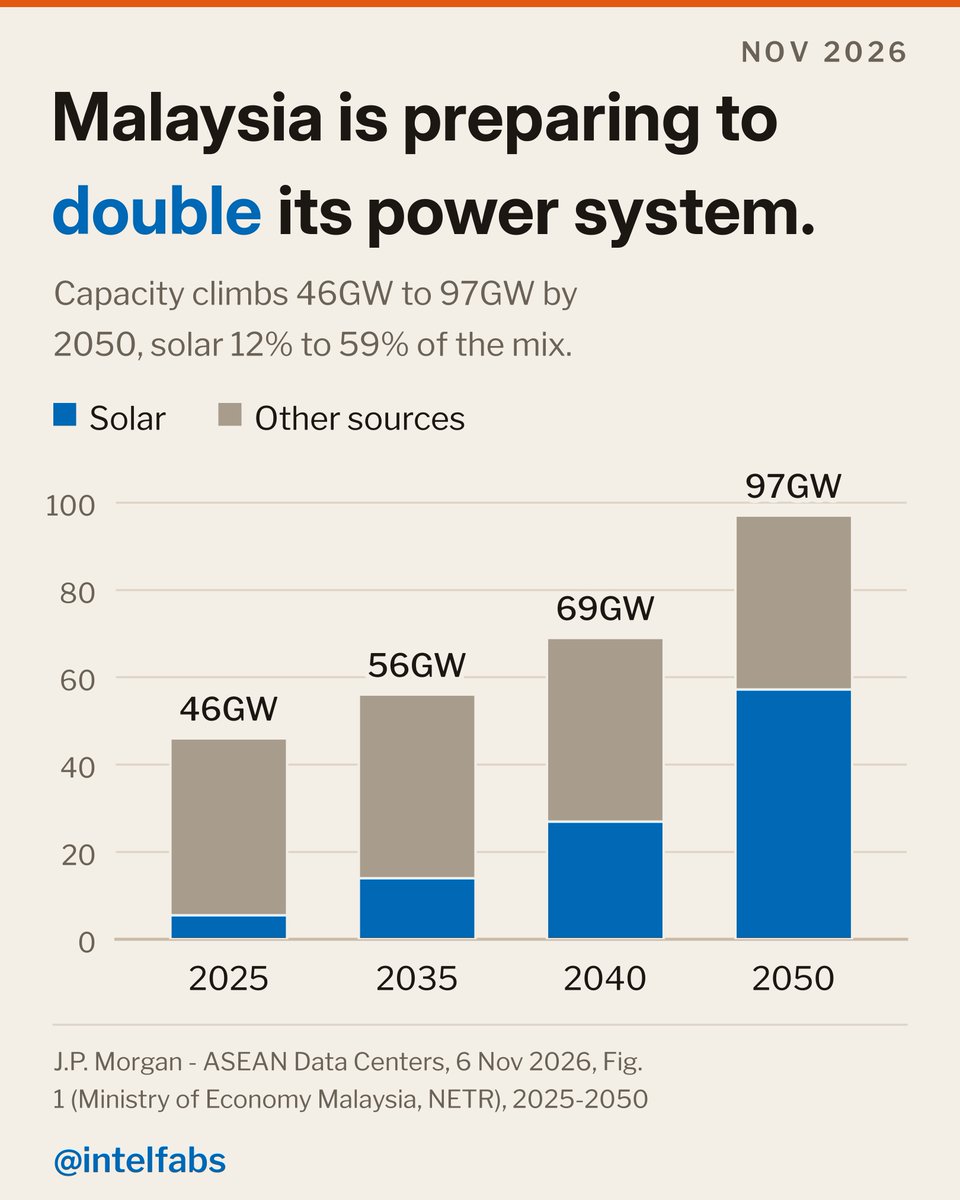
Google opens its first Malaysian data center.
Then commits another US$15B to expand there.
Data-center demand could create a roughly RM31B solar construction opportunity in Malaysia, while solar plus battery storage could provide electricity 12–24% cheaper than conventional data-center power.
Even the environmentalists are running out of things to complain about. $GOOGL
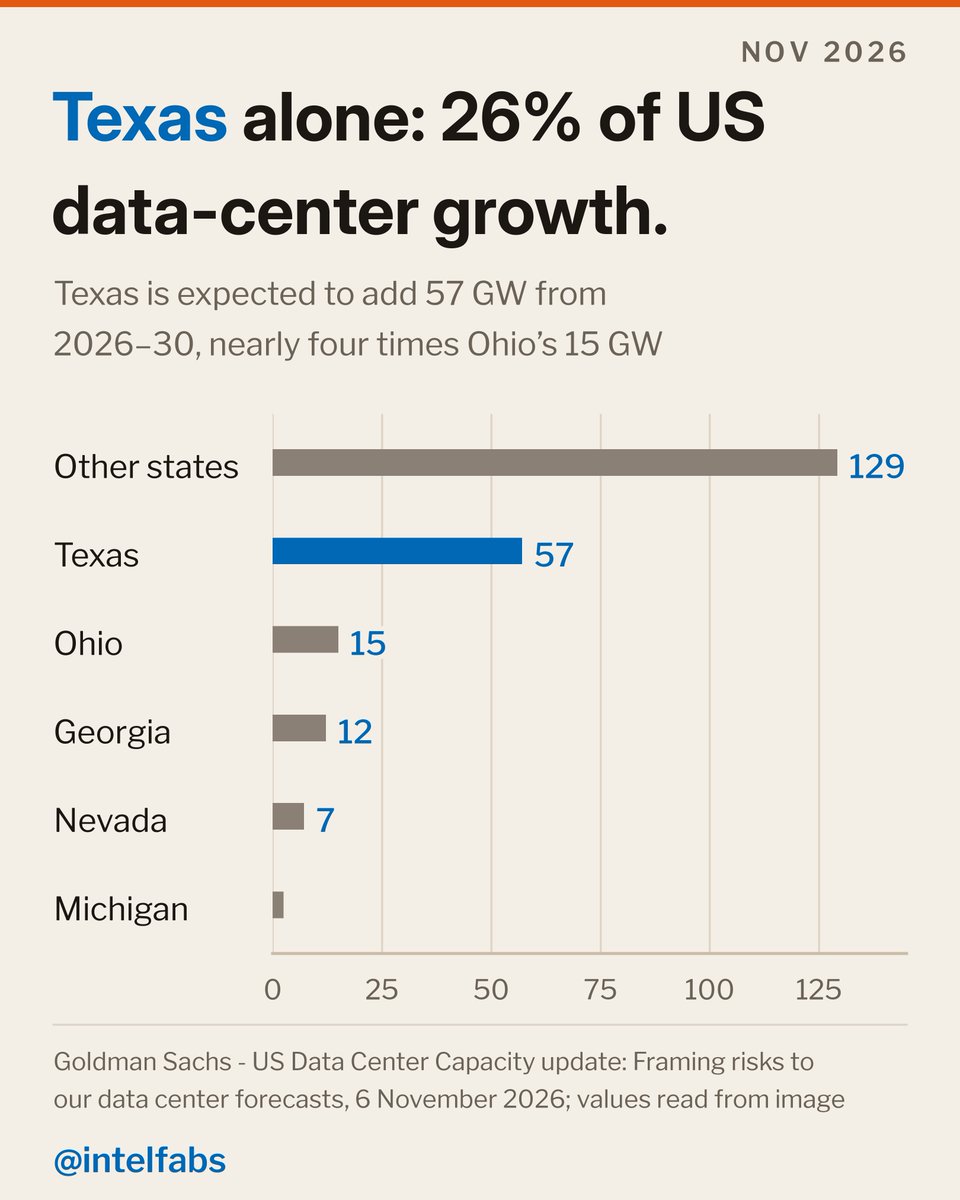
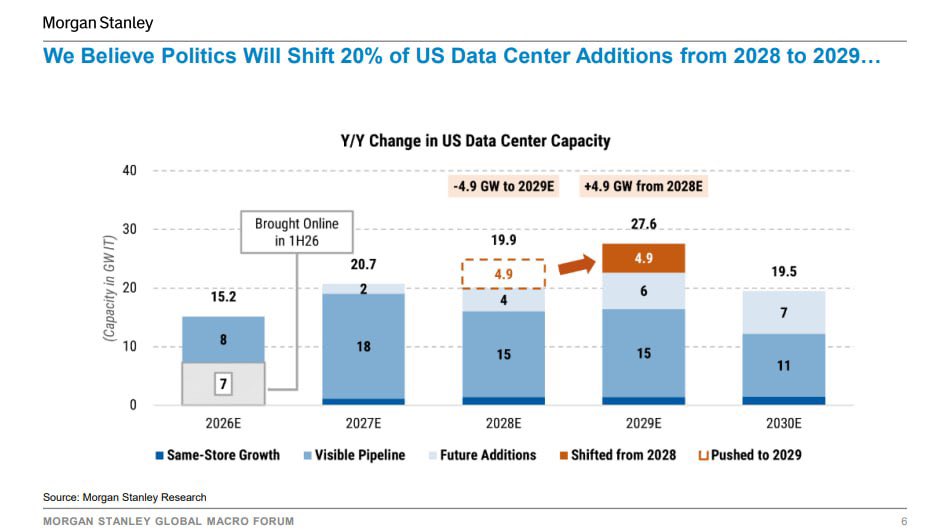
You can slow the AI data center boom.
Good luck stopping it.
22 GW of US additions in 2027 and 24 GW in 2028 are already under construction, which should be enough to cover the analysts’ forecasts for both years.
And another 137 GW-gross of high-likelihood capacity is lined up behind them.
China’s AI strategy may be about making thousands of good enough chips work together like one giant AI factory.
That’s the idea behind China’s SuperPoD strategy.
If thousands of chips need to work as one, networking and optics become critical bottlenecks, potentially making optical transceivers and switches some of the key beneficiaries.