Bitget CEO: After FTX, I Don’t Think Major Exchanges Would Comingle User Funds
On September 24, Bitget CEO Gracy Chen @GracyBitget said the collapse of FTX was a hard lesson for the entire industry, and that she does not believe major exchanges today would intentionally comingle customer funds. The exchange has a publicly verifiable protection fund of about $460 million, as well as more than $1 billion in Bitget-owned assets, separate from customer funds. She said user assets are backed 1:1 and can be checked through proof-of-reserves and Merkle Tree data.
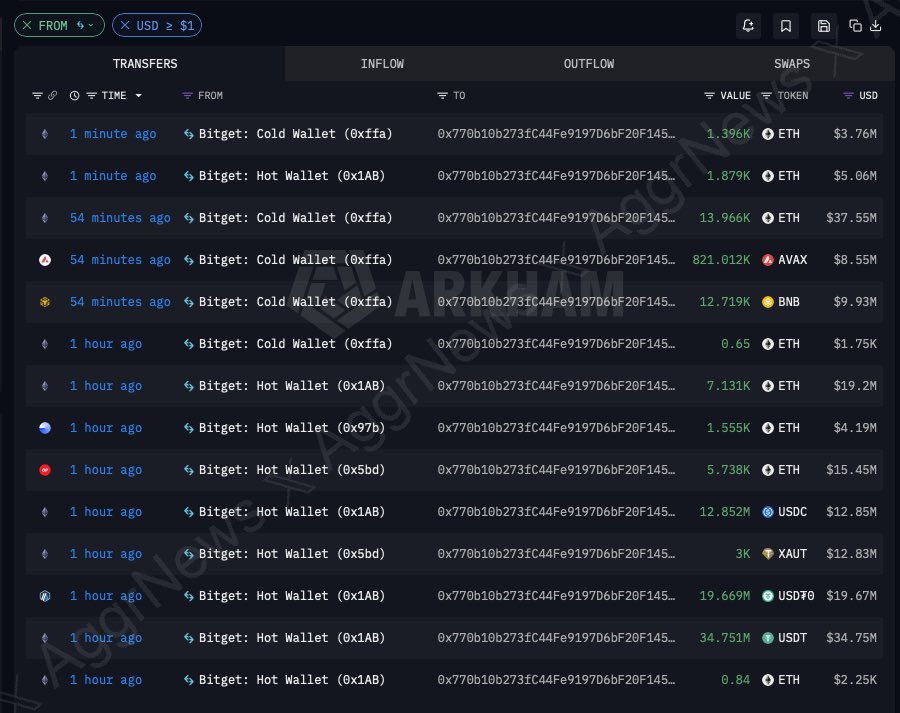
ATENCIÓN, HACKEO EN BITGET 🚨
Varios usuarios están reportando que los retiros desde Bitget no están saliendo y los movimientos onchain indican un posible exploit
De momento los retiros están saliendo desde Hot Wallets y Cold Wallets asociadas al exchange y ascienden a +$100M
Nadie del equipo ha salido a comentar nada ni tenemos información oficial aún
Si tienes fondos dentro más vale prevenir así que retíralo todo
Ojo, se hablan de cifras más altas de +$500M…
Si esto se confirma, podría ser un palo muy gordo para el Exchange
$CHOMP is not yet LIVE
Don't trust on any CA until we post it
we are working behind the curtain for the smooth launch
Also token is not the only thing we are working on
@izuruha0080 Lo tengo hecho el cambio pero igualmente no puedo retirar, a menos que por las opciones nuevas que hay de staking te obliga a meter dinero para sacar el antiguo y no debería ser así. Además no hay tampoco un botón de retiros a wallet externa o intercambio de usdx a otras monedas
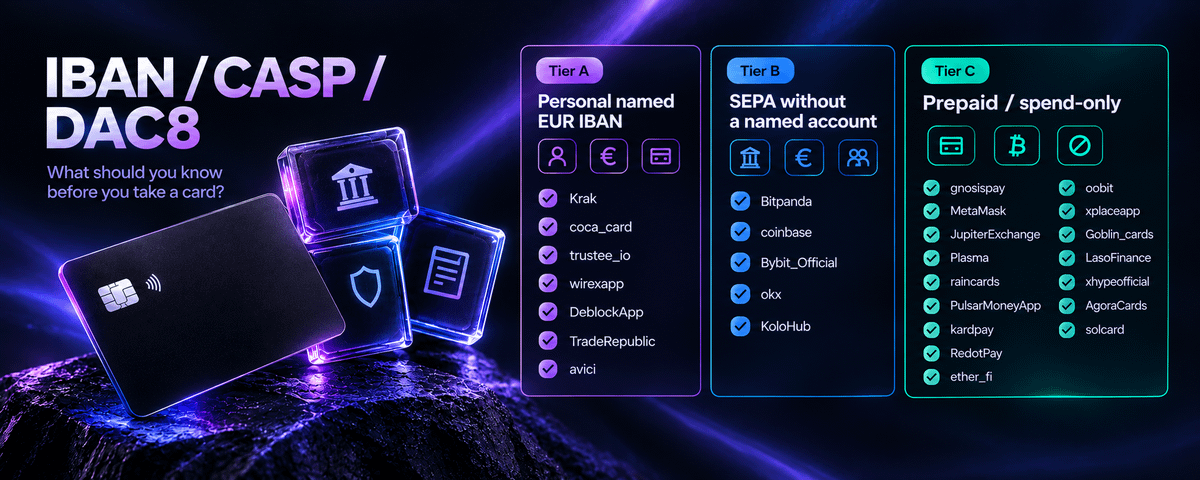
IBAN / CASP / DAC8 - What should you know before you take a card?
This is the most basic thing you should know before ordering a crypto card.
- CASP = Crypto-Asset Service Provider under MiCA
- IBAN is the SEPA account number. A personal EUR IBAN means you are a customer of a bank, EMI or payment institution, not just a prepaid card holder.
- DAC8 is the EU directive on automatic exchange of tax information on crypto. Providers collect from 1 Jan 2026; first reports go to tax authorities in 2027.
Based on this, we split cards by the fiat rail, not by cashback.
Tier A: personal named EUR IBAN
You can accept salary, invoices, and SEPA in/out. Maximum convenience, maximum banking transparency. Most of these IBANs are still e-money, not a deposit-insured bank current account.
• @Krak / @krakenfx: EUR IBAN + salary into Krak, card on top
• @coca_card: Starter already includes a EUR IBAN
• @trustee_io: Polish EUR IBAN + card
• @wirexapp: personal/virtual IBAN, SEPA
• @DeblockApp: French IBAN + self-custody
• @TradeRepublic: real IBAN, 1% saveback
• @avici: virtual EUR account + SEPA in/out; the Rain Visa card itself is not an EEA current account
Tier B: SEPA without a named account
You can top up via the provider’s details / pooled / virtual IBAN in the company’s name. You are in the payment reference, not the account holder.
• @Bitpanda: EU Visa, euro rail, platform IBAN
• @coinbase: in the EU usually SEPA to their details; US debit/Amex is a separate product
• @Bybit_Official: EU card + top-up via the platform
• @okx: card + internal balance / platform SEPA
• @KoloHub: outgoing SEPA Instant €1 to any IBAN; this is an offramp, not an IBAN issued to you
Tier C: prepaid / spend-only
Funded with crypto or an internal balance, then swiped. No incoming SEPA in your name. A spending tool, not a checking account.
• @gnosispay: Safe + EURe; web signups closed, GNO cashback until 30 Sep, then backup/Rebind
• @MetaMask: spend USDC/USDT from your own wallet
• @JupiterExchange: free virtual card, USDC→USD
• @Plasma: XPL cashback, not an account
• @raincards: MoneyGram from stables; a payout rail, not a current account
• @PulsarMoneyApp: cashback/pro, not a bank IBAN
• @kardpay: early-bird physical cards, still a spend product
• @RedotPay: QR / gift card, not a named EUR account
• @ether_fi: wallet cashback, no IBAN
• @oobit: top-up/spend, not a salary IBAN
• @xplaceapp: they charge 0%, Visa takes 1%; payment rail
• @Goblin_cards: no-KYC physical, XMR, 3.5–4% load
• @LasoFinance: no-KYC virtual, low cap
• @xhypeofficial: XKARD, subscription + load
• @AgoraCards: virtual/physical, no IBAN
• @solcard: Solana, lots of freeze complaints
Always DYOR.
Vienen 110.000 migrantes al año
No se construye vivienda, ni tampoco vivienda social
Fondos extranjeros acaparan la poca oferta que hay, hinchando precios (aunque sea solo un 5% del total)
Más demanda, menos oferta
Aumenta tensión en ciudades principales
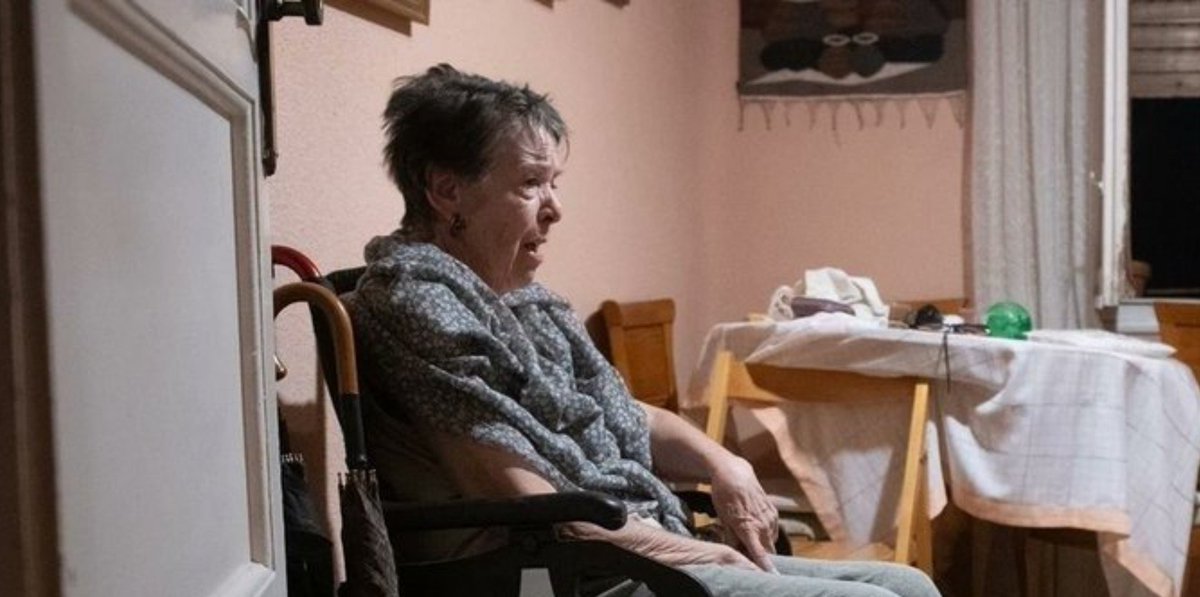
Mari Carmen es deshauciada
Este gobierno no ha sabido solucionar el principal problema de los españoles, ni siquiera ha cumplido con sus propias promesas
Había que construir (más oferta), restringir entrada (menos demanda), priorizar nacional VS fondo extranjero (encauzar oferta)
Y no, se ha, hecho, NADA
MI AMIGA ENVIÓ DECENAS DE CV.
0 respuestas.
0 entrevistas.
0 trabajos.
Le dí su CV a ChatGPT.
Después: 6 entrevistas en 5 días.
Estos son los 7 prompts que usamos:
If you’re 27 as a man.
No job.
No girlfriend.
No friends.
No money.
No savings.
No social life.
Trust me, you are NOT cooked.
But what you do in the next 5 years could completely change your life.
Start here...
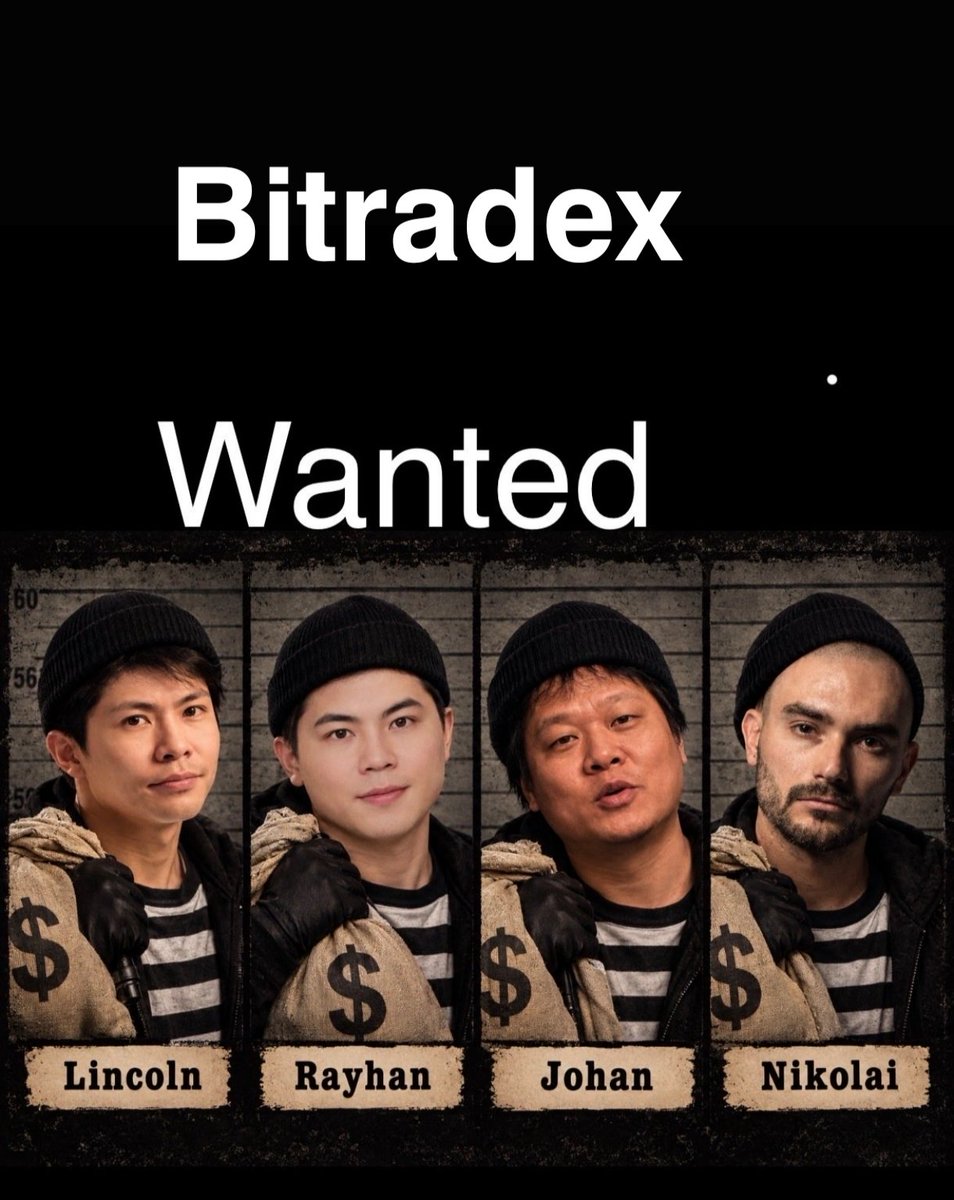
#bitradex
We are organizing an international group for BitradeX victims to share information and discuss possible joint action.
If you would like to join our Zoom or Google Meet meetings, please complete the Google Form.
https://t.co/FoEN4jDqwU
🔥IMPORTANTE🔥
EL MAPA GLOBAL DE LA REGULACIÓN CRIPTO SE ESTÁ COMPLETANDO PAÍS POR PAÍS
💸 Mientras la CLARITY Act sigue trabada en el Senado, las principales economías del mundo ya tienen reglas escritas, fechas y licencias en marcha.
🇺🇸 ESTADOS UNIDOS
▪️ La CLARITY quedó viva gracias a la moción del Senador Tillis, pronto pueden proponer otra fecha para votarla.
▪️ La SEC aprobó acciones tokenizadas, la CFTC escribe sus propias reglas y la Cámara avanzó con la Reserva Estratégica de Bitcoin y la ley impositiva #cripto.
🇷🇺 RUSIA
▪️ Desde el 1 de septiembre rige la ley 282-FZ: #Bitcoin, #Ethereum y USDT se operan legalmente en exchanges y brokers con licencia del Banco Central.
▪️ Cripto pasa a ser propiedad legal, con protección en juicios, quiebras y divorcios.
▪️ 20 millones de rusos ya tienen activos digitales por 3,7 billones de rublos. Esperan 10 millones más en 2027.
🇪🇺 UNIÓN EUROPEA
▪️ MiCA es el primer reglamento cripto único para 27 países: licencias, reservas 1 a 1 para stablecoins y prohibición de las algorítmicas.
▪️ Hoy arrancó Pontes: los bancos ya liquidan activos tokenizados con euros del propio BCE.
🇬🇧 REINO UNIDO
▪️ El 30 de septiembre abre las solicitudes de licencia para exchanges, custodios, emisores de stablecoins y staking.
▪️ Y el fisco propone tratar a las stablecoins como dinero a efectos impositivos desde abril de 2027.
🇯🇵 JAPÓN
▪️ Propone bajar el impuesto a las ganancias cripto a un 20% fijo, igual que las acciones. Hoy puede llegar al 55%.
🇰🇷 COREA DEL SUR
▪️ Desde enero de 2026, empresas cotizantes e inversores profesionales pueden invertir en cripto, hasta el 5% de su capital y solo en las 20 mayores monedas.
▪️ Las ganancias de personas siguen sin pagar impuestos durante todo 2026.
🇭🇰 HONG KONG
▪️ Ya otorgó las primeras licencias de stablecoins, entre ellas a un joint venture de HSBC y Standard Chartered.
📍 Hace dos años el debate era si prohibir o permitir. Hoy los países compiten por quién ofrece el mejor marco para atraer capital y usuarios.
📍 Cada licencia nueva en cada país abre una puerta más para que entre dinero regulado a un activo con oferta fija.
The hidden risks of no-KYC crypto cards.
“No-KYC” crypto cards are not really skipping KYC.
Someone else is doing it for you.
I went through the contracts behind 16 cards marketed as no-KYC.
A common setup looks like this:
> a company passes KYB with the issuer
> it gets access to a corporate card program
> users are added under that company
> you fund the service in USDT and receive a card from its program
So the issuing bank may know the company behind the card. It may not know you as its direct customer.
That is why some of these products can offer a card with only an email while the actual issuer still runs a fully compliant card program.
The trade-off is fees.
Across the cards I checked:
> top-ups can cost 2–5%
> opening a card ranges from $5 to $168
> one charges $0.25 for every authorization attempt, even if declined
> another charges 3% on declined transactions
> one can charge 10% of the remaining balance every month after 90 days of inactivity
And the bigger risk is what happens when something goes wrong.
If the issuer freezes the program, you may not be its direct customer at all.
One provider even disclosed that a banking partner froze accounts in February 2026 and trapped part of customer balances.
It says most users were eventually refunded voluntarily.
There are also cards that can block certain merchant categories, countries or platforms based on the issuer’s risk rules.
And three of the products I checked had no proper terms, privacy policy or legal information on the site at all.
So “no-KYC” does not mean anonymous banking.
Usually it means the compliance relationship sits one layer above you.
Before putting serious money into one, I want four things:
> named issuer
> program manager
> who legally owns the card account
> what happens to my money if the program gets frozen
Privacy is useful.
Not knowing who actually holds your money is not.
21/9,, Zoom, tidak ada keputusan apapun !!
@Bitradex kembalikan Investasi kami, itu hak kami, tidak ada alasan apapun kembalikan uang kami, kalian tidak usah akal akalan yang tujuanya untuk menipu kami, 😡