This AI just exposed the BIGGEST legal insider trading operation in America.
A platform called GovGreed built a seven-layer machine learning system that cross-references every stock trade disclosed by every sitting politician against the bills their committees control, the campaign donations they receive, and the companies their votes directly impact.
It scored all 540 politicians currently in Congress. And the numbers are crazy:
56% of every stock purchase made by Congress in the last 16 months was on a stock directly affected by a bill the buyer later voted on. That is 6,170 out of 11,016 total purchases.
More than HALF of all congressional stock buys are on companies whose fate that same politician is about to decide.
343 of 540 Congress members actively trade stocks while holding access to nonpublic legislative information.
That is 63.8% of the entire legislature making market bets with an informational edge that would put any hedge fund manager in prison.
The AI identified 752 active "Triple Signals" in the current Congress. A Triple Signal fires when three conditions line up at once:
The politician sits on the committee controlling a bill, they traded stock in a company affected by that bill, AND they received campaign contributions from that same industry.
Bills carrying these insider indicators pass at 5.4 TIMES the normal rate.
Now look at the individual leaderboard:
- Nancy Pelosi's estimated portfolio sits at $194 million with a Greediness score of 98.1 out of 100
- Ro Khanna made 13,231 trades across 800+ different tickers
- Michael McCaul made 32,302 trades and filed 6,670 of them late
- Thomas Suozzi filed 86.4% of his trades late with an average delay of 396 days, meaning his disclosures landed over a YEAR after he made the trade
And then there is Lisa McClain, the fourth-ranking Republican in the House. She has made 1,443 trades in three years, more than 98% of all politicians tracked.
She violated the STOCK Act twice in a single year, disclosing up to $900,000 in trades months after the legal deadline. Her husband bought up to $250,000 in Elon Musk's xAI, which quietly converted into SpaceX equity before last Friday's $2 trillion IPO.
The penalty for all of this? A $200 fine.
The number of Congress members ever prosecuted under the STOCK Act since it passed in 2012? Zero.
And the cruelest part is this:
A bill to ban congressional stock trading was introduced in January 2026. It has bipartisan support. Over 80% of American voters want it passed.
But Congress is sitting on it, because the people who would have to vote yes are the same people making millions from the system staying exactly the way it is.
They write the insider trading laws, they exempt themselves from enforcement, they trade on the information those laws generate, and when they get caught, they pay a fine that is basically nothing.
The AI didn't discover anything Congress was hiding. It just organized what was already public into a pattern so obvious that nobody can pretend it isn't there anymore.
Ho hum - dozens of overextension flags today - including this one - among the motherlode we've seen in the past 5 weeks.
Without implying that speculators can't do whatever speculators choose to do, their focus rarely gets this narrow except at extremes when they're all in.
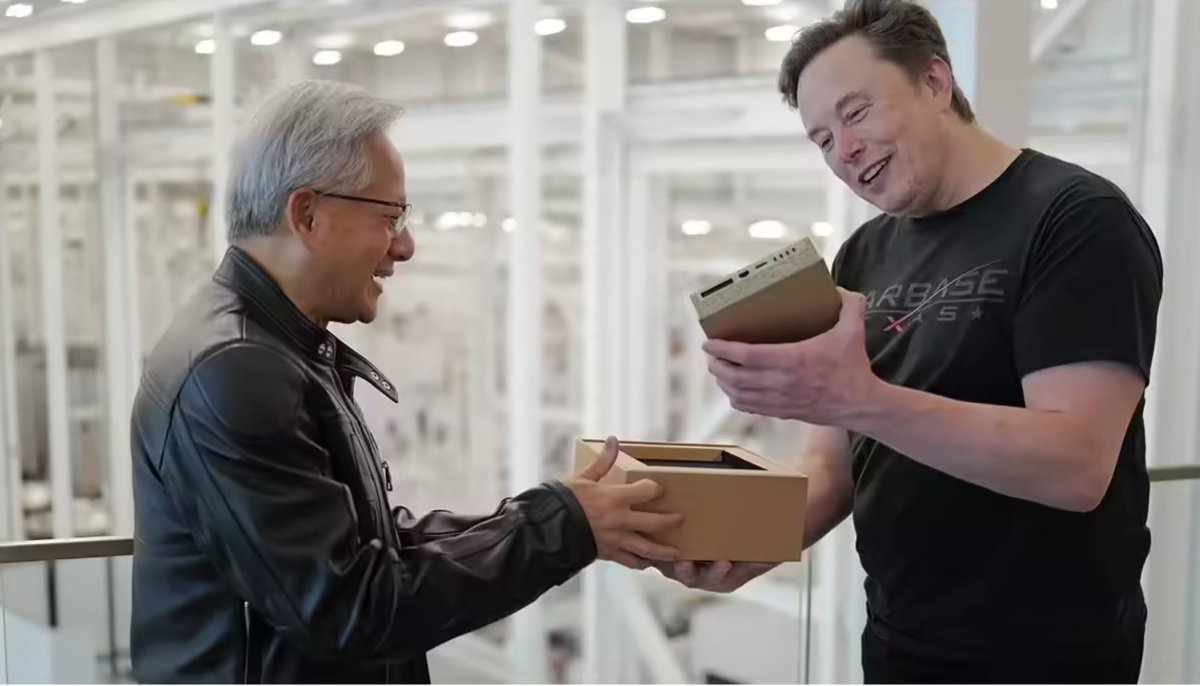
🚨Michael Burry just said Elon Musk and Nvidia's deal is built on fake numbers.
Burry published a detailed breakdown calling the entire structure "Fugazi", his word for fake.
He is alleging that billions of dollars in Nvidia chips are being hidden off balance sheets, and that American retirees are unknowingly funding the whole thing.
Nvidia, the world's largest AI chip company sold $5.4 billion worth of its most advanced GPUs, the GB200, to a company called Valor.
Valor is not a real operating business. It is a special purpose vehicle, a shell company created specifically to hold these chips and nothing else. Nvidia also invested $1.9 billion of its own money directly into Valor on top of the sale.
Those 100,000+ chips are now physically inside xAI's data center. xAI is Elon Musk's artificial intelligence company, the one that builds Grok. xAI is using every single one of those chips right now to run its AI models.
But here is what Burry is flagging.
Neither Nvidia nor xAI owns those chips on paper. Valor, the shell company holds legal title. That means $5.4 billion in GPU assets do not show up on Nvidia's balance sheet as inventory.
They do not show up on xAI's balance sheet as assets. They are legally invisible to both companies.
Nvidia gets to book the $5.4 billion as a completed sale and record it as revenue. xAI gets full use of the chips without owning them. And the risk disappears into a shell company in the middle.
Now here is where American retirees enter the picture.
Valor needed $3.5 billion in debt to fund this structure. Apollo provided it. Apollo is one of the largest asset managers on earth with $1.03 trillion under management and $834 billion specifically in private credit.
Apollo raised the $3.5 billion, packaged it into debt securities, and sold those securities to Athene.
Athene is Apollo's own insurance company. It sells fixed and indexed annuities, retirement savings products, to ordinary Americans.
When a retiree buys an Athene annuity, they believe their money is sitting in safe, stable investments. That money is now inside a structure funding Elon Musk's AI data center.
The numbers inside Athene are most alarming.
Athene holds $74.2 billion in reserves. It has moved $217 billion in assets into a captive insurer based in Bermuda, meaning those assets sit outside normal US insurance regulation and oversight.
Of the entire portfolio, 34.7%, equal to $103 billion, is classified as Level 3 assets.
Level 3 is an accounting classification that means there is no observable market price for these assets. No outside party can independently verify what they are actually worth.
The leverage sitting on top of those unpriced assets is 16 times.
Burry's says:
Every step of this structure is technically legal and publicly disclosed. But the entire thing was deliberately engineered across 8 to 12 steps to move credit risk off balance sheets and away from any market pricing.
- Nvidia books the revenue.
- Apollo collects the fees.
- xAI gets the computing power.
- And retirees sitting at the bottom of a 16x leveraged Bermuda insurance structure, holding $103 billion in assets with no market price carry the risk without knowing it exists.
@igus_ai Vendehumo serio.
La historia del estudiante chino en Japón y los $408.292 es inverosímil y está muy desmentida por los propios indicios públicos.
Paul Tudor Jones says the US is more dependent on equity prices than ever, and explains what a 35% correction would trigger in the economy:
"We're 252% of stock market cap to GDP. In 1929 we were 65%. In 1987 we got to ~85-90%. In 2000, 170%.
If you think about the periodicity of significant bear markets. Since 1970, we get a mean reversion about every 10 years.
Let's say mean revert to the past 25 or 30-year PE. That would be a 30, 35% decline. Well, 35% on 250% of GDP is 80, 90% of GDP.
10% of our tax revenues are capital gains, they go to zero. So you can see the budget deficit blowing up. You can see the bond market getting smoked. You can see this kind of negative self-reinforcing effect.
In the stock market, we're over-equitized as a country. We have the highest individual equity weightings in the history of the country.
And then the real problem is if you look at private equity in 2007-2008, that was about 7% of institutional portfolios. Now it's about 16% of the institutional portfolios. We're so much more illiquid than we were in 2008.
The problem is that if you buy the S&P at this current valuation, the 10-year forward return is negative when you buy the S&P with a PE of 22. That's what history shows.
So yes, the S&P is spectacular long-term, if you have a hundred-year view. But that's because that's an average of a hundred years, including times when the S&P 500 PE was 6, 7 and 8, or one third of what it is right now.
Valuation matters a lot, and the stock market's really high and it's gonna be really hard to make money from here with any kind of long-term view."
CEO of Citadel Ken Griffin says that Data Center spend this year alone is set to be half a trillion dollars, $500 billion
He says that AI is useful in some areas but it’s not worth the investment, he says a lot of what it produces “It’s all garbage”
“Data center spent in the United States this year, over half a trillion dollars, like over $500 billion. You're not gonna generate this kind of spend unless you're gonna make a promise. You're gonna profoundly change the world. So is it hype? Of course
— In certain areas, we know it's gonna be profound, whether it's call centers, whether it's helping to improve the productivity of software engineers, but in a number of white collar jobs, you know, there was a, there was a recent Harvard paper on this, they called it AI work Slop, that it looks good, but if you sort of peel back the onion, the substance isn't there.
I was with one of my colleagues who runs our commodities business and they, he handed a report on that we were generated with an AI engine. Doesn't matter what the topic was, the first few sentences, like, wow, that's, that's really insightful. And then you go down below that and it's all garbage.”
🚨 DAN PENA DROPS A CRYPTO NUKE - “IF YOU KNEW WHO REALLY CREATED BITCOIN, YOU’D RUN AS FAST AS YOU FU*KING COULD TO SELL IT”
The self proclaimed “$50 Billion Dollar Man” just detonated a warning on camera that the crypto world does not want circulating.
Peña says he knows 100% who’s really behind Bitcoin - who started it, who owns it, who controls it.
And according to him, if that truth ever comes out, holders “wouldn’t be able to sleep at night.”
He doesn’t frame it as a theory.
He doesn’t hedge.
He repeats it with certainty.
Then he goes further.
When the real founder of Bitcoin is revealed, Peña says it doesn’t crash slowly. It doesn’t bleed out. It doesn’t “correct.”
It goes to ZERO in a microsecond.
This isn’t some anonymous troll or influencer chasing engagement. This is a ruthless, old-school oil and real estate billionaire saying the quiet part out loud - that the entire system collapses the moment one name is revealed.
If one name can erase Bitcoin in a microsecond… who’s making sure that name never surfaces?
This is not exactly a short-term “sell everything” signal.
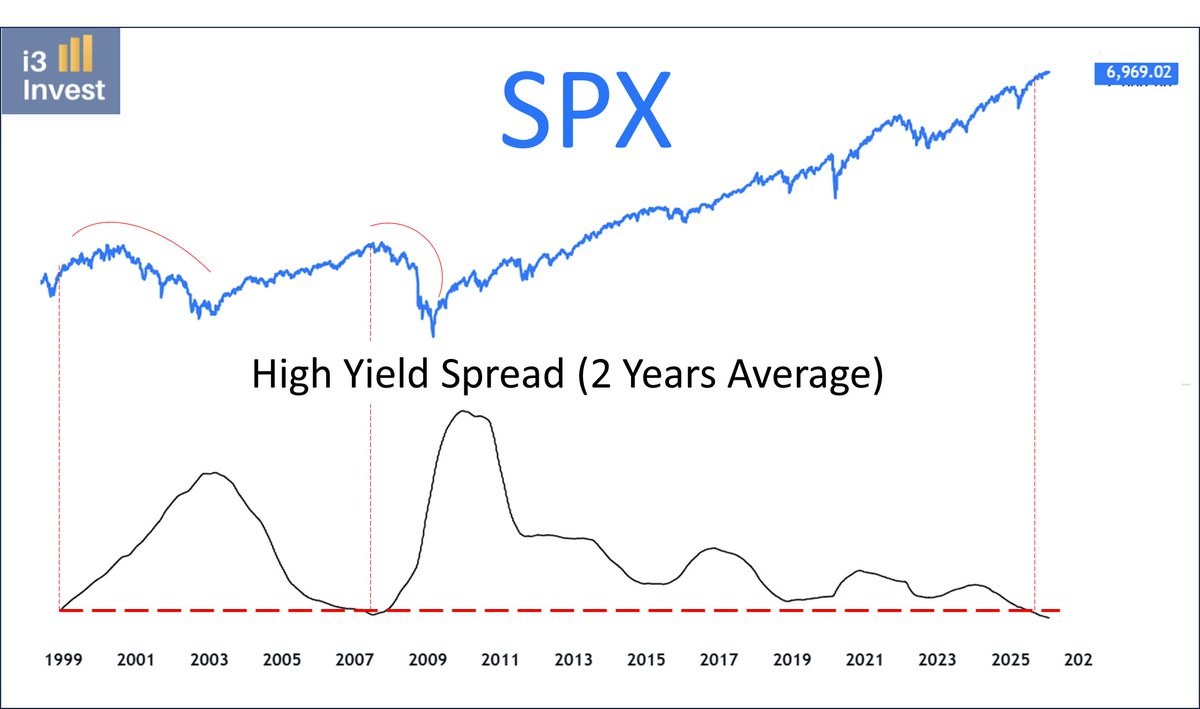
Rather, it realistically shows that market participants are in full speculative/risk-on mode.
This could act as a macro contrarian indicator for a potential cycle shift, as it did in 1999 and 2007.
Confirmations are needed, but it’s worth watching.
La plata va estupenda:cae más de un 26% (es la mayor de la historia en 1 día;Reuters). El oro 10,5%. Ya podemos decir que la plata inició ayer su Silver Thursday/Friday, como si fuera el 27 de marzo de 1980. Solo queda por saber quiénes son “los hermanos Hunt” de nuestros días.