Dave Ramsey tells a couple not to buy a $670K house together before marriage
Caller: "We're engaged, getting married in October, and we already bought a $670K house together with a $4,700 monthly payment"
Dave: "Don't buy a home until you're married. Don't buy a home unless you're out of debt, period"
"When you buy a home with someone you aren't married to, you are extremely vulnerable. Both of you. It is legal and financial suicide to do this"
"If anything happens with this relationship, y'all are gonna find out what screwed looks like"
This is what off-grid looks like when someone has taken it seriously.
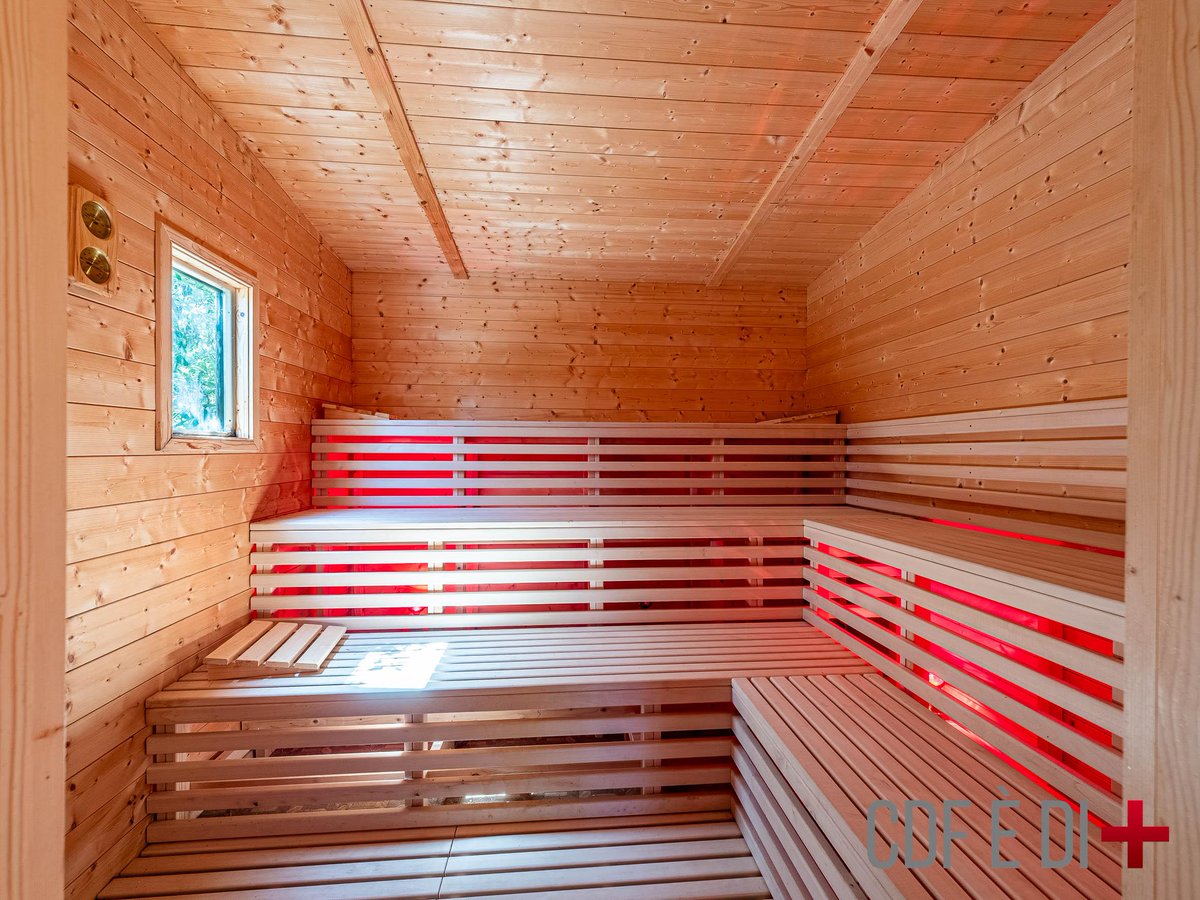
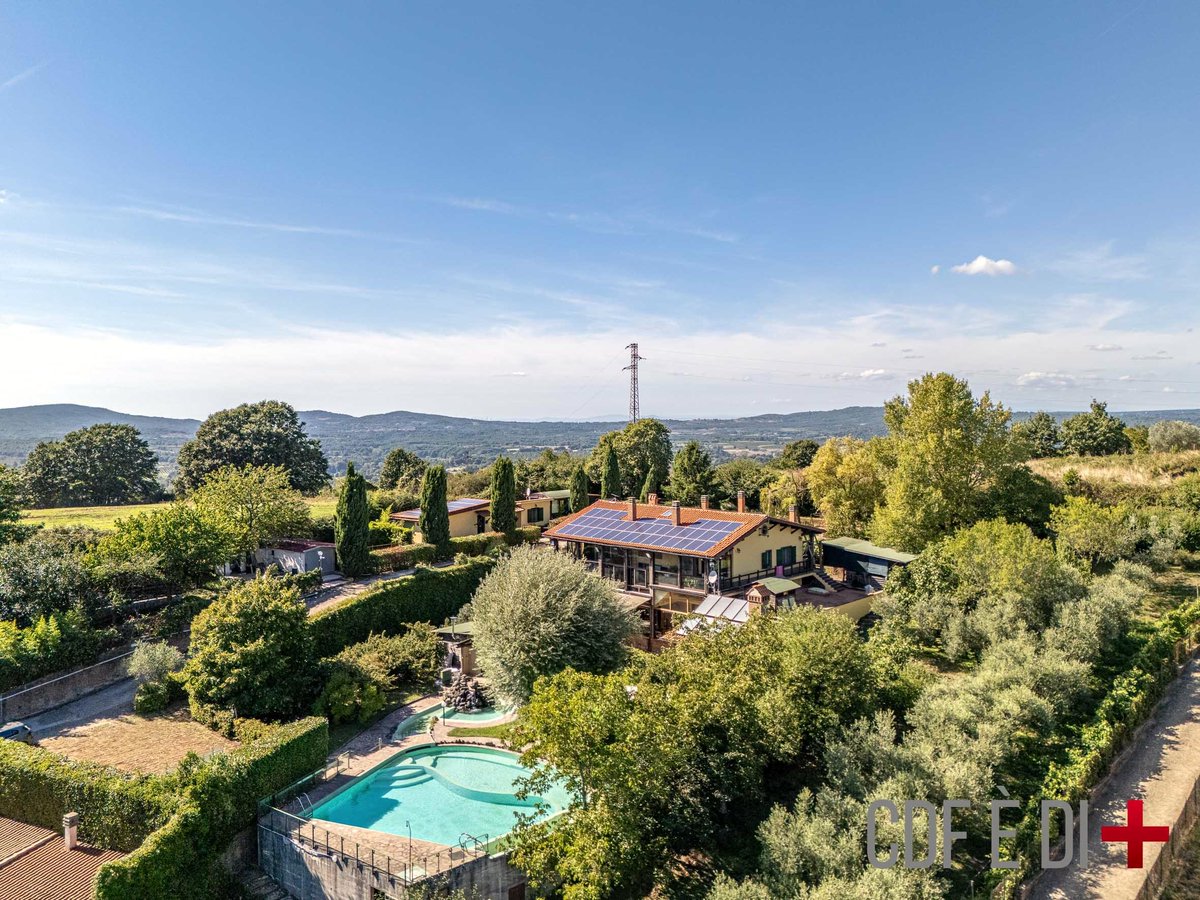
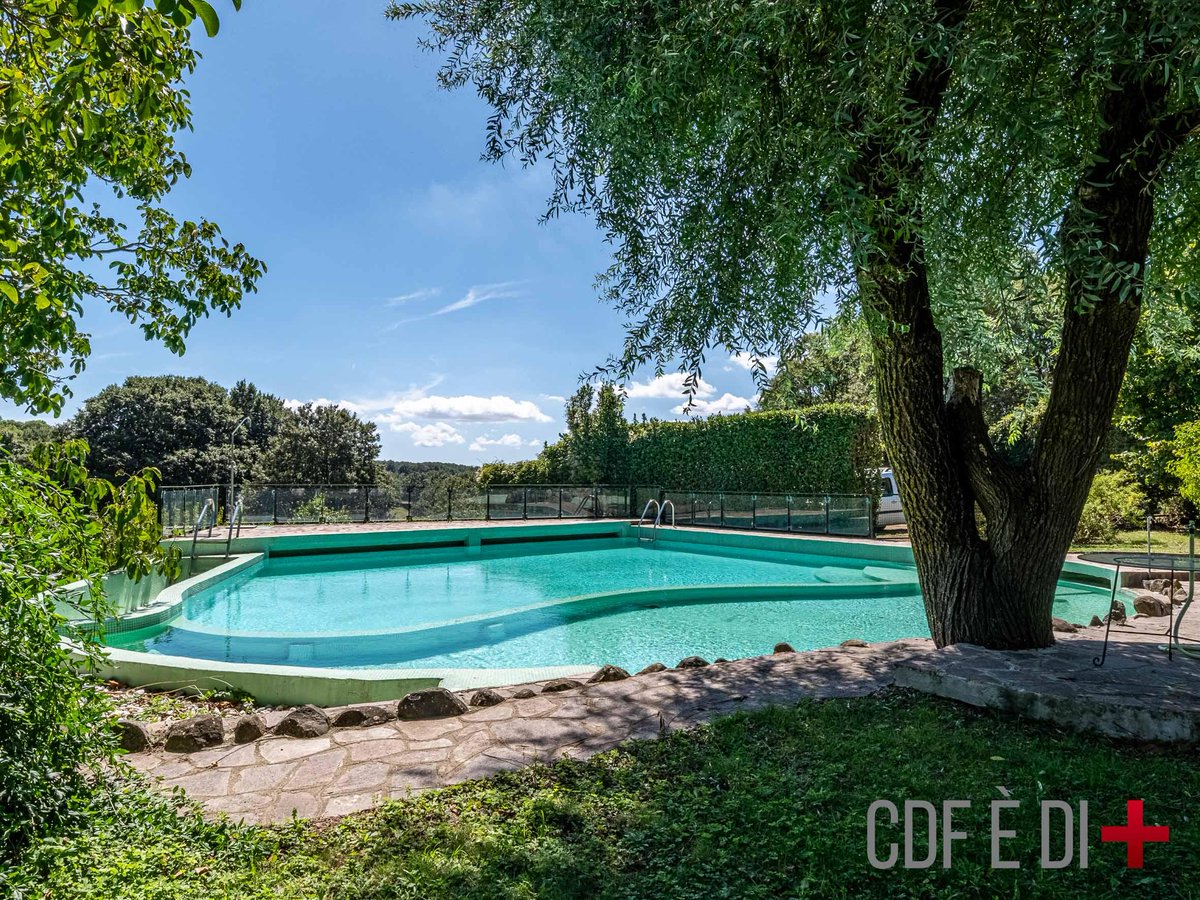
A farmhouse in Lazio with its own solar system generating 20,000 kWh a year, a private well independently tested and clean, Starlink already installed, a Hammam, a sauna, a 100 sqm pool, a gym, and an operating agriturismo business with an established clientele that comes with it.
654m² (7,040 sq ft), 8 bedrooms, 9 bathrooms, 30 olive trees, an orchard, and 3,000m² of garden. There's also a residual government solar incentive of approx. €30k still attached to the property.
The option to purchase the adjacent riding stables separately is also on the table.
80km from Rome's international airport. Asking: €535k ($630k).
I like it.
Wind farms on Scotland’s Isle of Lewis were stalled for decades, but the perseverance of local leaders overcame regulatory obstacles and community concerns https://t.co/DuqoAkuKO2
I’m very excited to finally share the results of a passion project that has been on my mind for nearly a decade. You can find the pre-print below, but what follows is the saga of how this project came to be:
I installed a box high up on a pole somewhere in the Mission. Inside is a crappy Android phone, set to Shazam constantly, 24 hours a day, 7 days a week. It's solar powered, and the mic is pointed down at the street below https://t.co/8D4yYNBPgu
I feel the need, the need for speed.
(Below is an essay I wrote ten years ago when I founded @boomsupersonic... but never published until now.)
I grew up in suburban Cincinnati. My maternal grandfather lived just an hour’s drive away in rural Indiana, so we visited easily and often. It’s hard to overestimate the joy he brought into my childhood or his influence on my character. We had countless hours together—in the garden, on his tractor, and in the sandbox. His lessons in self-reliance, everyday joy, and hard work are with me forever.
Today, my family lives near San Francisco. Our kids also have a very special grandfather: he’s one of those self-made investors, who started from little but built a mini empire through hard work, sound judgment, and by treating his employees and customers well. Unfortunately, his home is 14 hours away in Hong Kong. He has so many life lessons to offer, but our kids see him only a couple times a year—far too infrequently for close bonds or real influence.
It’s been 30 years since my childhood. The year is now 2014. Yet, Hong Kong is no more accessible than when I was a child.
Since the Industrial Revolution, we’ve enjoyed ever-improving transportation, each generation increasing the comfort, convenience, safety, and—most crucially—speed available to the average person. In the 1830s, the state of the art for long distance transit was the covered wagon. For a New Yorker, a vacation in the Pacific Northwest was unthinkable. If you were motivated and brave, you might move your family west—a perilous and expensive journey that took months. In 1869, a revolutionary technology was introduced: the transcontinental railroad. A passenger departing New York could reach California in just 83 hours—52 times faster than the wagon and with much greater comfort and safety. If your loved ones had moved to California, they were no longer gone forever—you could visit them. The world was fast becoming a smaller place.
In 1933, just 30 years after the Wright brothers flew, the first transcontinental air service was introduced. You could travel from New York to San Francisco in 20 hours. The trip was uncomfortable with many stops. But for a New Yorker, this meant California could be reached in about the time it takes to get to Hong Kong or Sydney today. The passenger jet age began 26 years later, in 1959, with American Airlines’ service from New York to Los Angeles. The flight took just five hours—nonstop—in greater safety than any automobile and with the comfort of a relatively quiet, pressurized cabin. A long weekend across the country was no longer unreasonable. Some even decided to commute across the country, weekends with family on one coast and work on the opposite.
Fifteen years later, in 1976, the Concorde appeared to open the next revolution in transportation: supersonic flight. It flew at twice the speed of sound, 2.4 times faster than conventional jets. At its speed, passengers could be almost anywhere in the world in under eight hours. One could leave New York in the morning, arrive in London in time for a business lunch & afternoon of meetings, yet still be home in time for dinner with family.
Observers expected the Concorde to usher in an era of supersonic travel. A new generation of supersonic aircraft would displace slower jets, just as those jets had replaced slower aircraft a few decades earlier.
But something went awry: international politics and concerns about sonic boom noise led to a ban of supersonic travel over land. With supersonic routes limited to those mainly over water—about a third of the market—the business case for supersonic became questionable. Congress cut subsidies for supersonic development and private companies elected not to continue without those subsidies. No new supersonic passenger aircraft have flown since the Concorde’s introduction in the 1970s.
In 2003, the Concorde was retired. The apparent cause of death? Public fear after its only-ever fatal accident, a post-9/11 decline in international travel, and increasing maintenance costs for the aging fleet. But the truth is that speed died decades earlier, when high speed development stopped.
For the first time in modern history, humanity got slower and the world got bigger.
What if innovation had continued? Drawbacks of the Concorde—such as high fuel consumption and limited range—could have been solved by successive aircraft. Imagine the life-changing possibilities: A patient waiting for a critical organ transplant might live, because a donor organ can come from farther yet arrive sooner. A California engineer with a factory in China could hear of a production breakdown and troubleshoot it first-hand only a few hours later. A traveling entrepreneur could visit more customers and spend more nights at home with family. Lovers separated by oceans could keep romance alive, thanks to seeing each other every weekend instead of every few months. My own children would see their grandfather every few weeks, perhaps building an irreplaceable relationship for both grandfather and grandchild.
What could faster travel do for you? What friends or family in a distant city could you visit more often? Is there a business trip you’ve been putting off because of the hassle of getting there? Is there a romantic relationship you might be able to make work, if only your partner weren’t so far away? What vacation could you take when the whole world is easily reachable? What could your life be like when travel is so fast and affordable that cities become neighborhoods and the whole world is your domain?
One day, I may have grandkids. I’d like to visit them quickly, easily and frequently—no matter what part of the globe they choose as home.
It’s time for a renaissance in transportation—not just to regain the speed of the Concorde, but to go well beyond.
--
Blake Scholl is founder and CEO at Boom Technology, a transportation startup.
Today, @boomsupersonic turns ten. I'd like to share here what I shared with our team.
A decade ago, I was sitting by myself in my basement in California. I knew no one in the industry and had under my belt a few spreadsheets, a stack of textbooks, and one Dan Raymer crash-course on airplane design. And a brand new certificate of incorporation of Boom Technology, Inc.
Back then, I thought a failure to launch was the most likely outcome. Boom would come and go without even being a footnote in aviation history. My (then) wife told me I had six months to screw around before she expected me to find gainful employment. When I told my friends I was going to build supersonic jets... I usually got a polite nod and an eye roll. One told me to call him back when I had something less pie in the sky. My mom said, "shouldn't you work on something you know something about?"
It took a decade, but the pie is now very much in the sky. And pretty soon it will be streaking across the sky making aviation history.
If the next ten years are anything like the last ten, they're going to be hard. And we're going to have breathtaking successes. Today, I am more optimistic than ever. We have time and time again done what the naysayers said was impossible. We've made at least our fair share of mistakes and had plenty of setbacks—and we've used those to learn and to build our toughness and resilience.
After incorporating Boom Technology, Inc. ten years ago, I wrote an essay entitled "I feel the need... the need for speed." I never published it and didn't read it again until today. It rings as true today as it did a decade ago—and indeed my belief of the importance of a supersonic renaissance has only deepened. It's attached here.
In the last 10 years, as Boom has accelerated, the rest of the industry has stood still. Neither Boeing nor Airbus has introduced a new product. On September 26, 2014 there were two supersonic companies—us and Aerion. Today, there is just Boom. And Boom was only the royal "we."
Today "we" is all of us—and United, and American, and Japan Airlines, a dozen suppliers, many political leaders and pretty much every single soul in Greensboro. Plus the "we" is the traveling public who are looking forward to flying on our jets. We is everyone around the company cheering us on. We are the only ones pursuing our mission—but are no longer lonely.
Building this company has been by far the hardest thing I've ever done. And also the most rewarding. On even the toughest days, I never have to ask myself "is this worth it." The world needs and deserves supersonic flight. America needs a new commercial aircraft manufacturer.
Steve Jobs liked to say "the people who are crazy enough to think they can change the world are the ones who do."
Thank you for being crazy—for doing what you do every day, for giving your time in service of a future where we all save time.
Happy 10th birthday, Boom.
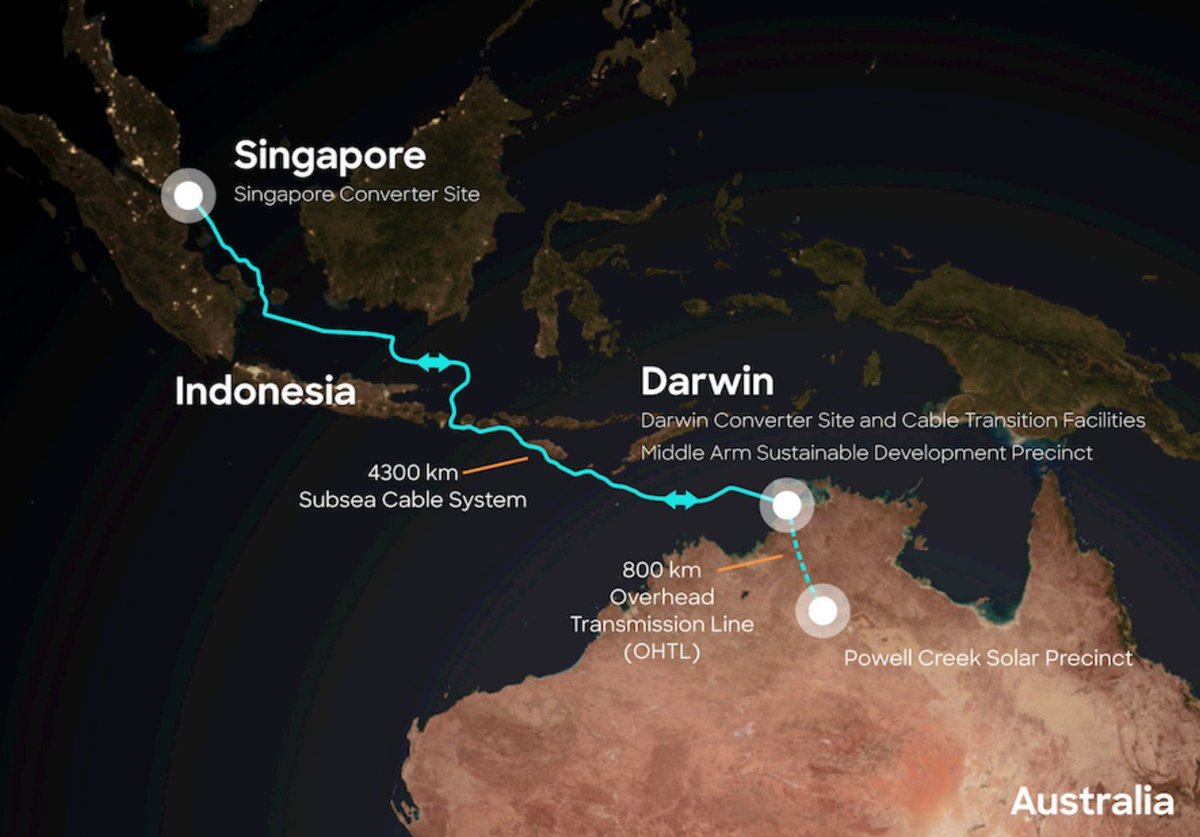
Congratulations to @mcannonbrookes, who just received government approval to build the world's largest renewable and storage project. Sun Cable is a preposterously large (24GW+) solar and wind farm plus an improbably long electricity cord.
https://t.co/gveXctXh6V
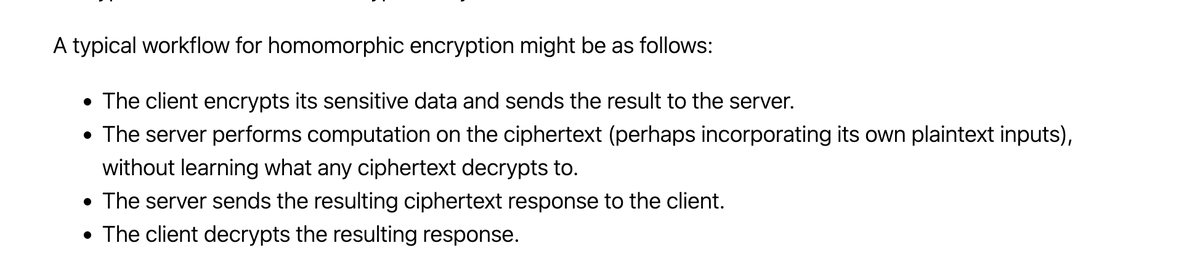
Apple introduces homomorphic encryption via Swift. A cryptographic technique that enables computations to be done on encrypted data without revealing the underlying unencrypted data in th process. For example during cloud computations. In short, the building blocks of privacy-preserving technologies, techniques or protocols. But there's more! Private Information Retrieval protocols! This allows building a database and retrieving information in ways that is private: only the client knows what information has been requested. The databases does not know what information the client requested. Yet, the client gets the data.
Why am I excited? I researched/used PIR ~15 years ago. In my Master's Thesis :-) https://t.co/hoBIorkxVk
Huge congrats to @AIatMeta on the Llama 3.1 release!
Few notes:
Today, with the 405B model release, is the first time that a frontier-capability LLM is available to everyone to work with and build on. The model appears to be GPT-4 / Claude 3.5 Sonnet grade and the weights are open and permissively licensed, including commercial use, synthetic data generation, distillation and finetuning. This is an actual, open, frontier-capability LLM release from Meta. The release includes a lot more, e.g. including a 92-page PDF with a lot of detail about the model:
https://t.co/48e3YJ8Sg9
The philosophy underlying this release is in this longread from Zuck, well worth reading as it nicely covers all the major points and arguments in favor of the open AI ecosystem worldview:
"Open Source AI is the Path Forward"
https://t.co/AdmpadCRM0
I like to say that it is still very early days, that we are back in the ~1980s of computing all over again, that LLMs are a next major computing paradigm, and Meta is clearly positioning itself to be the open ecosystem leader of it.
- People will prompt and RAG the models.
- People will finetune the models.
- People will distill them into smaller expert models for narrow tasks and applications.
- People will study, benchmark, optimize.
Open ecosystems also self-organize in modular ways into products apps and services, where each party can contribute their own unique expertise. One example from this morning is @GroqInc , who built a new chip that inferences LLMs *really fast*. They've already integrated Llama 3.1 models and appear to be able to inference the 8B model ~instantly:
https://t.co/b2kdSsz0fH
And (I can't seem to try it due to server pressure) the 405B running on Groq is probably the highest capability, fastest LLM today (?).
Early model evaluations look good:
https://t.co/RLR5YBpmks https://t.co/ipT4x4wCvy
Pending still is the "vibe check", look out for that on X / r/LocalLlama over the next few days (hours?).
I expect the closed model players (which imo have a role in the ecosystem too) to give chase soon, and I'm looking forward to that.
There's a lot to like on the technical side too, w.r.t. multilingual, context lengths, function calling, multimodal, etc. I'll post about some of the technical notes a bit later, once I make it through all the 92 pages of the paper :)
It begins.
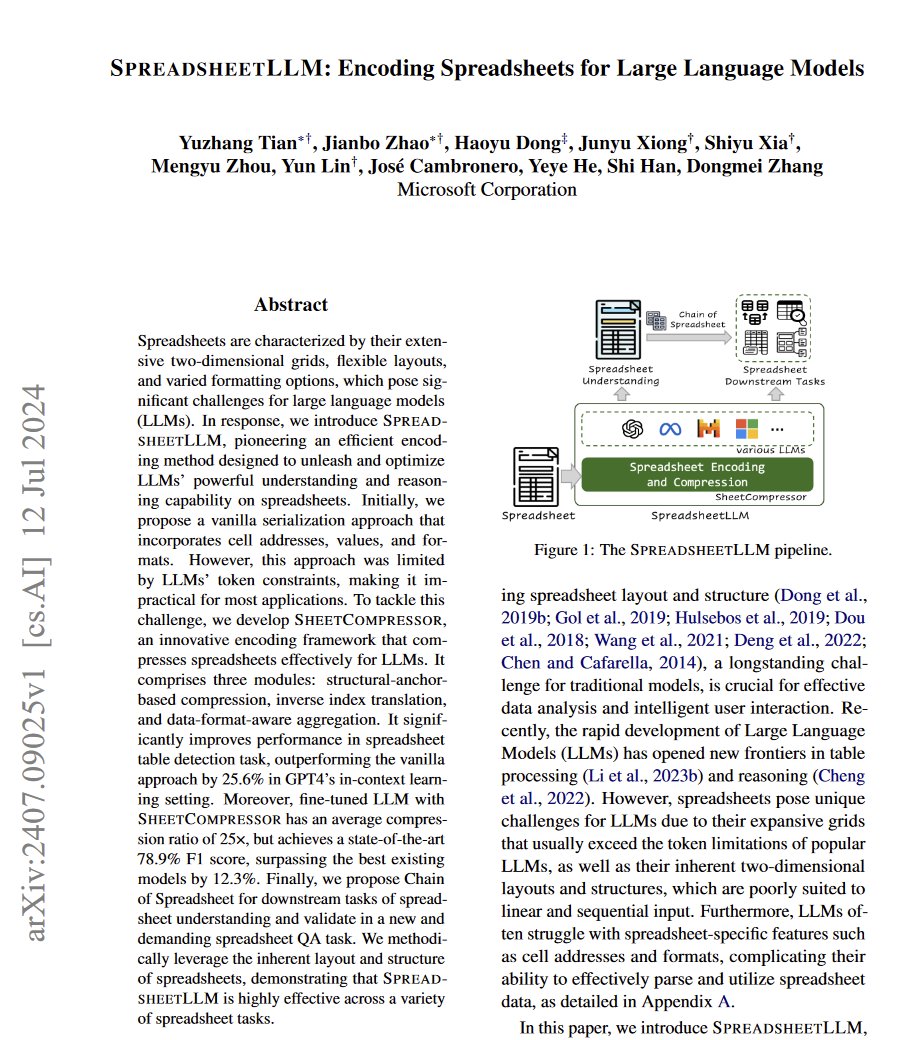
This is another sign that LLMs are going to be able to work with structured & unstructured spreadsheet data soon. This will unlock a lot of use cases (projections, financials, valuations, etc.) and having a spreadsheet source of truth will tend to lower hallucinations