Most warehouse managers never see the whole floor at once. So Claude Opus 5.5 built them the view from above.
93 people, 320 robots and every truck on Black Friday, live.
They built an AI agent in 20 minutes and sold it to Anthropic for $100k - and at Stanford showed how to repeat it from scratch:
02:00 - how to build your first agent with Opus 5 in 20 minutes
22:34 - one agent replaces an Anthropic engineering team worth $200k a year
49:47 - how to make $1.2M a year selling agents to Anthropic and Google
after watching I spent 20 minutes in Claude Code - the agent replaced 10 Anthropic engineers and they paid $100k and asked for more.
save & watch - the article below shows how to build an agent in Claude Code in 20 minutes and reach $1.2M a year.
Andrew Ng just dropped the best 2-hour course on Graph Engineering: from one agent to full automation
0% → 09:14 - build your first agent
25% → 33:11 - learn loop engineering
50% → 1:02:46 - move into graph engineering
75% → 1:30:15 - build agents that rewrite themselves
100% → 1:49:05 - run the full graph system
Two hours, and it replaces most agent tutorials you bookmarked this year
Prompts → Agents → Loops → Graphs
Most people will stop after the first agent and call it automation
He saves the last forty minutes for the graph that can run without him
Same model, same tokens, completely different workflow
Watch it today
Reconstructing ancient ruins in 3D with Gemini 4 Argon 🏛️
Using Google @Antigravity and Blender MCP, see how Gemini 4 Argon supports digital heritage preservation by turning raw, fragmented archaeological data into fully explorable 3D worlds.
It is becoming f*cking dangerous: a model that never writes a single word now judges every move your Claude AI agent makes
-> Create a folder named JEV LAB on your PC and launch Claude Code inside it
-> Install the Jev CLI: npm install -g jev-axi
-> Grab a key at https://t.co/2sWfeXdYFJ and run: jev-axi config set apiKey YOUR_KEY
-> Run jev-axi setup safety so every command Claude runs gets checked first. Dangerous downloads get denied, routine tests pass for free
-> Run jev-axi setup git-hooks to stop any commit that sneaks in a password or API key
-> Feed it anything your agent reads: jev-axi guard < email.txt
Hidden "ignore your previous instructions" tricks get flagged in under half a second
-> Run jev-axi setup supervise --project to catch the moment your agent quits early or gets stuck in a loop
The whole setup takes around 5 minutes
Turn Claude into an agent with a second opinion: every command screened, every page checked for prompt injection, every commit scanned for secrets. For a fraction of a cent per check
Bonus: pipe a broken build into jev-axi triage and it finds the root cause for you
Bookmark this article and check repo below:
https://t.co/02UL5wgfQp
Open-source 3D from a few random photos. No camera poses. No special capture.
#UniForge3D takes a handful of unposed shots, keeps what the photos actually show, and generates the missing parts into one complete textured model.
Reconstruction + generation in the same space.
Best photo per region.
Textured GLB ready.
Code, weights and demo are live.
https://t.co/USYkbVaDyT
#3DAI #OpenSource
this is pure f*cking treasure
A Stanford research group found how to orchestrate Claude Opus 5.5 and GPT-6 Astra together, and it completely breaks the resampling wall
most developers think test-time compute means running 32 blind retries on one model. you burn API tokens repeating the same 2-3 error clusters in loops
Stanford's paper (arXiv:2608.05643) splits the compute between two different brains:
> breadth search: GPT-6 Astra runs high-entropy exploration (T=0.8) to discover divergent solution paths
> step audit: Claude Opus 5.5 scans each step at T=0.0 and catches the exact logic fallacy
> local surgery: Opus rewrites only the broken step instead of dumping the whole reasoning chain
> verifier-free consensus: majority voting locks the proof without relying on drift-prone PRMs
the benchmark metrics outclass standard Best-of-N sampling:
> 91.2% recovery rate on detected reasoning flaws
> under 1.8% regressions on correct branches
> MATH500 jumps from 29.6% to 58.0% (+28.4% absolute gain)
> AMC-2023 improves by +7.5% with zero reward models
Astra explores the maze. Opus repairs the logic
you stop burning tokens on blind retries. you run verified reasoning depth
We'll be spending a lot more time trying to understand the outputs of language models. A few thoughts, tips & tricks:
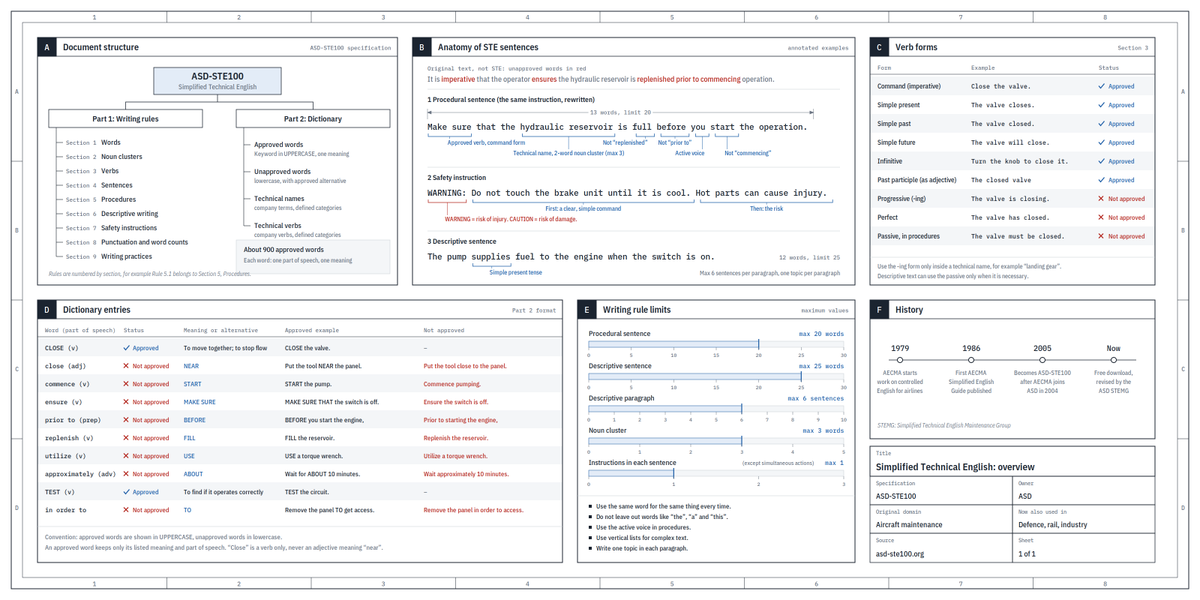
Writing. Something I've had success with: Ask your LLM to explain something in ASD-STE100, it's a controlled language specification originally developed for aerospace maintenance documentation. LLMs well-versed in this language and it comes with heavy constraints on clean writing style that I often find a lot more readable. Sometimes I've tried to soften it a bit e.g. ask for "80% of the way to ASD-STE100" because the spec is quite stringent. But even better:
Diagrams / images. Instead of writing, ask your LLM to create a diagram. These can be a lot easier to process, parse, and understand. But even better:
Web pages. Ask for output "in HTML" to get a beautiful, interactive webpage. LLMs are getting really good at frontend and can create beautiful experiences, animations, etc. But even better:
Explainer videos. The output format I am most bullish on is fully custom / bespoke explainer videos generated on any arbitrary topic. Experiment with things like "Create a 3b1b style video explainer on X. Use my ElevenLabs API key for audio narration". (you'd need an API key for the latter or you can ask your LLM to find you decent free alternatives that use your local compute). This is actually starting to work!
In summary:
- As LLMs get better, they will do more and more of the legwork autonomously, and a lot more of our work will rise up the abstractions into oversight and understanding.
- Luckily, LLMs can help here too because as intelligence and code are increasingly abundant, you can ask for large, custom, discardable software artifacts (e.g. web apps, video explainers) that would have never made sense to create before. Push the boundaries here and you'll be surprised.
AI ARCHITECTURE FIRMS ARE BREAKING THROUGH A 90 PERCENT PRODUCTION-ROLE UTILIZATION CEILING THAT OTHER FIRMS PLATEAU AT. IS A DEMO LIKE THIS WHY?
Interns stay flat at 83 percent utilization whether their firm uses AI or not. The lift shows up higher up, in senior staff and operations, according to Monograph's benchmark data across architecture firms.
That tracks with what a demo like this tests. An AI agent with write access to a live Revit file built an exploded axonometric, five views cut by level, then took a follow-up note, add color, label it, and revised the same file instead of starting over.
If that pattern holds, the harder question is what junior architects spend their first two years learning once tasks like this stop being how they learn the software.
SEARCH AN ADDRESS, DRAG A RADIUS, AND A REAL CITY BLOCK LOADS INTO THE SCENE IN UNDER 30 SECONDS. WHAT DO YOU DO WITH THAT?
The import panel lives inside Blender as an add-on. Picking the location happens in a separate map window instead, with a button that sends the selection back to the scene.
This is most useful for renovation work. Pull in the existing building exactly as it stands today, then model the proposed changes on top of it. The "before" isn't a photo or a rough block-out, it's the real building at real scale on the real street.
Planning boards, the local officials who approve or reject a project, are starting to expect renders like this: tied to the real surroundings instead of a generic backdrop. The industry has a name for it: a verified view.