Apply for FG not Tinubu’s free CAC registration.
2: He cares less whether you dey insult him or not.
3: Visit https://t.co/1KGb6CDI7v
4: complete the MSME registration form with accurate business information.
5: wait for the confirmation from SMEDAN if the application is successful.
6: Abi make Tinubu dey lock your doors before Una go apply.
7: go and enjoy T-gains CAC certificate @cacnigeria1@SMEDANGov@fmitiofficial@joduwole@TheCharlesOdii
DEPUTY GOVERNOR SEEKS INCLUSION OF MENTAL HEALTH IN GATES FOUNDATION'S PRIORITIES
Kaduna State Deputy Governor, @DrHadiza , on Monday received a delegation from the @gatesfoundation led by the Deputy Director, Health Systems Strengthening, Dr. Nkata Chuku, to review ongoing collaborations and discuss the Foundation's new strategic priorities.
Dr. Chuku said the Foundation is restructuring its interventions to improve coordination, efficiency, and impact. He explained that its renewed focus will centre on three priorities: preventing maternal and under-five deaths, ending deaths from infectious diseases, and reducing poverty.
He announced the introduction of an Execution Grant to help governments implement key decisions more quickly by reducing bureaucratic delays. He also disclosed plans to establish Service Delivery and Intelligence Units (SDIUs) to provide technical assistance, strengthen institutional capacity, facilitate knowledge transfer, and support the Kaduna State Ministry of Health with a state-of-the-art Data Intelligence Unit staffed by skilled professionals.
Dr. Balarabe described Kaduna State as a long-standing partner of the Gates Foundation, noting that it currently supports interventions in health, nutrition, agriculture, and poverty reduction. She welcomed the reforms, saying they would improve alignment and maximise the impact of the Foundation's investments.
The Deputy Governor appealed for the inclusion of mental health among the Foundation's priority areas, citing findings by the Kaduna State Substance Abuse and Mental Health Services Agency (KADSEMHSA) showing a significant incidence of suicidal thoughts among pregnant women in parts of the state, highlighting the need for targeted interventions.
The meeting was attended by senior officials of the Ministry of Health and heads of key health agencies ahead of the Foundation President's August visit.
Kaduna State Leads Human Capital Development Drive as Deputy Governor Represents Uba Sani at Northern Summit
Kaduna State has made significant strides in addressing human capital development under Governor @ubasanius, with the establishment of a dedicated Human Capital Development Policy Council that coordinates multi-sectoral interventions across relevant ministries, departments, and agencies.
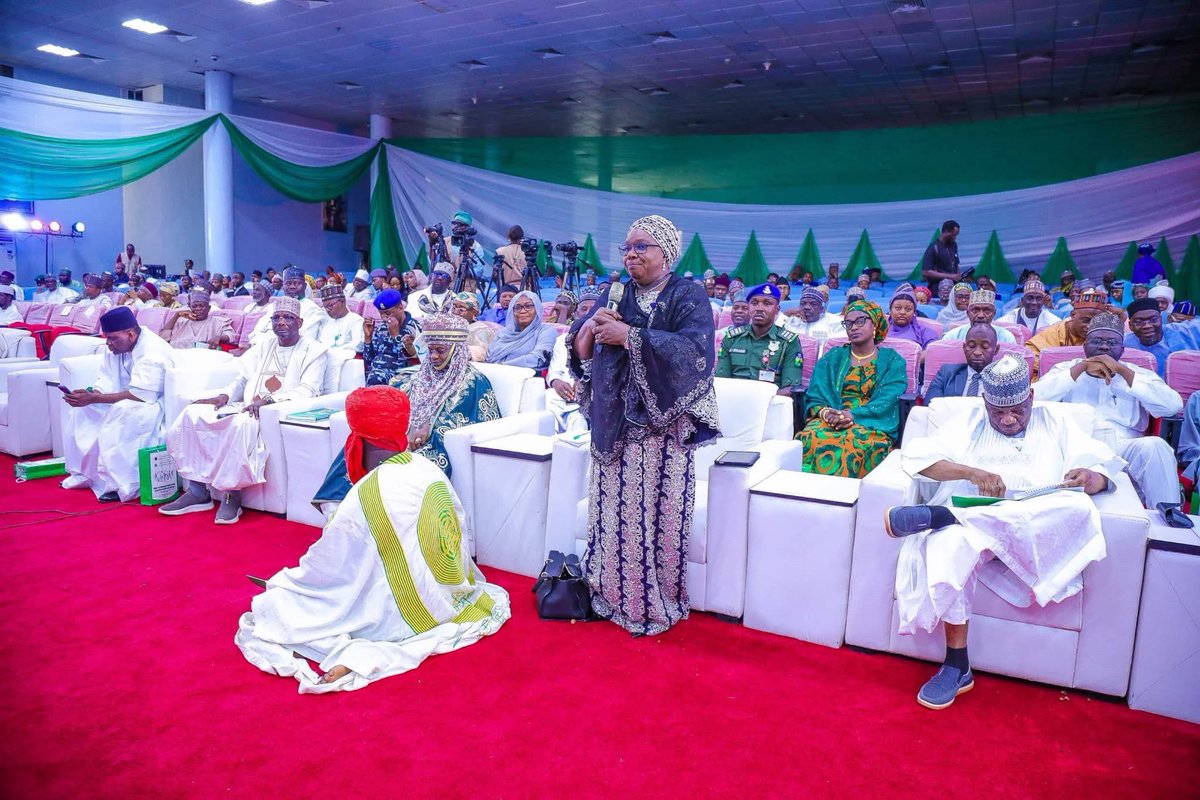
This initiative was highlighted by the Deputy Governor, Dr. Hadiza Sabuwa Balarabe, who represented Governor Uba Sani at the Summit on Enhancing Human Capital Development in Northern Nigeria, held at the NAF Conference Centre in Abuja.
The summit, organised by the Sir Ahmadu Bello Memorial Foundation in collaboration with the Northern States Governors’ Forum, was themed “Reversing the Decline, Unleashing Potentials for Northern Nigeria.” It convened governors, policymakers, traditional rulers, development partners, civil society organisations, and other stakeholders to address the region’s human capital challenges and develop sustainable solutions.
Vice President Senator Kashim Shettima, the Special Guest of Honour, was represented by Deputy Chief of Staff Senator Ibrahim Hassan Hadejia, while the Chairman of the Northern States Governors’ Forum was represented by Nasarawa State Governor Abdullahi Sule.
In her remarks at the event, Dr. Balarabe emphasised the Uba Sani administration’s commitment to human capital development through strategic investments, effective policies, and collaborative governance aimed at improving citizens’ well-being and productivity.
Delivering the keynote address, the Coordinating Minister of Health and Social Welfare, Professor Muhammad Ali Pate, presented evidence on the strong global link between human capital development and economic growth. He urged political leaders and stakeholders to make deliberate and sustained efforts to tackle the region’s human capital deficits.
Participants at the summit called for increased investment in education, healthcare, nutrition, and skills development to unlock the potential of Northern Nigeria’s youthful population and drive socio-economic transformation across the region.
Kaduna Reaffirms Commitment to Business Reforms, Investment Growth
The administration of Governor @ubasanius has reiterated its commitment to reforms aimed at boosting private investment and accelerating economic growth.
Deputy Governor Dr. Hadiza Sabuwa Balarabe stated this on Thursday while receiving the Director-General of the Presidential Enabling Business Environment Council (PEBEC), Princess Zahrah Mustapha Audu, during a courtesy visit at Sir Kashim Ibrahim House, Kaduna.
Dr. Balarabe commended PEBEC for driving reforms that are improving Nigeria’s business environment and strengthening collaboration with state governments to attract investment. She assured the delegation that Kaduna State would sustain ongoing reforms to make the state more attractive to investors.
Earlier, Princess Audu said she and her team were in Kaduna for a town hall engagement and technical workshop. She acknowledged the state's progress in ease-of-doing-business reforms and pledged continued collaboration with Kaduna to promote private sector-led growth and development.
Should Nigeria ban social media for children under 16?
The UK is considering exactly that, citing growing concerns over cyberbullying, online predators, harmful content, mental health challenges and addictive algorithms.
In Nigeria, many children have unrestricted access to social media, exposing them to misinformation, pornography, cybercrime culture, dangerous trends and excessive screen time. While a total ban may be debatable, stronger age restrictions, parental controls and child online safety laws are becoming harder to ignore.
Are we doing enough to protect Nigerian children online, or is it time for tougher action?
Read the BBC report: https://t.co/M9lbCypZsD
Gov. Uba Sani Grants Clemency to 97 Inmates on Democracy Day
As part of activities marking Nigeria’s 27 years of uninterrupted democracy, Kaduna State Governor, @ubasanius, granted clemency to 97 inmates serving various prison terms across the state.
The pardon, exercised under the Prerogative of Mercy, was announced on Thursday at the Nigerian Correctional Centre, Kaduna.
Governor Sani urged the beneficiaries to maintain good conduct, embrace skills acquisition opportunities, and reintegrate into society as responsible citizens. He said the gesture was intended to give deserving inmates a second chance while promoting rehabilitation.
Chairman of the Kaduna State Committee on the Prerogative of Mercy and Attorney-General, Sir James Kanyip, described the clemency as a demonstration of compassion and the administration’s commitment to balancing justice with mercy.
He noted that the beneficiaries were selected based on remorse, good behaviour, and vocational development while in custody. Kanyip added that correctional facilities are meant for rehabilitation as well as punishment, and that executive clemency helps decongest prisons and advance restorative justice.
He further disclosed that Governor Sani has institutionalised the exercise on key national occasions, including New Year’s Day, Democracy Day and Independence Day, and encouraged the released inmates to make positive contributions to their communities.
“DEMOCRACY DAY 2026: DEFENDING DEMOCRACY, STRENGTHENING UNITY, SECURING THE FUTURE”
My Esteemed Citizens of Kaduna State,
Today, on June 12, 2026, we stand in solidarity with our fellow Nigerians, both at home and abroad, to commemorate Democracy Day; a day that encapsulates sacrifice, courage, freedom, and national unity. This moment invites us to honour the countless men and women whose unwavering struggles have ensured that democratic governance prevails over authoritarianism. It is also a time for deep reflection on our nation’s journey, a celebration of our progress, and a renewed commitment to forge a stronger, more united, and prosperous Nigeria.
June 12 holds a singular place in the annals of our national history. The historic election of June 12, 1993, revealed the extraordinary capacity of Nigerians to transcend ethnic, religious, and regional divisions in pursuit of a shared national destiny. Though that democratic mandate was unjustly annulled, the sacrifices that ensued ignited a national movement, ultimately restoring constitutional rule and laying the foundation for the freedoms we cherish today.
As one who actively participated in the pro-democracy struggle, I reflect with profound respect and deep gratitude on the sacrifices made by luminaries such as the clear winner of the Presidential Election of June 12, 1993, Chief MKO Abiola, GCFR, Chief Gani Fawehinmi, SAN, GCON, Dr. Beko Ransome-Kuti, Hajiya Kudirat Abiola, His Excellency President Bola Ahmed Tinubu, GCFR, Col. Dangiwa Umar (Rtd) and many other patriots who risked their liberty, comfort, and, in some instances, their very lives in defense of democracy. Their courage serves as a timeless reminder that freedom is never free, and democracy must never be taken for granted.
This year’s celebration bears particular significance, as it marks over twenty-seven years of uninterrupted democratic governance under the Fourth Republic; the longest period of constitutional rule in Nigeria’s history. During this epoch, our nation has successfully conducted seven consecutive general elections, witnessed peaceful transfers of power at both national and sub-national levels, and demonstrated that democratic institutions can endure, adapt, and strengthen over time. The right of citizens to freely associate, organize, form political parties, forge alliances, contest elections, and engage in governance remains one of the crowning achievements of our democracy.
As we revel in these accomplishments, we must remain vigilant. Across Africa and particularly in our West African sub-region, constitutional governance has faced increasing pressure from anti-democratic forces, leading to unconstitutional changes in government. These developments remind us that democracy cannot thrive in complacency; it must be actively defended by citizens, institutions, and leaders who uphold the rule of law, constitutionalism, and the supremacy of the people's mandate.
Thus, we must resolutely reject all forms of anti-democratic tendencies and resist any romantic notions of military rule. While democracy may sometimes appear slow or imperfect, it remains the most effective system for managing our diversity, protecting fundamental rights, promoting accountability, and ensuring peaceful political succession. Under democracy, citizens enjoy the freedom to choose their leaders, express their opinions, and pursue change through constitutional means rather than coercion.
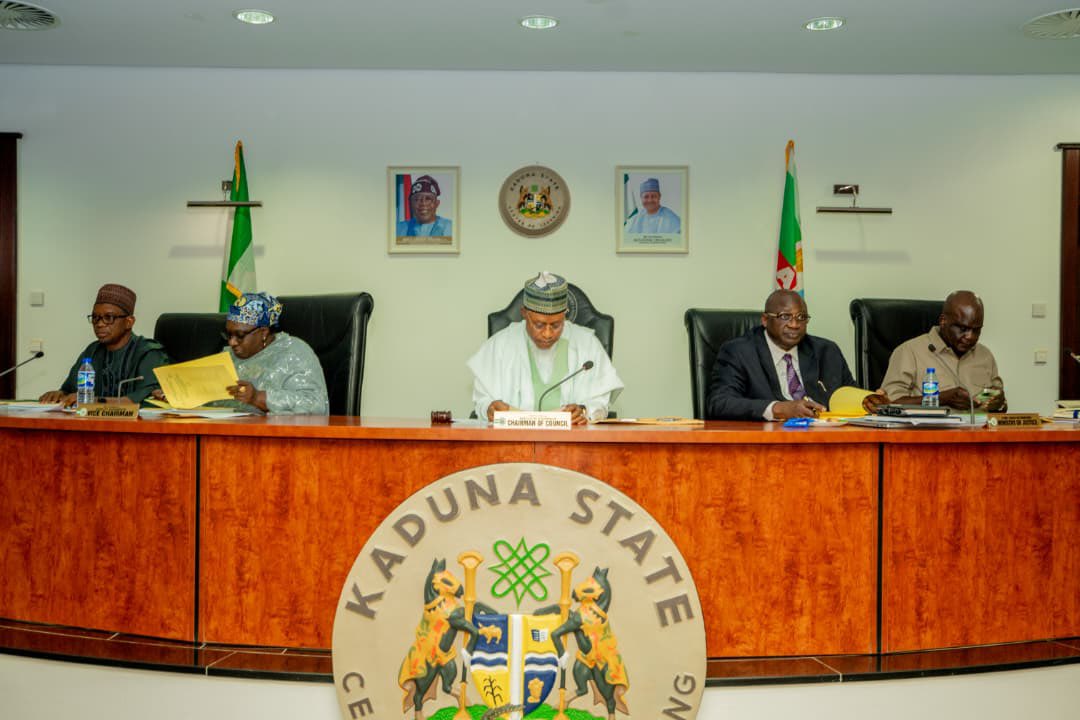
Kaduna Executive Council Approves Safe Schools Policy, Health Regulatory Authority, Security Boost
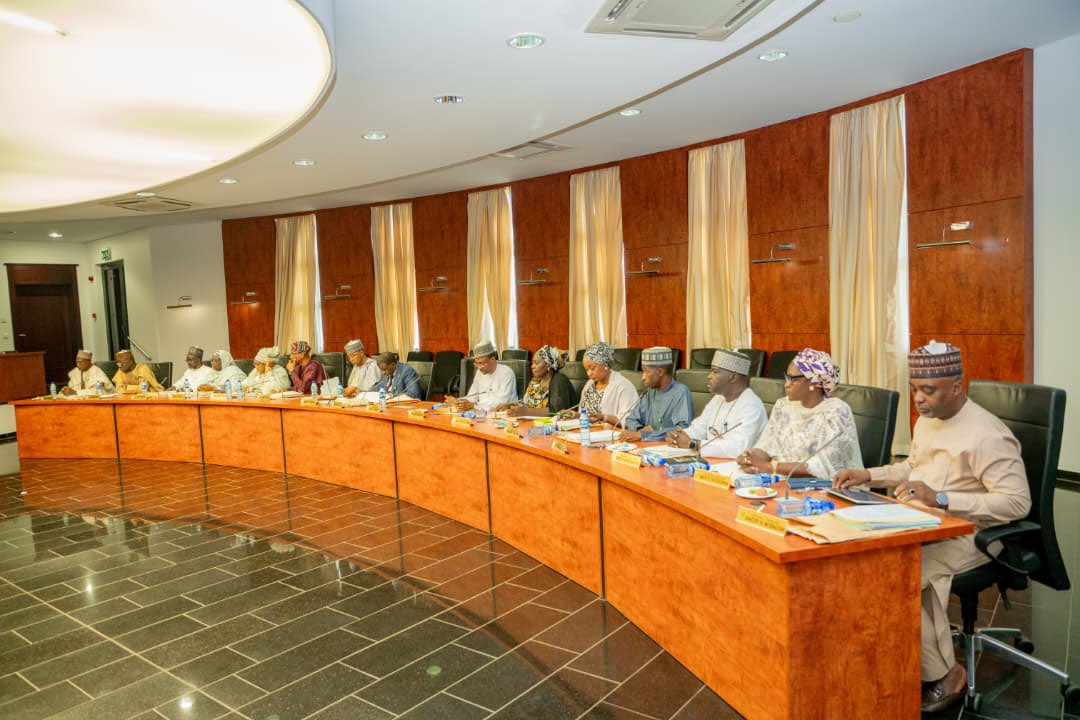
The Kaduna State Executive Council has approved a series of policies and projects aimed at strengthening security, improving education and healthcare, and accelerating infrastructure development across the state.
The approvals were announced at a Post-Executive Council briefing by the Commissioner for Information and Culture, Ahmed Maiyaki, alongside Commissioners for Internal Security and Home Affairs, Dr. Suleiman Shuaibu; Planning and Budget Commission, Mukhtar Ahmed Monrovia; Health, Hajiya Umma Khaltum Ahmed; Environment, Abubakar Buba; and the Permanent Secretary, Ministry of Public Works and Infrastructure, Audu Na Audu.
A major highlight was the approval of the Kaduna State Safety, Security and Violence-Free Schools Policy, aimed at providing a safe and conducive learning environment for pupils, students and teachers across the state.
Commissioner for Planning and Budget Commission, Mukhtar Ahmed Monrovia, said the policy reflects Governor Uba Sani’s commitment to protecting children and safeguarding investments in education.
The Council also approved the procurement of additional security kits and safety gear for the Kaduna State Vigilance Service (KADVS) to enhance public safety and deployment of security personnel across all security flashpoints.
According to the Commissioner for Internal Security and Home Affairs, Dr. Suleiman Shuaibu, the move will strengthen community-based security efforts and support ongoing measures to safeguard lives and property.
In the health sector, the Council approved a bill for the establishment of the Kaduna State Private Health Services Regulatory Authority for transmission to the State House of Assembly for consideration and passage into law.
The Commissioner of Health, Hajiya Umma Khaltum Ahmed, said the Authority would regulate private healthcare facilities through licensing, accreditation, inspections and enforcement of standards to ensure quality healthcare delivery.
The Executive Council further approved the reconstruction of Giwa Township Road and Shika Township Road in Giwa Local Government Area. The Permanent Secretary, Ministry of Public Works and Infrastructure, Audu Na Audu, said the projects would improve connectivity, facilitate economic activities and enhance access to essential services.
The Council also ratified approval the dereservation of 3,120 hectares of land within the Giwa Forest Reserve in Kagarko Local Government Area to support strategic development initiatives. The Commissioner of Environment, Abubakar Buba, said the decision was in line with existing laws and government policies.
Speaking further on the Council approvals, Ahmed Maiyaki said they reflect Governor Uba Sani’s commitment to strengthening security, improving public services and delivering sustainable development across Kaduna State.
UK Government Hails Uba Sani’s Transformational Reforms, Reaffirms Support for Kaduna’s Development Agenda
The United Kingdom Government has commended Governor Senator Uba Sani for driving transformational reforms in Kaduna State and reaffirmed its commitment to supporting the state's development agenda.
The commendation came from the UK Minister of State for International Development and Africa, Jenny Chapman, during an courtesy visit to Sir Kashim Ibrahim House, Kaduna as part of her scheduled assessment visit to review the impact of UK-funded programmes being implemented through the Foreign, Commonwealth and Development Office (FCDO) across the sectors of education, health, social protection, environment, and agriculture.
Champan praised Governor Uba Sani for his consistent partnership with the FCDO, noting that the collaboration has played a critical role in strengthening public institutions, enhancing accountability, and fostering reform-oriented leadership. She also lauded Kaduna State’s remarkable progress in peace and security, describing it as a key enabler of development and economic growth.
The Minister pledged the UK Government’s continued support to Kaduna State in line with its development priorities, reaffirming the commitment to deepening cooperation for sustainable and inclusive development.
In his remarks, Governor Uba Sani described the partnership with the UK Government as strategic, consistent, and results-driven, with outcomes that are both demonstrable and nationally recognised.
According to the Governor, sustained engagement through landmark programmes such as the State and Local Governance Programme (SLGP), State Partnership for Accountability, Responsiveness and Capability (SPARC), Supporting Active Voice for Impact (SAVI), Partnership for Education and Learning (PERL), and the Partnership for Accountability and Civic Engagement (PACE) has helped position Kaduna State as a leading model of subnational reforms in Nigeria.
Governor Uba Sani noted that Kaduna’s early adoption of the Open Government Partnership (OGP)—making it the second subnational government in Africa to embrace the initiative—underscores the state's commitment to transparency, citizen participation, and accountable governance.
He further revealed that Kaduna State has recorded a more than 500 per cent increase in Internally Generated Revenue (IGR), driven by far-reaching reforms in revenue administration, fiscal transparency, and institutional capacity development, many of which were supported through the enduring partnership with the FCDO.
The visit further highlights the strong and enduring relationship between Kaduna State and the United Kingdom, anchored on shared goals of strengthening institutions, promoting good governance, expanding economic opportunities, and improving the quality of life for citizens.
Kaduna State has flagged off the 2026 Maternal, Newborn and Child Health Week and HPV Vaccination Campaign, bringing life-saving services closer to communities across the state. Representing Governor @ubasanius, @DepGovKaduna Dr. Hadiza Sabuwa Balarabe urged parents and caregivers to take advantage of the exercise, while calling on community leaders to support efforts to end vaccine hesitancy and protect women and children from preventable diseases. #MNCHWeek #HPVVaccination
Fight Against Banditry: Kaduna State Begins Training 1,000 Forest Guards
Building on improved security in Kaduna State under the leadership of Governor Uba Sani, the state has commenced a rigorous six-week training program for 1,000 newly recruited forest guards at the Police College, Kaduna.
Coordinated by the Office of the National Security Adviser (ONSA), this critical initiative aims to aggressively strengthen surveillance in dense forests and rural communities that criminal groups frequently target.
The guards will work alongside conventional security agencies and will be well-armed, operating strictly under ONSA rules of engagement.
Once trained, these officers will be dispatched to key flashpoints across eight local government areas, including Birnin Gwari, Giwa, Kachia, Kagarko, Kajuru, Chikun, and Igabi.
Representing Governor @ubasanius at the 2026 Access Bank–UNICEF Charity Shield Polo Tournament, Dep. Gov. @DrHadiza joined Polo enthusiasts in supporting UNICEF’s mission to improve the lives of vulnerable children across Nigeria through sport, philanthropy and partnership.
THREE YEARS OF GOVERNOR UBA SANI'S TRANSFORMATIONAL LEADERSHIP
A Recap of Key Achievements Delivering Progress Across Kaduna State
True leadership is not measured by rhetoric; it is measured by lives transformed. As Governor Uba Sani marks three years in office, Kaduna State is witnessing a historic, people-centred transformation that is delivering tangible results across every sector and ensuring that no community is left behind.
## Security & Peacebuilding:
- The Kaduna Peace Model: Implemented a non-kinetic, people-centred security framework focused on dialogue, reconciliation, and community engagement.
- Stabilisation: Restored peace in heavily affected areas, including Birnin Gwari, Giwa, Igabi, and Southern Kaduna, enabling displaced communities and farmers to return to their homes and livelihoods.
- National Recognition: Commended by the Office of the National Security Adviser (ONSA) as a national model for conflict resolution.
## Healthcare:
- Primary Healthcare Upgrade: Upgraded all 255 Primary Healthcare Centres to Level II status, making Kaduna the first state in Nigeria to achieve this milestone.
- Hospital Infrastructure: Completed a long-abandoned 300-bed Specialist Hospital, originally initiated 16 years ago, and launched the rehabilitation and remodelling of 20 General Hospitals across the state.
- Healthcare Financing: Met the Abuja Declaration benchmark by consistently allocating at least 15% of the state budget to healthcare.
- Restoration of Services: Reopened 222 Primary Healthcare Centres that had previously been shut down due to insecurity.
## Education:
- Increased Enrolment: Reduced the number of out-of-school children from approximately 550,000 to 187,320 within three years.
- Infrastructure and School Reopenings: Constructed and renovated more than 600 classrooms, established 60 new secondary schools, and safely reopened 162 schools that had been closed due to insecurity.
- Financial Relief: Reduced tuition fees by 50% across all state-owned tertiary institutions and cleared ₦407 million in outstanding foreign tuition liabilities for state-sponsored students stranded abroad.
## Agriculture:
- Record Investment: Increased the agricultural budget from ₦1.48 billion in 2023 to over ₦100 billion in 2026, representing 11.6% of the total state budget. Kaduna became the first subnational government in Nigeria to exceed the 10% Malabo Declaration benchmark.
- Farmer Support: Distributed 900 truckloads of free fertiliser to more than 240,000 smallholder farmers and provided subsidised agricultural inputs to commercial farmers.
- Agro-Industrialisation: Launched the Special Agro-Industrial Processing Zone (SAPZ) to attract investment, strengthen value chains, and reduce post-harvest losses.
## Infrastructure:
- Road Network Expansion: Completed or commenced more than 150 road projects spanning over 1,400 kilometres across all 23 local government areas.
- Rural Connectivity: Connected 12 local government areas that had never previously benefited from state road projects, including the construction of a historic 35-kilometre road linking 76 farming communities across Igabi, Kajuru, and Chikun.
1.
Uba Sani Signs 3 Landmark Laws to Transform Energy, Agriculture, and Climate Governance in Kaduna
The Kaduna State Government has described the signing of three strategic laws by Governor Senator Uba Sani, CON, as a major milestone in the State’s drive to accelerate economic growth, strengthen institutions, and promote sustainable development.
In a statement issued by the Honourable Commissioner for Information and Culture, Malam Ahmed Maiyaki, the Government said the newly enacted Kaduna State Electricity Law, 2026, Kaduna State Agricultural Development Fund (KADFund) Law, 2025, and Kaduna State Climate Change Advisory Board Law, 2026 provide a comprehensive framework for transforming the State’s energy, agriculture, and environmental sectors.
Speaking on the development, Deputy Chief of Staff, Legal and Legislative Matters to the Governor, Dr. Mustapha Musa, described the three laws as one of Kaduna State’s most transformative governance reform packages, aimed at expanding energy access, accelerating agricultural growth, strengthening climate resilience, and driving sustainable economic development through strong institutions.
The Kaduna State Electricity Law, 2026 establishes the Kaduna State Electricity Regulatory Commission to oversee electricity generation, transmission, distribution, and supply within the State, while creating opportunities for private-sector investment, renewable energy development, and improved access to electricity.
The KADFund Law, 2025 creates a dedicated financing mechanism to support farmers, cooperatives, agribusinesses, and agricultural value-chain actors through grants, soft loans, technical assistance, and investments in critical infrastructure aimed at boosting food security and agricultural productivity.
Similarly, the Kaduna State Climate Change Advisory Board Law, 2026 establishes a state-level framework for climate action, environmental sustainability, climate finance mobilization, and the integration of climate considerations into development planning, reinforcing Kaduna’s commitment to sustainable development.
Maiyaki said the three laws collectively underscore the administration’s vision of building resilient institutions capable of driving inclusive growth, attracting investment, expanding opportunities, and delivering lasting benefits to citizens.
He noted that the landmark legislations reflect Governor Uba Sani’s commitment to laying the foundations for a prosperous, sustainable, and competitive Kaduna State through electricity sector reform, agricultural transformation, and climate-responsive governance.
According to him, the reforms establish the institutional framework needed to strengthen food security, improve living standards, and position Kaduna as a model for innovation, sustainable development, and effective subnational governance.
THREE YEARS IN OFFICE: GOVERNOR UBA SANI
Exactly three years ago today, Governor Uba Sani assumed office as the executive Governor of Kaduna State, promising a governance model anchored on rural transformation and economic inclusion.
Three years down the line, residents across the state's 23 local government areas are feeling the direct impact of his administration's healthcare, agricultural, and infrastructural revolution.
- Muhammad Umar Ajingi takes us through the journey so far.
Kaduna Ranks Among Nigeria’s Top Three Performing States as Independent Assessments Validate Reform Agenda
The Kaduna State Government has welcomed the outcome of the 2025 Phillips Consulting State Performance Index (pSPI), which ranked Kaduna State 3rd nationally and awarded it an Excellent Four-Star Rating, placing it among Nigeria’s highest-performing states.
In a statement issued by the Honourable Commissioner for Information and Culture, Malam Ahmed Maiyaki, the Government described the ranking as an independent validation of the reform-driven and people-centred policies being implemented by the administration of Governor Uba Sani.
According to the Commissioner, the ranking reflects measurable progress in governance, fiscal management, economic development, infrastructure, healthcare, education, agriculture, security, and social inclusion.
"This recognition is significant because it comes from an independent and credible assessment that combines objective performance indicators with citizen feedback. It confirms that Kaduna State is making steady progress in strengthening institutions, improving governance outcomes, and expanding opportunities for its citizens," Malam Maiyaki said.
The Commissioner noted that the latest ranking adds to a growing list of independent recognitions received by Kaduna State. Earlier in the year, the state emerged Number One in Nigeria on the 2025 Transparency and Integrity Index (TII) published by the Centre for Fiscal Transparency and Public Integrity (CeFTPI), while also recording the country's highest score on the Control of Corruption Indicator.
The Commissioner further said the recognitions reflect the impact of ongoing reforms and investments across critical sectors.
"These rankings are encouraging because they demonstrate that our efforts are yielding measurable results. However, our focus remains on improving the lives of our people through inclusive development, economic empowerment, quality service delivery, and sustainable peace," the statement stated.
Malam Maiyaki reaffirmed the commitment of Governor Uba Sani’s administration towards building a peaceful, prosperous, transparent, and globally competitive Kaduna State, while sustaining reforms that will deliver greater benefits to citizens.
The Kaduna State Government expressed appreciation to citizens, development partners, traditional and religious institutions, civil society organisations, and other stakeholders whose support continues to contribute to the state's progress and development.