Most Docker debates eventually reach this question: slim or alpine, which base image should you use?
Alpine is very small and looks attractive for cutting image size.
But it uses musl instead of glibc, so some apps behave differently, some libraries don’t work as expected, and debugging can be painful.
Great for simple, static binaries that don’t have many OS-level dependencies.
Slim images (like debian:slim or node:22-slim) are bigger than Alpine, but still much smaller than full OS images. They use glibc, so most tools and libraries just work.
This usually means fewer surprises in production, easier debugging, and better compatibility with existing docs and examples.
For most web apps, APIs, and tooling, slim is a safer default. You still get smaller images, faster pulls, and decent security, but without fighting weird musl edge cases.
Alpine makes sense when you:
- Ship a single static binary
- Fully understand your dependencies
- Are ready to handle compatibility issues if they show up
Building a Docker-like Container From Scratch 🐳
Learn about the key Linux namespaces by assembling a tiny but realistic container using only stock Linux commands: unshare, mount, and pivot_root. No runtime magic and (almost) no cut corners.
https://t.co/6Pj2cn3a4M
Introducing vdr-2b-multi-v1 - a fully open-source visual embedding model for your most complex, multilingual documents 🧿🖼️📊
Document search and retrieval is increasingly becoming multimodal, as more and more companies are building agentic document workflows. Most existing RAG, OCR, IDP etc. etc. pipelines depend primarily on text processing. But that inherently causes you to lose information - and a lot of information is locked up in a visual format in unstructured docs.
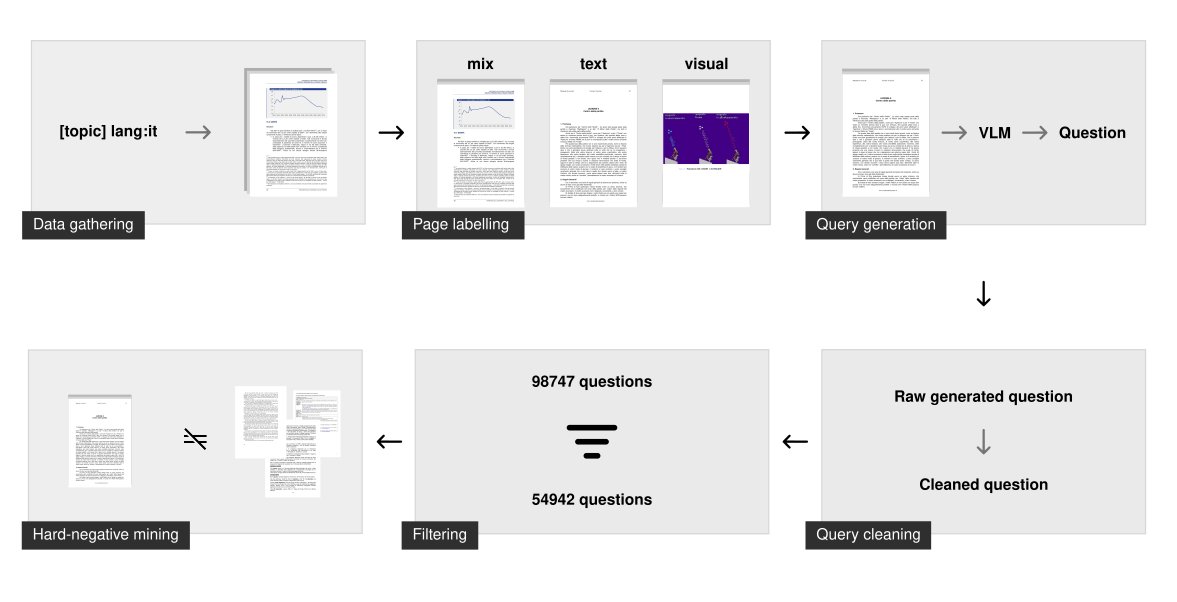
We’ve invested heavily in tooling and abstractions to automate unstructured data processing, including LlamaParse, LlamaReport, LlamaExtract (upcoming), and more. This is a huge next step in that journey. Vdr-2b-multi-v1 allows you to directly embed image screenshots of different documents so that you can search retrieve image chunks as opposed to text chunks. It outperforms an existing qwen baseline and depends on a 500k query-image dataset we put together.
Huge shoutout to @CimolaiMarco, @disiok, and @LoganMarkewich.
Model: https://t.co/1lh8QD7FUY
Blog: https://t.co/mcPOzrSdbS
Securely Access #Kubernetes With Tailscale
When it comes to K8s, Tailscale’s flexibility shines. Instead of wrestling with port-forwarding or managing access control within K8s itself, Tailscale handles the heavy lifting.
https://t.co/V0AmvUcuGX #DevOps
The guide to kubectl I
kubectl is a CLI tool used to communicate to the #Kubernetes API it can seem simple at first but can quickly get complicated. Focusing on command syntax & useful commands
https://t.co/Q1vzD3Pk56 #DevOps
Understanding #Kubernetes Resource Management: apply vs. create
kubectl apply & kubectl create are primary tools for creating or updating resources within a #K8s cluster. Delve into the differences between them, their usage, and when to use them.
https://t.co/yQaQuiIB8u
In 1956, 26-year-old Edgar Dijkstra invented a classic path-finding algorithm while out with his fiancée at a café in Amsterdam. It all happened in his head: “Without pencil and paper you are almost forced to avoid all avoidable complexities,” he said. https://t.co/hvFDiI6wy5
Dijkstra’s algorithm doesn’t just tell you the fastest route to one destination. Instead, it gives you an ordered list of travel times from your current location to every other point that you might want to visit — a solution to what researchers call the single-source shortest-paths problem.
https://t.co/5klGAQUmh8
GitOps Bridge is a community project that aims to showcase best practices and patterns for bridging the process of creating a Kubernetes cluster and subsequently managing everything through GitOps
It focuses on using ArgoCD or FluxCD
➜ https://t.co/geGmEMKrjm
A gentle reminder for software engineers (you'll thank me later):
• Learn SQL before ORM.
• Learn Git before Jenkins.
• Learn SQL before NoSQL.
• Learn CSS before Tailwind.
• Learn Linux before Docker.
• Learn English before Python.
• Learn JavaScript before React.
• Learn REST before GraphQL.
• Learn HTML before JavaScript.
• Learn Containers before Kubernetes.
• Learn Monolith before Microservices.
• Learn Data Structures before Leetcode.
The bottom line: Learn fundamentals before going deep.
What else would you add?
The long-standing question in neuroscience seems to be now answered.
How can memories last for years or even decades when the molecules in our brains are constantly being replaced?
Neurons store information in the strength of synapses, but the proteins and molecules in those synapses are unstable and degrade after just a few days. This creates a puzzle—if the building blocks of memory are so short-lived, what allows us to maintain long-term memories?
ANS
Two key proteins form memory's "glue":
- KIBRA (structural protein) - acts as persistent synaptic tag
- PKMζ (enzyme) - strengthens synaptic connections
Source - psypost
How can you learn neural networks?
Machine Learning From Zero <--- This is an open-source library that will teach you everything you need about neural networks.
This is not a video. It's not an infographic. It's not a PDF. It's a working library with a very cool characteristic:
The documentation of the library reads like a textbook. You think you are learning how to use the library, but in reality, you are learning how neural networks work!
In my opinion, there's no better way to learn something than building it piece by piece from scratch.
Here is the library: https://t.co/ssdbUja8aH. You will find the link to the GitHub repository on that page.
This library is part of my friend @TivadarDanka's book about the mathematics of Machine Learning.
Trust me. It's the best book about this topic you'll ever read. Nobody explains complex ideas like he does:
https://t.co/jQ3ao7I7z5
Enjoy!